

1、 Product Introduction
We are a professional Chinese manufacturer & supplier of sports and casual eyewear. This casual square sunglass combines semi-transparent matte frames with functional sports performance.
The frames are crafted from ultra-light flexible TR90 material, paired with vivid Polarized mirrored lenses that eliminate harsh glare from roads and water surfaces. The lenses feature full-spectrum UV400 protection to block all UVA and UVB rays. Slim gradient two-tone temples deliver trendy streetwear aesthetics.
Available in four exclusive colourways , these sunglasses suit daily commutes and outdoor trips, as well as a wide range of sports including cycling, running, fishing, boating, golf, hiking, mountaineering, badminton, tennis, pickleball and beach volleyball. They offer all-day lightweight comfort with zero facial pressure.
We support wholesale, OEM manufacturing and custom logo printing. Samples are available upon request. Feel free to contact us for competitive factory direct prices.
Huangjia Eyewear Co., Ltd., Linhai, is an eyewear manufacturer and exporter located in Zhejiang, China.We offer one-stop OEM & ODM customization services straight from the factory.Inquiries are warmly welcome.
2.1 Product Features
(1)、Polarized Mirrored Lenses & UV400 Protection
High-quality polarized lenses effectively filter glare, blocking up to 99% of reflected light. They greatly reduce harsh brightness and improve visual clarity. After eliminating stray light, object outlines become sharper with higher contrast.The lenses restore true-to-life colors, making scenery brighter, more natural and rich in details. They ease eye strain caused by glare, preventing squinting and relieving fatigue during long outdoor use.With full UV400 protection, they block 100% of harmful UVA and UVB rays.
(2)、Transparent & Matte TR90 Square Frame
Flexible shatterproof TR90 material, ultra-light with zero facial pressure. Transparent and matte sand finish resists fingerprints, with trendy gradient colour temples for a modern streetwear look.
(3)、Ergonomic Stable Fit
Smooth curved temples stay snug against the temples. No slipping even when sweating heavily during cycling, running or driving, so you won’t need constant readjustment.
(4)、Four Exclusive Colour Combinations
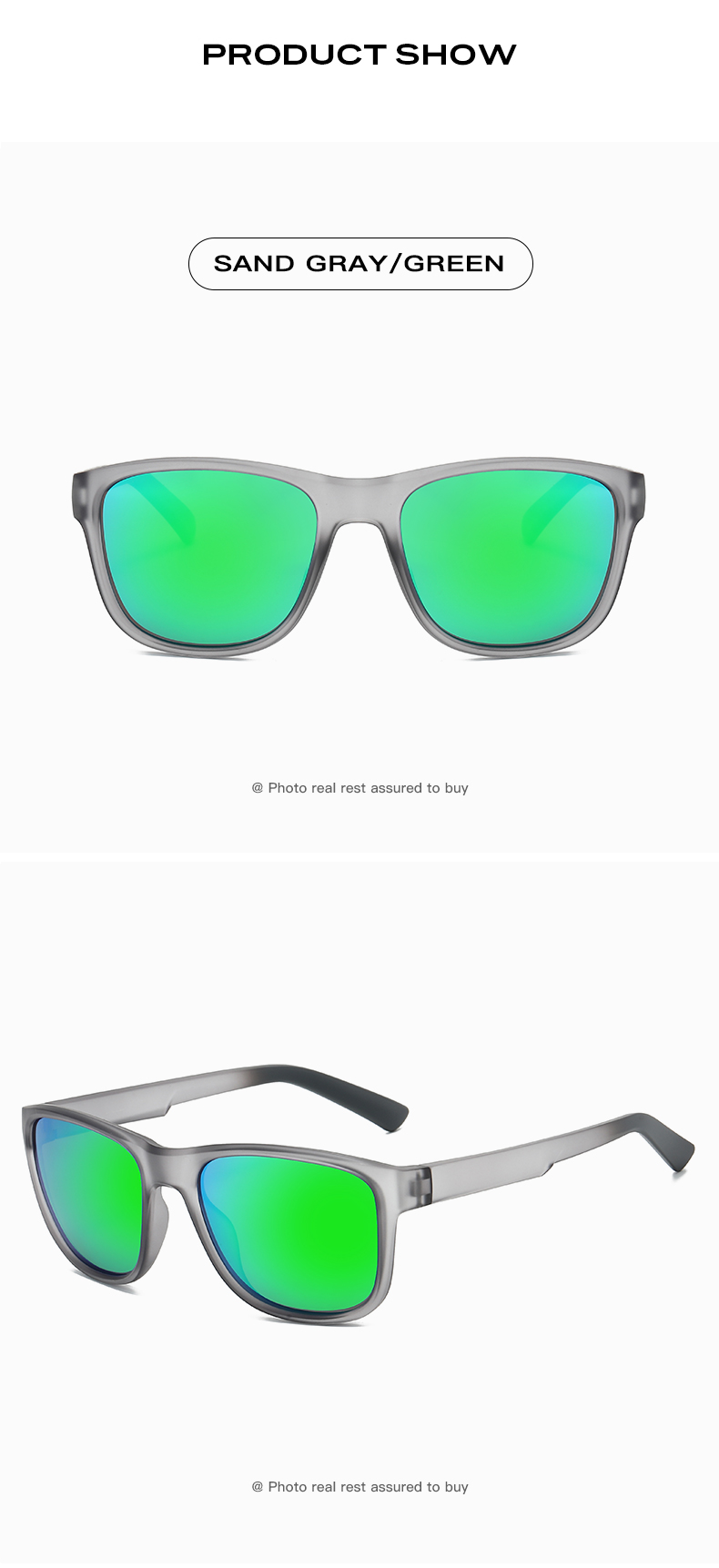
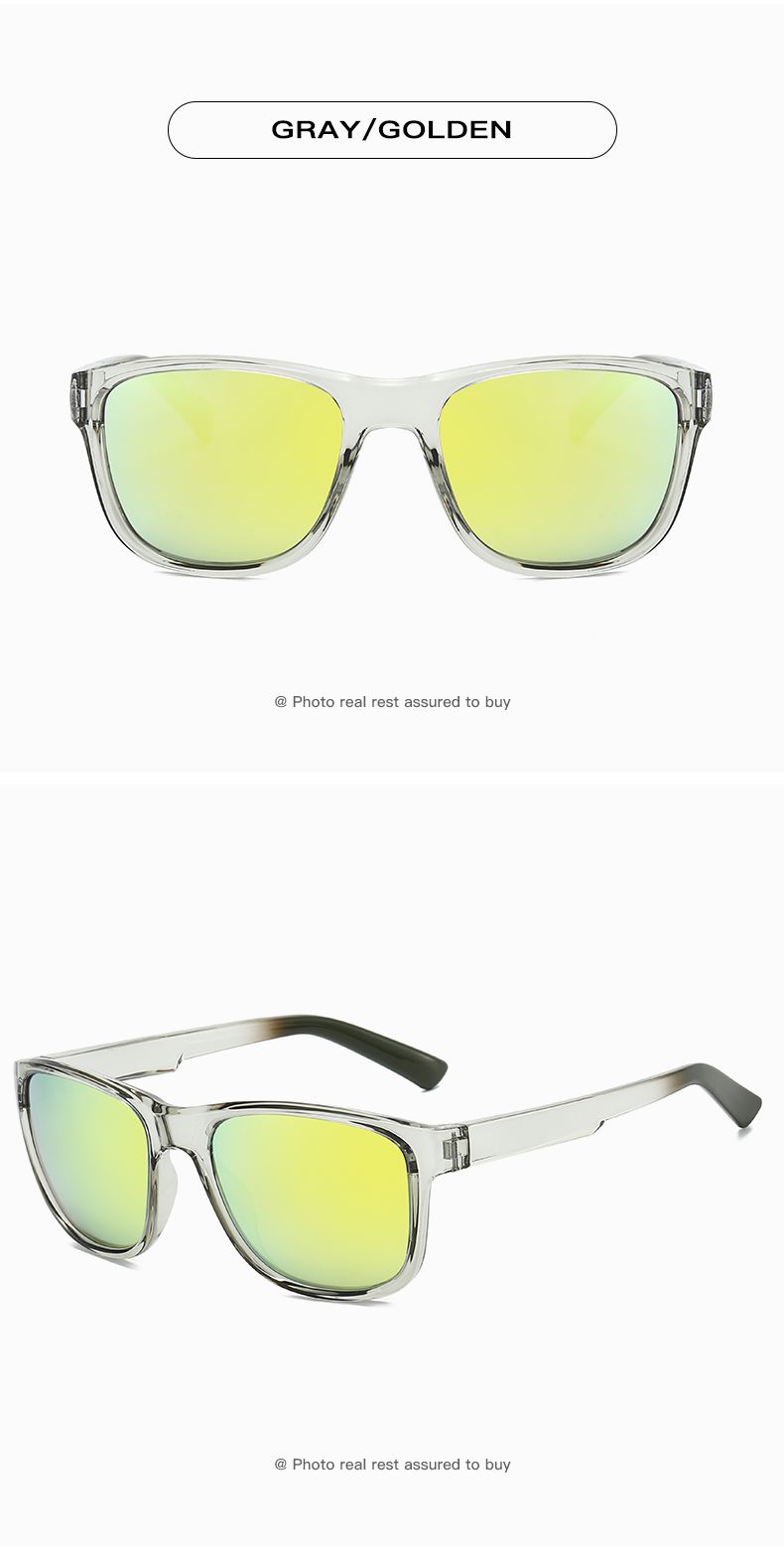
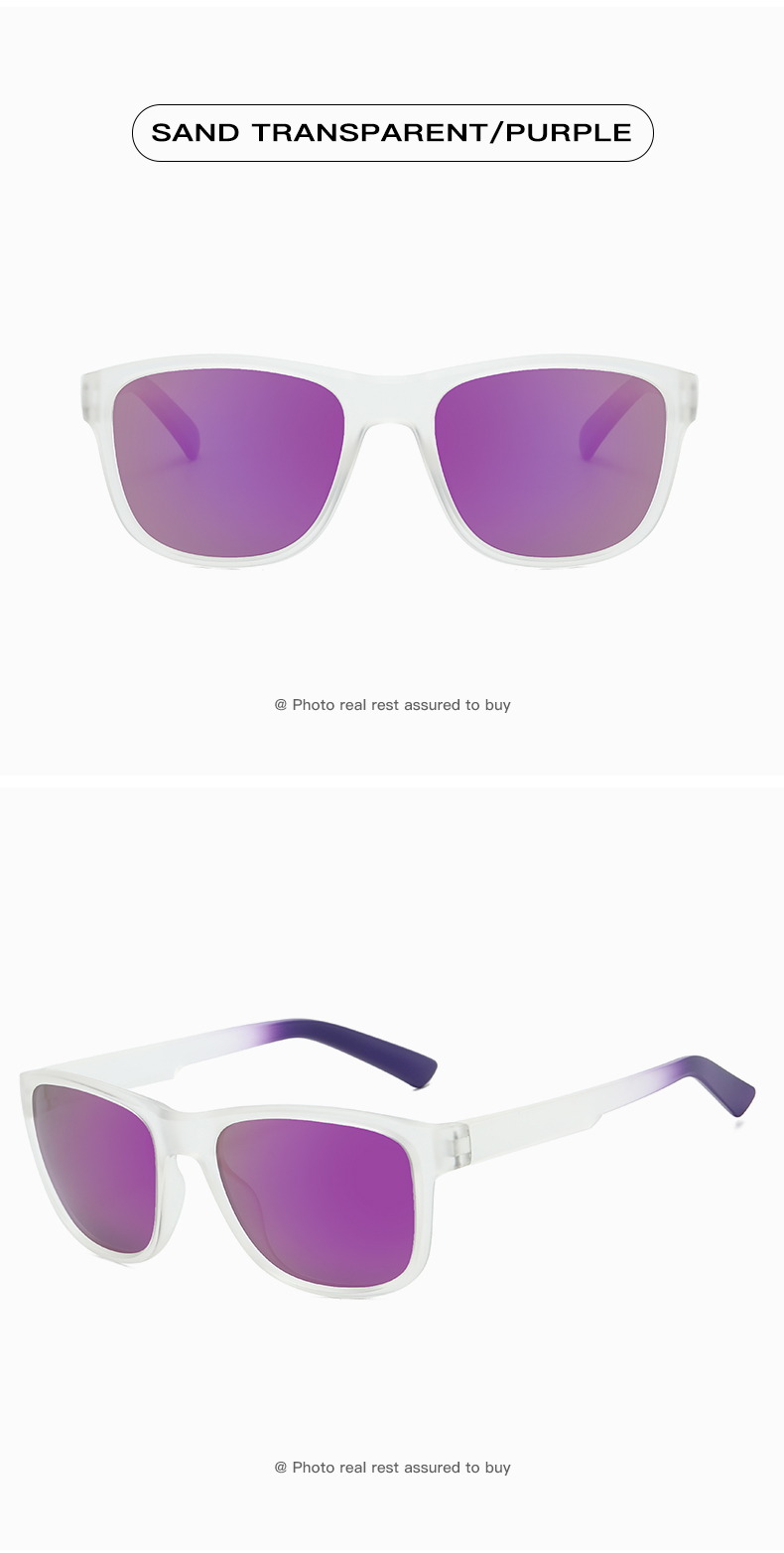
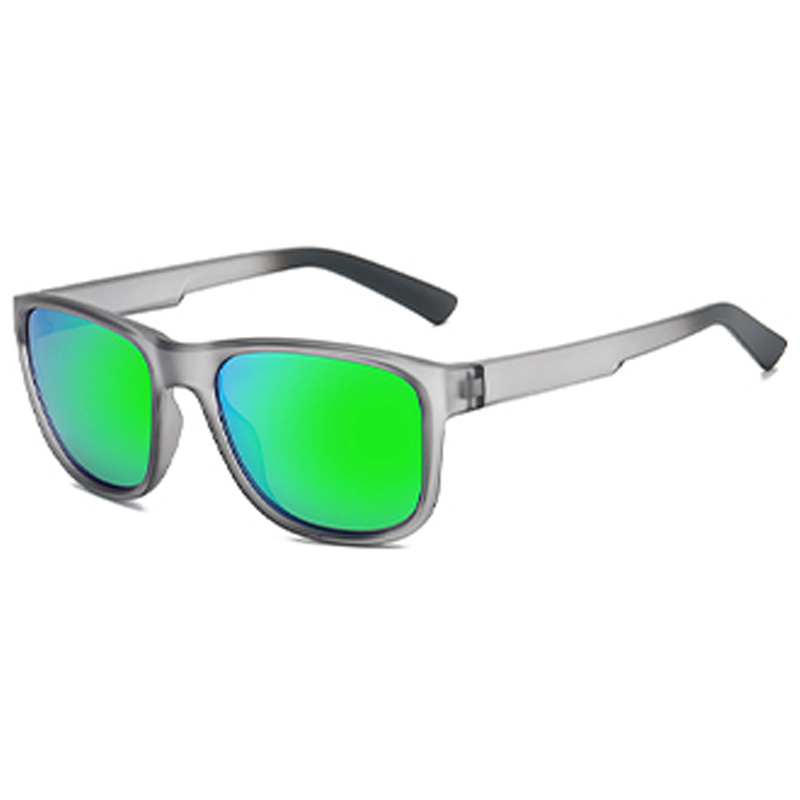
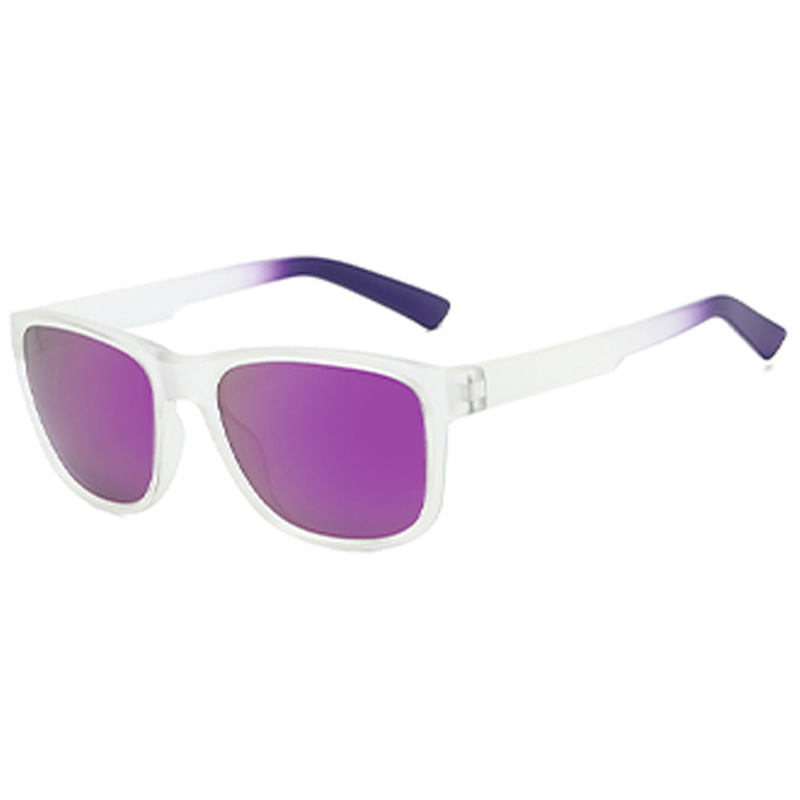
Sand Gray/Green、Gray/Golden、Sand Transparent/Purple、Sand Transparent/Golden ;Transparent frames paired with colourful mirrored lenses, with gradient two-tone temples for a unique stylish look.
(5)、Unisex Medium Square
This medium square frame fits most face shapes.Lightweight construction allows all-day wear, perfect eyewear for sports, driving, beach holidays and daily street styling.
2.2 Dimensions
Parameter | Specification |
Model Name | TR90 Transparent Square Polarized Sports Casual Sunglasses |
Model No. | RS260106 |
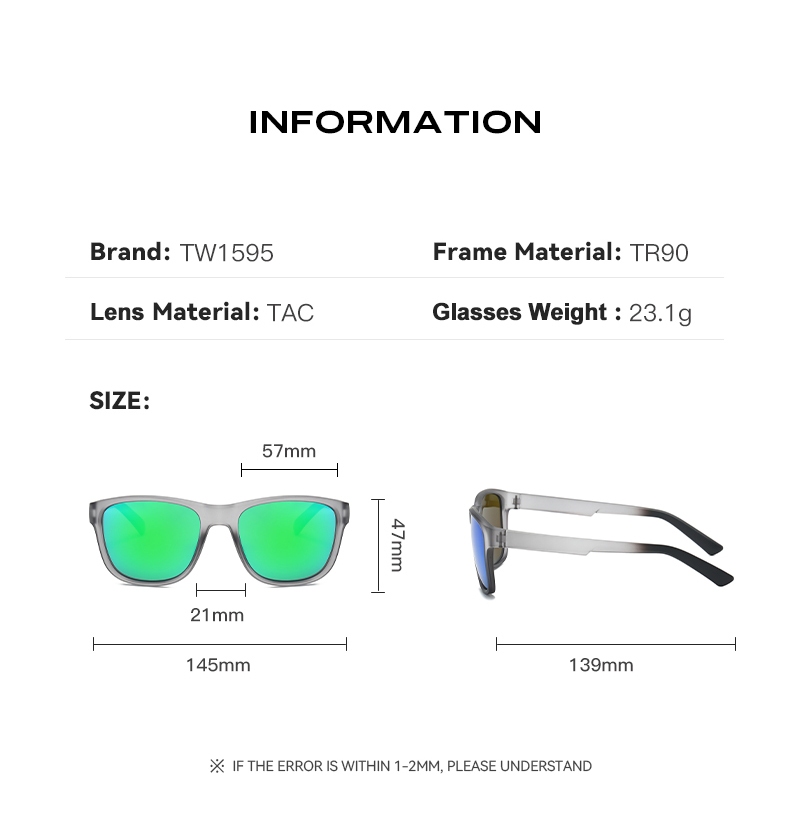
Material: | TR90 |
Frame Shape | Classic Square Full Rim |
Frame Color | Sand-Gray/Green,Gray/Golden,Sand-Transparent/Purple,Sand-Transparent/Golden(Customizable) |
Size | 57-21-139mm |
Total Weight | 23.1g |
Lens Type | Polarized,UV400, |
Target Audience | Unisex Men & Women |
Applicable Scenes | Cycling, Fishing, Hiking, Beach Vacation, Daily Commute |
MOQ | 300pcs/Color; |
Origin | Taizhou, Zhejiang Province, China |
Logo Printing | Custom Made |
Packaging | 1pcs/bag, 12pcs/box, 300pcs |

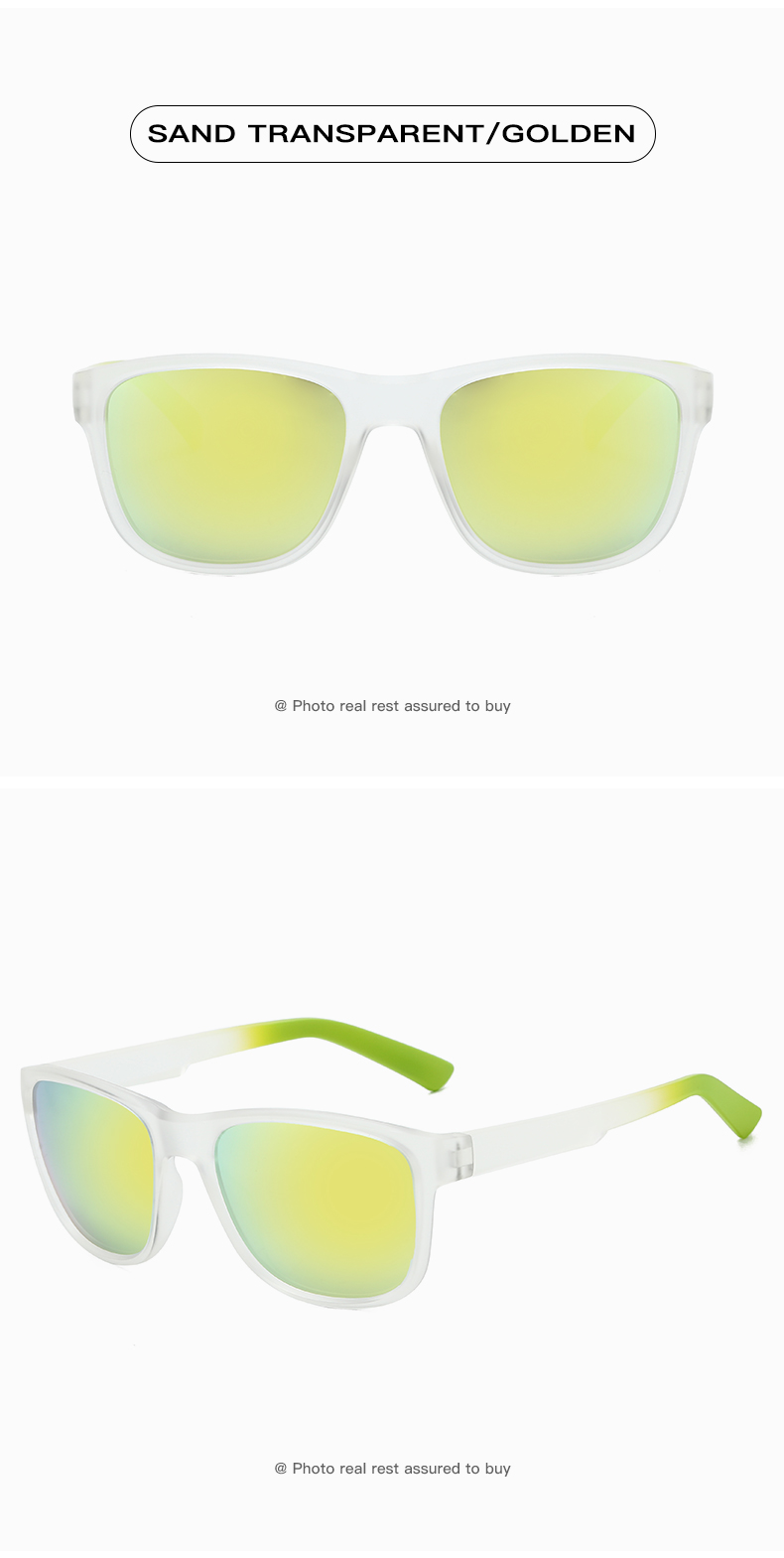
TR90 Transparent Square Polarized Sunglasses for Modern Outdoor Eyewear
When I look at a pair of sunglasses for a product project, I do not only look at the frame shape. I look at how the frame feels on the face, how the lens handles strong reflected light, whether the design works for different markets, and whether the product can be produced consistently in larger quantities. That is the thinking behind our TR90 Transparent Square Polarized Sunglasses.
At Linhai Huangjia Glasses Co., Ltd., I work with customers who are looking for sports eyewear, optical glasses, fashionable sunglasses, industrial safety eyewear, and tactical eyewear. Different customers have different priorities. A fashion brand may care more about frame appearance and color options. An outdoor brand may focus on lens performance and wearing comfort. A distributor may care about stable production, packaging, MOQ, and delivery. Our job is to bring these requirements together into a product that is practical to manufacture and easy to sell.
The TR90 Transparent Square Polarized Sunglasses are designed around a clean transparent frame, a modern square silhouette, and polarized lens construction. The transparent appearance gives the product a lighter visual feel, while the square shape creates a clear and contemporary profile. Polarized lenses are used to help reduce glare from reflective surfaces, which can be useful in bright outdoor environments.
This makes the product suitable for everyday outdoor wear, driving, travel, leisure, fashion eyewear collections, and selected outdoor activities. It can also be developed for wholesale, private-label, OEM, and ODM projects according to the buyer's requirements.
I think the most useful way to understand this product is to separate the frame, lens, and overall wearing experience.
The first feature is the transparent square frame. Transparent frames have a clean appearance because they do not visually dominate the face as much as some dark or heavily colored frames. The square geometry adds a stronger outline, so the glasses can still have a clear fashion identity.
The second feature is the TR90 frame concept. In eyewear manufacturing, lightweight thermoplastic frame materials are commonly used when brands want to balance weight, flexibility, appearance, and production efficiency. For a specific TR90 specification, we can confirm the material grade and technical requirements with the customer before production rather than treating every product sold under the TR90 name as exactly the same material.
The third feature is the polarized lens. Polarization is different from simply making a lens darker. A polarizing filter is designed to reduce certain types of reflected glare. This is particularly relevant around roads, water, glass surfaces, and other bright reflective environments.
The fourth feature is versatility. This is not a product designed only for one narrow activity. Depending on the final lens, frame, color, and compliance configuration, the design can be positioned for Fashion Sunglasses, outdoor eyewear, driving sunglasses, travel sunglasses, or private-label collections.
| Product Element | Purpose | What Buyers Should Confirm |
|---|---|---|
| Transparent square frame | Creates a modern visual profile and clear fashion identity | Frame dimensions, color, finish, fit and material specification |
| Polarized lens | Helps reduce glare from reflective surfaces | Polarization performance, lens material, color and optical requirements |
| Lightweight frame concept | Supports comfortable everyday wear | Actual frame weight, dimensions and wearing-test results |
| OEM/ODM structure | Allows adaptation for different brands and markets | Logo, packaging, lens options, color, quantity and delivery schedule |
The important point is that I do not treat a product name as a technical specification. If a customer needs a particular UV transmission level, optical requirement, impact requirement, or driving classification, we confirm the exact configuration and test requirements before making the final production decision.
Many buyers know the word “polarized,” but it is worth explaining what it actually means.
Light normally travels in many directions. When sunlight hits a flat reflective surface such as water, a road, snow, or glass, part of that light can become strongly oriented and reach the eyes as uncomfortable glare. A polarizing filter is designed to reduce a significant portion of this unwanted reflected light.
That is why polarized sunglasses can feel different from ordinary tinted sunglasses in certain outdoor conditions. The goal is not simply to make the world darker. The goal is to reduce distracting reflected light so that the visual scene can feel cleaner and more comfortable.
For example, imagine driving on a bright afternoon. The road ahead may reflect sunlight toward the driver. A polarized lens can help reduce that reflected glare. The same basic principle can be useful around lakes, rivers, beaches, boats, and other reflective environments.
However, I always make one distinction clear to customers: polarization does not automatically mean UV protection. These are two different optical functions. UV performance depends on the lens construction and its tested transmission characteristics.
The FDA explains that sunglasses with polarizing lenses can attenuate light and reduce glare, while UV protection depends on the physical and chemical properties of the lenses and the applicable requirements they meet. The FDA also advises consumers not to judge UV protection simply by how dark a lens looks.
For this reason, when we prepare a production specification for a customer, I prefer to list polarization and UV performance separately. It makes the specification easier to understand and reduces the risk of using a vague marketing statement.
| Feature | What It Mainly Addresses | Important Note |
|---|---|---|
| Polarization | Reflected glare | Useful around roads, water and other reflective surfaces |
| UV protection | Ultraviolet radiation | Must be verified from the lens specification or test result |
| Lens tint | Visible light transmission and appearance | Darker color does not automatically mean stronger UV protection |
| Frame coverage | Physical coverage around the eyes | Actual protection depends on design and intended use |
Source: FDA, Guidance Document for Nonprescription Sunglasses; FDA consumer guidance on sunglasses and UV protection.
When developing a pair of sunglasses for a customer, I normally break the design into several practical questions rather than starting with appearance alone.
The square frame is one of the main visual features of this model. Compared with a very rounded frame, a square silhouette gives the product a more structured appearance. The transparent finish can soften that structure and make the overall look less heavy.
This combination works well for brands that want a contemporary product without making the design too complicated. It can fit fashion collections, casual outdoor collections, travel eyewear, and lifestyle sunglasses.
For OEM projects, the frame can be discussed in terms of front width, lens width, bridge size, temple length, hinge construction, frame color, surface finish, logo position, and packaging. These details matter because a few millimeters can change how a frame looks and feels.
The lens is where I pay particular attention to the customer's intended market. A polarized lens can be produced in different colors and configurations. Gray, brown, green, and other lens colors can create different visual experiences, but the final selection should be based on the product positioning and required optical performance.
For general-use sunglasses, ISO 12312-1:2022 covers afocal sunglasses and clip-ons intended for general use, including road use and driving, for protection against solar radiation. The standard includes requirements relating to construction, filter material and surface quality, transmittance, refractive power, robustness, solar radiation resistance, and other properties.
That does not mean every pair of sunglasses should simply be described as “ISO certified.” Certification, testing, market access, and labeling are separate matters. If a customer needs compliance with a particular standard, we discuss the exact market, product configuration, test plan, and documentation required for that project.
A good-looking frame can still become a poor product if it is uncomfortable after thirty minutes. That is why fit deserves attention during product development.
I look at the relationship between the front frame, nose bridge, temples, hinge area, and the user's head shape. Temple pressure that feels acceptable for five minutes may become annoying during a long drive or outdoor activity.
For bulk orders, I also recommend confirming sample fit before mass production. A sample gives the buyer a chance to check the physical size, visual proportions, lens color, frame transparency, logo position, and overall wearing experience before the production quantity is released.
One common problem in eyewear sourcing is putting different product categories into the same basket. I prefer to separate them because their intended uses and technical requirements are not identical.
| Eyewear Type | Typical Use | Main Design Focus | Standard Consideration |
|---|---|---|---|
| General-use sunglasses | Daily wear, travel, road use and general outdoor activities | Solar attenuation, optical quality, comfort and appearance | ISO 12312-1:2022 may be relevant depending on product scope |
| Polarized sunglasses | Outdoor environments with reflected glare | Glare reduction plus normal sunglasses requirements | Polarization is a lens function and does not by itself define all safety properties |
| Sports eyewear | Specific sports and active use | Fit, retention, field of view and activity-specific protection | Some sports eyewear falls outside the scope of ISO 12312-1 |
| Occupational protective eyewear | Industrial work and workplace hazards | Hazard-specific eye protection | Separate occupational eye-protection standards may apply |
Source: ISO 12312-1:2022. The standard specifically distinguishes general-use sunglasses from eyewear intended for specific sports and occupational eye protection.
This distinction is important for B2B buyers. A fashionable polarized sunglass should not automatically be marketed as an industrial safety goggle. If a customer needs eye protection against a workplace hazard, we should start with the hazard and the applicable protective-eyewear standard, not with a fashion frame.
The same principle applies to sports. A pair of sunglasses intended for cycling, skiing, shooting, or another specialized activity may need additional design and testing considerations. The exact requirements depend on the activity and target market.
When a customer asks us to manufacture TR90 Transparent Square Polarized Sunglasses, the production process normally begins long before the injection machine starts running. Good production is mostly about getting the details right early.
First, I need to understand what the customer is actually selling. Is it a fashion collection? A driving sunglasses series? A lifestyle outdoor line? A private-label product? Or a new product intended for online retail?
We then confirm frame dimensions, lens type, lens color, frame color, logo, packaging, quantity, target market, and any required testing or documentation.
Once the dimensions are confirmed, the frame components can be developed and prepared for production. For a transparent square frame, consistency is especially important because transparency can make small surface defects or color differences easier to notice.
Production control therefore covers molding conditions, material handling, frame finishing, trimming, assembly, and visual inspection. The exact process varies according to the selected frame material and construction.
The lens specification is confirmed separately. We check the lens material, dimensions, color, polarization requirement, optical requirements, and any requested UV or transmission specification.
Polarization also needs practical quality control. A polarized lens is not simply a colored lens. Its polarizing function should be checked according to the agreed production specification.
After the frame and lenses are prepared, the components are assembled. Hinge installation, lens fitting, temple alignment, frame symmetry, and general appearance are checked.
At this stage, I look at the product as a customer would. Does the frame sit correctly? Are the temples aligned? Is the lens properly seated? Is the transparent frame clean? Is the logo in the correct position? Does the packaging match the approved sample?
For projects requiring formal testing, we can work from the customer's agreed test specification. ISO 12311:2023 provides reference test methods for determining properties of sunglasses covered by the ISO 12312 series and is applicable to sunglasses and related eyewear.
For bulk orders, packaging is part of the product rather than an afterthought. We can discuss individual bags, cases, cartons, labels, barcode requirements, brand packaging, and export packing according to the customer's project.
Production schedules and transportation plans are also discussed according to order quantity, customization level, destination, and customer requirements.
From a B2B perspective, I see this product as more than a single pair of sunglasses. It can become a platform for different product versions.
For example, a buyer may keep the same square frame but change the lens color for different markets. Another customer may use a transparent frame for a fashion collection and a darker frame for an outdoor collection. A private-label customer may keep the physical design but change the logo, packaging, color combination, and sales positioning.
This is one reason we support OEM sunglasses and ODM eyewear projects. The buyer does not always need to start from a completely new mold. Sometimes a well-developed existing structure can be adapted to the customer's commercial needs.
Typical customization discussions may include:
Frame color and transparent finish
Lens color and polarization options
Lens material and optical specifications
Logo printing or other branding methods
Temple design and branding position
Individual packaging and product labels
Retail boxes, cases and accessories
Carton markings for wholesale shipments
Sample development before bulk production
Production quantity and delivery planning
For customers selling through optical stores, outdoor retailers, fashion channels, e-commerce stores, or private-label brands, this flexibility can make product development easier.
At the same time, I do not recommend changing everything at once. Too many changes can make quality control harder. For a new project, I usually prefer to establish one approved sample first, then use that sample as the production reference.
Linhai Huangjia Glasses Co., Ltd. was established in 2023 in Linhai, Zhejiang. Our work covers sports glasses, optical glasses, fashionable sunglasses, industrial safety goggles, and military and police tactical goggles.
Our product development approach is based on a simple idea: eyewear needs to work for the person wearing it, but a B2B product also needs to work for the company buying it.
That means I pay attention to both sides.
For the wearer, we consider visual clarity, comfort, frame shape, lens function, and the intended application.
For the buyer, we consider specifications, quantity, customization, packaging, production planning, delivery, and communication.
We can organize production according to customer specifications and confirmed product standards. Payment methods, production cycles, packaging, and transportation can be discussed based on order size and destination.
For OEM and ODM projects, the communication process is particularly important. A product drawing or reference sample may show the appearance, but it may not answer every production question. Before bulk manufacturing, we prefer to clarify dimensions, lens requirements, materials, colors, branding, packaging, inspection requirements, and delivery expectations.
Our broader product experience also allows us to understand that different eyewear categories require different design priorities. A pair of fashion sunglasses should not be treated exactly like industrial safety goggles. Likewise, tactical eyewear and sports eyewear may have different requirements from general-use sunglasses.
This practical distinction helps us avoid making one product do everything. Instead, we develop the product around the actual application.
Yes, this design can be positioned for daily wear, travel, driving, outdoor leisure, and fashion eyewear collections, provided that the final product configuration is appropriate for the intended use. The transparent square frame gives the product a modern appearance, while the polarized lens is designed to reduce reflected glare.
Polarization and UV protection are different functions. A polarized lens can reduce glare, but UV protection should be confirmed from the actual lens specification and test results. The FDA specifically notes that lens darkness does not determine UV protection and recommends checking the stated UV protection level.
Yes. For OEM and ODM projects, frame colors and finishes can be discussed according to the customer's collection and production requirements. Transparent, semi-transparent, and other color directions may be considered depending on the selected frame material and manufacturing process.
Yes. Lens color can normally be discussed as part of the product specification. The final choice should consider appearance, intended market, visible-light transmission, and any required testing or labeling.
Yes. Logo placement and branding methods can be discussed for private-label projects. Depending on the product structure, branding may be considered on the temples, lenses, packaging, cases, or other suitable components.
No. A general-use polarized sunglass should not automatically be described as occupational protective eyewear. ISO 12312-1:2022 specifically excludes products intended for occupational eye protection from its scope. If your application involves industrial hazards, we recommend developing or selecting an appropriate protective-eyewear product and confirming the applicable requirements.
The answer depends on the sport and the final product configuration. General-use sunglasses standards do not automatically cover every type of specialized sports eyewear. ISO 12312-1:2022 excludes certain specific sports eyewear from its scope, so a sports project should be evaluated according to the actual activity and applicable requirements.
I recommend providing the target product name, reference images or samples, frame dimensions if available, preferred material, lens type, lens color, polarization requirement, logo, packaging, estimated quantity, target market, and required delivery time. If you already have a technical drawing, we can use it as a starting point.
Sample development and confirmation can be arranged according to the project. I strongly recommend approving a physical sample before mass production when the order involves customized dimensions, colors, lenses, branding, or packaging.
We can prepare production plans according to product specifications, order quantity, customization requirements, packaging requirements, and agreed delivery schedules. For larger projects, I recommend confirming the sample and inspection requirements before the bulk order enters production.
ISO 12312-1:2022 is an international standard for sunglasses and related eyewear for general use, including road use and driving. ISO 12311:2023 provides reference test methods for properties of sunglasses covered by ISO 12312. The exact standards needed for a commercial product depend on the destination market, intended use, and product configuration.
When I evaluate the TR90 Transparent Square Polarized Sunglasses, I see three things working together: a clean transparent square frame, a practical polarized lens concept, and a flexible platform for B2B customization.
The transparent frame gives the product a modern appearance without making the design overly complicated. The square silhouette creates a recognizable shape that can work across fashion and lifestyle collections. The polarized lens adds a useful optical function for environments where reflected glare is a concern.
But the product name itself is only the starting point. For a serious wholesale or private-label project, the actual specifications matter more. Frame material, dimensions, lens construction, polarization, UV performance, optical requirements, packaging, testing, labeling, and intended use all need to be considered together.
That is how we approach eyewear manufacturing at Linhai Huangjia Glasses Co., Ltd. Rather than simply producing a frame from a picture, we work with the customer to turn the product idea into a clear production specification.
If you are sourcing TR90 Transparent Square Polarized Sunglasses for a fashion collection, outdoor eyewear range, driving sunglasses line, wholesale catalog, or private-label brand, we can discuss the required frame, lens, branding, packaging, quantity, and delivery specifications before production.
The goal is straightforward: make the product look right, feel right, perform according to its agreed specification, and remain practical to manufacture at the quantity your business needs.
| Source | Relevant Information |
|---|---|
| ISO 12312-1:2022 | General-use sunglasses, including road use and driving; construction, transmittance, optical properties, robustness and solar-radiation-related requirements. |
| ISO 12311:2023 | Reference test methods for determining properties of sunglasses and related eyewear covered by the ISO 12312 series. |
| U.S. FDA – Nonprescription Sunglasses Guidance | Guidance on sunglasses, glare reduction, UV-related claims, labeling and performance considerations. |
| U.S. FDA – Sun Safety Guidance | Consumer guidance explaining UV protection and why lens darkness alone should not be used to judge UV performance. |
Reference: International Organization for Standardization (ISO), ISO 12312-1:2022 and ISO 12311:2023.
Reference: U.S. Food and Drug Administration (FDA), Guidance Document for Nonprescription Sunglasses and consumer guidance on sunglasses and UV protection.
This website uses cookies to ensure you get the best experience on our website.



 Phone
Phone