



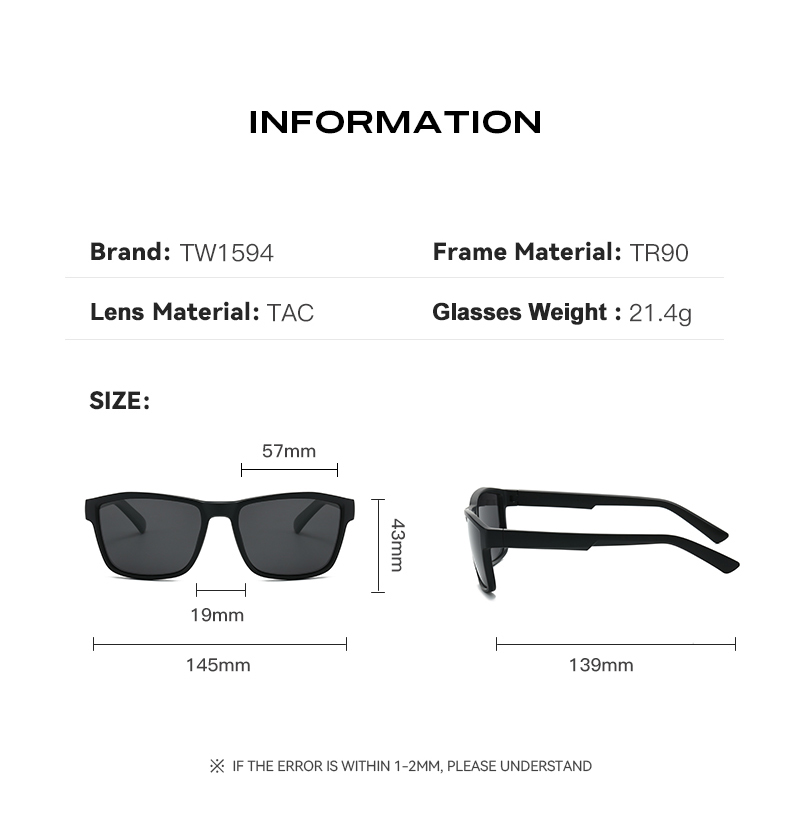
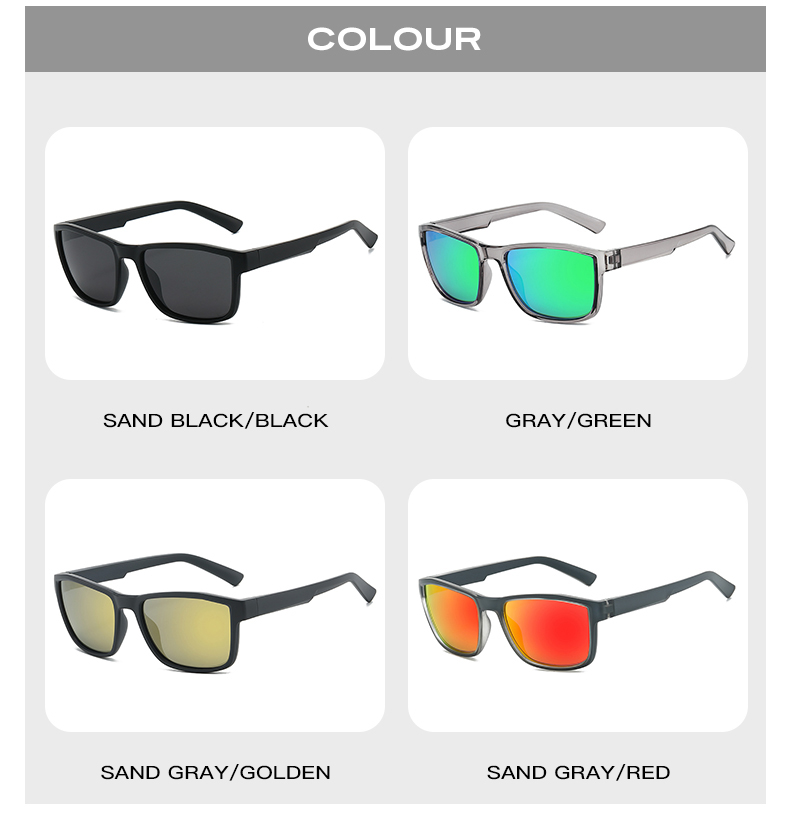
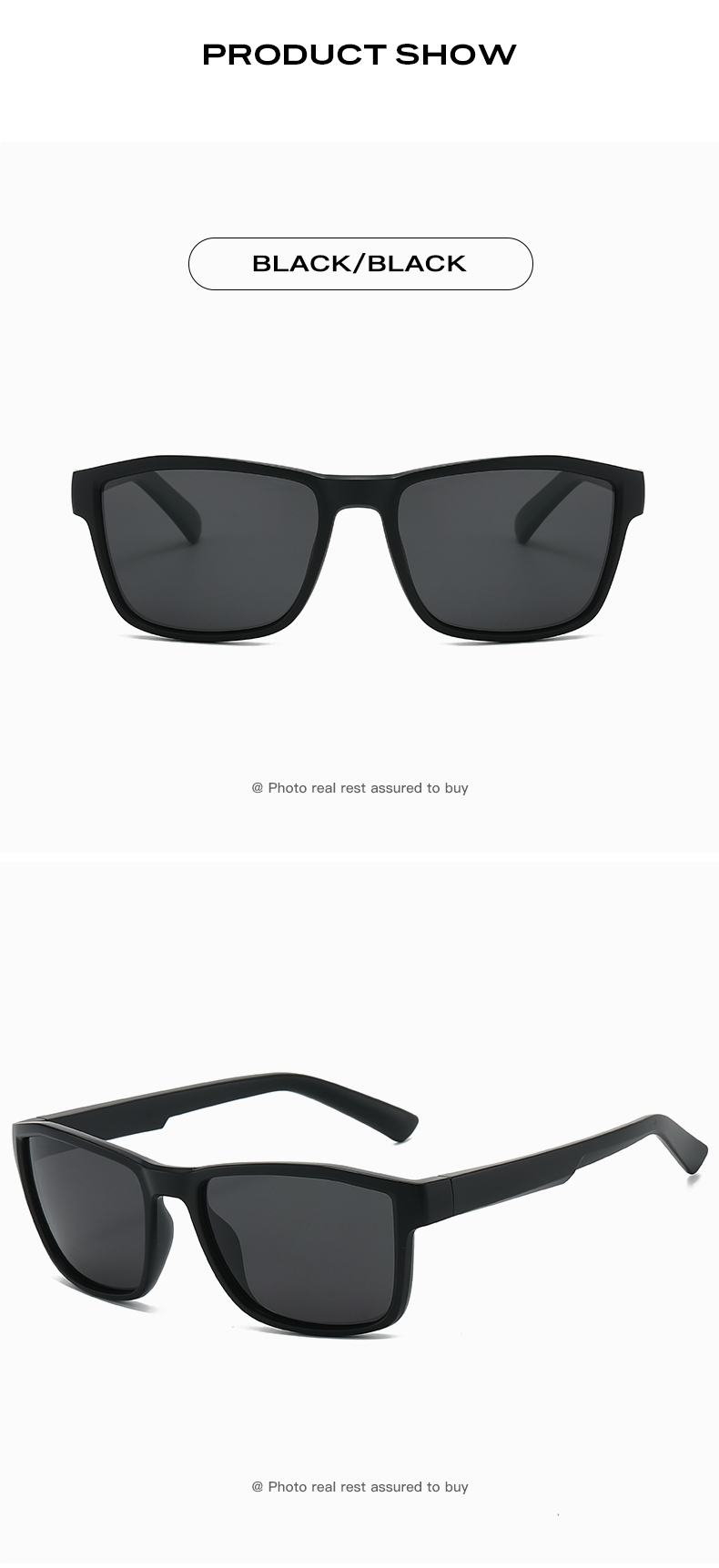
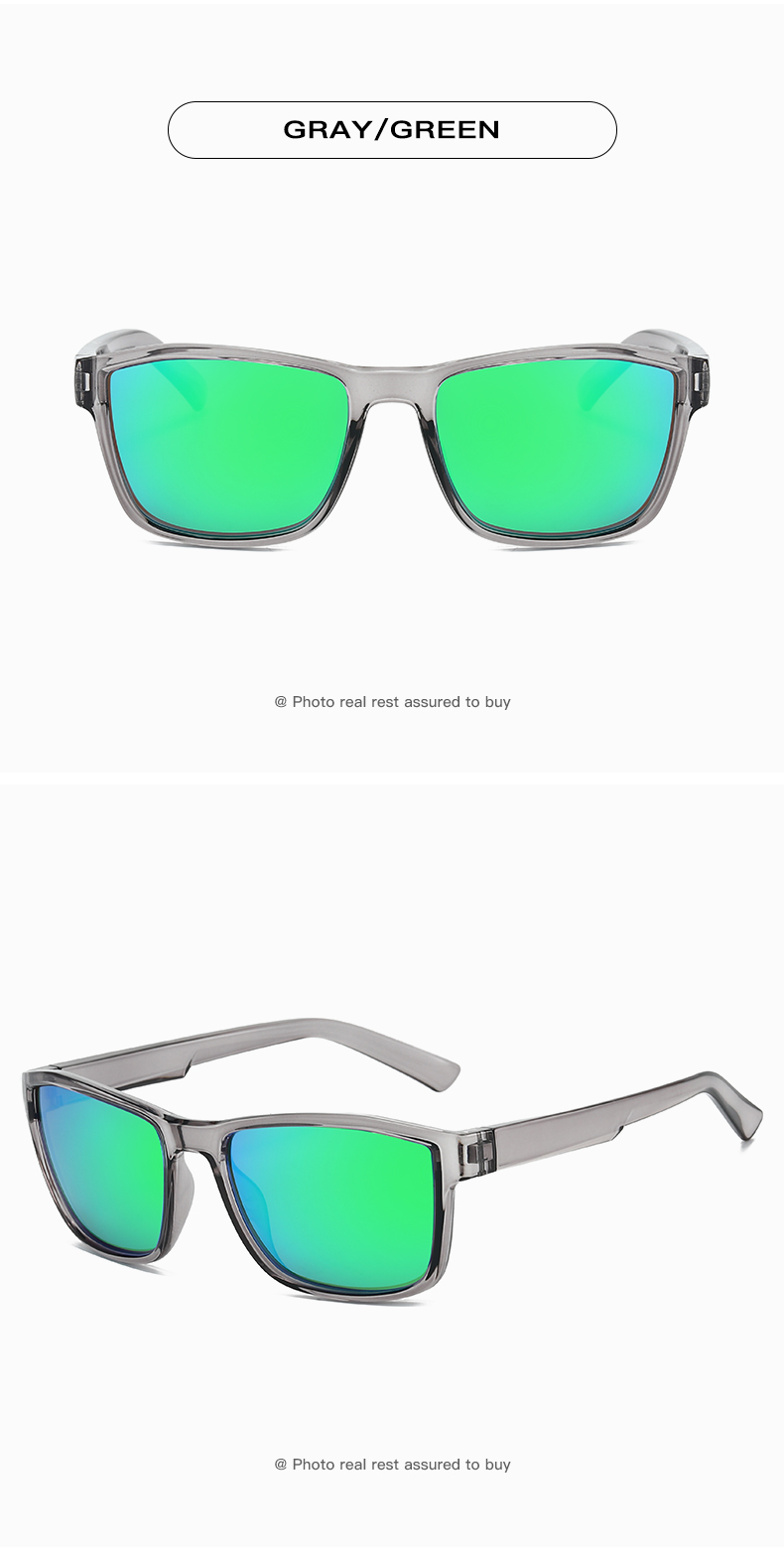
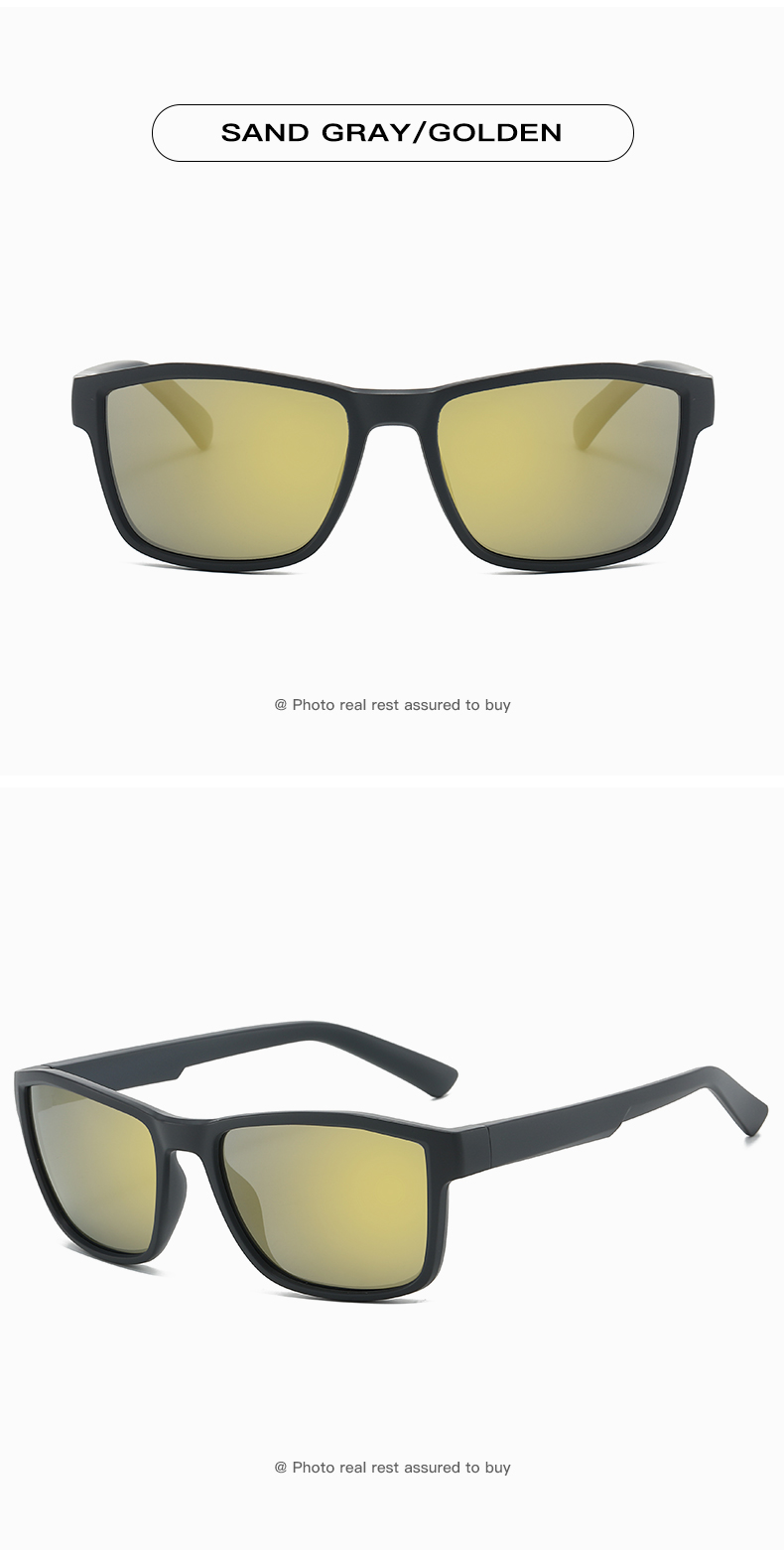
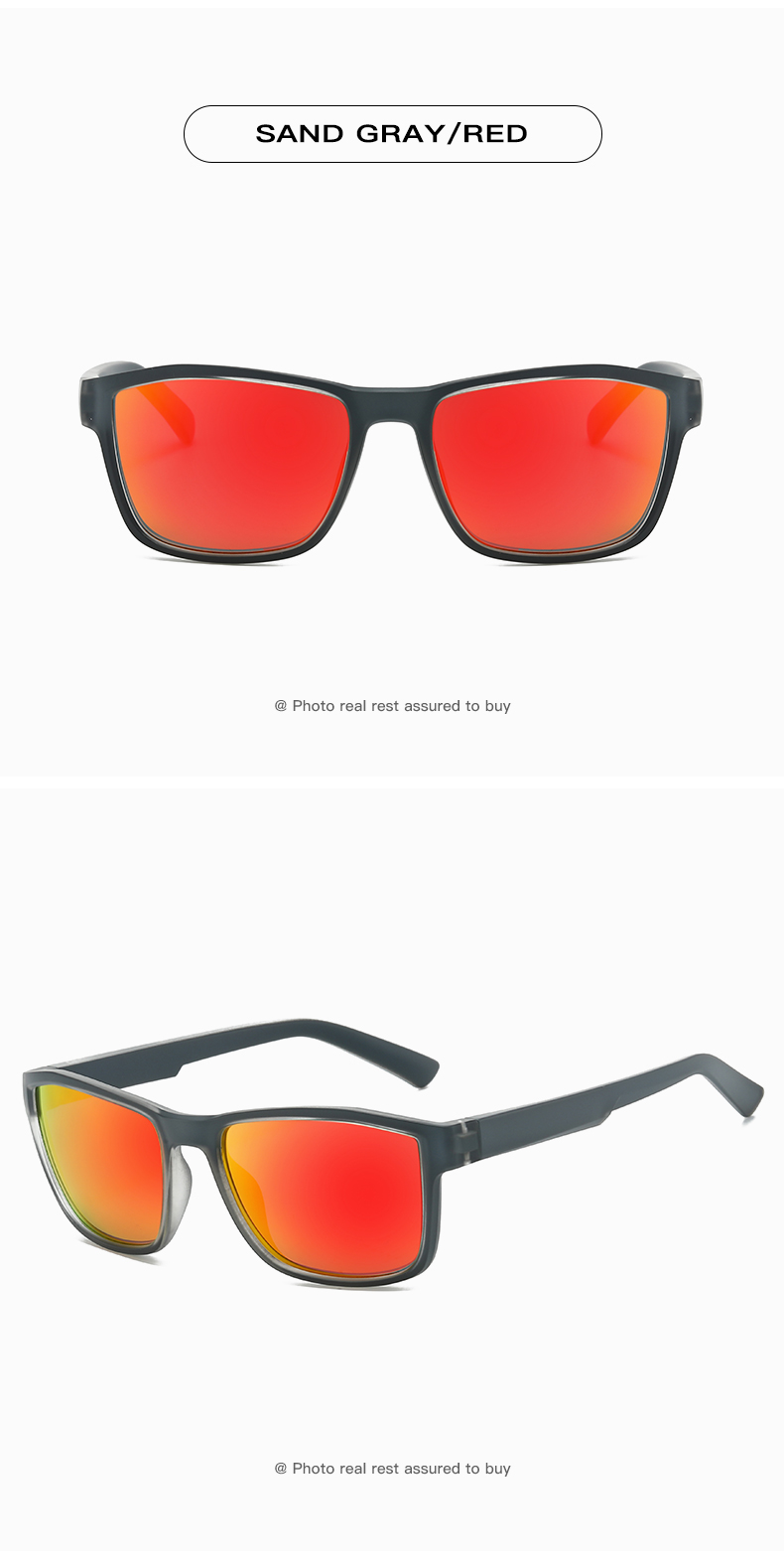
When I design or evaluate a pair of sunglasses for outdoor use, I do not look at the frame shape alone. A good pair needs to feel comfortable after several hours of wear, stay stable during movement, reduce disturbing glare, and provide the level of UV protection expected from modern sunglasses. That is the thinking behind our TR90 Square Polarized Sunglasses.
At Linhai Huangjia Glasses Co., Ltd., I work with a product range covering Sports sunglasses, optical glasses, fashionable sunglasses, industrial safety goggles, and military and police tactical eyewear. Our focus is practical: clear vision, comfortable wearing, and protection suited to the actual environment. For this TR90 square polarized sunglasses model, we combine a modern square frame with polarized lens technology and a lightweight TR90 frame concept to create a product that can move easily between daily wear and outdoor activities.
I know that buyers often search for sunglasses using simple terms such as TR90 Polarized Sunglasses, square polarized sunglasses, lightweight outdoor sunglasses, or UV400 TR90 Sunglasses. Those searches usually come from a practical need. A buyer wants to know whether the product is comfortable, whether the lenses help with glare, whether the frame can handle regular use, and whether the supplier can support larger orders or customization. So, instead of only talking about appearance, I want to explain how we approach this product from the frame and lens to manufacturing, quality control, applications, and bulk supply.
1. What Makes TR90 Square Polarized Sunglasses Different?
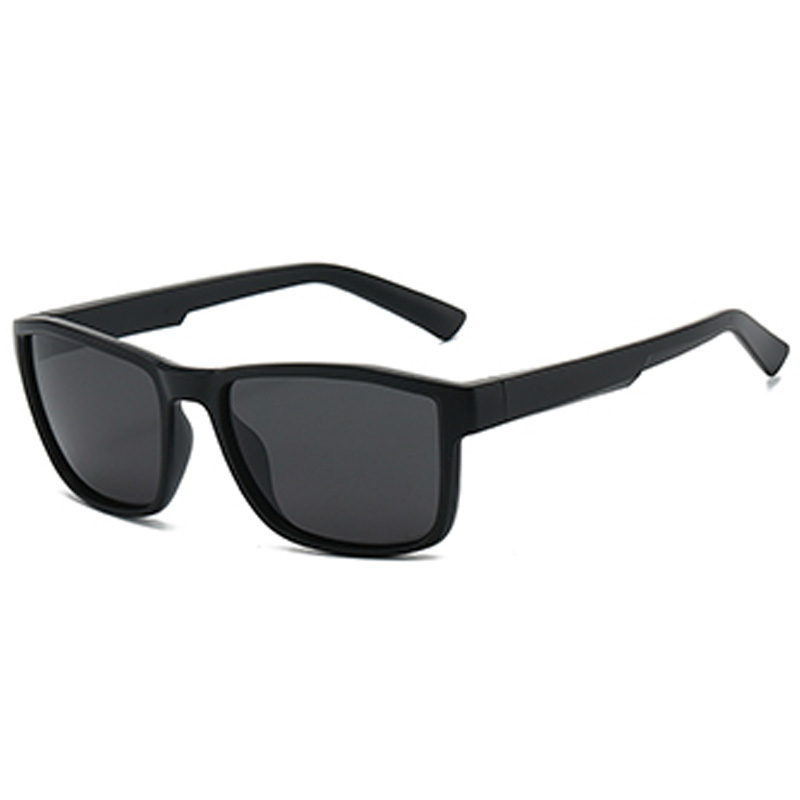
The first thing you notice about these sunglasses is the square frame. It has a clean, modern outline that works well for everyday fashion without looking overly complicated. But the shape is only part of the product. For us, the more important question is how the frame and lens work together when the sunglasses are actually being worn.
The frame is designed around TR90 material. In eyewear manufacturing, lightweight frame materials are useful because the frame sits on the nose and behind the ears for long periods. A lighter construction can make extended wear more comfortable. The American Academy of Ophthalmology's EyeWiki notes that lower-density lens and eyewear materials can be useful when weight is an important consideration for eyeglass wearers.
For the wearer, this means the product is not simply about making a fashionable square frame. It is about creating a practical balance between weight, shape, flexibility, appearance, and daily usability. That balance is especially important for customers buying sunglasses for driving, travel, cycling, walking, fishing, beach activities, or other outdoor situations.
The polarized lens is another important part of the design. Ordinary tinted sunglasses mainly reduce the amount of visible light entering the eye. Polarized lenses go a step further by reducing certain types of reflected glare. The American Optometric Association specifically notes that polarized lenses can help reduce glare from horizontal surfaces during activities such as driving, cycling, fishing, and boating.
This is why I see polarized sunglasses as a functional product rather than simply a fashion accessory. When sunlight reflects from a road, water surface, wet pavement, sand, or another bright surface, the reflected light can become distracting. Polarization is designed to control this type of glare and make outdoor viewing more comfortable.
There is also a practical difference between choosing sunglasses for appearance and choosing them for outdoor use. The National Eye Institute recommends sunglasses that provide strong UVA and UVB protection and points out that polarized lenses are useful for reducing glare from reflective surfaces such as snow and water.
| Product Element | Practical Purpose | Typical User Benefit | Source |
|---|---|---|---|
| TR90 frame | Lightweight frame construction | More comfortable for extended everyday wear | Product design information; lightweight material principle supported by EyeWiki |
| Polarized lens | Reduces reflected glare | More comfortable viewing around roads and reflective surfaces | American Optometric Association |
| UV protection | Blocks harmful ultraviolet radiation when properly specified | Helps protect eyes during outdoor exposure | National Eye Institute |
| Square frame | Modern visual design and lens coverage | Suitable for fashion and everyday outdoor use | Product design specification |
Sources: National Eye Institute, “Protecting your eyes from the sun’s UV light”; American Optometric Association, “UV protection” and outdoor eyewear guidance; American Academy of Ophthalmology EyeWiki, “Lens Material Properties.”
2. How Polarized Sunglasses Work in Real Outdoor Conditions
I often explain polarization in simple terms because the basic idea is easier than the technical name makes it sound. Sunlight normally travels in many directions. When sunlight hits a flat surface such as water, a road, glass, or wet ground, some of the reflected light becomes strongly organized in a way that creates glare. A polarized filter is designed to reduce much of this unwanted reflected light.
Think about driving on a bright afternoon after rain. The road may reflect sunlight directly toward your eyes. You can still see the road, but the bright reflection makes the scene harder to look at comfortably. A polarized lens can reduce part of this reflected glare. The same basic benefit can be useful when fishing, boating, walking near water, or spending time at the beach.
The American Optometric Association describes polarization as useful for reducing glare from horizontal surfaces, including situations involving driving, cycling, and water activities.This is one reason TR90 Square Polarized Sunglasses can be a practical choice for customers who spend time outdoors rather than only wearing sunglasses for fashion.
Polarization should not be confused with UV protection. They solve different problems. Polarization is mainly associated with glare reduction, while UV protection concerns ultraviolet radiation. A good product specification should therefore make both points clear instead of treating “polarized” as if it automatically means complete UV protection.
The National Eye Institute recommends sunglasses that block 99% to 100% of UVA and UVB radiation or carry a UV400 rating. It also explains that UV protection is important because ultraviolet radiation can contribute to several eye problems over long periods of exposure.
For this reason, when we discuss UV400 TR90 sunglasses or polarized sunglasses with customers, we prefer to treat UV performance and polarization as separate specifications. The exact lens specification, coating, tint, and certification should always be confirmed according to the actual order and production requirements.
| Light or Viewing Issue | What It Means | How the Eyewear Can Help | Reference |
|---|---|---|---|
| UV radiation | Invisible ultraviolet radiation from sunlight | Use lenses with verified UVA/UVB blocking performance | National Eye Institute |
| Reflected glare | Strong reflected light from roads, water, snow, and similar surfaces | Polarized filters can reduce reflective glare | American Optometric Association |
| Bright visible light | High levels of visible light can make outdoor viewing uncomfortable | Appropriate lens tint can reduce transmitted visible light | American Optometric Association |
Technical references: National Eye Institute and American Optometric Association. Product-specific lens performance depends on the confirmed lens specification and should be verified against the production sample or test report.
3. Main Features of Our TR90 Square Polarized Sunglasses
Lightweight TR90 Frame
The main reason we use a TR90 frame concept for this product is everyday comfort. Sunglasses should not feel like a heavy object sitting on your face. When customers wear a pair for a short walk, the difference may not be obvious. After several hours of travel, driving, outdoor work, or leisure, frame weight and pressure become much more noticeable.
TR90 is commonly used in eyewear where designers want a lightweight frame with practical flexibility. For our product development, we pay attention to the relationship between frame thickness, shape, temple structure, nose contact, and overall appearance rather than simply specifying the material name.
Modern Square Shape
The square silhouette gives this product a clean appearance. It can work with casual clothing, sports-inspired outfits, travel wear, and everyday outdoor clothing. For B2B customers, the shape is also useful because it can fit a broad product range without being tied to one narrow sporting activity.
Polarized Lens Function
The polarized lens is intended to reduce reflective glare. This is especially useful around water, roads, bright outdoor surfaces, and other environments where strong reflections can become uncomfortable. The AOA recommends polarization for reducing glare from horizontal surfaces in activities such as driving, cycling, fishing, and boating.
Outdoor-Oriented Design
I would describe these as everyday outdoor sunglasses rather than specialist protective goggles. That distinction matters. Sunglasses can be useful for light management and UV protection, but ordinary sunglasses should not be treated as industrial safety eyewear or impact-rated protective equipment unless the exact product has been tested and certified for those purposes.
The National Eye Institute also makes this distinction clear: ordinary sunglasses are not automatically a substitute for protective eyewear in situations involving eye-injury risks. For sports or hazardous work, the appropriate protective eyewear should be selected according to the activity.
Suitable for Different Customer Groups
Our target users include outdoor enthusiasts, drivers, travelers, cyclists, anglers, sports participants, and consumers looking for fashionable daily sunglasses. For B2B customers, the same basic model can also be considered as part of a wider private-label, OEM, or ODM sunglasses collection.
4. Technical Advantages: What Buyers Should Actually Check
When a buyer contacts us about sunglasses, I prefer to discuss measurable product details instead of simply saying that a product is “good.” The right questions are more useful: What is the frame material? What lens material is required? Is the lens polarized? What UV protection is specified? What dimensions are needed? What packaging is required? What quantity is planned? Does the customer need a logo or custom color?
This approach helps avoid a common purchasing mistake: selecting sunglasses only from a product photograph. A photograph can show the shape and color, but it cannot tell you everything about the lens performance, material specification, coating, or manufacturing requirements.
Frame Material and Weight
A lightweight frame can improve comfort, particularly for products intended for long periods of wear. EyeWiki notes that lower specific gravity is relevant to eyewear because a lighter material can reduce the weight of an equivalent-size lens.
Lens Specification
For polarized sunglasses, the lens specification should clearly state whether the lens is polarized and what additional functions are required. If a customer needs UV400 performance, the specification should be confirmed through the appropriate product documentation or testing rather than assumed simply because the lens is dark or polarized.
The National Eye Institute advises consumers to look for sunglasses that block 99% to 100% of UVA and UVB radiation or are marked UV400. It also notes that lens color and fit matter when selecting sunglasses.turn0search0
Fit and Coverage
A comfortable frame should sit securely without creating unnecessary pressure around the nose and ears. Coverage also matters. Sunglasses that fit well can reduce the amount of light entering from the sides and around the lenses. The National Eye Institute specifically recommends choosing sunglasses that fit well and cover the area around the eyes.turn0search0
Color and Lens Tint
Lens color is not simply a fashion decision. Different tint levels and colors affect how much visible light reaches the eye and can affect color perception. The AOA recommends appropriate lens density and notes that tint should not interfere with color recognition when sunglasses are used for activities such as driving.turn1search1
That is why we prefer to confirm lens color, transmission, coating, and intended application with the customer before mass production. A buyer who needs sunglasses for daily fashion use may have different requirements from a customer developing an outdoor sports collection.
5. Where TR90 Square Polarized Sunglasses Can Be Used
I would place this model in the broad category of outdoor lifestyle eyewear. It is not limited to one sport, which makes it easier for brands, distributors, retailers, and promotional product buyers to build a flexible sunglasses collection around it.
Driving
Driving is one of the most common situations where polarized sunglasses can be useful. Reflections from roads, vehicles, and other horizontal surfaces can create uncomfortable glare. A polarized filter can reduce this type of reflected glare, although the exact lens tint must still be suitable for the driving conditions. The AOA specifically identifies polarized tint as useful for reducing glare while driving.
Cycling and Outdoor Exercise
Cyclists often spend long periods in changing light. A lightweight frame can be useful because the sunglasses need to stay comfortable while the wearer is moving. Polarization may also help with glare from roads and other reflective surfaces.
However, cycling eyewear should be selected according to the actual risk level. Standard Fashion Sunglasses are not automatically impact-protection eyewear. The National Eye Institute recommends protective eyewear designed for sports where eye injury is a concern.
Fishing and Boating
Water is one of the clearest examples of why polarization can be useful. Sunlight reflecting from a water surface can create strong glare. The AOA specifically includes fishing and boating among activities where polarized lenses can help reduce glare.
Travel and Beach Activities
Travelers often want one pair of sunglasses that can move from city streets to beaches and outdoor sightseeing. A square polarized frame offers a simple combination of fashion and outdoor function. The lightweight construction can also make it easier to wear throughout a long day.
Daily Outdoor Wear
Not every user needs specialist sports eyewear. Many people simply need a reliable pair for walking, commuting, shopping, traveling, or spending time outdoors. That is where this model fits naturally.
UV protection remains important in these everyday situations. The National Eye Institute notes that UV exposure can occur even when conditions are not obviously hot or bright and recommends sunglasses with appropriate UVA and UVB protection.
| Application | Potential Product Benefit | Important Buying Consideration | Source |
|---|---|---|---|
| Driving | Polarization can reduce reflective glare | Lens tint must support safe daytime visibility | American Optometric Association |
| Cycling | Lightweight frame and glare reduction can improve wearing comfort | Use dedicated protective eyewear where impact risk exists | AOA / NEI |
| Fishing / Boating | Polarized lenses can reduce glare from water | Confirm UV and lens specifications | American Optometric Association |
| Travel / Beach | Combination of everyday style and outdoor functionality | Check fit, UV protection, lens tint, and comfort | National Eye Institute |
| Daily Outdoor Use | Comfortable frame and glare-control lens option | Select verified UV protection | National Eye Institute |
6. How We Manufacture and Prepare Sunglasses for B2B Orders
For a consumer, the finished sunglasses are the product. For a manufacturer, there is a much longer process behind that finished product. We start with the customer's product requirements and then work through frame specifications, lens requirements, color, quantity, logo or branding needs, packaging, and delivery requirements.
Step 1: Confirm Product Requirements
Before production, we confirm the basic specifications. These may include frame shape, dimensions, frame color, lens color, polarization requirements, UV requirements, logo placement, packaging, quantity, and delivery schedule.
This step sounds simple, but it is one of the most important parts of an OEM or ODM project. A small change in lens color, logo position, frame finish, or packaging can affect production planning. Confirming these points early helps reduce misunderstandings later.
Step 2: Frame Production and Finishing
The frame needs to be produced according to the confirmed design and material specification. For TR90 eyewear, dimensional consistency is important because the frame must hold the lenses correctly and provide a stable wearing position.
After forming, components are checked for visible defects, surface problems, dimensional issues, and assembly requirements. Finishing and cleaning are also important because consumers notice small cosmetic defects immediately when they look closely at a pair of sunglasses.
Step 3: Lens Preparation
The lens is prepared according to the confirmed specification. Depending on the project, this may include lens color, polarization, UV protection, coating, optical requirements, and shape.
We do not treat every sunglasses order as identical. A private-label fashion customer may focus on color and appearance, while an outdoor brand may put more emphasis on polarization, UV performance, lens tint, and fit.
Step 4: Assembly
Frame and lens components are assembled carefully so that the finished sunglasses maintain the intended shape. Temples, hinges, nose contact areas, lenses, and frame alignment all need to work together.
Step 5: Inspection
Inspection focuses on the product requirements confirmed before production. Depending on the order, this can include appearance, dimensions, assembly, lens condition, logo quality, packaging, and required testing or documentation.
Step 6: Packaging and Delivery
Packaging is planned according to the order. For B2B customers, packaging can be just as important as the sunglasses themselves because products may travel long distances before reaching a warehouse, distributor, retailer, or final customer.
Our company can coordinate production plans according to order quantity, product specifications, customization requirements, packaging requirements, and delivery schedules. Payment terms, production timing, transportation methods, and packaging details can be discussed according to the order and destination.
7. Why Work With Linhai Huangjia Glasses Co., Ltd.?
Linhai Huangjia Glasses Co., Ltd. was established in 2023 and is based in Linhai, Zhejiang. We specialize in sports glasses, optical glasses, fashionable sunglasses, industrial safety goggles, and military and police tactical goggles.
Our product development approach is based on practical use. We look at what the wearer needs to see, how long the eyewear may be worn, what environment it will be used in, and what level of protection or visual support is required. This is also why our product range covers several different categories instead of focusing only on fashion sunglasses.
Experience Across Multiple Eyewear Categories
Our experience covers both everyday eyewear and more specialized products. Sports sunglasses require attention to comfort, fit, movement, and outdoor light. Optical products require attention to visual correction and frame design. Industrial safety goggles and tactical eyewear require a different approach because the protection requirements are more specific.
For buyers, this wider product background can be useful when developing several related products under one sourcing program.
OEM and ODM Support
We can work with customers who have their own product specifications, drawings, samples, branding requirements, or packaging ideas. If a buyer already has a detailed design, we can organize production according to the confirmed specifications. If the buyer has only a general product direction, we can discuss the required frame style, lens function, color, packaging, and intended market before moving into production.
Flexible Batch Production
Different customers have different purchasing plans. Some need a small trial order before expanding. Others are preparing a larger seasonal collection. Some require a single model, while others need several colors or related frame styles.
For this reason, we discuss order quantity, production requirements, delivery timing, and packaging before confirming the production plan. This makes the process more transparent and gives the customer a clearer understanding of what can be arranged.
Specification-Based Communication
I believe clear communication is one of the most important parts of B2B manufacturing. Rather than promising that every product can meet every requirement, we prefer to confirm the exact specification first.
For example, if a customer asks for custom TR90 polarized sunglasses, I would want to know the desired frame dimensions, color, lens color, polarization requirements, UV requirements, logo, packaging, quantity, and delivery destination. Once these details are clear, production planning becomes much more straightforward.
Suitable for Wholesale and Private Label Projects
Our sunglasses can be considered for wholesale distribution, retail collections, outdoor brands, promotional programs, private-label projects, and OEM/ODM development. Customers can discuss product specifications and branding requirements with us based on their target market.
8. Frequently Asked Questions About TR90 Square Polarized Sunglasses
Are TR90 Square Polarized Sunglasses suitable for daily use?
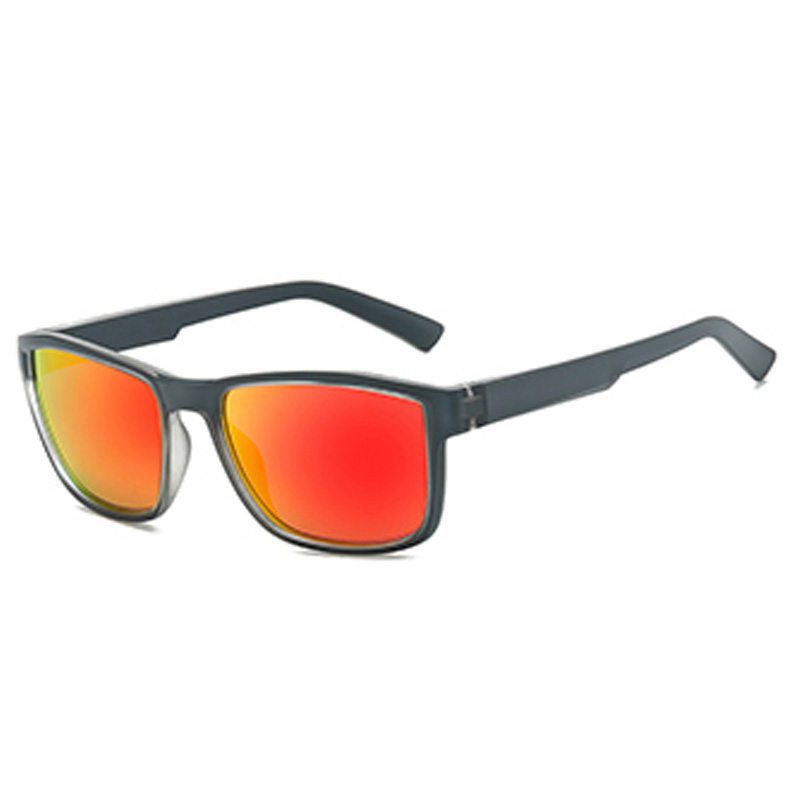
Yes. The product is designed around a lightweight TR90 frame and a modern square shape, making it suitable for everyday outdoor wear, travel, driving, walking, and leisure activities. The exact suitability depends on the confirmed lens specification and intended use.
What is the advantage of polarized sunglasses?
Polarized lenses are designed to reduce reflective glare, especially glare from surfaces such as roads and water. The American Optometric Association identifies polarization as useful for activities including driving, cycling, fishing, and boating.
Are polarized lenses the same as UV400 lenses?
No. Polarization and UV protection describe different lens functions. Polarization is mainly related to reducing reflected glare, while UV protection concerns ultraviolet radiation. When buying or developing sunglasses, both specifications should be confirmed separately.
Does TR90 mean the sunglasses are impact-resistant safety eyewear?
No. A TR90 frame should not automatically be treated as certified safety eyewear. If a product will be used in an environment where impact protection is required, the buyer should specify the applicable safety standard and request the appropriate tested product. The National Eye Institute recommends dedicated protective eyewear for activities where eye injury is a concern.
Can I order custom TR90 square polarized sunglasses?
Yes. We support OEM, ODM, and customized projects. Depending on the order, customization can involve frame color, lens color, branding, packaging, product specifications, and other confirmed requirements.
Can I add my company logo?
Logo customization can be discussed according to the frame design, printing or marking method, logo position, artwork, quantity, and production requirements. The final method should be confirmed before mass production.
Can the sunglasses be supplied in different colors?
Color options can be discussed according to the product design and order requirements. Buyers can provide target colors or references, and we can confirm the available production options before an order is finalized.
Are these sunglasses suitable for driving?
Polarized sunglasses can be useful for reducing reflected glare during daytime driving. The AOA specifically discusses polarized lenses for driving and recommends considering tint density and color recognition when selecting sunglasses.
As with any sunglasses used for driving, the exact lens tint and visible-light transmission should be appropriate for the driving conditions. Sunglasses intended for bright daytime use should not automatically be assumed suitable for night driving.
Are these sunglasses suitable for fishing?
Yes, polarized sunglasses are commonly used for fishing because polarization can reduce glare from water. The AOA specifically lists fishing and boating among activities where polarized tint can help reduce glare.
How do I confirm UV protection?
Ask for the exact lens specification and relevant test documentation. The National Eye Institute recommends sunglasses that block 99% to 100% of UVA and UVB radiation or are marked UV400.
Can you provide samples before bulk production?
Sample arrangements can be discussed according to the product, customization requirements, and order plan. For customized projects, confirming a sample or production specification before mass production is a useful way to check appearance, fit, color, branding, and other important details.
What information should I provide for a quotation?
For a more accurate quotation, I recommend sending the required model, quantity, frame color, lens color, polarization requirement, UV requirement, logo or branding details, packaging requirements, destination country, and target delivery schedule. If you already have drawings, product images, or samples, those can also help us understand the project faster.
Final Thoughts: A Practical Square Polarized Sunglasses Option
When I look at the TR90 Square Polarized Sunglasses as a complete product, I see three main ideas working together: a lightweight frame, a modern square design, and polarized outdoor functionality. None of these features needs complicated language to explain. The frame is about comfortable wearing. The square shape is about a clean and versatile appearance. Polarization is about reducing reflected glare.
For everyday outdoor users, that combination can make a lot of sense. For B2B buyers, it also provides a practical foundation for building a wider sunglasses collection. The model can be developed for different colors, branding requirements, packaging concepts, and order specifications according to the project.
At Linhai Huangjia Glasses Co., Ltd., we do not see manufacturing as simply producing a frame and putting in a lens. The useful part of the process is matching the product specification with the customer's actual market and application. That means discussing lens functions, frame requirements, order quantity, packaging, production timing, and delivery before production begins.
If you are sourcing TR90 polarized sunglasses, square polarized sunglasses, Lightweight TR90 Sunglasses, or developing a private-label outdoor eyewear collection, we can discuss the required specifications and prepare a production plan based on your project. For OEM, ODM, wholesale, and customized orders, the final product details can be confirmed according to your requirements.
For product inquiries, please provide your target quantity, frame and lens requirements, logo details, packaging needs, and delivery destination. We can then discuss the appropriate production and customization options for your TR90 Square Polarized Sunglasses project.



 Phone
Phone