



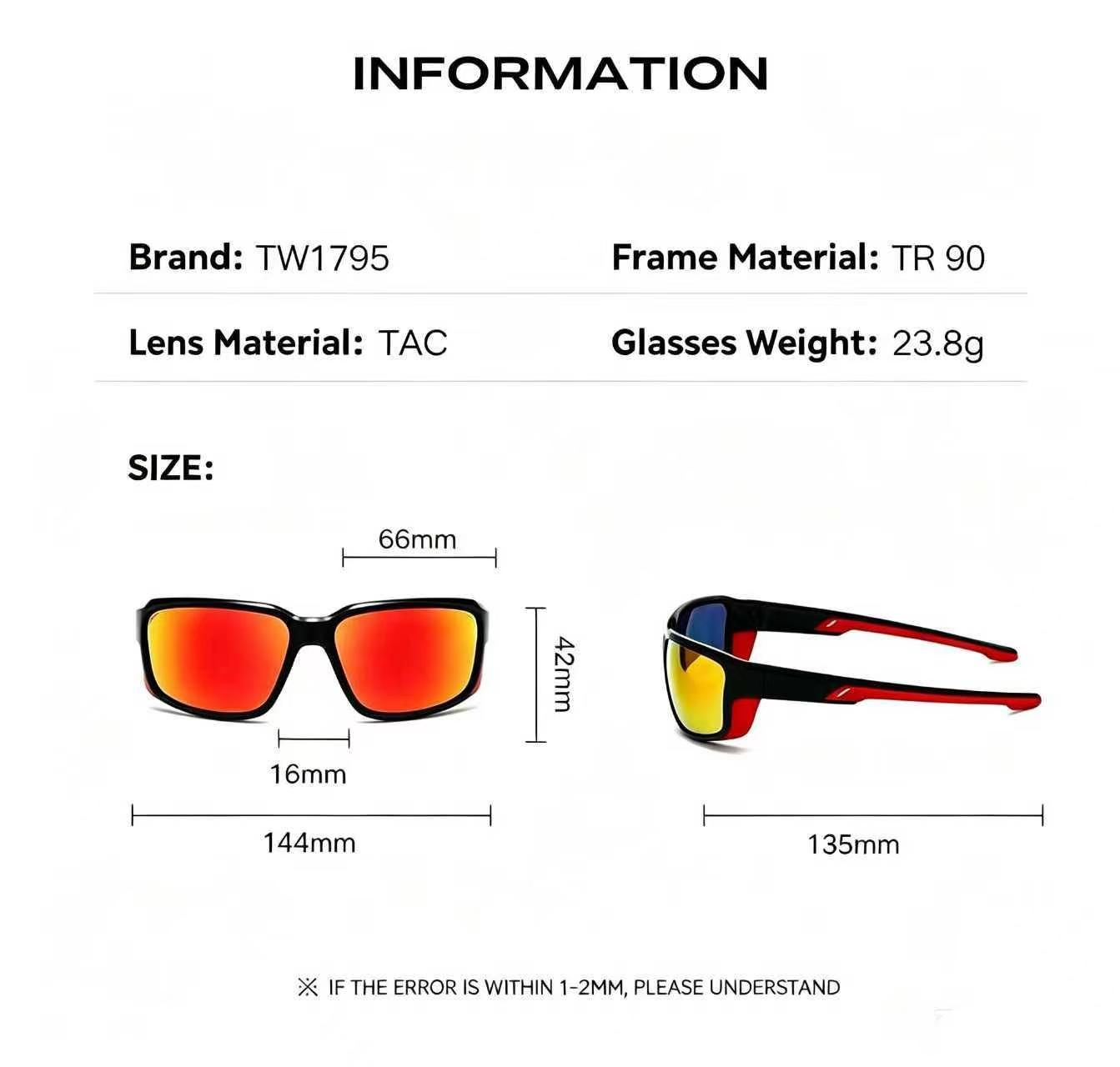
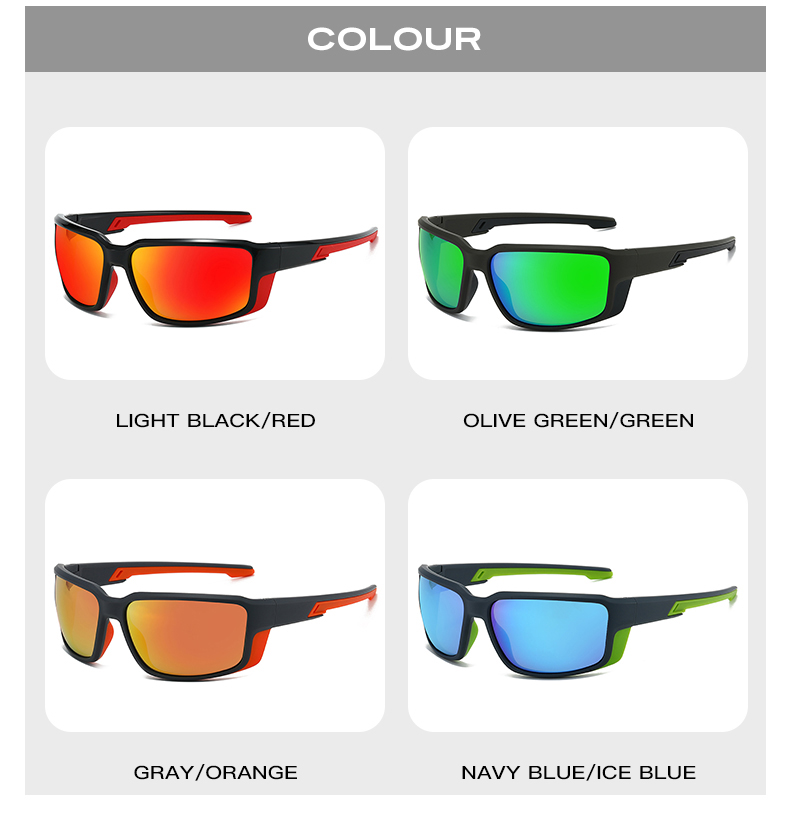
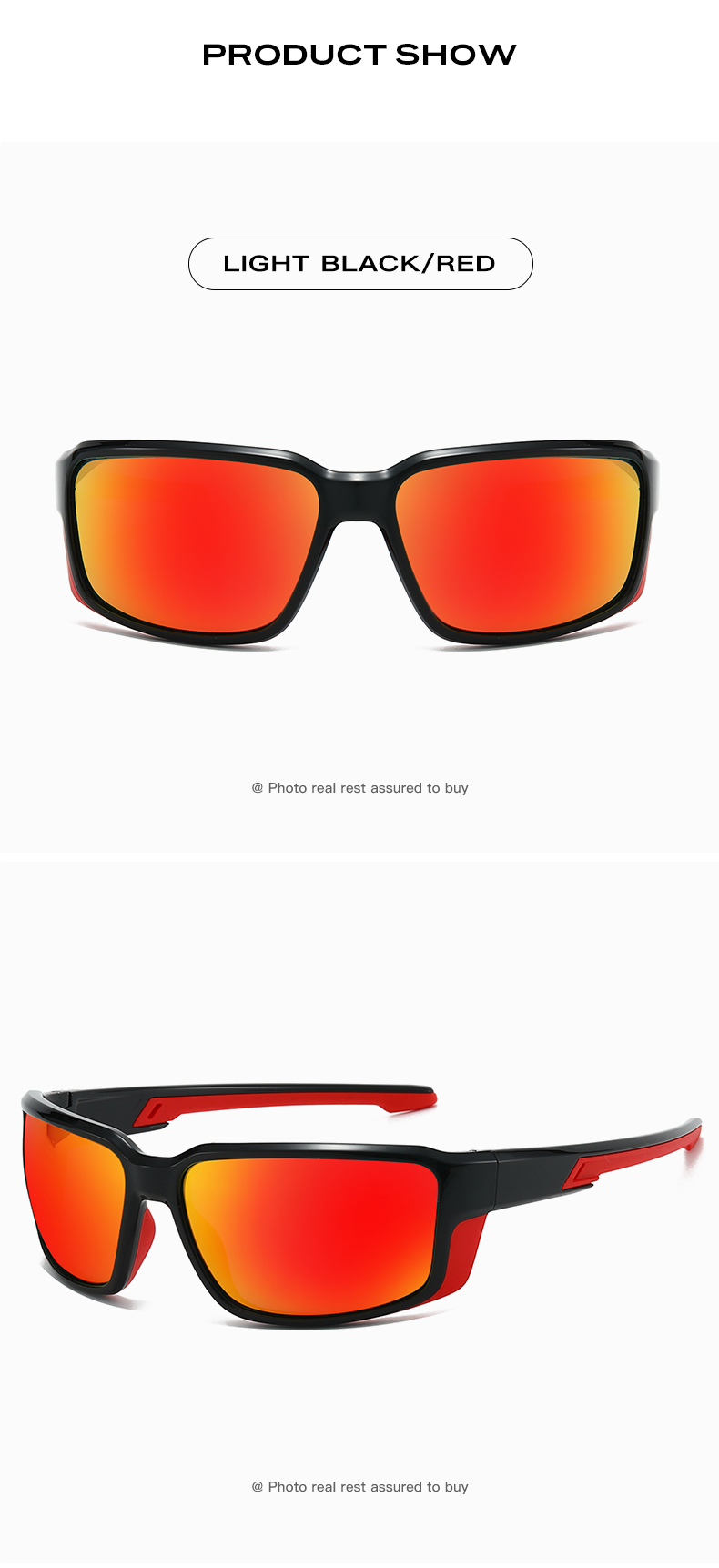
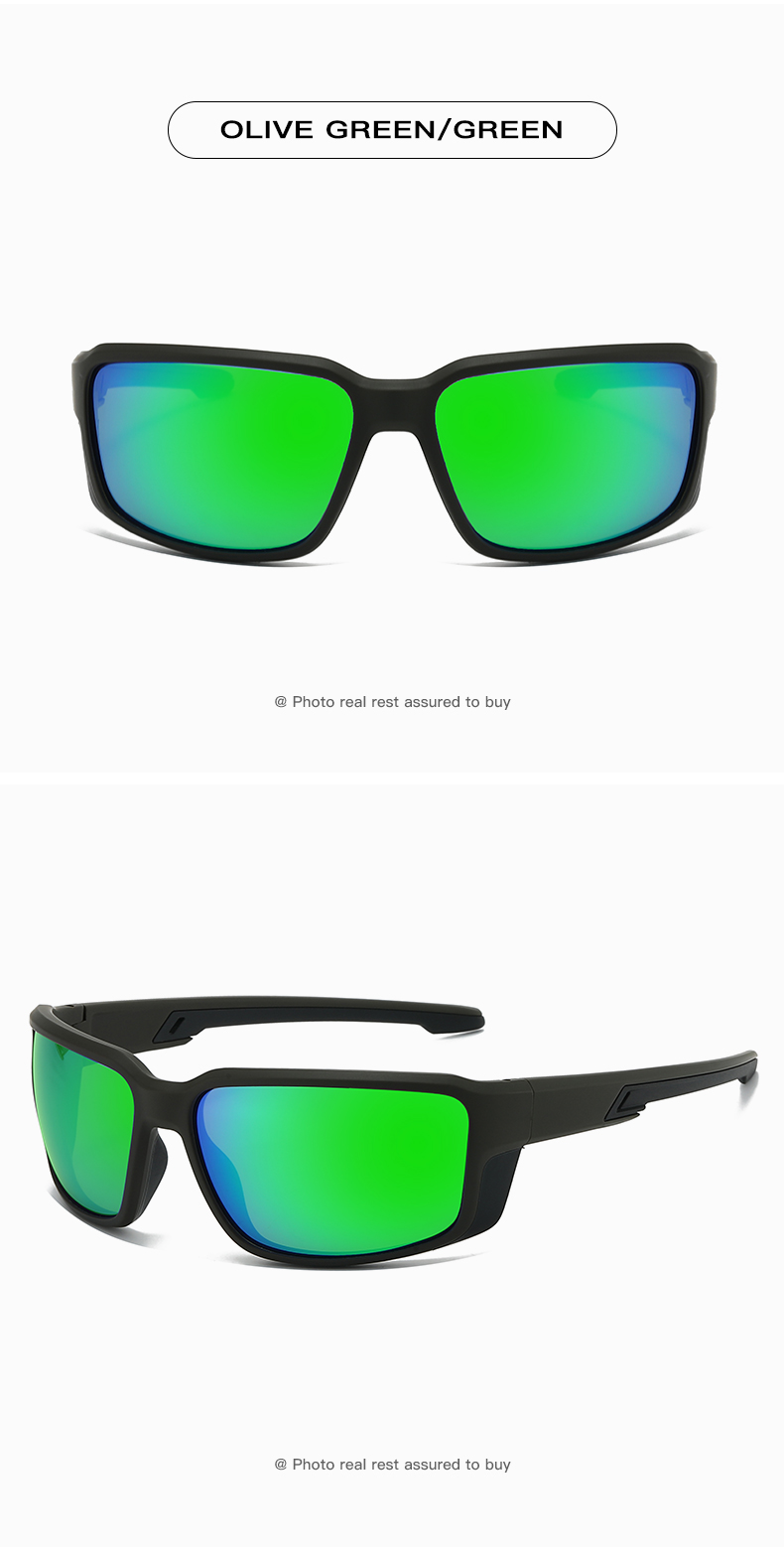
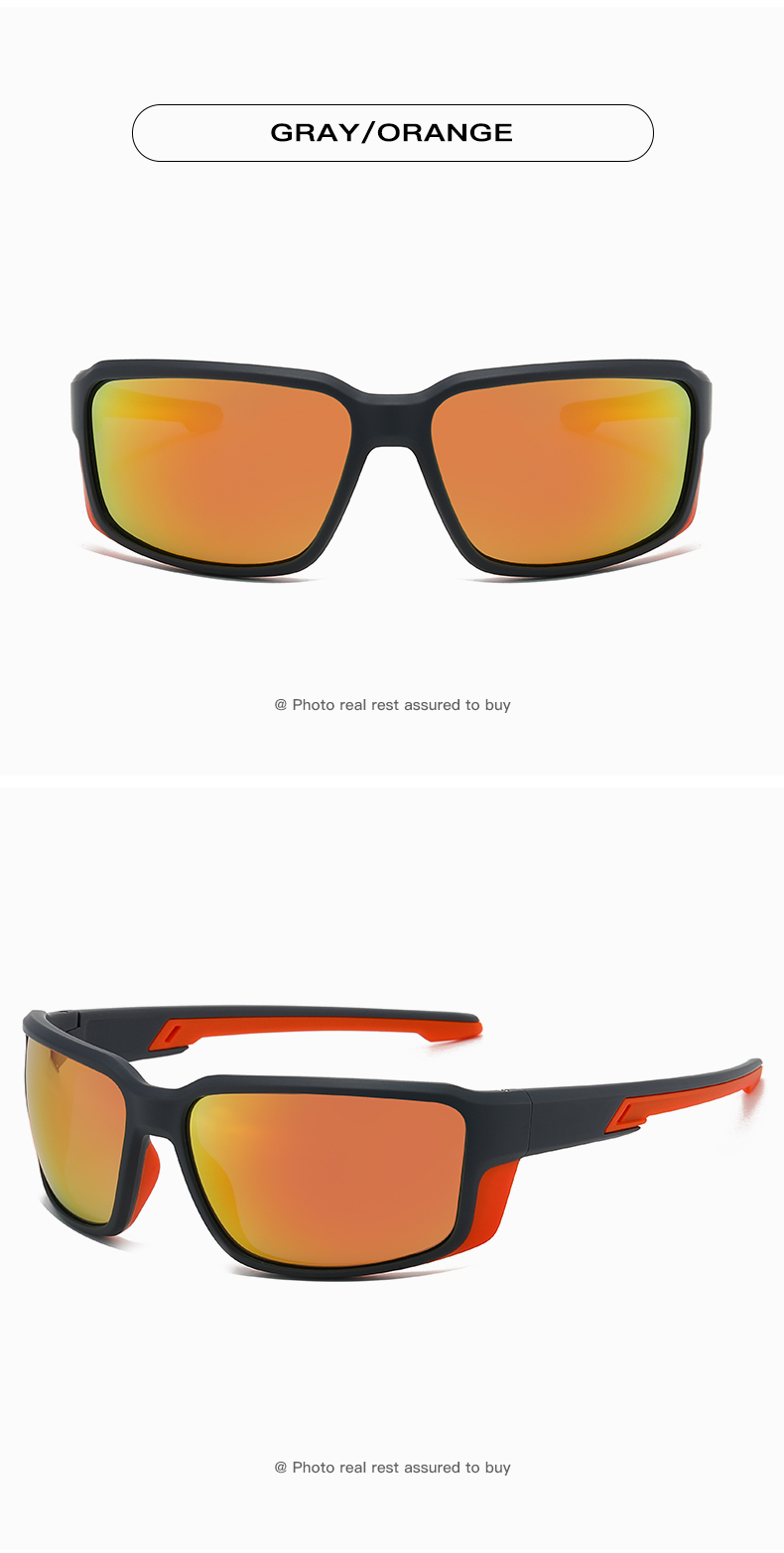
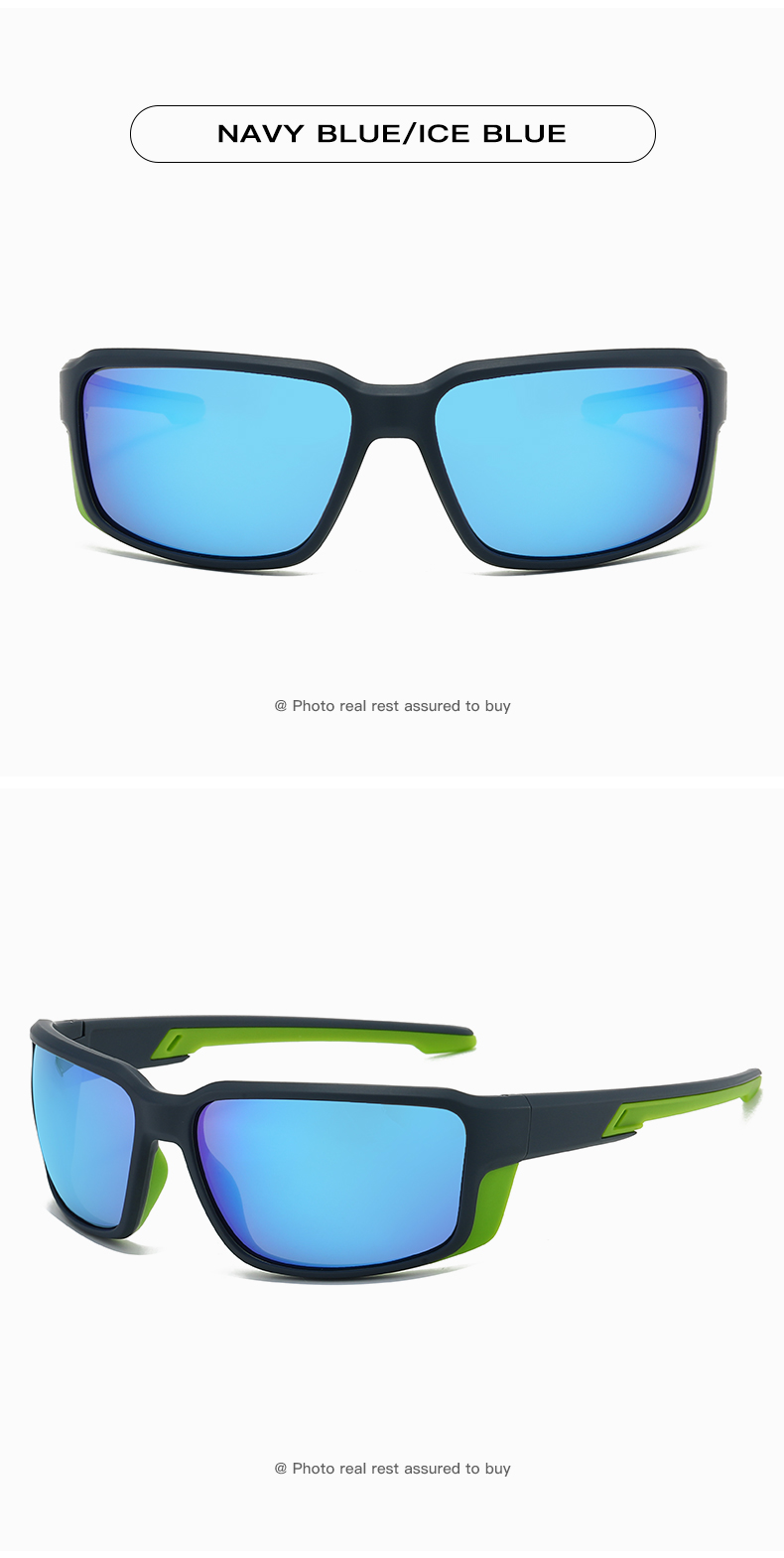
When I develop a pair of sports Sunglasses, I do not start with appearance alone. I first think about how the glasses will actually be worn. Will the user wear them while cycling, running, hiking, driving, training, or simply spending a long day outdoors? Will the frame feel comfortable after several hours? Is the lens size suitable for active movement? And can the product be produced consistently when a customer places a large order?
These questions are behind our TR90 Two-Tone Rectangular Full Frame Sports Sunglasses. This model combines a lightweight TR90 frame, a rectangular full-frame structure, and a two-tone appearance. I designed it to sit between performance eyewear and everyday sports fashion, making it suitable for customers who want practical outdoor sunglasses without an overly complicated design.
At Linhai Huangjia Glasses Co., Ltd., we focus on sports glasses, optical glasses, fashionable sunglasses, industrial safety goggles, and military and police tactical goggles. Since our products are used in different environments, I have learned that a good eyewear product is not simply about adding more features. It is about choosing the right structure, material, lens, and fit for the actual job.
The TR90 Two-Tone Rectangular Full Frame Sports Sunglasses are a good example of this approach. The rectangular shape gives the product a clean and modern appearance, while the two-tone frame creates more visual character. The full-frame construction provides a defined structure around the lenses, and the TR90 material helps keep the frame lightweight and suitable for active use.
For B2B buyers, this model can also be used as a foundation for custom sports sunglasses, TR90 sunglasses wholesale, private-label eyewear, and OEM/ODM projects. Final frame colors, lens specifications, branding, packaging, quantity, and delivery arrangements can be discussed according to the project.
1. Why I Use a Rectangular Full-Frame Design
Sports sunglasses come in many shapes. Some have curved shield lenses, some use narrow lenses, and others have a very strong wraparound appearance. I chose a rectangular full-frame design for this model because it gives buyers a different balance between sport and everyday style.
A rectangular lens shape has a familiar appearance. It does not look like a highly specialized piece of racing equipment, so it can be easier to use across several product categories. At the same time, the sports-oriented frame construction gives it enough visual identity for an outdoor eyewear collection.
The full frame is also important from a manufacturing point of view. The frame provides a defined structure around each lens, which gives us clear reference points during assembly and inspection. For a B2B product, that matters because repeatability is just as important as the appearance of the first sample.
I also pay attention to the relationship between the lens and the frame. A sports sunglasses frame should not simply hold the lens in place. Its geometry affects how the glasses sit on the face, how the temples extend toward the ears, and how the finished product looks from the front and side.
With the two-tone treatment, I can also create a more distinctive product without changing the basic frame structure. This is useful for brands that want several color versions within one product family. A black-and-grey version can have a more technical appearance, while brighter combinations can be used for a younger outdoor sports collection.
| Design Element | What It Does | Practical Product Value |
|---|---|---|
| Rectangular frame | Creates a familiar geometric lens shape | Balances sports styling with everyday wear |
| Full-frame structure | Surrounds and supports the lens | Provides a defined and stable frame construction |
| Two-tone finish | Combines two visual colors or tones | Creates more options for brand positioning |
| TR90 material | Provides a lightweight frame platform | Supports comfortable use during active outdoor activities |
Source: Product design characteristics are based on the stated specifications of Linhai Huangjia Glasses Co., Ltd. Material and final performance characteristics should be confirmed against the final production specification and applicable test documentation.
2. How the TR90 Two-Tone Rectangular Sports Sunglasses Work
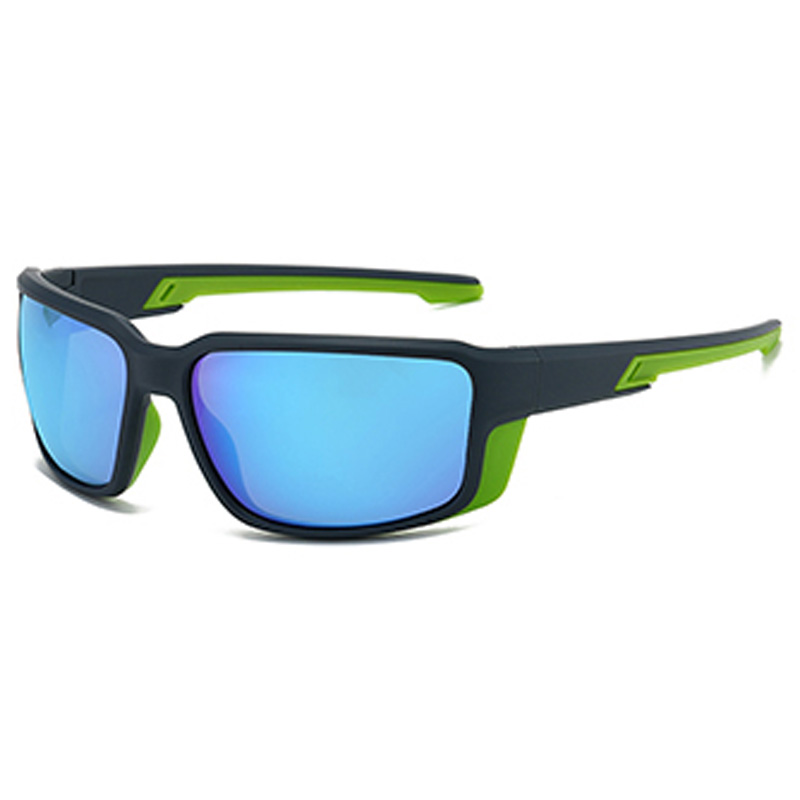
There is nothing complicated about the basic working principle of sunglasses. The lens sits between the eyes and the outdoor environment, while the frame holds the lens in the correct position. What makes sports sunglasses different is the way these simple parts are designed around movement and outdoor conditions.
When I use sunglasses outdoors, the first thing I notice is the light. Direct sunlight can be uncomfortable, particularly when I am cycling, running, hiking, or spending a long time outside. The lens is therefore selected according to the intended light conditions and the required optical properties.
UV protection is another important consideration. I do not treat a dark lens as proof of UV protection. Lens appearance and UV transmission are different things. For a commercial product, the UV specification should be confirmed from the actual lens material, coating, and test documentation.
The frame has another job: keeping the eyewear in place. During exercise, the head moves constantly. A frame that is too loose may shift, while one that creates excessive pressure can become uncomfortable. The frame geometry, temple design, nose area, and overall dimensions all contribute to the final fit.
The rectangular full-frame structure also gives the lens a clear surrounding boundary. Compared with a very small fashion frame, this design can provide a larger visual area while maintaining a conventional full-frame appearance.
For this reason, I describe the product as sports-oriented eyewear rather than specialized protective equipment. If a customer needs industrial eye protection, impact protection, or another regulated safety application, I recommend selecting a product specifically designed and tested for that purpose.
3. Main Features I Focus On
Lightweight TR90 Frame
One of the main reasons I use TR90 for sports eyewear is its balance of lightness and flexibility. Sunglasses can become surprisingly noticeable when they are worn for several hours. Reducing unnecessary frame weight can make the product easier to wear during long outdoor activities.
TR90 is not a magic material, and I do not describe it as unbreakable. In real manufacturing, the final result depends on the material specification, frame thickness, geometry, hinges, assembly, and how the product is used. My goal is to use the material as part of a balanced frame design.
Two-Tone Color Design
The two-tone construction gives this model a more recognizable appearance. This can be particularly useful for sports brands that want a product line with several color choices without developing a completely different frame mold for every version.
Color combinations can be discussed according to the customer's branding and market requirements. Before mass production, I recommend confirming the exact color reference because visual differences can occur between screen images, samples, and finished products.
Rectangular Full-Frame Structure
The rectangular shape is easy to recognize and works well across different age groups and outdoor activities. The full frame also creates a clear visual connection between the lenses and temples, giving the sunglasses a structured appearance.
Sports-Oriented Fit
Although the glasses have a fashionable rectangular appearance, the product is designed for active use. The frame geometry is developed with movement, comfort, and stable positioning in mind.
Flexible Product Positioning
I see this model as more than cycling eyewear. It can be positioned for running, hiking, outdoor training, travel, leisure activities, commuting, and casual sports use, depending on the selected lens specification and final product configuration.
4. Technical Considerations When Choosing Sports Sunglasses
When customers ask me what makes a pair of sports sunglasses suitable for outdoor use, I normally explain that there is no single number that tells the whole story. Frame material, lens transmission, UV protection, optical quality, fit, mechanical strength, and intended use all need to be considered together.
| Consideration | What I Check | Why It Matters |
|---|---|---|
| Frame material | TR90 material and approved frame construction | Supports lightweight sports eyewear design |
| Lens properties | Transmission, optical characteristics and UV specification | Helps match the lens to the intended outdoor environment |
| Frame geometry | Lens position, temple dimensions and overall fit | Affects wearing comfort and stability |
| Mechanical performance | Applicable strength and durability requirements | Helps determine suitability for the intended product category |
| Marking and documentation | Applicable market and standard requirements | Supports correct product claims and market compliance |
Source: ISO 12312-1:2022 covers general-use afocal sunglasses and includes requirements related to transmittance, refractive power, robustness, solar radiation and other characteristics. ISO 12312-3:2022 covers sunglasses intended for running, cycling and similar active lifestyles. ISO 12312-1:2022; ISO 12312-3:2022.
There is an important difference between general sunglasses and occupational safety eyewear. ISO 12312-1:2022 covers general-use afocal sunglasses but does not cover products intended for occupational eye protection. ([iso.org](https://www.iso.org/standard/77321.html)) That is why I never recommend using ordinary sports sunglasses as a replacement for industrial safety goggles.
For cycling and similar active lifestyles, ISO 12312-3:2022 addresses requirements for sunglasses intended for running, cycling, and similar activities. The standard includes areas such as transmittance, field of view, coverage, robustness, perspiration resistance, solar radiation, and marking. ([iso.org](https://www.iso.org/standard/72628.html))
For a B2B project, I therefore recommend starting with the target application and destination market. Once these are known, the appropriate product specification and testing requirements can be discussed.
5. Where I Recommend This Product
Road Cycling
Road cycling is an obvious application for sports sunglasses. Riders spend extended periods outdoors and often need eyewear that combines a comfortable frame with a broad enough visual area. The rectangular shape gives this product a slightly different look from highly curved racing sunglasses.
Mountain Biking
Mountain biking involves changing light, uneven terrain, wind, dust, and frequent head movement. The full-frame structure provides a solid sports appearance, while the lens specification can be selected according to the intended riding environment.
Running and Fitness
The lightweight frame concept also makes the model suitable for running and outdoor fitness. The two-tone appearance can help brands position the sunglasses as both sports equipment and lifestyle eyewear.
Hiking and Outdoor Recreation
For hiking, walking, travel, and other outdoor activities, many users want sunglasses that do not look too technical. The rectangular shape provides a familiar appearance, while the sports frame keeps the product connected to outdoor use.
Daily Commuting
Some customers want one pair of sunglasses for both commuting and weekend activities. This is another situation where a rectangular sports frame can work well. It has enough visual character for outdoor sports but does not have the highly specialized appearance of some professional cycling models.
Sports Eyewear Retail
For retailers and distributors, the model can fit naturally into a wider outdoor eyewear collection. Buyers can combine different frame colors and lens options to create several SKUs around the same basic product design.
| Application | Typical Customer | Product Positioning |
|---|---|---|
| Road cycling | Cyclists and cycling clubs | Lightweight Sports Sunglasses |
| Mountain biking | MTB riders and outdoor users | Full-frame outdoor eyewear |
| Running | Runners and fitness users | Active lifestyle sunglasses |
| Hiking | Outdoor enthusiasts | Sports and outdoor sunglasses |
| Commuting | Daily bicycle users | Practical everyday sports eyewear |
| Retail and wholesale | Distributors and eyewear brands | Private-label and OEM/ODM product |
Source: Application categories are based on the stated product positioning. ISO 12312-3:2022 specifically covers sunglasses intended for running, cycling and similar active lifestyles. ([iso.org](https://www.iso.org/standard/72628.html))
6. How We Manufacture the Sunglasses
From my experience, manufacturing a good pair of sunglasses is less about one impressive production step and more about keeping every small step under control.
We begin with product confirmation. For an OEM or ODM project, I first need to understand the customer's requirements. This includes the frame design, dimensions, lens requirements, colors, logo, packaging, order quantity, destination market, and delivery expectations.
If the customer has drawings or a reference sample, we can use those materials to establish the initial specification. If the customer only has a general idea, we can discuss the intended market and product direction before confirming the final configuration.
Frame Preparation
The TR90 frame is produced according to the approved design. Frame dimensions need to remain consistent because even small changes can affect lens fitting, temple alignment, and the appearance of the finished product.
Two-Tone Finishing
The two-tone design requires careful control of the different frame colors or surface finishes. Color matching is particularly important for branded projects because the final sunglasses need to be consistent with the customer's approved sample or color reference.
Lens Processing
The lenses are processed according to the agreed specification. Depending on the project, customers may request different lens colors, coatings, transmission characteristics, UV requirements, or other optical features.
I always recommend confirming these details before mass production. Changing lens specifications after production has started can affect the production schedule and cost.
Assembly
During assembly, the lenses and frame components are brought together. We check the lens positioning, frame condition, temple movement, and overall appearance. The objective is simple: the finished product should match the approved design.
Inspection and Packing
Before shipment, finished sunglasses are checked according to the agreed product requirements. Appearance, assembly, lens condition, branding, accessories, and packaging are among the areas that may be inspected depending on the order.
For bulk orders, packaging is also part of the product. Individual cases, bags, labels, cartons, and shipping marks can be specified according to the customer's requirements.
7. OEM, ODM and Wholesale Support
Not every B2B customer wants the same thing. Some buyers already have a complete design and simply need a manufacturing partner. Others know the market they want to target but need help turning the idea into a finished eyewear product.
For the first type of customer, we can work from drawings, samples, dimensions, or detailed specifications. For the second type, we can discuss the product structure, lens options, colors, branding, and packaging before confirming the final production requirements.
Custom Frame Colors
The two-tone structure naturally gives customers room to develop different color combinations. This can help create a consistent product family for a sports or outdoor brand.
Custom Lens Options
Lens requirements can be discussed according to the intended application and target market. UV protection, lens color, coating, optical characteristics, and transmission requirements should all be confirmed before production.
Private Label Branding
For private-label projects, branding can be discussed for appropriate frame and packaging areas. Logo placement, size, color, and production method need to be confirmed against the actual frame design.
Custom Packaging
We can discuss packaging requirements based on the customer's sales channel. Retail packaging, protective packaging, labels, cartons, and shipping marks may all be included in the production plan.
Flexible Production Planning
Production and delivery arrangements are based on order quantity, product specifications, customization requirements, packaging, and destination. Payment terms, production schedules, transportation methods, and packaging methods can be discussed according to the project.
8. TR90 Sports Sunglasses Compared With Conventional Fashion Sunglasses
I often explain to customers that sports sunglasses and fashion sunglasses are not completely different products. The biggest difference is usually the design priority. Fashion sunglasses often place greater attention on style and appearance, while sports sunglasses need to consider movement, fit, outdoor light, and longer periods of use.
| Product Aspect | TR90 Two-Tone Sports Sunglasses | Typical Fashion Sunglasses |
|---|---|---|
| Design focus | Active use plus modern appearance | Fashion and everyday appearance |
| Frame material | TR90-oriented lightweight construction | Depends on individual product |
| Frame shape | Rectangular full-frame sports design | Wide range of fashion shapes |
| Movement considerations | Designed with active outdoor use in mind | Usually focused on general daily wear |
| Typical applications | Cycling, running, hiking and outdoor activities | Casual wear, travel and lifestyle use |
| Customization potential | Frame, color, lens, logo and packaging options | Varies by manufacturer and model |
Source: Product characteristics are based on the product specification supplied by Linhai Huangjia Glasses Co., Ltd. The comparison describes general design positioning rather than a universal performance claim for every product in either category.
9. What I Check Before Starting a Custom Order
Before I recommend a configuration, I usually ask the customer a few simple questions.
What is the main application? Cycling, running, hiking, commuting, general outdoor use, and fashion retail may require different product configurations.
Which market will the product enter? Different markets can have different requirements for labeling, testing, packaging, and product documentation.
What lens performance is required? The customer should specify the desired lens color, UV protection, transmission, coating, optical properties, and any applicable test requirements.
Does the customer need customization? If the project requires a specific logo, frame color, lens color, packaging, or other changes, these details should be confirmed before production.
What is the expected quantity? Quantity affects production planning, material preparation, packaging, and sometimes the available customization options.
What is the required delivery schedule? A standard product and a highly customized product should not be expected to follow exactly the same production timeline. I prefer to confirm the actual schedule after reviewing the complete order specification.
This approach may take a little more time at the beginning, but it helps prevent misunderstandings later.
10. FAQ About TR90 Two-Tone Rectangular Full Frame Sports Sunglasses
What are TR90 Two-Tone Rectangular Full Frame Sports Sunglasses?
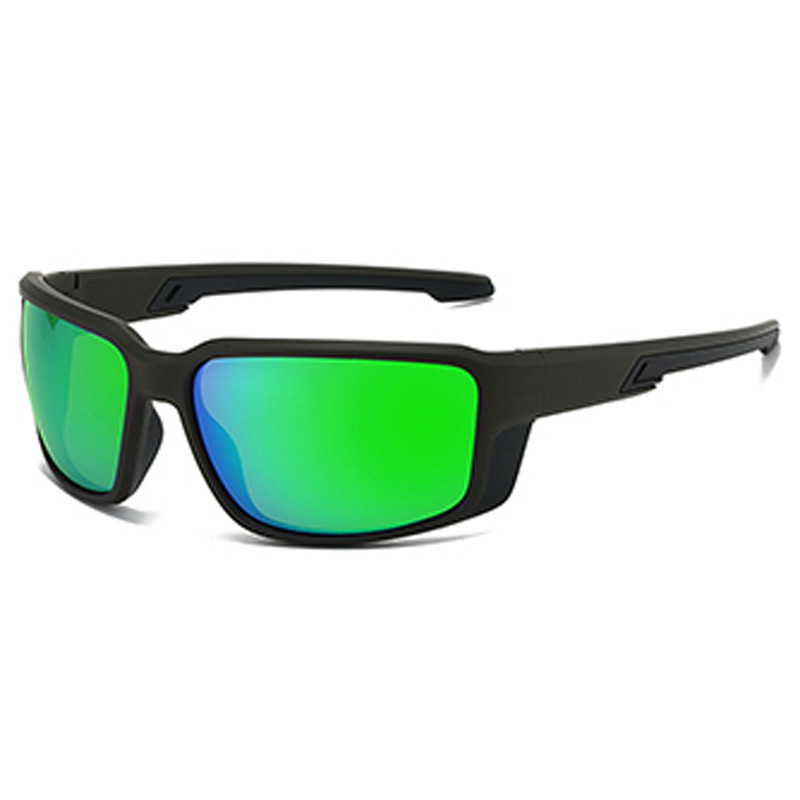
They are sports-oriented sunglasses featuring a lightweight TR90 frame, rectangular lens geometry, full-frame construction, and a two-tone design. They are intended for active outdoor use and can also be positioned as lifestyle sports eyewear.
Why choose a rectangular frame for sports sunglasses?
A rectangular frame provides a familiar appearance while still allowing the product to have a sporty structure. It can be a useful option for brands that want sports eyewear with a more everyday visual style.
What is the advantage of a TR90 frame?
TR90 is commonly selected for eyewear because it can provide lightweight and flexible frame characteristics. The actual durability and comfort of the finished product depend on the material specification, frame geometry, components, assembly, and use conditions.
Are these sunglasses suitable for cycling?
Yes. The model can be positioned for road cycling, recreational cycling, commuting, and other outdoor riding activities. The lens specification should be selected according to the intended lighting environment and applicable market requirements.
Can I use these sunglasses for running?
Yes. Their lightweight sports-oriented structure can be used for running and other active outdoor activities. ISO 12312-3:2022 specifically addresses sunglasses intended for running, cycling, and similar active lifestyles. ([iso.org](https://www.iso.org/standard/72628.html))
Do these sunglasses have UV protection?
UV protection depends on the specific lens configuration selected for the product. We recommend confirming the required UV specification and related test documentation before mass production.
Can the two-tone colors be customized?
Yes. Color customization can be discussed for OEM and ODM projects. The available options depend on the frame structure, material, production process, quantity, and requested finish.
Can I add my own logo?
Yes. We can discuss private-label branding for suitable frame and packaging areas. The final logo position, size, color, and application method should be confirmed before production.
Can I customize the lenses?
Yes. Lens color, coating, UV requirements, transmission, and other specifications can be discussed according to the intended application and destination market.
Are these sports sunglasses industrial safety goggles?
No. Sports sunglasses should not automatically be treated as industrial safety goggles. Occupational applications may require specific protective eyewear standards and testing. ISO 12312-1:2022 does not cover products intended for occupational eye protection. ([iso.org](https://www.iso.org/standard/77321.html))
Can you provide OEM and ODM services?
Yes. We provide flexible OEM/ODM support based on customer specifications, order quantity, branding, packaging, and delivery requirements.
What information do I need to provide for a quotation?
I recommend sending the required model, estimated quantity, lens requirements, frame colors, logo requirements, packaging specifications, destination market, and target delivery schedule. Drawings or reference samples are also helpful for customized projects.
How should I clean the sunglasses?
I recommend using clean water or an eyewear cleaning solution suitable for the lens coating, together with a clean microfiber cloth. Avoid rubbing the lens with rough materials, and keep the sunglasses in a protective case when they are not being used.
11. Why I Treat Product Documentation Seriously
For consumer eyewear, it is easy to focus on the product photograph and forget the documentation behind it. As a manufacturer, I take the opposite approach. A product image tells the customer what the sunglasses look like. The specification tells us what we are actually producing.
For a B2B order, the specification may include the frame material, dimensions, lens material, lens color, UV requirements, coatings, logo, packaging, labeling, quantity, and delivery requirements. When these details are clearly confirmed, production becomes much easier to manage.
Testing requirements should also be connected to the intended product category. General sunglasses, active lifestyle sunglasses, and occupational safety eyewear are not automatically covered by the same requirements.
ISO 12311:2023 provides test methods for sunglasses and related eyewear and is referenced in connection with the ISO 12312 series. ([iso.org](https://www.iso.org/standard/77506.html)) For customers who require a particular market standard or test report, I recommend identifying that requirement before production so that the correct product and testing route can be evaluated.
I believe this is especially important for international B2B business. A customer should know exactly what product they are ordering and what claims can be supported by the final documentation.
12. Build Your Own TR90 Sports Sunglasses Collection
The TR90 Two-Tone Rectangular Full Frame Sports Sunglasses are designed to give brands and buyers a practical base for a modern sports eyewear product. The combination of a lightweight TR90 frame, rectangular full-frame structure, and two-tone styling creates a product that can move between sports and everyday outdoor use.
For a cycling brand, the model can become part of a broader cycling eyewear range. For an outdoor retailer, it can be positioned alongside running and hiking products. For a distributor, different colors and lens configurations can be developed around the same basic frame concept. For a private-label customer, branding and packaging can be added according to the project requirements.
At Linhai Huangjia Glasses Co., Ltd., I prefer to develop these projects through clear communication. We first understand the intended use, target market, product specification, quantity, customization requirements, and delivery plan. We then work around the confirmed requirements rather than making assumptions.
If you are sourcing TR90 sports sunglasses wholesale, custom rectangular sports sunglasses, two-tone sports eyewear, or OEM/ODM sunglasses from China, this model can be evaluated according to your specific project.
Send us your preferred frame colors, lens requirements, logo, packaging details, quantity, and destination market. We can then discuss the appropriate configuration and production plan for your order.
Technical Reference Notes
ISO 12312-1:2022 specifies requirements for afocal sunglasses for general use, including road use and driving. It covers areas such as transmittance, refractive power, robustness, solar radiation, and related characteristics. The standard does not cover occupational eye protection. ([iso.org](https://www.iso.org/standard/77321.html))
ISO 12312-3:2022 specifies requirements for sunglasses intended for running, cycling, and similar active lifestyles. Its scope includes considerations such as construction and materials, transmittance, robustness, perspiration resistance, solar radiation, field of view, coverage, and marking. ([iso.org](https://www.iso.org/standard/72628.html))
ISO 12311:2023 provides test methods for sunglasses and related eyewear and supports the evaluation of properties covered by relevant eyewear standards. ([iso.org](https://www.iso.org/standard/77506.html))
Any specific certification, UV transmission value, impact rating, compliance statement, or test result should be confirmed against the final production specification and corresponding laboratory documentation.



 Phone
Phone