



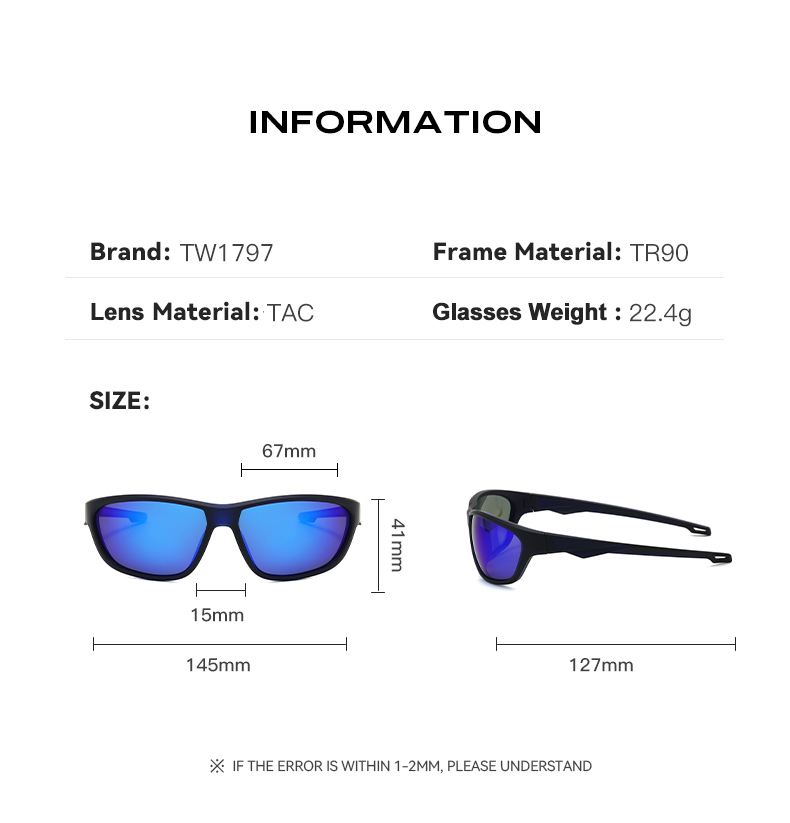
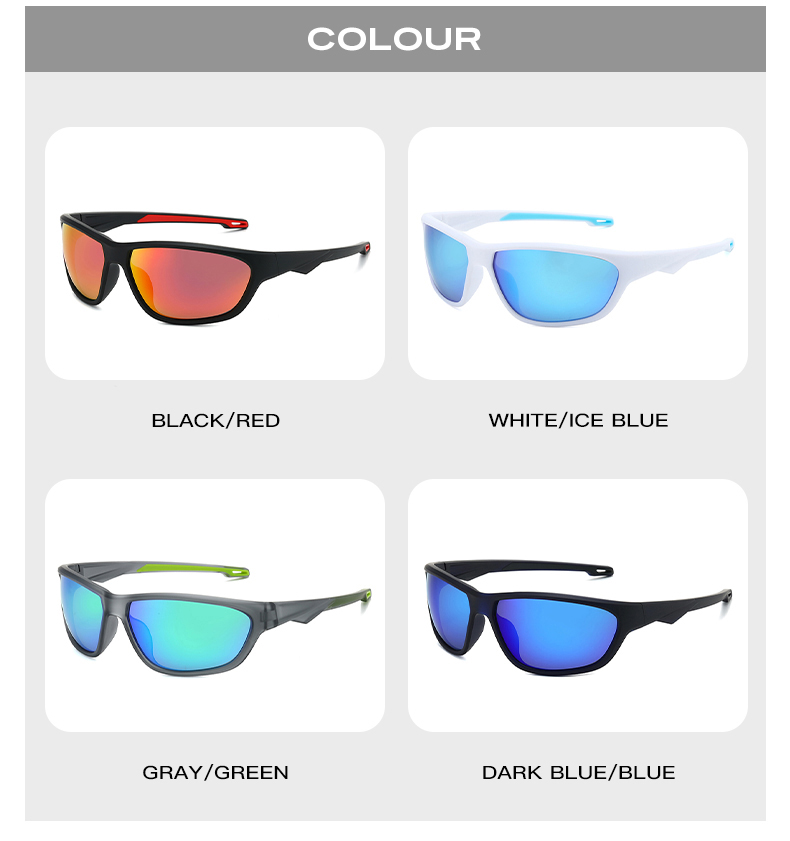
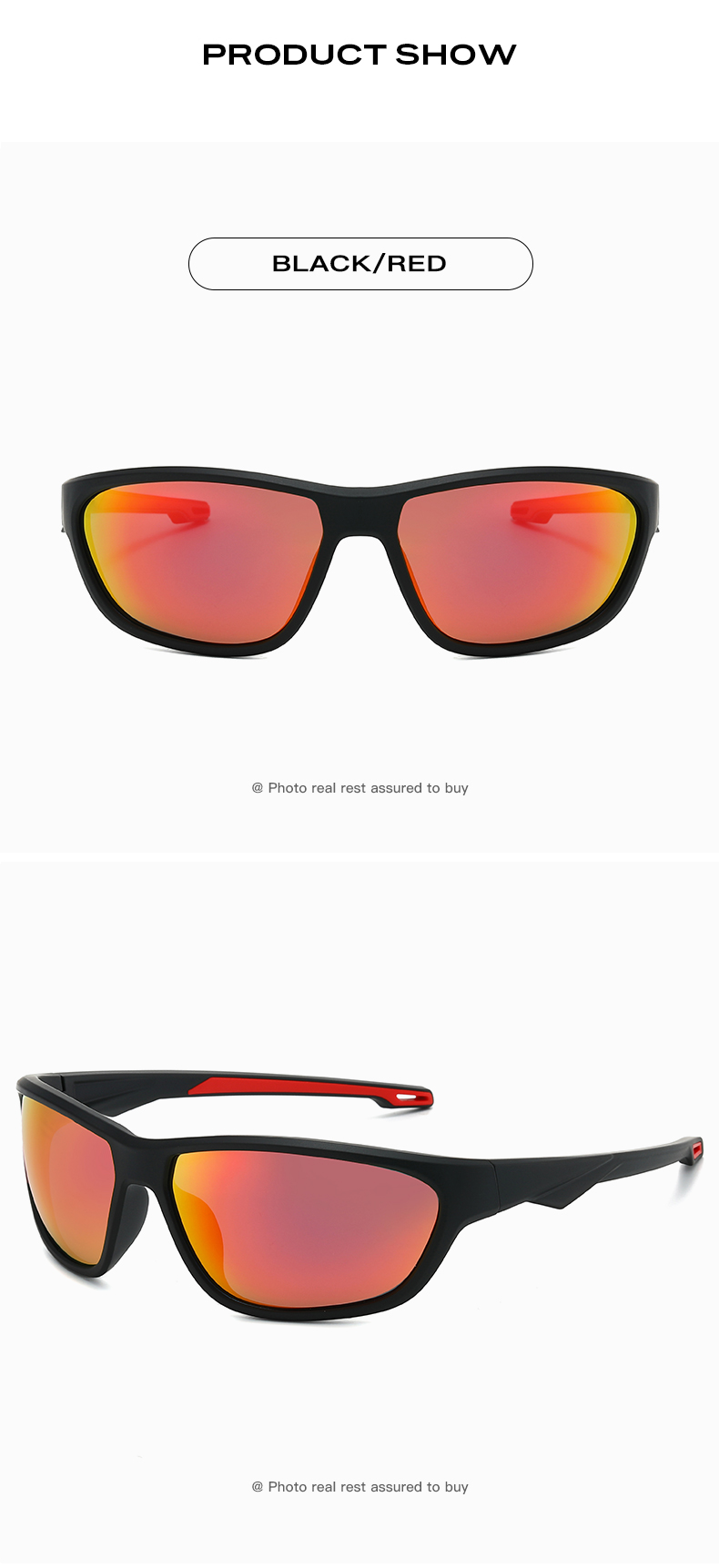
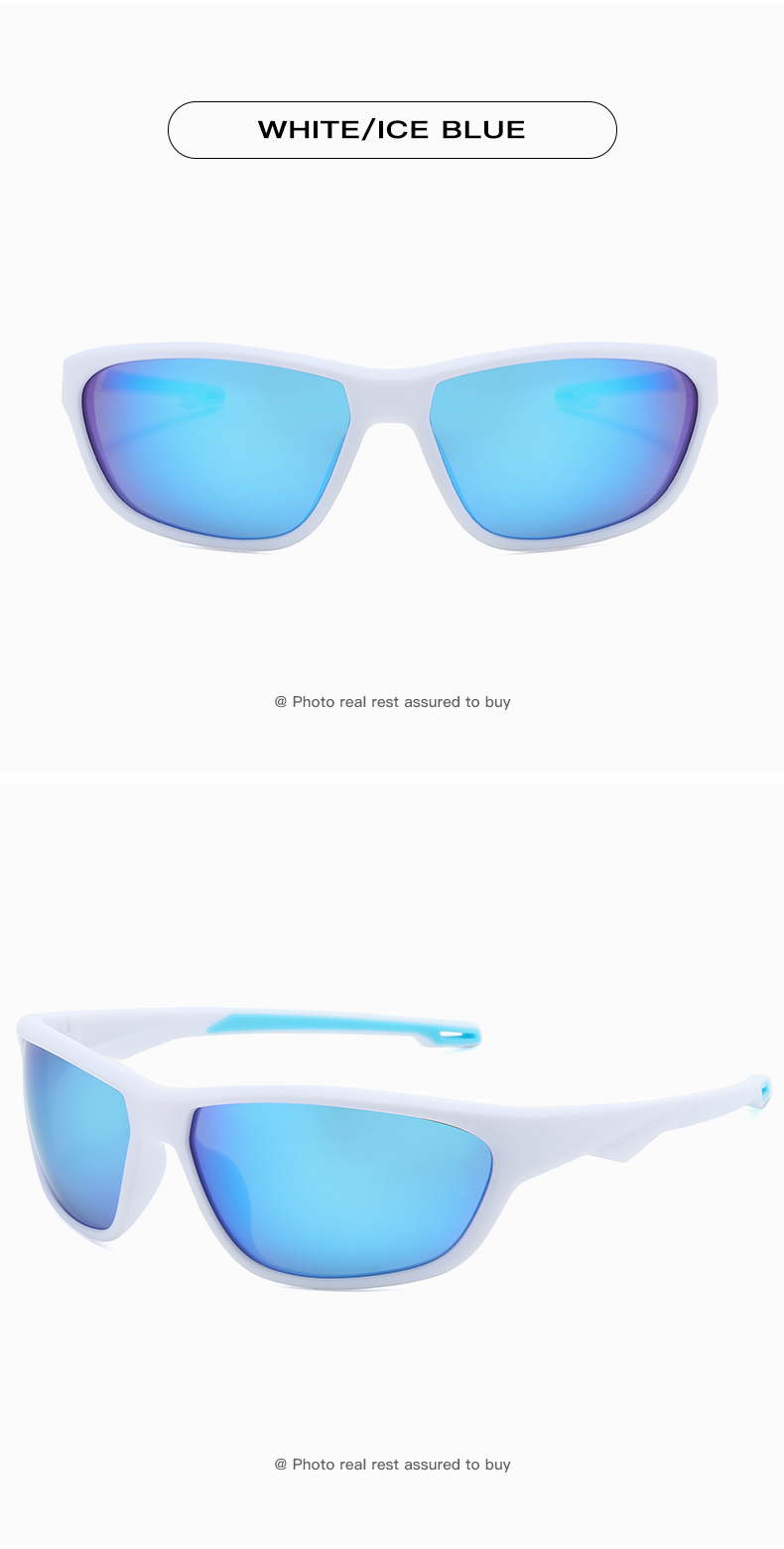
When I develop sports eyewear, I always start with a simple question: where will people actually wear it? A pair of Sunglasses may look attractive on a product page, but that is only one part of the job. When the wearer is cycling, running, training outdoors, traveling, or simply spending a long day outside, the frame needs to feel comfortable and stay suitable for the activity.
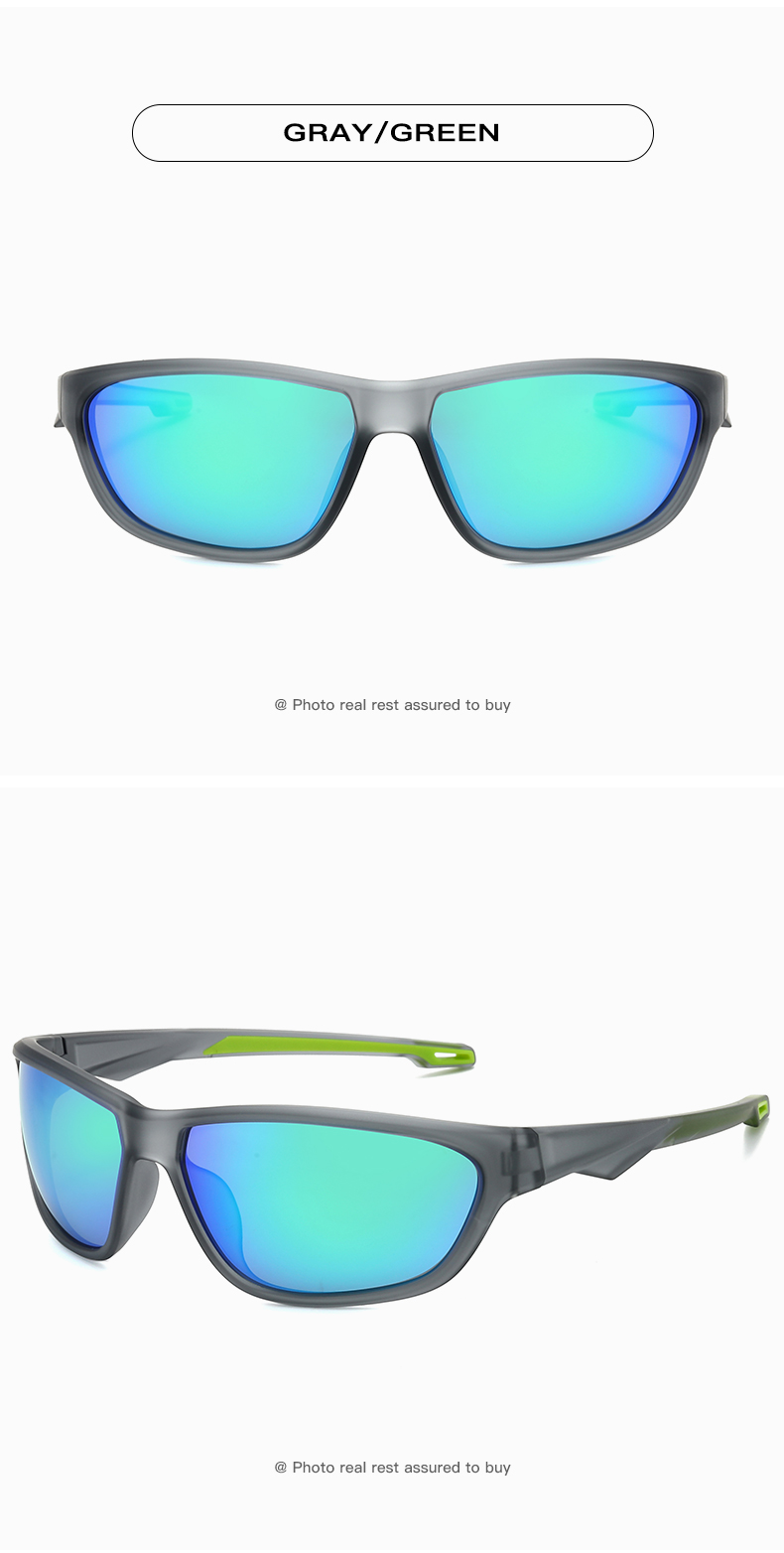
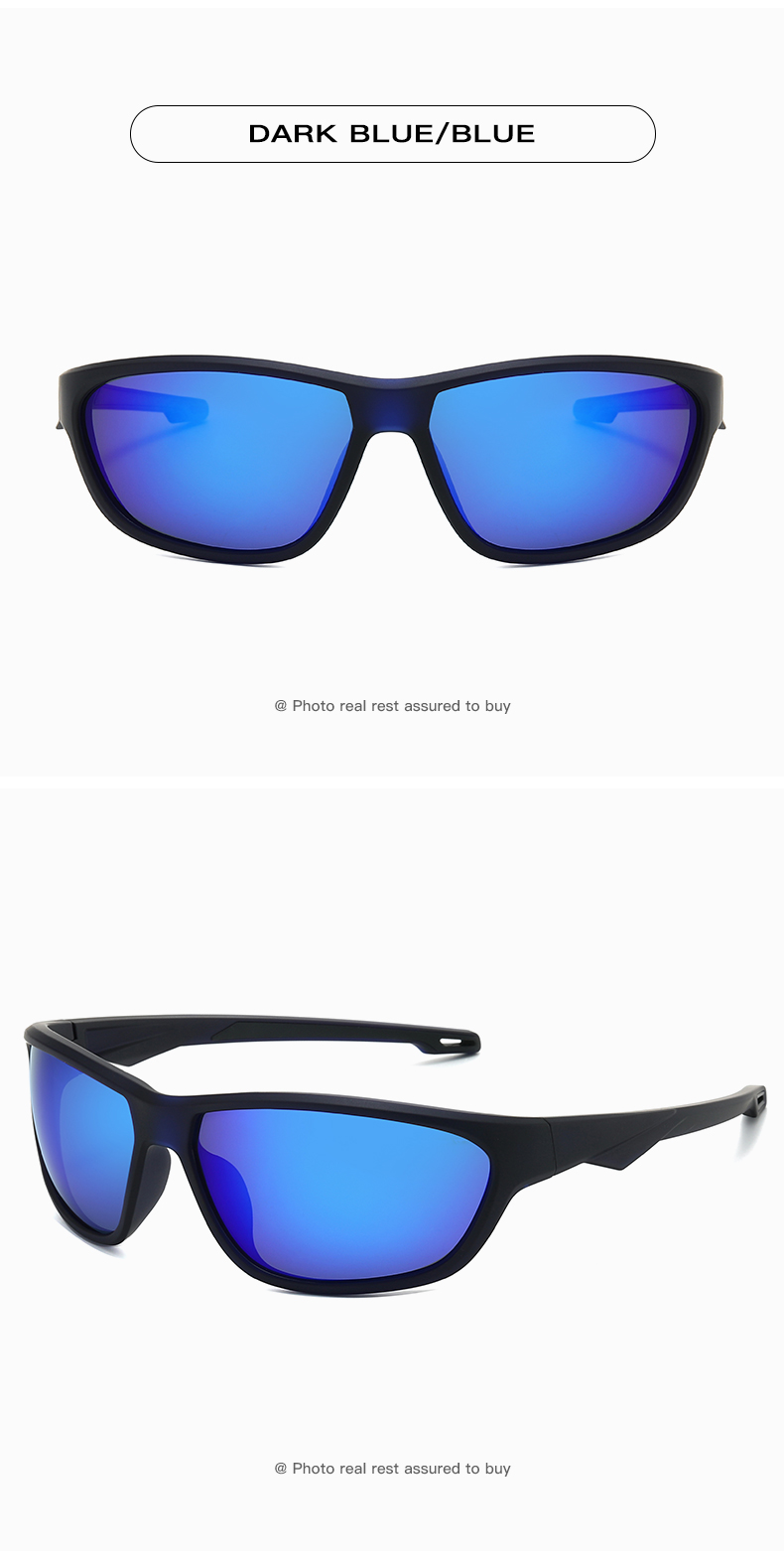
Our TR90 Angular Cut Temple Sports Sunglasses were developed with this practical idea in mind. The model combines a sports-oriented frame with an angular cut temple design, giving it a clean and modern appearance without making the product look overly complicated.
At Linhai Huangjia Glasses Co., Ltd., we specialize in sports glasses, optical glasses, fashionable sunglasses, industrial safety goggles, and military and police tactical goggles. We work with different eyewear categories because different users have different needs. A cyclist may care about weight and fit. An outdoor user may care about lens properties and coverage. A professional safety buyer may need a completely different certified protection system.
For this reason, I do not treat every pair of eyewear as the same product. I prefer to match the frame, lens, materials, and production requirements to the actual application.
1. A Sports Sunglasses Design Built Around Real Use
The first thing people notice about the TR90 Angular Cut Temple Sports Sunglasses is the angular temple structure. It gives the frame a sharper visual line and a distinctly sporty character.
But from a manufacturing point of view, the temple is more than a decorative part. It connects the front frame to the wearer's head, so its length, angle, thickness, hinge position, and overall shape can all affect the wearing experience.
When someone runs or cycles, the head is constantly moving. A frame that works well when standing still may feel very different after an hour of movement. That is why I pay attention to the balance between the front frame and the temples during product development.
The goal is not to make the temples excessively tight. Instead, I want the structure to work naturally with the shape of the wearer's head. Of course, every person's face is different, so the final fit still depends on the frame dimensions and the individual user.
The angular cut design also gives brands more room to create a modern sports collection. It can fit naturally into product ranges covering Cycling sunglasses, running eyewear, outdoor sports sunglasses, fitness eyewear, and sports lifestyle products.
Another point I consider important is product positioning. These sunglasses are designed as sports and lifestyle eyewear. They should not automatically be marketed as industrial safety goggles or tactical protective equipment. Those categories have different requirements and may require specific testing and certification.
For example, ANSI/ISEA Z87.1-2025 addresses occupational and educational eye and face protection, including requirements relating to impact, non-ionizing radiation, liquid splash, testing, marking, selection, care, and use. A sports sunglasses model should not be assumed to meet those requirements simply because it has a strong-looking frame.
That clear distinction helps our B2B customers choose the right product for the right market.
2. How the Frame and Lens Structure Work Together
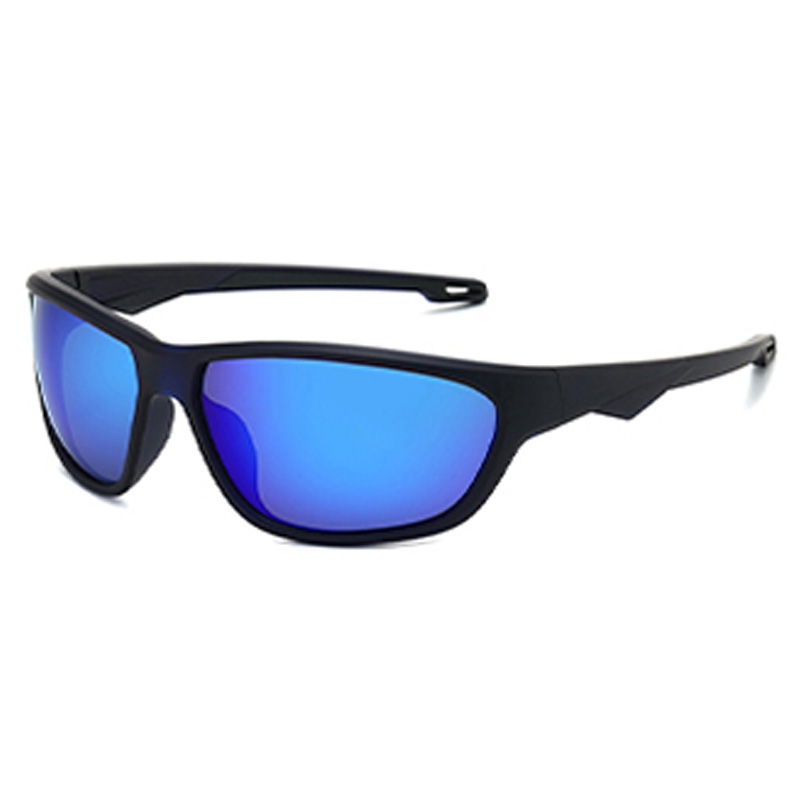
There is no complicated mechanism inside these sunglasses. What makes a sports eyewear product work is the interaction between several basic parts: the frame, temples, hinges, nose area, and lenses.
I normally look at these parts from three practical angles: fit, comfort, and vision.
Frame and Temple Stability
The frame needs to sit in a reasonably stable position while the wearer moves. If it moves too much, the user may keep adjusting it. If it is too tight, pressure can become uncomfortable.
The angular temple design gives the product a structured appearance while contributing to the overall frame geometry. During production, the relationship between the front frame and temple length needs to remain consistent so that the finished products have a repeatable shape.
Lightweight Wearing Experience
Sports sunglasses are often worn for long periods. A product that feels fine for ten minutes may not feel the same after several hours.
TR90 is commonly used in eyewear where designers want a lightweight frame with practical flexibility. However, I always look at the whole product rather than judging the material by itself. Lens thickness, hardware, frame dimensions, and temple construction all contribute to final weight.
Lens Function
The lens is the part that directly sits in front of the eyes, so its optical and light-filtering properties need to match the intended application.
For outdoor sunglasses, buyers should confirm the exact UV and optical specifications instead of relying on a general statement such as “UV protection.” ANSI Z80.3-2025 is a relevant standard for noncorrective sunglasses and fashion eyewear and addresses areas including optical properties, transmittance, UV protection, and physical durability.
| Component | Main Function | What We Check During Product Development |
|---|---|---|
| Front Frame | Supports the lenses and defines the overall shape | Dimensions, proportions, lens fit, frame finish |
| Angular Temple | Connects the frame to the sides of the head | Length, angle, thickness, shape and fit |
| Hinge | Allows the temples to open and close | Assembly consistency and movement |
| Nose Area | Supports the frame on the face | Fit, contact area and wearing comfort |
| Lenses | Provide the required visual and light-filtering properties | Material, color, optical requirements and specified tests |
Source: The component functions above are based on general eyewear construction principles and the manufacturer's product development approach. Applicable technical requirements should be confirmed according to the destination market and product category. ANSI Z80.3-2025 provides requirements for noncorrective sunglasses and fashion eyewear; ANSI/ISEA Z87.1-2025 addresses occupational and educational eye and face protection.
3. Main Features of TR90 Angular Cut Temple Sports Sunglasses
I designed this model to be easy to understand from both the consumer side and the B2B purchasing side. A buyer should be able to look at the product and quickly understand what kind of eyewear it is and where it fits in a product collection.
TR90 Frame Construction
The use of TR90 in the frame concept gives the product a lightweight sports direction. For active eyewear, this is useful because frame weight can affect how the product feels during longer periods of wear.
At the same time, I avoid treating “TR90” as a magic word. Material selection is only one part of product performance. Frame geometry, wall thickness, molding quality, assembly accuracy, and the lens combination all influence the finished product.
Angular Cut Temple Design
This is the most recognizable visual feature of the model.
The angular cut creates a clean, slightly technical appearance. Compared with a very simple straight temple, it gives the product more visual character and makes it easier to position as modern athletic eyewear.
For brands, this can be useful when building a collection where different models need to look related without being identical.
Sports-Oriented Shape
The overall design is suitable for customers who want sunglasses with a clear sports identity. It works naturally with cycling, running, outdoor training, travel, driving, and recreational activities.
It can also sit within a broader lifestyle collection. Many consumers wear sports-style sunglasses outside of actual training, so a frame that combines athletic styling with everyday usability can serve more than one retail situation.
OEM and ODM Potential
For wholesale buyers, an existing model can often save time compared with developing a completely new frame from zero. The product can be discussed as a starting point for a customized project.
Depending on the project, customers may discuss frame colors, lens options, branding, packaging, product combinations, and other specifications.
| Buyer Type | Typical Product Requirement | Details to Confirm |
|---|---|---|
| Sports Eyewear Brand | Private-label sports sunglasses | Logo, frame color, lens specification, packaging |
| Outdoor Distributor | Ready-to-sell sports eyewear | Product mix, lens options, quantity and packaging |
| OEM Buyer | Customer-branded version | Artwork, dimensions, materials, specifications and MOQ |
| ODM Buyer | Modified product design | Design changes, sample approval and tooling requirements |
| Retail Chain | Consistent product range | Color combinations, packaging, labeling and delivery plan |
Source: The customization and supply information reflects the manufacturing and project-support capabilities provided by Linhai Huangjia Glasses Co., Ltd. Actual customization options and minimum quantities are subject to individual project confirmation.
4. Technical Points I Pay Attention to During Production
People sometimes think eyewear manufacturing is simply a matter of making a frame and inserting two lenses. In practice, small details can make a big difference.
Dimensional Consistency
A production batch needs consistent dimensions. If one temple is slightly different from another, or if the lens opening varies between products, the assembly process can become more difficult and the wearing experience may become inconsistent.
That is why production control starts with the approved product specification. The sample is not just a visual reference; it can also become an important reference for subsequent production.
Frame Surface Quality
The surface of a sports frame is another area that buyers notice quickly. Scratches, uneven surfaces, poor edges, or inconsistent finishing can reduce the overall product impression.
During production, the frame surface needs to be checked according to the agreed quality requirements. For private-label products, this is particularly important because the eyewear becomes part of the customer's own brand image.
Lens Installation
The lenses need to fit the frame properly. Poor fitting can affect appearance and may create assembly problems.
For customized projects, I recommend that buyers confirm lens material, lens color, coating, UV requirements, optical requirements, and any applicable test standards before mass production.
Hinge and Temple Assembly
The hinge is a small component, but it is used every time the sunglasses are opened or closed. Assembly consistency therefore matters for the overall product experience.
We pay attention to the connection between the front frame and temple so that the finished product follows the confirmed assembly requirements.
Final Inspection
Before shipment, finished products should be checked according to the agreed product specifications. Depending on the order, inspection may cover appearance, assembly, dimensions, lens condition, branding, packaging, and other customer-defined requirements.
I prefer this approach because quality should be controlled throughout the process rather than left entirely to the final packing stage.
5. Choosing the Right Lens Specification for the Application
The frame gets most of the attention in product photographs, but the lens is often more important to the user's actual experience.
When we discuss a custom sports sunglasses project, I encourage buyers to start with the use case. Is the product mainly for cycling? Running? General outdoor activities? Driving? Fashion? A combination of several applications?
The answer affects the lens specification.
Outdoor Sports
For cycling, running, hiking, and outdoor recreation, buyers may look at lens tint, visible light transmission, UV filtering, optical clarity, and other properties.
These characteristics should be specified according to the target market rather than added as generic marketing claims.
Driving
For driving sunglasses, the lens must be selected carefully because excessive tint or unsuitable optical characteristics can affect visibility. The product specification should be reviewed according to the relevant market requirements and driving conditions.
Fashion and Lifestyle
For fashion-oriented products, appearance may have a greater influence on purchasing decisions. Lens colors, frame colors, temple details, and branding can then become important parts of the product concept.
Prescription or Optical Applications
Linhai Huangjia Glasses Co., Ltd. also works with optical glasses and sports optical glasses. If a buyer needs prescription-related development, the lens requirements should be discussed separately from a standard noncorrective sunglasses project.
It is better to confirm the exact optical requirements at the beginning than to assume that one lens specification works for every product category.
| Application | Key Considerations | Typical Buyer Focus |
|---|---|---|
| Cycling | Fit, lens coverage, optical properties, UV requirements | Sports brands and cycling retailers |
| Running | Weight, fit, comfort and lens specification | Fitness and running product distributors |
| Outdoor Recreation | UV filtering, tint, comfort and durability | Outdoor retailers and wholesalers |
| Driving | Suitable tint, optical quality and visibility | Automotive and lifestyle retailers |
| Fashion Sports | Appearance, color combinations and branding | Fashion and sports lifestyle brands |
Source: Application considerations are general product-development guidance. Specific lens performance must be established from the selected lens material, design, testing, and destination-market requirements. ANSI Z80.3-2025 provides a relevant framework for noncorrective sunglasses and fashion eyewear.
6. Where These Sports Sunglasses Fit Best
Cycling and Road Riding
Cycling is a natural market for this model. Riders often want eyewear that looks technical but can still be used outside the bike.
The angular temple design gives the product a modern cycling-inspired appearance, while the lightweight frame direction makes it suitable for brands building a practical sports eyewear range.
Running and Fitness
Running creates repeated movement, so fit and comfort become important. A sports sunglasses frame should not simply look athletic; it should also be comfortable enough for the intended wearing period.
This model can be positioned for running, gym training, outdoor fitness, and recreational sports markets.
Hiking and Outdoor Recreation
Outdoor users often need a product that can move between different activities. Hiking, walking, camping, travel, and weekend trips are all possible applications.
For these markets, I would pay particular attention to lens selection because outdoor light conditions can vary considerably.
Driving and Commuting
The frame has enough sports character for casual driving and commuting without requiring the wearer to be a professional athlete.
This creates another useful retail position: sports-inspired sunglasses for active everyday users.
Sports Lifestyle Products
Sports and fashion are increasingly connected. A customer may buy cycling-style sunglasses and wear them while traveling, shopping, or meeting friends.
For B2B brands, this creates an opportunity to sell one product concept across several related channels, provided the lens and labeling specifications are appropriate for each market.
7. Our Manufacturing and OEM/ODM Process
When I work with a B2B buyer, I prefer to make the production process clear from the beginning. A successful order depends on more than the frame itself. It also depends on specifications, communication, sample approval, production planning, inspection, packaging, and delivery.
Step 1: Product Requirement Confirmation
We first confirm the product model and the customer's requirements. This can include frame dimensions, colors, lens specifications, logo details, packaging, quantity, destination, and delivery expectations.
Step 2: Sample Review
For customized projects, the sample gives both sides an opportunity to review the actual product. I recommend checking frame proportions, temple design, lens fit, surface finish, branding, and general wearing experience before approving mass production.
Step 3: Production Planning
After the specifications are confirmed, we arrange the production plan according to order quantity and customization requirements. The production schedule can vary between projects, so I prefer to confirm the actual delivery plan rather than promise one standard lead time for every order.
Step 4: Frame Manufacturing
The frame is produced according to the approved design and material specification. Manufacturing control at this stage focuses on consistent dimensions, surface quality, structural details, and preparation for later assembly.
Step 5: Lens Preparation
The selected lens specification is prepared according to the confirmed product requirements. If the customer has specific optical, UV, coating, color, or testing requirements, those details should already be included in the product specification.
Step 6: Assembly
The frame, lenses, temples, hinges, and other components are assembled into the finished sunglasses. Assembly consistency is important because the customer expects products in the same order to have a consistent appearance and basic construction.
Step 7: Inspection and Packaging
Finished products are inspected according to the agreed requirements before packaging. Customized packaging, labels, logo information, and outer cartons can be arranged according to the project.
Step 8: Shipment
Payment terms, transportation arrangements, packaging methods, and delivery schedules can be discussed according to order quantity and customer location. The final terms are confirmed between both sides before production and shipment.
8. Why Choose Linhai Huangjia Glasses Co., Ltd. for Your Sports Eyewear Project?
I understand that choosing an eyewear manufacturer is not only about finding a factory that can make sunglasses. For B2B buyers, the real process includes product development, communication, customization, quality control, packaging, and delivery.
Linhai Huangjia Glasses Co., Ltd. was established in 2023 and is based in Linhai, Zhejiang. Our product scope covers sports glasses, optical glasses, fashionable sunglasses, industrial safety goggles, and military and police tactical goggles.
This broad product experience helps us understand that different eyewear projects require different priorities.
We Work With Multiple Eyewear Categories
Our products cover sports and lifestyle eyewear as well as more specialized categories. This includes sports sunglasses, sports optical glasses, industrial safety goggles, and tactical goggles.
Each category is discussed according to its actual application rather than using the same product description for everything.
We Support OEM and ODM Projects
If you already have a product drawing or sample, we can discuss production based on your specifications. If you are still developing the product concept, an existing model such as the TR90 Angular Cut Temple Sports Sunglasses can provide a starting point for further discussion.
Customization may involve product colors, branding, lens requirements, packaging, and other details, depending on the project.
We Focus on Clear Product Specifications
I have found that many production problems start with unclear specifications rather than manufacturing itself.
That is why I encourage customers to confirm important details before production begins. Once both sides agree on the product requirements, the production team has a clearer reference for manufacturing and inspection.
Flexible Supply for Different Order Types
Our supply model can support batch purchasing, OEM/ODM projects, and customized orders. Production plans are arranged according to quantity, customization level, packaging requirements, and delivery schedule.
Frequently Asked Questions
What are TR90 Angular Cut Temple Sports Sunglasses?
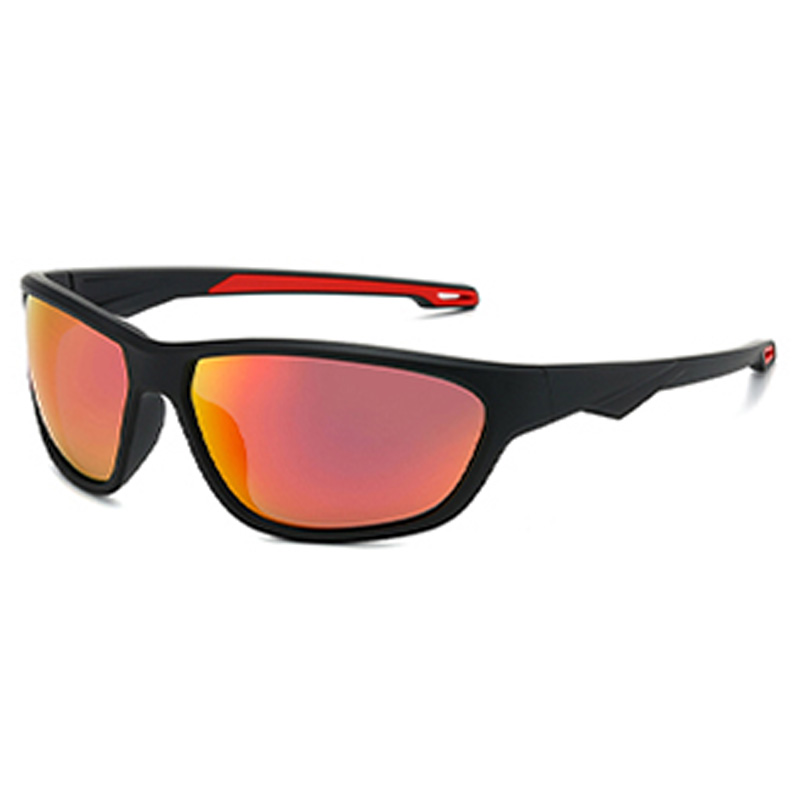
They are sports-oriented sunglasses featuring a TR90 frame concept and an angular cut temple design. The model is intended for outdoor sports, active lifestyles, travel, driving, and other everyday activities where a contemporary sports appearance is preferred.
Are these sunglasses suitable for cycling?
Yes. The model is suitable for cycling and other recreational outdoor sports. Buyers should select the appropriate lens specification according to the intended riding environment and destination-market requirements.
Can I use them for running?
Yes. Their sports-oriented frame design makes them suitable for running, fitness, training, and recreational activities. Final fit and comfort depend on frame dimensions and the individual wearer's facial shape.
Can the frame color be customized?
For OEM and ODM projects, frame color and other product details can be discussed according to the customer's requirements. The available options depend on the specific product version and order.
Can I add my own logo?
Yes, logo and private-label requirements can be discussed for customized orders. The exact logo location, marking method, artwork, and packaging details should be confirmed before production.
Can I customize the lenses?
Lens specifications can be discussed according to the application. Possible project requirements may include lens color, material, coating, UV filtering, optical characteristics, and other agreed specifications.
Are these industrial safety glasses?
No assumption should be made based only on the sports appearance. Industrial safety eyewear has specific requirements related to workplace hazards and applicable standards. If your application involves impact, chemical splash, dust, radiation, or other workplace risks, please specify those requirements so the appropriate product category can be evaluated.
Can this model be used as tactical eyewear?
This model is positioned as sports and lifestyle eyewear. We manufacture military and police tactical goggles as a separate product category. Tactical projects should be developed against their specific protection and performance requirements.
Can you provide OEM sports sunglasses?
Yes. We can discuss OEM projects based on confirmed product specifications, quantities, branding, packaging, and delivery requirements.
Do you support ODM sports sunglasses?
Yes. Existing models can be used as a starting point for product development, while specific design changes and customization requirements are confirmed during the project.
What information should I provide for a quotation?
I recommend providing the product model, estimated quantity, frame colors, lens requirements, logo requirements, packaging requirements, destination country, and expected delivery schedule. If you have drawings or reference samples, these can also help us understand the project more accurately.
How long does production take?
Production time depends on the order quantity, customization requirements, materials, packaging, and current production schedule. We confirm the actual production and delivery time after the product requirements are finalized.
Can you arrange customized packaging?
Yes. Packaging requirements can be discussed according to the customer's retail or wholesale needs. Customized labels, branding, protective packaging, and other requirements can be included in the project specification.
What I Recommend Before Placing a Bulk Order
If you are considering these TR90 Angular Cut Temple Sports Sunglasses for wholesale or private-label sales, I recommend preparing a simple specification sheet before requesting a final quotation.
Frame material
Frame color
Frame dimensions
Temple dimensions
Lens material
Lens color
UV filtering requirements
Optical requirements, if applicable
Logo artwork
Logo position
Individual packaging
Outer carton requirements
Order quantity
Destination market
Required testing or certification
Target delivery date
This information helps us understand what you actually need rather than giving you a quotation based on assumptions.
For example, “sports sunglasses” is not enough information to define a production order. A buyer may need a specific lens color, a specific UV requirement, a private logo, a special box, or a particular carton configuration. Each of these details can affect the final product and cost.
Final Thoughts From Our Manufacturing Team
I see the TR90 Angular Cut Temple Sports Sunglasses as a practical model for buyers who want a modern sports look without making the design unnecessarily complicated.
The TR90 frame concept supports a lightweight product direction, while the angular cut temple gives the sunglasses a clear visual identity. The model can fit cycling, running, outdoor recreation, fitness, travel, driving, and sports lifestyle applications.
For B2B customers, the bigger value is the possibility of developing the model around a specific product program. Frame colors, lens specifications, branding, packaging, quantity, and delivery arrangements can be discussed according to the project.
At Linhai Huangjia Glasses Co., Ltd., we prefer to keep the process straightforward: understand the application, confirm the specifications, review the sample when necessary, arrange production, inspect the finished products, and coordinate packaging and delivery.
If you are searching for a TR90 Sports Sunglasses manufacturer, custom sports sunglasses supplier, OEM sports eyewear manufacturer in China, or ODM sunglasses supplier, this model can be a useful starting point for your next product development project.
Send us your product requirements, estimated quantity, lens specifications, branding details, packaging needs, and destination market. We can then discuss the appropriate production route based on your actual project.
Technical References
ANSI/ISEA Z87.1-2025, American National Standard for Occupational and Educational Personal Eye and Face Protection Devices. The standard addresses occupational and educational eye and face protection requirements, including testing, marking, selection, care, and use.
ANSI Z80.3-2025, Nonprescription Sunglasses and Fashion Eyewear. The standard provides requirements relevant to noncorrective sunglasses and fashion eyewear, including optical properties, transmittance, UV protection, and physical durability.
American National Standards Institute (ANSI), eyewear standards guidance. Standards should be reviewed directly for the specific product category, market, testing method, and intended use.
Product specification note: Technical characteristics such as UV protection, impact resistance, optical performance, material properties, and regulatory compliance should be confirmed from the actual finished product, applicable testing, and customer-approved specifications. Product appearance alone should not be treated as evidence of compliance with a particular safety standard.



 Phone
Phone