

We are a professional Chinese manufacturer & supplier of sports eyewear. This full-wrap rectangular Sports sunglasses are tailor-made for outdoor enthusiasts.
The extended side frames provide all-around protection to block wind, sand and stray light. Equipped with polarized lenses, they cut harsh glare reflected off roads and water surfaces, effectively reducing eye strain during long-distance driving, saltwater fishing and mountain biking.
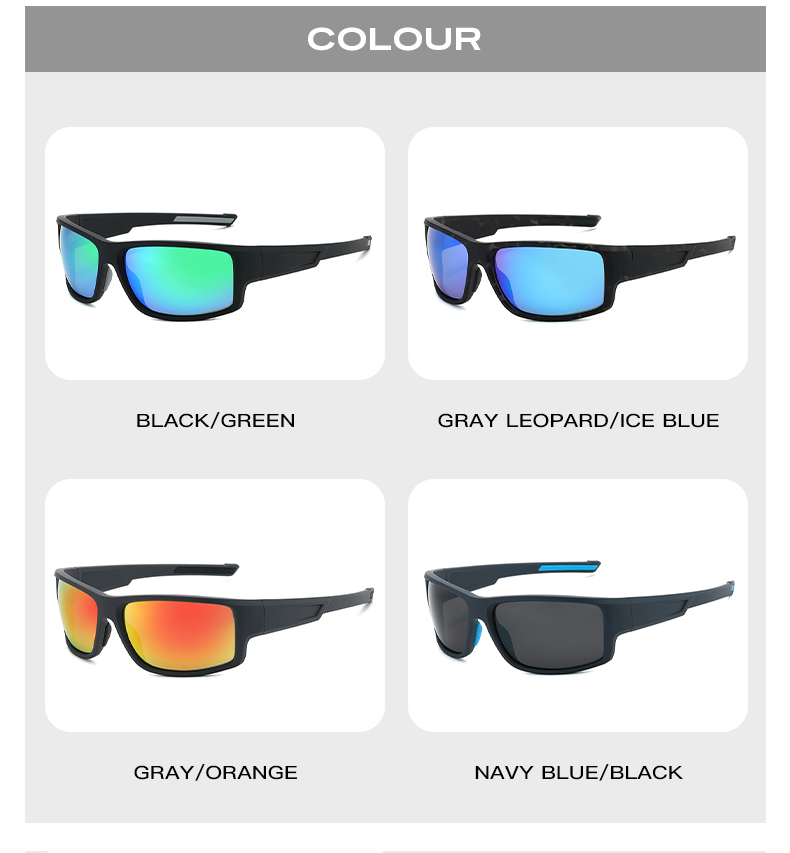
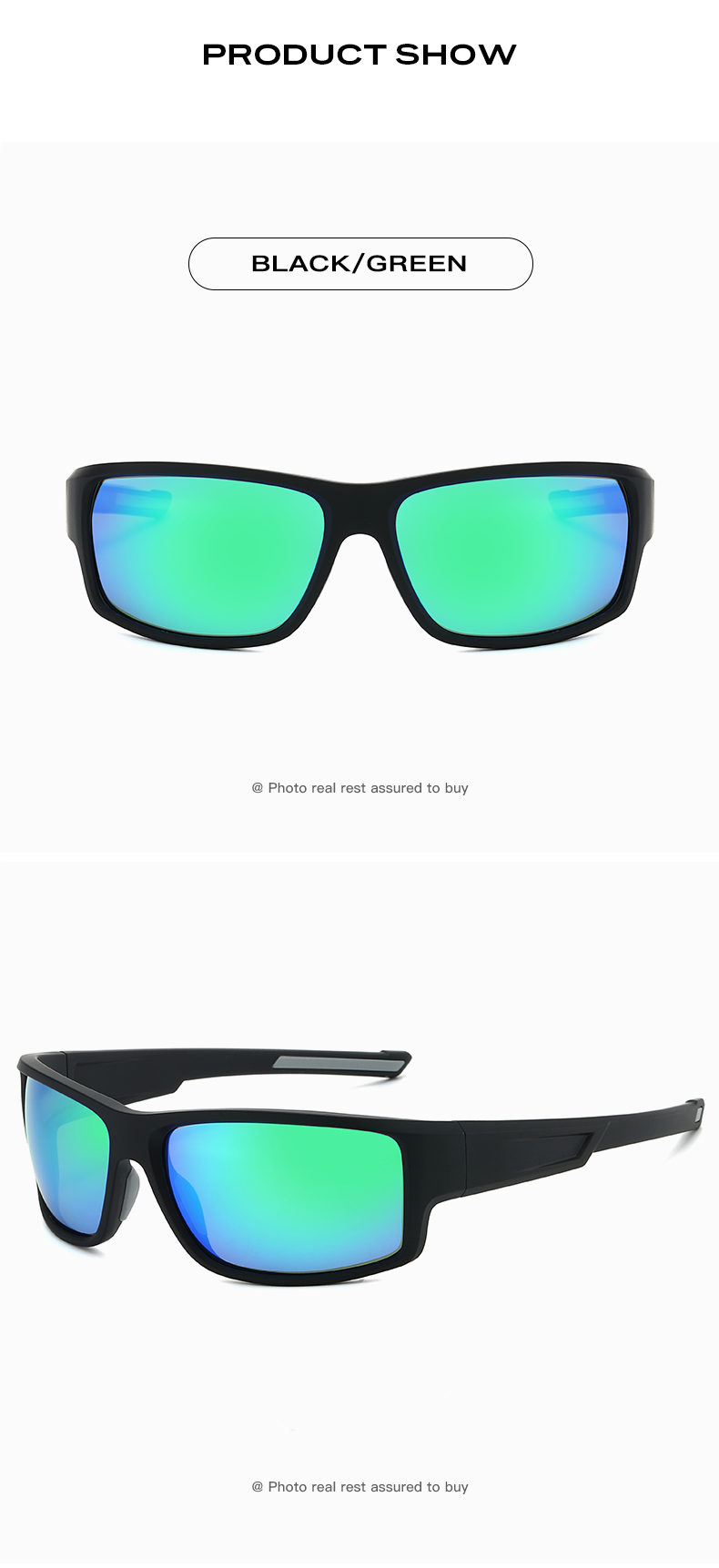
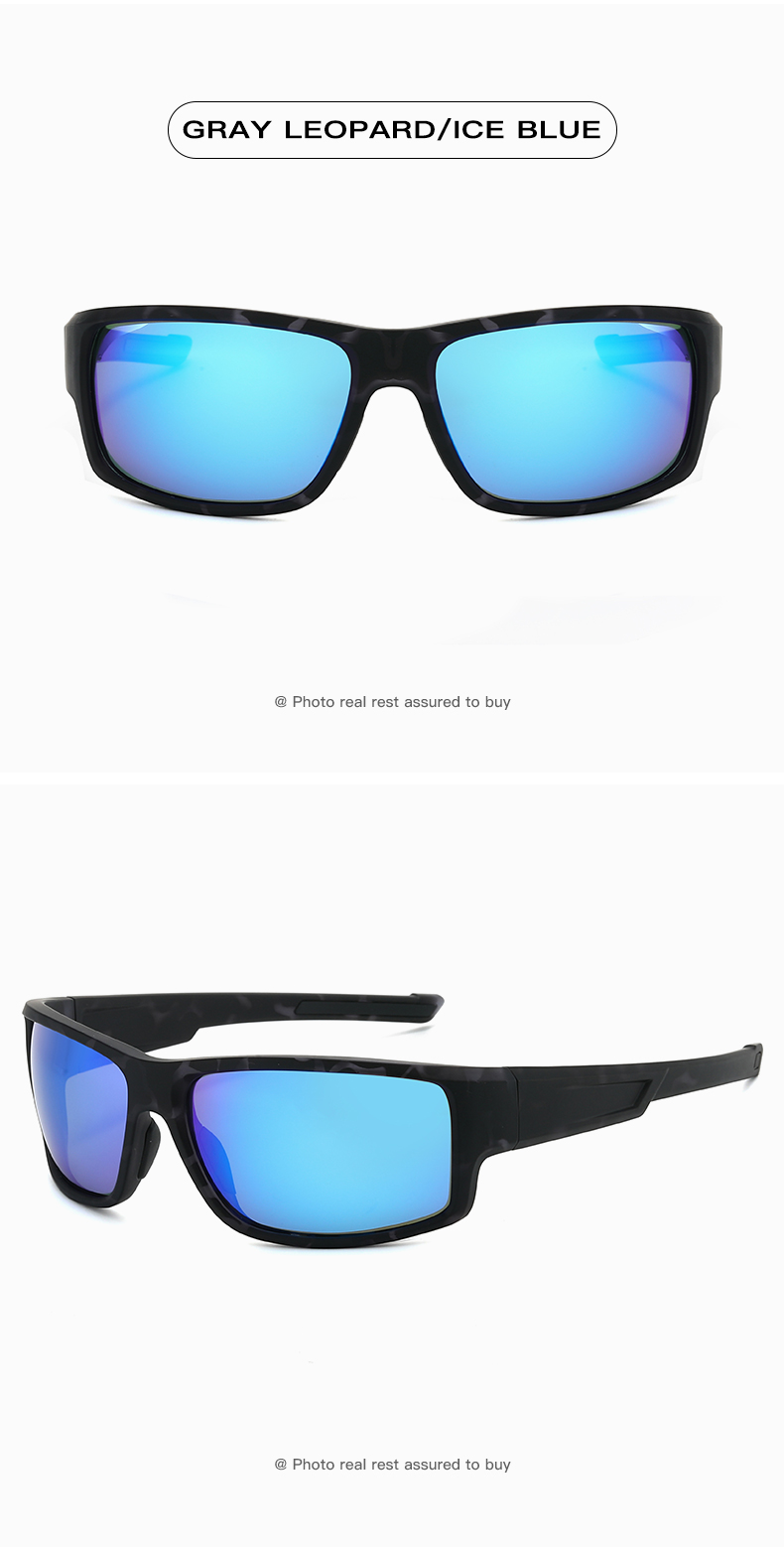
This style comes in 4 distinctive colorways: Black/Green, Gray Leopard/Ice Blue, Gray/Orange, Navy Blue/Black. Curved anti-slip temple arms deliver a secure, comfortable fit with zero discomfort even after all-day wear.
The classic rugged rectangular frame flatters most face shapes, ideal for fishing, road cycling, hiking and daily commuting. We support bulk wholesale, OEM manufacturing and custom logo printing. Feel free to contact us for inquiries.
Linhai Huangjia Eyewear Co., Ltd., based in Zhejiang, China, specializes in eyewear production and export. We offer one-stop OEM/ODM customization directly from the factory. Welcome to contact us for details.
2、Product Features & Dimension Drawings
2.1 Product Features
Design Features——Lightweight & Flexible TR90 Frame, Two-Tone Segmented Anti-Slip Temples, plus non-slip nose pads that prevent slipping during intense sports.The full-wrap widened square windproof frame delivers unobstructed wide vision while blocking side stray light and wind-blown sand. It minimizes harsh side glare when cycling or shore fishing for enhanced all-round eye protection.
Lens Advantages——High-quality polarized lenses effectively filter glare, blocking up to 99% of reflected light. They greatly reduce harsh brightness and improve visual clarity. After eliminating stray light, object outlines become sharper with higher contrast.The lenses restore true-to-life colors, making scenery brighter, more natural and rich in details. They ease eye strain caused by glare, preventing squinting and relieving fatigue during long outdoor use.With full UV400 protection, they block 100% of harmful UVA and UVB rays.
2.2 Dimensions
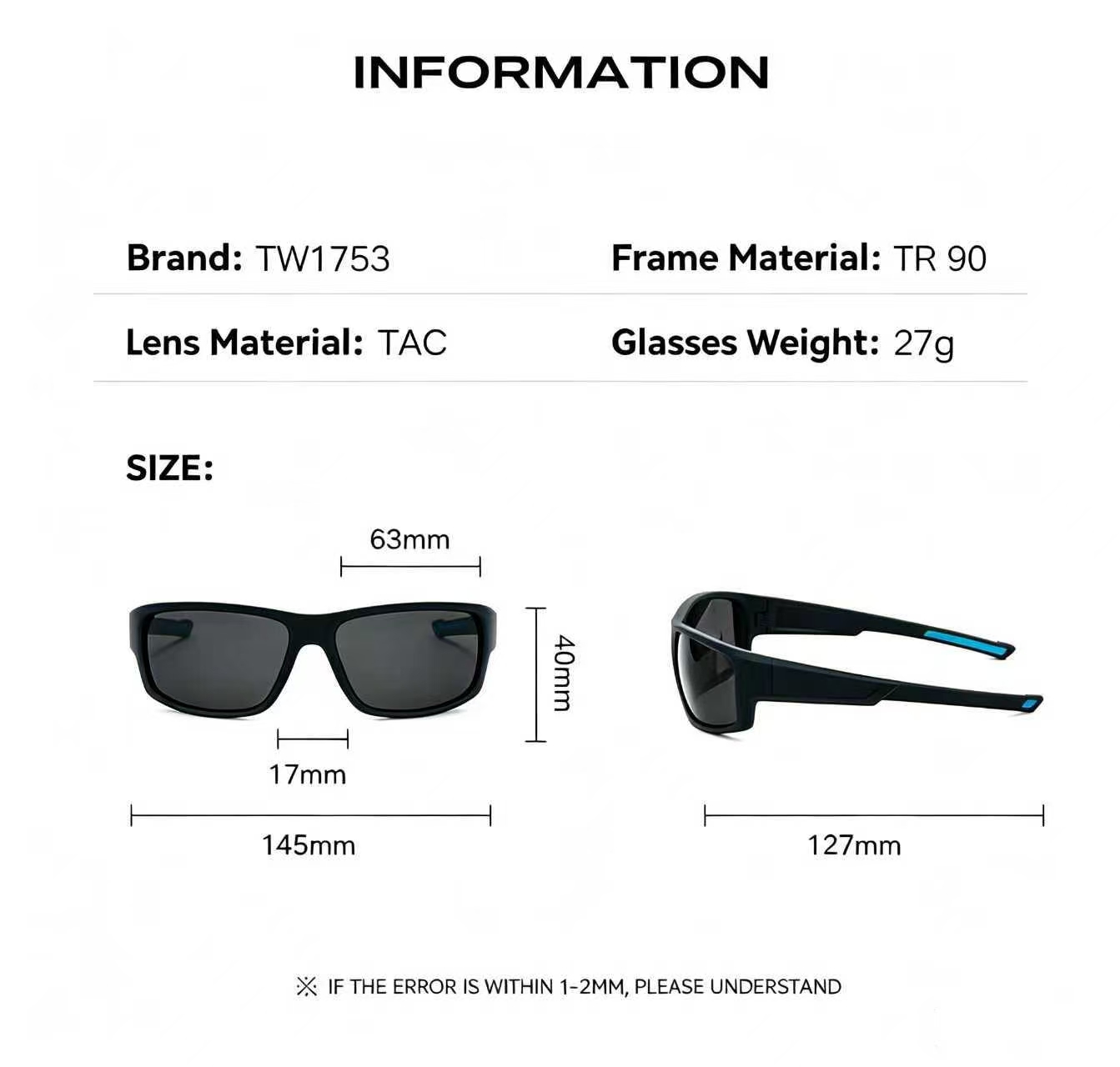
Parameter | Specification |
Model Name | TR90 Rectangular Full Frame Sports Sunglasses |
Model No. | RS260509 |
Material: | TR90 |
Frame Shape | rectangle |
Frame Color | Black、Gray Leopard、Gray、Navy Blue (Custom) |
Size | 63□17-127mm |
Total Weight | 27g |
Lens Type | Polarized |
Target Audience | Unisex-Men&Women |
Applicable Scenes | cycling,beach vacation, hiking,fishing,mountain off-road riding,driving,long-distance running,golf,badminton,tennis,pickleball,beach volleyball,daily commuting |
MOQ | 300pcs/Color; |
Origin | Taizhou, Zhejiang Province, China |
Logo Printing | Custom Made |
Packaging | 1pcs/bag, 12pcs/box, 300pcs |
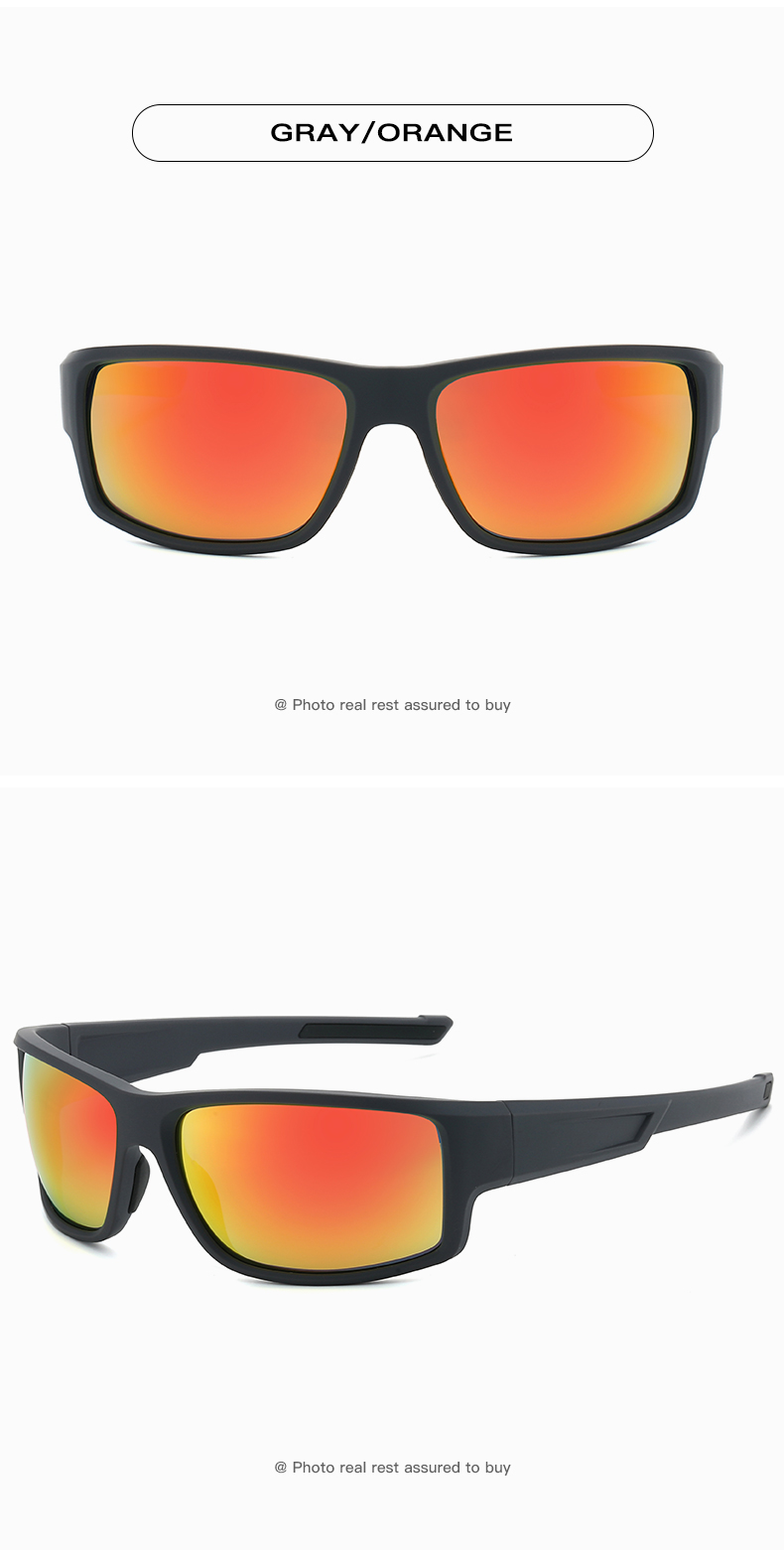
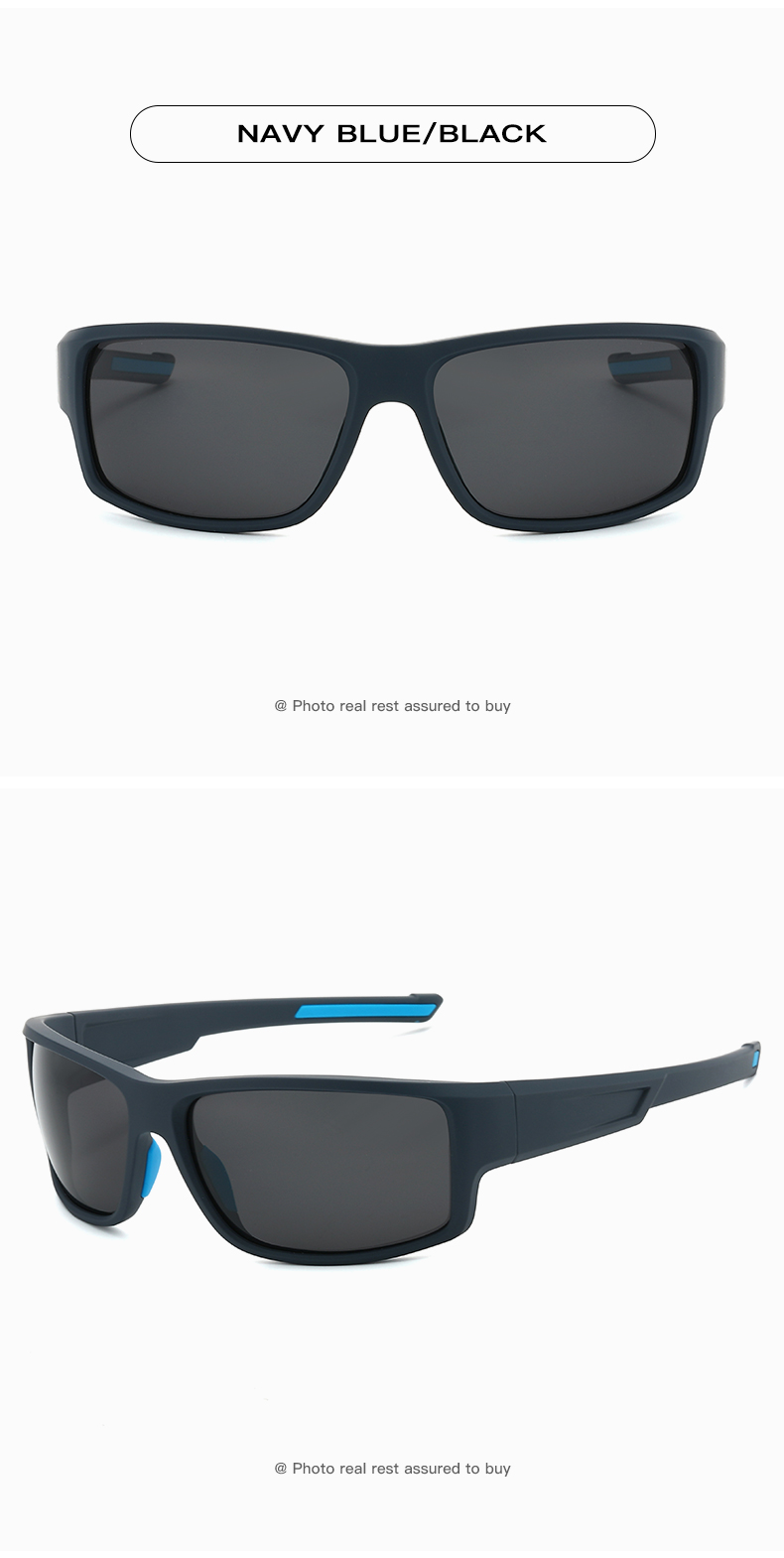
TR90 Rectangular Full Frame Sports sunglasses for Active Outdoor Use
When I look at a pair of sports Sunglasses for real-world use, I do not judge them by appearance alone. A good pair needs to feel comfortable after hours of wear, stay stable when the user is moving, provide a clear field of vision, and match the conditions where it will actually be used. That is the thinking behind our TR90 Rectangular Full Frame Sports Sunglasses.
At Linhai Huangjia Glasses Co., Ltd., I work with a product range covering sports glasses, optical glasses, fashionable sunglasses, industrial safety goggles, and military and police tactical goggles. We established our company in Linhai, Zhejiang, in 2023, with a focus on developing and manufacturing eyewear for different working and outdoor environments.
This rectangular full-frame sports sunglasses model is designed around a simple idea: keep the frame practical, lightweight, comfortable, and easy to adapt to different active lifestyles. The rectangular shape gives the product a clean and modern appearance, while the full-frame structure provides a defined frame around the lens.
For buyers, this product can also be developed as part of an OEM or ODM eyewear program. Frame colors, lens options, branding, packaging, order quantity, and other product details can be discussed according to the project requirements.
The first thing I want to explain is the combination of TR90 material, rectangular geometry, and a full-frame structure. Each part serves a practical purpose.
TR90 is commonly used in eyewear because it is a lightweight thermoplastic polyamide material with good flexibility. A material guide published by CHARMANT describes TR90 as a polyamide-family material developed in Switzerland and notes properties including low weight, flexibility, durability, corrosion resistance, and a wide range of color possibilities.
For sports eyewear, low weight matters more than many people expect. During cycling, running, hiking, or outdoor training, the glasses move with the head. If the frame feels heavy or creates pressure around the nose and ears, that small discomfort can become noticeable after several hours.
That is why we use the TR90 concept for this product. The goal is not simply to make a frame that looks sporty. The goal is to create a frame that works naturally with active use.
| Design Element | Practical Purpose | Typical Buyer Concern |
|---|---|---|
| TR90 frame | Lightweight and flexible frame construction | Long wearing comfort |
| Rectangular shape | Clean, versatile visual appearance | Product styling and market positioning |
| Full-frame structure | Defined lens retention and frame profile | Daily stability and product durability |
| Sports-oriented design | Suitable for active outdoor lifestyles | Fit for cycling, running, training and travel |
The material characteristics should still be understood realistically. TR90 does not mean that every frame made from it has the same performance. Resin grade, frame geometry, wall thickness, injection settings, hinge construction, lens installation, and quality control all affect the finished product.
For this reason, I treat the material as one part of the engineering process rather than using the word TR90 as a marketing shortcut.
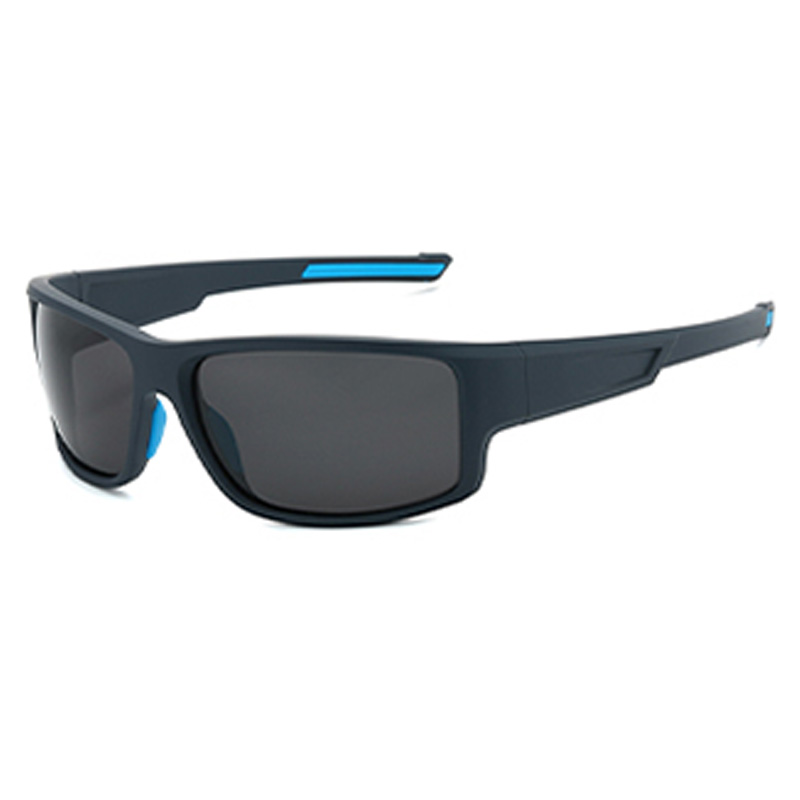
There is no complicated mechanism inside a pair of sports sunglasses. The performance comes mainly from how the frame, lenses, temples, nose area, and overall geometry work together.
When the user is cycling or running, the head moves constantly. There can also be vibration from the road, wind pressure, sweat, and repeated contact when the glasses are taken on and off. A suitable sports frame needs to maintain a stable position without becoming uncomfortable.
The rectangular full-frame construction gives us a straightforward platform for controlling the lens shape and frame dimensions. During development, we consider the relationship between the front frame, temple length, bridge area, lens opening, and contact points.
I also pay attention to the balance between flexibility and stability. A frame that is too rigid can feel harsh when pressure is applied. A frame that is too soft may not hold its position as well as expected. For this reason, the material and geometry have to be considered together.
Another important point is the lens. A frame cannot compensate for a lens that is poorly matched to the intended application. Depending on the project, customers may specify different lens materials, colors, coatings, or optical requirements.
For general-use sunglasses, ISO 12312-1:2022 covers afocal sunglasses and clip-ons intended for general use, including road use and driving, for protection against solar radiation. The standard addresses areas such as transmittance, optical properties, robustness, solar-radiation resistance, and other product characteristics.
It is important, however, not to confuse general sunglasses with certified occupational eye protection. ISO itself states that ISO 12312-1 does not apply to products intended for occupational eye protection.
That distinction is important for B2B buyers. If a customer needs industrial safety goggles for a specific workplace hazard, we recommend specifying the appropriate protective eyewear requirements rather than simply choosing a sports sunglasses model.
When I describe this model to a buyer, I focus on practical features rather than a long list of promotional words.
The first feature is the TR90 frame construction. The material is widely used in performance and everyday eyewear because it can combine low weight with flexibility. This makes it suitable for products where comfort during extended wear is important.
For a cyclist riding for several hours, a runner completing a long training session, or an outdoor user spending a full day away from home, the weight and pressure of eyewear can affect the overall experience.
The rectangular shape gives this model a clear and recognizable appearance. It is sporty without being limited to one activity. A buyer can position the product as cycling eyewear, outdoor sports eyewear, travel sunglasses, or active lifestyle sunglasses depending on the lens and branding configuration.
The full-frame design also provides a familiar construction for many eyewear buyers. It gives the product a defined outline and allows the frame color to become part of the overall visual identity.
I would normally position this model for activities such as cycling, running, hiking, walking, outdoor fitness, travel, and general recreational use.
For example, a cycling brand may use the product as part of an entry-level or lifestyle cycling collection. A sports retailer may position it as an outdoor training accessory. A private-label eyewear company may use the rectangular design as part of a broader TR90 collection.
For wholesale customers, the product does not have to remain exactly the same as the sample. We can discuss frame colors, lens choices, logo application, packaging, product specifications, and order quantities according to the project.
This is particularly useful for customers who do not want a completely new frame mold but still need a product that fits their own brand identity.
For B2B buyers, I think a material comparison is more useful than simply saying that one material is “better.” Different materials solve different problems.
TR90 is generally understood as a thermoplastic polyamide material used in eyewear. Industry material references describe it as lightweight and flexible, with applications in sports and everyday frames.
| Frame Material | Common Characteristics | Typical Eyewear Applications | Consideration for Sports Use |
|---|---|---|---|
| TR90 / thermoplastic polyamide | Lightweight, flexible, durable | Sports, optical and lifestyle eyewear | Useful where low weight and flexibility matter |
| Acetate | Rich finish, strong styling potential | Fashion and optical eyewear | Useful when appearance and premium material feel are priorities |
| Metal | Rigid structure, adjustable in many constructions | Optical and fashion frames | Can provide a different fit and appearance from flexible sports frames |
| Standard injected plastic | Easy to mold and cost-efficient | Mass-market eyewear | Performance depends strongly on the specific resin and frame design |
The comparison above is a practical material overview, not a certification table. Actual performance depends on the exact material grade and product construction.
One reason I like TR90 for this product category is that it gives us room to design a frame that feels light without making the product visually too delicate. That balance is useful for sports sunglasses where buyers often want a strong-looking frame without unnecessary bulk.
At the same time, I do not tell customers that TR90 automatically makes a product “unbreakable.” That would be misleading. Any eyewear product can be damaged by excessive force, heat, incorrect handling, or unsuitable use. The actual frame design and quality control remain important.
The frame is only half of a pair of sunglasses. The lens determines how the user sees the environment, how much light reaches the eye, and how the product behaves under different outdoor conditions.
When we discuss an OEM or ODM project, I recommend that buyers define the intended use first. Cycling in bright sunlight, everyday commuting, fishing, travel, running, and fashion use may require different lens configurations.
Lens color should not be treated as a simple measure of protection. A dark lens is not automatically a lens with suitable UV performance. For products marketed with UV protection claims, the relevant lens specifications and test documentation should be confirmed for the actual production configuration.
ISO 12312-1:2022 includes requirements related to luminous transmittance, filter categories, optical power, robustness, solar-radiation resistance, and other characteristics of general-use sunglasses.
| Lens Consideration | What It Can Affect | Why Buyers Should Define It |
|---|---|---|
| Lens color | Visual appearance and perceived brightness | Different markets may prefer different styles |
| Light transmittance | Amount of visible light reaching the eye | Important for matching the intended lighting conditions |
| UV performance | Protection from ultraviolet radiation | Should be verified against the actual specification |
| Optical properties | Visual clarity and optical comfort | Important for product quality and user experience |
| Surface treatment | Appearance, reflection and durability characteristics | Can affect both performance and product positioning |
For sunglasses testing, ISO 12311:2023 provides reference test methods for determining properties covered by the ISO 12312 series.
There is also a useful update for buyers who are maintaining technical documentation in 2026: ISO 12312-1:2022 has a published Amendment 1 from April 2026.
We therefore recommend confirming the exact target market, product category, lens specification, labeling requirements, and testing requirements before mass production. This is especially important when an eyewear product will be sold through different countries or regions.
Manufacturing a pair of sports sunglasses looks simple from the outside. In practice, many small production details determine whether the finished product feels good in the hand and on the face.
We begin by confirming the product specification. For a custom order, this may include frame dimensions, lens shape, material, color, logo position, hinge configuration, lens requirements, packaging, and quantity.
I prefer to confirm these details before production because changing one part of the design can affect other parts. For example, changing lens thickness may influence the frame groove. Changing frame color may require a different material or production process. Changing the logo position may affect mold or printing arrangements.
The selected frame material is prepared according to the agreed specification. For TR90 frames, injection molding is a common production method. The material is heated and formed inside a mold to create the required frame geometry.
Material consistency matters at this stage. The frame should have stable dimensions so that the lens, hinges, temples, and other components can be assembled correctly.
The mold defines the basic shape of the front frame and temples. Mold quality has a direct effect on product consistency. We pay attention to dimensions, edges, surface condition, and the fit between components.
For a B2B order, repeatability is just as important as making the first sample look good. A sample may look excellent, but if mass production varies significantly from the approved sample, it creates problems for both the manufacturer and the buyer.
After molding, the frame goes through finishing operations. Excess material is removed, edges are checked, and surfaces are inspected. The aim is to create a clean frame without unnecessary roughness or visible production defects.
The lens is prepared according to the confirmed lens specification and fitted into the frame. During assembly, the lens should sit correctly in the frame without unnecessary stress.
We also check the relationship between the lens and frame. A good-looking front is not enough if the lens does not fit properly or if the frame becomes distorted during assembly.
Quality inspection is carried out through the production process rather than waiting until the final carton is ready. Depending on the project, inspection can cover frame appearance, dimensions, color, logo quality, lens condition, assembly, packaging, and other agreed requirements.
This approach is especially important for OEM and ODM projects because the approved sample becomes a reference point for mass production.
I see this model as a flexible sports eyewear platform rather than a product limited to one sport.
For cycling brands, the rectangular full-frame shape provides a practical alternative to highly curved shield-style cycling glasses. It can work well for lifestyle cycling collections, recreational riders, commuting, and outdoor riding.
Runners often want sunglasses that are light enough to wear throughout training. The TR90 frame is suitable for a lightweight sports eyewear concept, while the rectangular shape gives the product a more everyday appearance.
For hiking, walking, travel, and general outdoor activities, customers often look for eyewear that can move between sports and everyday use. This is where a clean rectangular design can be commercially useful.
For wholesalers and distributors, the product can be positioned within an outdoor eyewear collection. Different frame colors and lens options can help create several SKUs without completely changing the basic product concept.
For brands, our OEM/ODM service allows the product to become part of a private-label collection. Customers can discuss branding, packaging, lens configuration, color combinations, order quantity, and other requirements with us.
We can also plan production according to the customer's product specifications and quantity. Production schedule, packaging, transportation, payment terms, and delivery arrangements can be discussed according to the order and destination.
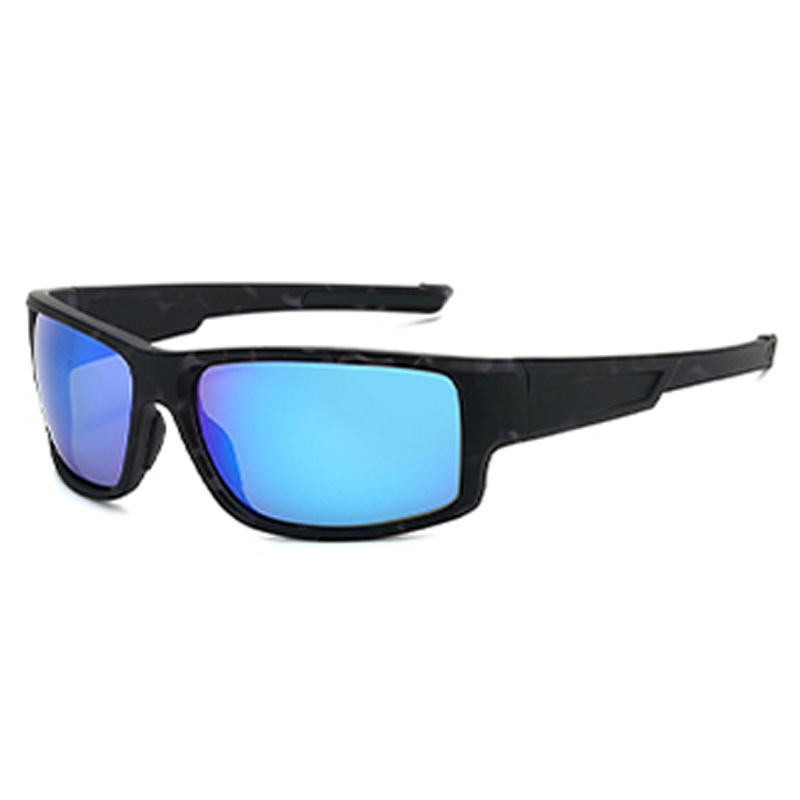
When I talk with B2B buyers, I know that the product itself is only one part of the decision. Buyers also need to know whether the supplier can communicate clearly, maintain specifications, manage production, and support customization.
Linhai Huangjia Glasses Co., Ltd. was established in 2023 in Linhai, Zhejiang. Our product scope includes sports sunglasses, sports optical glasses, fashionable sunglasses, industrial safety goggles, and military and police tactical goggles.
Because we work across several eyewear categories, we understand that different applications require different design priorities. A pair of sports sunglasses is not the same thing as industrial safety eyewear, and tactical goggles have their own functional requirements.
For this reason, we start with the customer's actual application instead of trying to use one frame for every situation.
For the TR90 Rectangular Full Frame Sports Sunglasses, we can discuss:
Frame color and finish
Lens color and configuration
Brand logo application
Packaging requirements
Product specifications
OEM and ODM development
Wholesale quantities
Custom project requirements
Production schedule
Transportation and delivery arrangements
For bulk orders, we confirm the product specifications, quantity, packaging, and delivery requirements before production. This gives both sides a clear reference for the order.
I also believe that communication should remain practical. If a requested specification is not suitable for the intended use, it is better to discuss the problem before production rather than discovering it after a large batch has been completed.
If you are sourcing rectangular sports sunglasses, I recommend looking at more than the product photo.
First, check the actual frame material. If the product is described as TR90, ask for the relevant material specification when it matters to your project.
Second, check the lens specification. Ask what lens material, color, coating, and UV-related requirements apply to the product you are ordering.
Third, confirm the dimensions. A frame that looks suitable in a catalog may fit differently when the bridge width, lens width, temple length, or frame curvature changes.
Fourth, check the sample before bulk production. The sample should be reviewed for appearance, fit, assembly, logo position, lens condition, packaging, and other project-specific requirements.
Finally, confirm the documents required for your target market. Different countries and product categories may have different requirements. General sunglasses standards should not automatically be treated as occupational protective eyewear standards.
This last point is especially important. ISO 12312-1:2022 specifically excludes occupational eye protection from its scope. If your customer needs protection against workplace hazards such as flying particles, chemical splashes, or other occupational risks, the product should be specified and tested under the appropriate protective eyewear requirements.
They are sports-oriented sunglasses using a TR90-style lightweight thermoplastic frame with a rectangular full-frame structure. They are designed for outdoor activities, active lifestyles, cycling, running, travel, and similar applications, depending on the final lens and product configuration.
TR90 is a lightweight and flexible thermoplastic polyamide used in eyewear. Its combination of low weight and flexibility makes it suitable for many sports and active-lifestyle frame designs.
Yes. The model can be positioned for cycling and recreational riding. However, the final suitability depends on the selected lens, fit, dimensions, and specific riding environment.
Yes. For OEM and ODM projects, frame color can be discussed according to the required design and production quantity.
Yes. We support customized branding for suitable projects. Logo position, application method, artwork, and packaging can be confirmed during product development.
Lens options can be discussed according to the target application and market. Customers can specify requirements such as lens color, optical configuration, coatings, and other relevant details.
No. This model is positioned as sports and general outdoor eyewear. If the intended application requires certified occupational eye protection, the correct safety standard and product category must be specified separately.
Sports sunglasses are generally designed around outdoor vision, sunlight management, comfort, and active use. Safety goggles are designed around specific workplace hazards and applicable protective requirements. The two categories should not be treated as interchangeable.
Yes. We support bulk purchasing, OEM/ODM projects, and customized eyewear orders. Production and delivery arrangements can be discussed according to quantity, product specifications, packaging, destination, and other order requirements.
We can discuss custom development according to drawings, samples, product specifications, branding requirements, and intended applications. The actual development process depends on the complexity of the requested design.
If you are a brand owner, distributor, wholesaler, retailer, or sourcing company, I recommend preparing a simple product specification sheet before asking for a quotation.
Include the target market, product name, frame material, frame color, lens type, lens color, logo requirements, packaging, estimated quantity, and expected delivery location.
If you already have a reference sample or technical drawing, that can make communication much faster. We can use the information to understand what needs to remain unchanged and what can be adjusted.
For a new private-label project, I also recommend ordering samples before moving directly into mass production. A sample allows you to check the product in your own hands instead of making a decision only from photos.
For larger projects, we can then move from sample confirmation to production planning, packaging confirmation, inspection, and delivery.
For me, the value of TR90 Rectangular Full Frame Sports Sunglasses comes from their balance. The design is sporty but not overly aggressive. The rectangular shape is easy to understand. The full-frame structure provides a familiar eyewear construction, while TR90 offers the lightweight and flexible characteristics that make sense for active use.
It is also a practical product for B2B customers because the basic design can be developed in different directions. A cycling company can build it into an outdoor collection. A sports retailer can use it for active lifestyle products. A private-label brand can customize colors, lenses, logos, and packaging.
At the same time, I believe in being clear about what the product is and what it is not. Sports sunglasses should not automatically be presented as industrial safety goggles, and UV or impact claims should be connected to the actual lens, frame, testing, and documentation of the finished product.
Our job at Linhai Huangjia Glasses is to turn a product requirement into a practical eyewear solution. Whether you need a standard TR90 Sports Sunglasses model, a private-label product, or an OEM/ODM project, we can discuss the specifications, quantity, customization, packaging, and delivery requirements step by step.
If you are sourcing TR90 Rectangular Full Frame Sports Sunglasses for cycling, running, outdoor sports, wholesale distribution, or a private-label eyewear collection, send us your target specifications and order requirements. We can then work from the actual application and commercial needs rather than making assumptions from a product photo.
ISO 12312-1:2022 — Eye and face protection — Sunglasses and related eyewear — Part 1: Sunglasses for general use.
ISO 12311:2023 — Personal protective equipment — Test methods for sunglasses and related eyewear.
ISO 12312-1:2022/Amd 1:2026 — Amendment 1, published April 2026.
CHARMANT Material Introduction — TR90 material characteristics and eyewear applications.
This website uses cookies to ensure you get the best experience on our website.



 Phone
Phone