

Sports sunglasses for running live or die on three things: how little they weigh, how firmly they stay put on a sweat-slick face, and whether the lens tint matches the light you actually run in. Get those right and you stop noticing the glasses entirely, which is the whole point. This guide breaks down frame weight, grip systems, ventilation, lens tint selection and fit checks specifically for road, track and trail runners, plus the care habits that keep a running pair performing for seasons instead of months.
Running is the most repetitive of the outdoor sports, and repetition is exactly what exposes weak eyewear. Every footstrike sends a small shock up through the body, and any frame that is loose, heavy or badly balanced answers that shock with a micro-bounce. Over ten kilometers, thousands of micro-bounces become a pressure point on the nose bridge, a sore spot behind the ears, or a habit of pushing the frame back up every few hundred meters.
Add sweat to the equation and the problem compounds. Salt water acts like a lubricant on smooth plastic, so frames that feel secure in the shop slide within the first kilometer of a summer run. Ordinary lifestyle sunglasses also tend to sit far from the face, letting wind dry your eyes and dust grind under the lids at pace. Running demands a different engineering brief: minimal mass, maximal grip, close fit and lenses tuned to hours of forward motion.
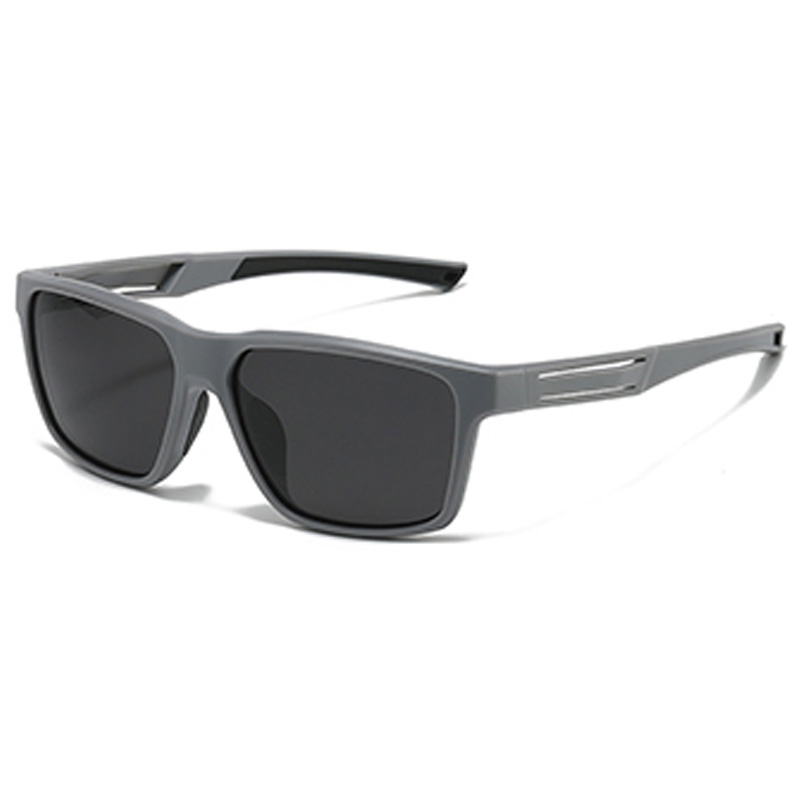
Weight is the single most underrated spec in running eyewear. Every gram on the nose bridge is carried through the soft tissue of the bridge and the cartilage of the ears, and that load repeats with every stride. Modern performance frames solve this with nylon-family materials, most notably TR90, which delivers high flexibility at roughly half the weight of traditional acetate. A well-designed TR90 frame with a polycarbonate lens commonly lands in the twenties of grams, light enough that the frame disappears from your awareness once you settle into pace.
Weight distribution matters as much as raw mass. A frame that concentrates weight at the front tips forward when you sweat; a balanced design spreads load across the bridge and both temples. When comparing models, hold each pair at the bridge with two fingers: a balanced frame stays level, while a nose-heavy one dips immediately. That simple test predicts how the frame will feel at kilometer fifteen far better than any spec sheet.
Grip is what converts lightness into stability. Performance running frames use soft, hydrophilic rubber compounds on the nose pads and temple tips; these materials actually increase their grip as they absorb moisture, which is the opposite of how hard plastic behaves when wet.
A quick in-store or at-home test: put the glasses on, shake your head firmly side to side, then bend forward as if picking something up. A running-grade frame does not slide on either movement. If it does, no amount of marketing will save your long runs.
Runners generate heat and moisture from their own face, which makes fogging a bigger risk in running than in most other sports. Fog forms when warm, humid air from your skin meets a lens that is cooler than the dew point, and it collects fastest where the frame seals tightly against the face.
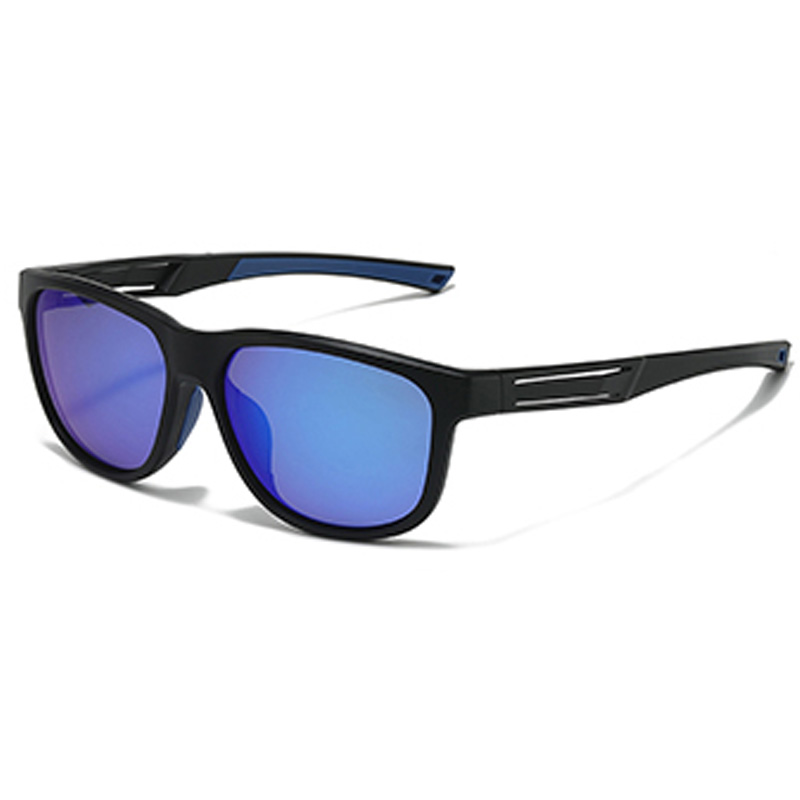
Good running designs fight fog in three ways: small vent channels cut into the lens or brow bar, a slight gap between frame and forehead, and hydrophobic coatings that make condensation bead and roll instead of film over. Some pairs sacrifice a little side coverage for airflow, which is the right trade for most road running. If you run in cold weather, where the air-to-face temperature gap is largest, favor models with dedicated brow vents and avoid frames that sit flush against the cheeks.
The right tint depends on when and where you run, and honestly assessing your dominant conditions matters more than chasing the darkest lens.
Whatever tint you choose, confirm the lens states UV400 protection. Darkness without UV filtering is worse than no sunglasses at all, because dilated pupils admit more ultraviolet light.
Polarized lenses remove horizontally reflected glare from water, wet asphalt and glass buildings, which makes them outstanding for road running near rivers, canals or coastlines and for sunny urban environments. On shaded trails, however, deep polarized tints can flatten the subtle shadow differences that help you read roots and rocks. Many trail runners therefore pick a moderate tint without polarization for technical terrain and reserve polarized lenses for road and waterside routes. Neither choice is wrong; matching the filter to the terrain is what counts.
| Running scenario | Recommended tint | Polarization | Notes |
|---|---|---|---|
| Road, bright sun | Gray or mirrored | Yes | Best glare control on wet asphalt |
| Park loop, variable cloud | Amber or copper | Optional | Contrast boost through shade |
| Technical trail | Brown, medium density | Usually no | Preserve shadow detail on roots |
| Track sessions | Gray or rose | Yes on waterfront tracks | Stable color helps lane judgment |
| Pre-dawn / dusk | Yellow or clear photochromic | No | Maximize available light |
Running posture matters: when you settle forward into pace, your eyes look through the upper portion of the lens, and when you glance down at your watch the frame shifts slightly. Test any candidate pair in a running-specific way. Lean into a running stance and confirm the brow line stays covered. Check that the frame's lower edge does not contact your cheeks when you smile or breathe hard, because constant lens-to-skin contact smears sweat across the optics.
Wrap angle deserves attention too. Moderate wrap blocks wind and peripheral glare without the tunnel-vision feel that aggressive wrap can produce on foot. Cyclists benefit from extreme wrap because they move at speed; runners usually prefer a balance between coverage and airflow.
Running eyewear leads a rough life. Sweat is mildly corrosive, sunscreen degrades coatings, and the frame spends half its life folded in a pocket or bouncing in a hydration vest. TR90 frames shrug off sweat and UV exposure far better than standard injection plastic, and hard-coated polycarbonate lenses resist the pocket abrasion that ruins cheap lenses within weeks.
Build habits that extend lifespan: rinse the frame in fresh water after sweaty summer runs, dry it with the microfiber pouch rather than a shirt tail, and store it in a rigid case rather than loose in a bag. Check hinge screws every couple of months; road vibration loosens them gradually. With those habits, a quality running pair typically holds its optical and mechanical performance for several seasons.
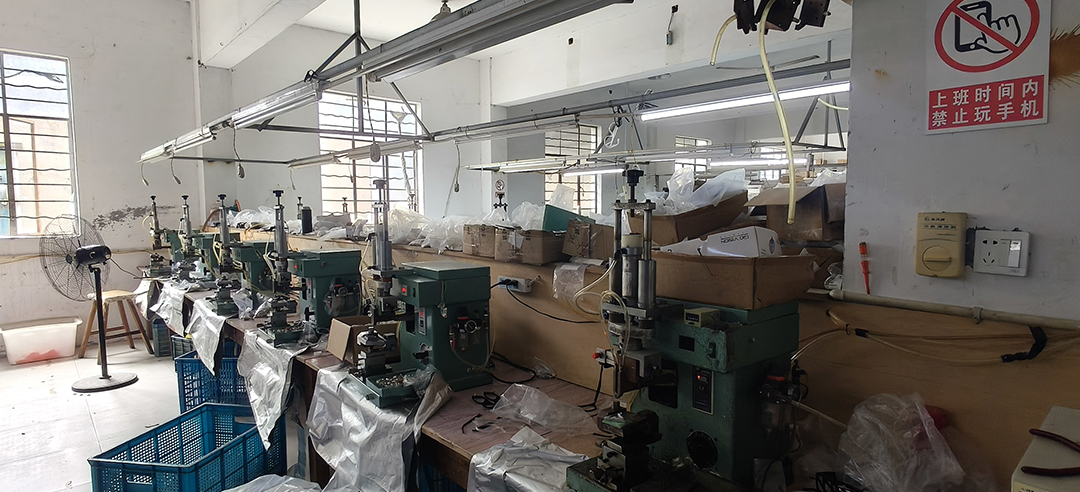
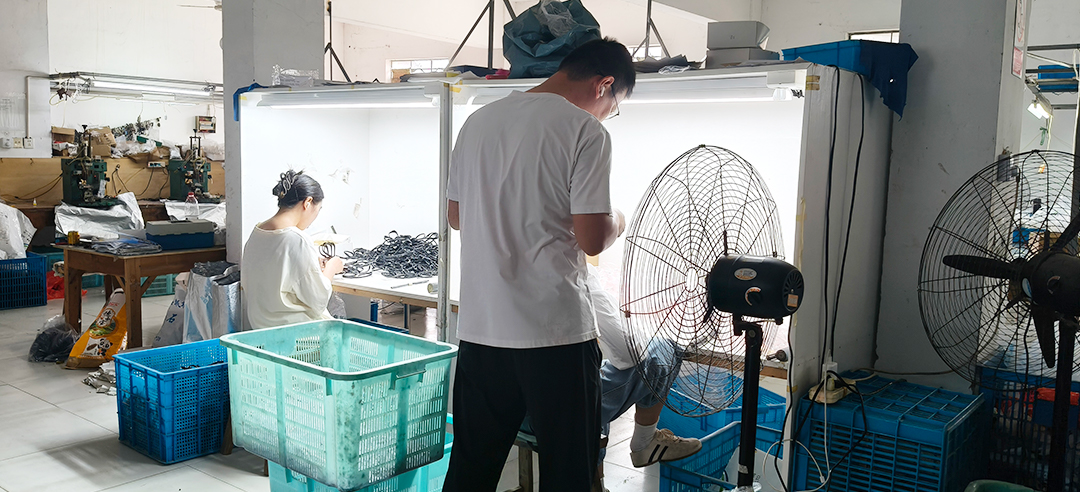
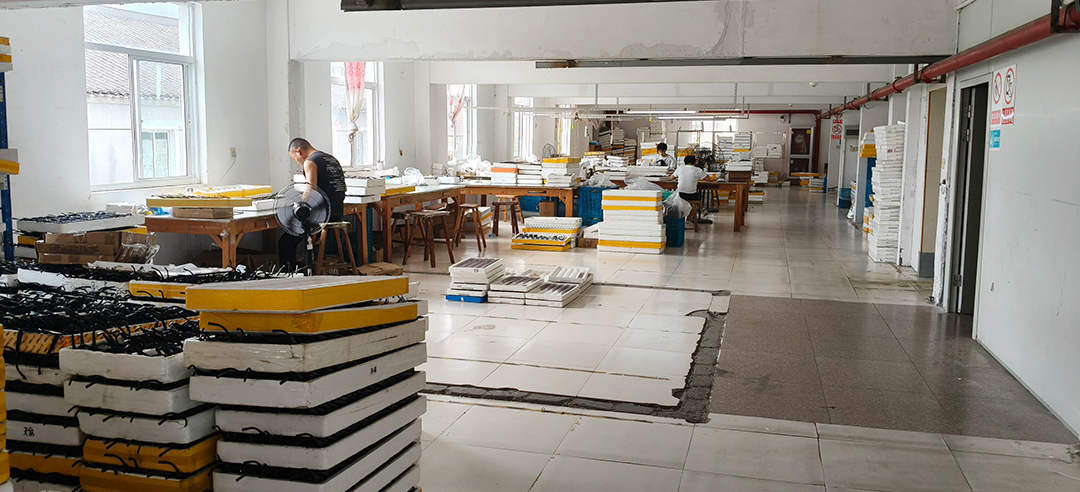
Understanding production helps you judge quality claims. TR90 granules are injection molded into frames, then tumbled and hand-finished to remove mold lines; a clean frame shows smooth parting lines and even coloring. Lenses are cut from polycarbonate sheet or molded, coated with hard coat and tint layers, and for polarized models the polarizing film is laminated under controlled pressure. Rushed lamination shows up later as edge bubbling, especially after hot summers.
Assembly stations rivet hinges and press-fit nose pads, and disciplined factories verify polarization with test cards and run sweat-resistance sampling on metal parts. The photographs from a typical production flow tell the story: molding and finishing, hinge riveting, quality inspection under bright light, and packing of finished batches. When you compare brands, asking which steps are done in-house is a fair question; in-house lamination and inspection usually mean consistent UV400 and polarization across the whole batch rather than just the display sample.
Runners who need correction have three practical routes. Prescription lenses cut directly into a running frame give the cleanest optics but cost more and limit extreme wrap designs. Clip-in prescription inserts behind the tinted lens keep the sport look and allow lens swapping, at a small weight penalty. Contact lenses paired with non-prescription sports sunglasses remain the most flexible choice for many runners, because they allow unlimited frame choice and easy lens-tint changes by season. If you choose direct prescription lenses in a curved frame, confirm with the optical lab that your prescription is compatible with the frame's base curve; strong corrections in deep wrap geometry can distort peripheral vision.
Modern TR90 frames with polycarbonate lenses typically weigh in the twenties of grams, which most runners find unnoticeable once moving. Weight matters slightly less than balance; a well-distributed frame feels lighter than its spec sheet. If you feel the frame within the first kilometer, choose lighter.
Yes for road running, waterfront paths and bright urban routes, where they remove glare from wet asphalt and glass. On shaded technical trails many runners prefer non-polarized medium tints to preserve shadow detail. Match the filter to your dominant route.
Either the bridge width does not match your nose, or the nose pads and temple tips are smooth plastic rather than hydrophilic rubber. Adjustable pads plus rubberized tips solve the problem for most faces; a slightly snugger frame also helps.
Choose frames with brow vents and a small face gap, use a hydrophobic-coated lens, and avoid frames that seal against the cheeks. In winter, starting the run with dry lenses and keeping effort steady for the first minutes reduces the moisture spike that causes fog.
Occasionally, but they are the wrong tool for regular training. Fashion frames are heavier, grip poorly when wet, and lack the close fit that blocks wind and dust. Save them for the cafe after the run.
Yellow or light amber raises contrast in dim light, and a clear photochromic lens adapts as the sun rises. Avoid dark lenses before full daylight; they hide surface irregularities when visibility is already poor.
With fresh-water rinses after sweaty runs, microfiber-only cleaning and rigid-case storage, a quality TR90 frame with hard-coated lenses typically performs well for several seasons of regular training. Cheap uncoated lenses usually scratch within months.
Yes. Salt and sand are abrasive and corrosive. Rinse the frame in fresh water soon after the run, let it air dry, and wipe only with the microfiber pouch to keep coatings intact.
Running eyewear needs are not constant across the year, and a little seasonal thinking prevents most complaints. In summer, the enemies are glare and sweat: polarized lenses earn their keep on sunlit roads, hydrophilic grip pads work overtime, and light colors on the frame absorb less heat against your face. In spring and autumn, low sun angles dominate the problem; a lens with strong contrast in the lower half of its range handles the long shadows that make potholes and roots hard to spot at dawn.
Winter running splits into two gear strategies. On bright cold days with snow around, the same dark lenses that serve summer still work, but fog becomes the central battle, so ventilation beats coverage slightly in priority. On gray, short-day winter runs, many runners switch to a light amber or rose lens or a photochromic pair, because the limiting factor is not glare but the shortage of light. Runners who train year-round eventually settle on a two-pair system, one bright-condition lens and one low-condition lens, exactly as cyclists and skiers do.
Training pairs can be chosen for all-day comfort and durability. Race day adds three considerations: familiar gear only, never debut new eyewear in a race; a fit that survives an hour of harder effort, since effort raises breathing moisture and head motion; and quick stashability for the final kilometers when the sun drops, because a frame that folds into a race belt without scratching is worth real peace of mind.
Sport lenses come in different base curves, the amount of wrap built into the lens itself. A base-6 lens offers a gentle, natural wrap that suits casual running and lifestyle use. Base-8 designs wrap noticeably, cutting side glare and wind, which is why most dedicated running and cycling frames use them. The trade-off is adaptation: strongly curved lenses bend light at the periphery, and your brain needs a session or two to accept the correction, which is one more reason not to debut new eyewear on race day.
For runners the practical guidance is simple. If your routes are open and sunny, the extra coverage of a higher base curve is worth the brief adaptation. If you run shaded, technical trails where peripheral awareness of roots and banks matters most, a moderate base curve with a contrast tint gives you more useful information per glance. Neither is objectively better; they optimize different parts of the visual field.
Running eyewear pricing clusters into three tiers, and knowing what changes between them prevents overspending. Entry-level pairs deliver the fundamentals: a TR90 frame, polycarbonate lens and UV400. At this level, fit quality varies more between models than price predicts, so trying pairs on matters more than comparing specs.
Mid-price products add the coatings that change daily experience: hard scratch coats that survive pocket storage, hydrophobic layers that shed sweat spray, and in some models genuine polarization with verified lamination. For most regular runners this is the sweet spot, because the coatings are the difference between a pair that lasts seasons and one that clouds within months.
Premium tiers buy optical refinement and brand infrastructure: cleaner lens edges, better tolerance in the wrap geometry, interchangeable lens systems and spare-part availability. Those features matter to high-mileage athletes who log hours daily, and less to everyone else. The honest rule: buy the mid-tier coatings before you buy the premium logo.
Runners travel, and eyewear logistics follow. For race-cation packing, a semi-rigid case protects the pair inside a checked bag, while the race-day pair travels in cabin luggage where temperature swings are smaller. If you run commute, choose a frame that tolerates being clipped to a bag strap without slipping, and keep the microfiber pouch inside the bag permanently so cleaning never depends on remembering it.
At home, a fixed storage spot beats willpower: glasses in their case on the same shelf every time survive years longer than pairs that migrate through pockets. Check hinge screws on the first day of each month, rinse the frame after hot weeks, and replace the pouch when it saturates with oil; a dirty pouch is itself a scratch source. These habits cost minutes per month and are the entire difference between eyewear that ages gracefully and eyewear that gets replaced annually.
If you run year-round in changing light, a two-lens system is genuinely useful: a darker gray or polarized pair for bright months and a light amber, rose or photochromic pair for winter and dawn sessions. One adaptable photochromic pair can serve both roles at a higher price per unit.
Sport-casual designs do this well, with moderate wrap and neutral styling. Aggressive race designs look out of place off the road and often clash with helmets and hats. Decide which role the pair plays most and prioritize it.
Snug but painless. Grip materials do their job with light contact; if the frame already presses in store, it will hurt at kilometer twenty when swelling and sweat change the fit. Pain-free stability is the target, not clamping force.
Mirror coatings sit on the lens front surface, so scratches show more visibly than on tinted lenses. With a hard coat underneath and careful storage they last fine, but they punish shirt-tail wiping and loose pocket life.
Great running sunglasses are a fit-and-physics product: featherweight TR90 construction, hydrophilic grip that tightens as you sweat, ventilation that beats fog, and a lens tint matched to your routes with confirmed UV400. Test grip the honest way, with head shakes and a forward lean, choose polarization for road and glare-heavy routes, and treat the pair with the same care as your shoes. Do that, and the glasses disappear from your awareness, which is exactly what the best running gear is supposed to do.
This website uses cookies to ensure you get the best experience on our website.



 Phone
Comment
(0)