

Sports sunglasses for fishing are not an accessory; they are an optical instrument. A quality polarized lens removes the mirrored glare that lies on every water surface, converting a silver sheet into a readable picture of depth, bottom structure, weed lines and fish movement. Anglers who fish without polarization are effectively reading half the water. This guide explains how polarization works on the water, which tints match freshwater, inshore and offshore conditions, and what frame, fit and lens-quality details separate serious fishing eyewear from beach Sunglasses.
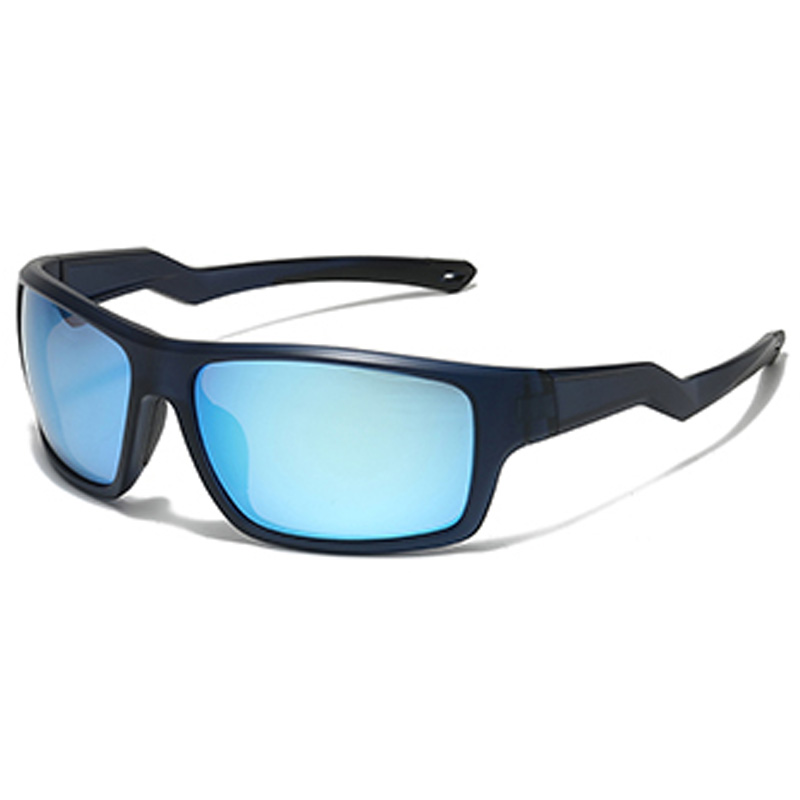
Sunlight hitting a flat water surface reflects strongly in the horizontal plane. That reflected sheet is what your eye receives as glare: a bright, moving mirror that carries almost no information about what lies beneath. A dark non-polarized lens dims everything equally, so the glare and the useful light fade together and you still cannot see through the surface.
Polarization changes the physics. The lens carries a vertically oriented filter that absorbs horizontally vibrating light, which is precisely the component water glare is made of. With the glare layer removed, the remaining light reaching your eye is the light returning from below the surface: bottom color, suspended structure, weed edges, bait flashes and the shadows of cruising fish. Every angler who has compared the two on the same stretch of water describes the same revelation: the river suddenly has a floor.
The viewing advantage grows with shallowness and clarity, which is why flats, streams and shallow lakes reward polarization most. In deep or turbid water the filter still removes surface glare and eye fatigue, but it cannot create visibility the water does not have.
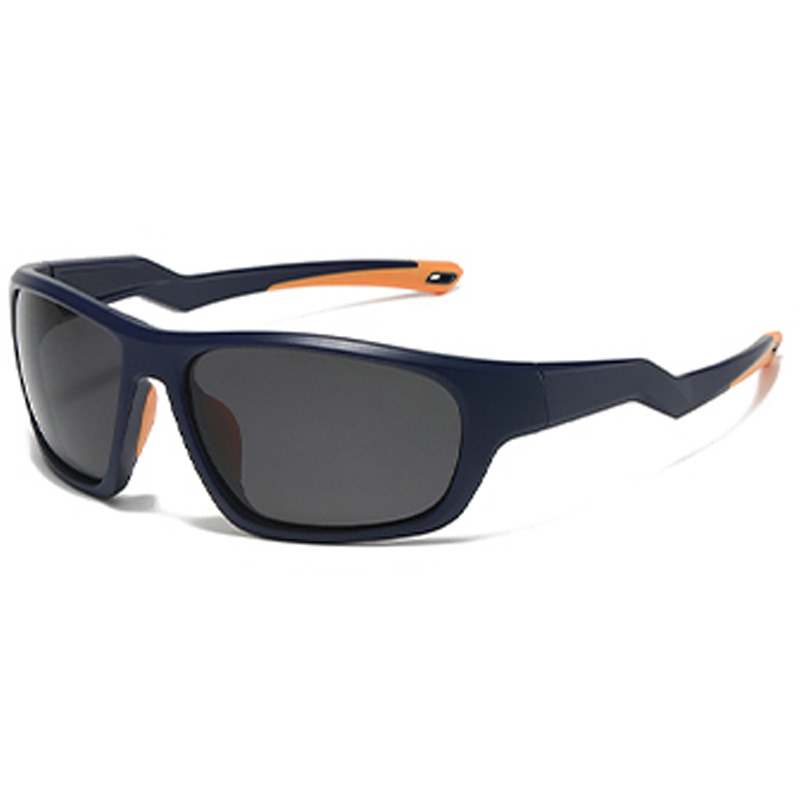
The polarizing film handles glare; the base tint decides how the rest of the scene renders. Match the tint to your dominant water and light conditions rather than buying on looks.
If you buy a single pair for mixed fishing, copper polarized lenses are the most versatile compromise. Serious anglers eventually run a two-lens rotation: copper or amber for low light and freshwater, gray for bright offshore days.
| Environment | Best tint | Mirror | Why |
|---|---|---|---|
| Shallow clear flats | Copper / amber | Green mirror | Contrast against bright sand bottom |
| Rivers and streams | Copper / brown | No | Read currents and holding water in mixed light |
| Lakes, overcast | Amber | No | Maximum available contrast |
| Inshore, bright | Gray or copper | Green / silver | Trim glare while keeping structure visible |
| Offshore, open water | Gray | Blue / silver | Neutral color under extreme brightness |
| Dawn and dusk | Yellow | No | Gather the little light available |
Water glare arrives from everywhere the sun can reach: directly off the surface ahead, obliquely from the side as the sun arcs, and upward off the water behind you after bouncing off your cheekbones. That last path, back-glare, is why wraparound coverage matters so much in fishing eyewear. A flat lifestyle lens lets light leak around the edges and off the back surface of the lens itself, re-introducing the glare you paid to remove.
Serious fishing frames answer with noticeable wrap angle, side coverage that follows the cheekbone, and often an anti-reflective coating on the lens back surface. The back-coating detail is easy to overlook and easy to test: with the sun behind you, a lens without AR coating shows ghost reflections in your peripheral vision, while a coated lens stays clean. If you fish facing the low sun of morning and evening, coverage and back-surface treatment matter as much as the front-surface filter.
Fishing involves long stillness interrupted by sudden movement, and eyewear must survive both. A frame that slides during a cast, a net scoop or a boat bump is a liability, especially when leaning over water. Look for:
TR90 has become the dominant fishing frame material because it combines low weight, flexibility and strong resistance to sweat and UV aging. Metal frames look classic but conduct heat, corrode faster around salt water, and transmit more shock when a rod butt or boat part finds your face.
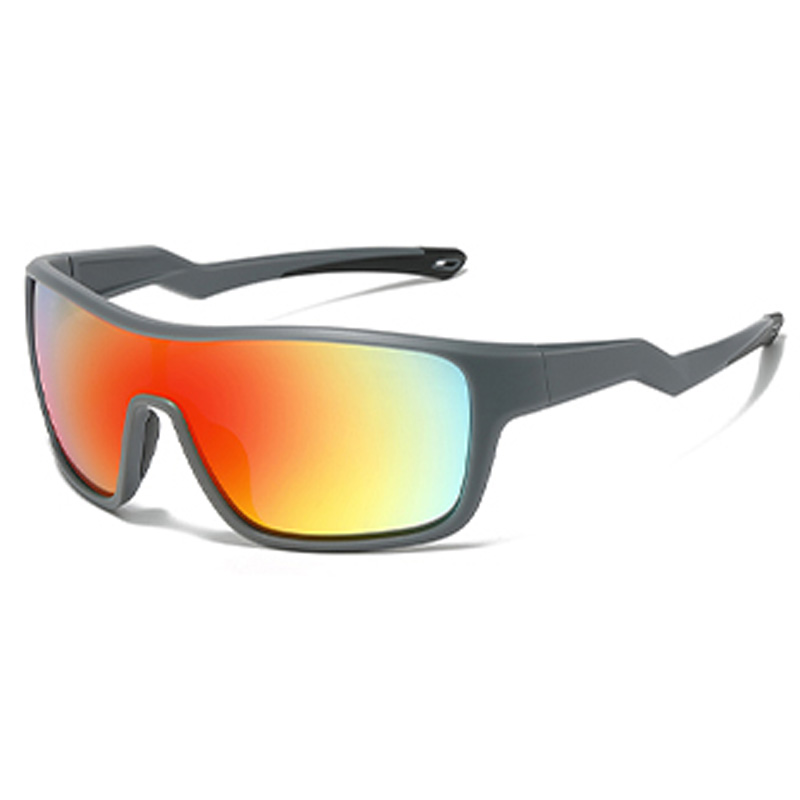
Staring at water all day is a stress test for lens quality. Cheap polarized lenses show their flaws as eye strain, wavy vision and early delamination. Judge four things:
Fishing environments are hostile to optics: salt spray, sunscreen, fish slime, sand and windblown grit. Care habits matter more here than in almost any other sport.

Polarized lenses are laminated constructions: a polarizing film bonded between tint and protective layers under controlled heat and pressure, then hard-coated and often mirror-coated on the front surface. Lamination quality is the invisible variable that separates good fishing glasses from disappointing ones. A well-laminated lens stays clear and stable for years; a rushed one develops edge bubbles and haze after a season of heat, especially on a boat deck or dashboard.

Frames follow a parallel path: TR90 granules injection molded, tumbled smooth, hinges riveted at assembly stations, pads press-fitted, and finished pairs inspected under strong light for optical flaws, polarization verification and cosmetic defects. Factories that control lamination, riveting and inspection in-house can guarantee consistent UV400 and polarization across a production batch rather than only in the sample pair. Asking a supplier which processes are in-house is a legitimate quality question, and their answer tells you a lot about what will arrive in the box.

Prescription wearers can fish with full optical correction in three ways. Direct prescription polarized lenses cut into a fishing frame deliver the cleanest view but limit extreme wrap styles and cost more. Prescription inserts that clip behind the tinted polarized lens keep frame choice open and allow tint swaps by water type. Contact lenses under non-prescription polarized glasses remain the most flexible and popular approach, especially for anglers who already wear contacts for sport. Whatever the route, verify that UV400 and polarization claims apply to the actual lens you receive, not just the product family.
If you sight-fish, wade, or fish shallow clear water, yes; polarization is the difference between reading the bottom and staring at a mirror. Even in deep or murky water it removes glare-induced eye fatigue over long days. It is the single highest-value optical upgrade in fishing.
Copper or amber for most freshwater and inshore contrast, gray for bright offshore days with the most natural color, and yellow for dawn, dusk and heavy overcast. If you must choose one, copper covers the widest range of situations.
LCD screens emit polarized light, so at certain angles it crosses the lens filter and the screen darkens or blacks out. That is normal physics and actually a quick proof that your lens is genuinely polarized.
Mirrors reflect additional light away and shine in extreme brightness on open flats or offshore water. They also show scratches sooner and need more careful handling. The base tint underneath does the contrast work; the mirror is a brightness trim.
No. Polarization removes the surface reflection layer; it cannot create visibility that turbidity, depth or shade do not allow. In clear shallow water the effect is dramatic, and it shrinks as water deepens or clouds with sediment.
Start the trip with dry, clean lenses, keep them off your cap when not worn, and choose frames with brow vents. Avoid pressing them against your face; trapped skin moisture is the usual fog source.
TR90 or similar nylon-family plastic: light, flexible, sweat-resistant and immune to the corrosion that troubles metal frames around salt. Rinse the frame with fresh water after trips and the hinges stay smooth for years.
Not necessarily. Judge the measurable things: genuine polarization, UV400, lens base material, hard coat and coverage. Many mid-price polarized lenses outperform poorly made expensive ones; brand premiums do not guarantee lamination quality.
Each water type rewards a different reading skill, and polarization changes what you look for. On slow rivers and spring creeks, the filter reveals current seams, the darker lines where fast water meets slow, because surface reflection no longer hides them. Trout hold along those seams, so the lens converts hydrology into targets. On reservoirs and lakes, look for bottom transitions: where a mud bottom meets gravel, the tone change marks a travel corridor for cruising fish, visible only when glare is stripped away.
On tidal flats, polarization turns the entire environment into a map. Sand potholes, grass edges, oyster bars and the shadows of tailing fish all become visible at distances where an unfiltered eye sees only sky-colored water. Anglers new to flats fishing routinely overestimate how close fish must be before spotting them; with good lenses the practical sighting range often doubles, which is worth more than any rod upgrade. In moving streams, the filter helps you track a drift, watching your fly or lure hold its line through glare that would otherwise erase it from view.
Honest limits keep expectations sane. Polarization removes surface reflection, not water opacity: in turbid or deep water the bottom stays hidden no matter the lens. It also cannot beat physics at steep angles; looking straight down from a high bank through deep water always shows more than a low-angle glance across the surface. And heavy chop breaks reflection into chaos, reducing the filter's apparent magic on windy days. The lens works constantly, but its visible payoff tracks water clarity, sun angle and your viewing geometry.
Polarization's effect changes with the sun's height, and anglers who understand the pattern position themselves to exploit it. When the sun sits low, glare intensifies but is highly directional; moving so the sun sits behind or beside you restores visibility even through the same lens. At midday, glare comes from everywhere and the filter does its heaviest lifting, which is why the middle hours feel dramatically better through polarized lenses than through tints.
Positioning habits worth building: approach fishy water from downstream or with the sun at your back when possible; use the polarized view to pick a sight line before wading, since the lens will show you the bottom route your feet will follow; and when spotting fails because of angle, change your height, crouch or climb, before blaming the glasses. The filter plus geometry beats the filter alone, every time.
Where you fish changes what the frame must survive. Wading anglers need frames that grip through spray and humidity and survive the occasional dunking; a floating retainer turns a dropped pair from a loss into a joke. Kayak anglers add paddle spray and low seating angles that push water glare directly into the sightline, so coverage height and wrap matter more than style. Boat anglers face the most extreme brightness of all, since open water reflects from every angle and the boat itself adds white surfaces; darker gray lenses with strong wrap and a retainer strap are the default kit.
One often-missed detail for boat and kayak fishing: keep a spare microfiber pouch somewhere dry, because spray leaves mineral film that smears if wiped dry. A quick fresh-water rinse at the ramp after salt trips keeps hinges smooth and coatings alive for years.
Fishing days run long, and comfort failures accumulate slowly until they dominate. The bridge is the first place to fail: a frame that grips firmly in the morning can leave pressure marks by afternoon, so bridge width and soft, wide pads matter more for fishing than for shorter sports. Weight sits second: every gram on the nose becomes noticeable after hours of looking down at water, and the lightest balanced TR90 designs genuinely earn their price here.
Ventilation has a fishing-specific twist. Bending over the water creates a humidity bubble around your face, and frames that seal tightly fog exactly when you lean in to land a fish. Small brow vents and a lens that sits slightly off the face prevent the most annoying fog moment in angling, the one that happens at the net.
Yes. Bank anglers benefit as much as boat anglers because they read shallow near-shore water constantly, exactly where glare removal shows the most structure and movement.
Usually geometry, not equipment. Sun angle relative to your viewing direction, viewing height, and polarized-lens orientation all change what is visible. Move your position, crouch, or shift the angle before concluding the lens is inferior.
The optics can be the same; the tint usually changes. Copper or amber covers most freshwater contrast work, gray handles offshore brightness, and saltwater adds care demands: thorough fresh-water rinses and corrosion-resistant frame materials such as TR90.
In stained or muddy water, contrast matters more than penetration, so amber or yellow tints in moderate density generally read fish and structure better than dark gray, which over-darkens already dim water.
If you struggle to see your lure at hand's distance, the lens is too dark for the light available. Switch to yellow or amber in the first and last hour; there is little glare to fight at those times anyway.
Polarized lenses change social dynamics on crowded water in ways few guides mention. Anglers who can see fish approach them more carefully, spot other anglers' lines before crossing them, and read holding water well enough to spread out rather than compete for the same pool. On popular streams and flats, the anglers with good optics are also the ones who wade without stepping on redds or through spawning gravel, because the lens shows them the bottom before their boot commits.
Guides build their whole service around this optics advantage, and their practice offers a template for recreational anglers: polarized lenses for every client, spare pairs for the one who forgot, and a habit of describing what the lens reveals, structure, shadows, depth changes, so less experienced partners learn to see the same water. Sharing the viewing skill is half of sharing the water gracefully.
Fly fishing concentrates the polarization advantage more than any other discipline because it is a sight game end to end. The angler who spots the fish first casts first, and the fish that never saw the fly eats it. Through a polarized lens, the whole craft sharpens: you track the fish's holding line before wading, watch your fly ride the drift through glare that would erase it, and see the take, that subtle sideways flash of a mouth, early enough to set without hope or guesswork.
Stealth improves too, because polarization extends the distance at which you can spot fish, letting you plan an approach from farther away. Squatting, keeping casts low, and using the water's texture as cover all work better when you can see from outside their window of awareness. Many guides teach new anglers to spot fish through the lens before teaching casting, on the logic that a good drift to nothing beats a perfect cast at nothing.
Fishing rewards anglers who can read water, and polarization is the tool that makes reading possible. Start with a genuinely polarized UV400 lens, pick a tint that matches your water, copper for contrast in freshwater and inshore, gray for offshore brightness, add wraparound coverage and back-surface glare control, and keep the lenses rinsed and case-stored. Do those four things and the water stops being a mirror and becomes a map, which is exactly what fishing eyewear is for.
This website uses cookies to ensure you get the best experience on our website.



 Phone
Comment
(0)