

Sports sunglasses for hiking face a uniquely mixed environment: hours of steady UV exposure that climbs with altitude, light that swings between dark forest shade and blinding open ridgelines, dust and grit on exposed trails, and a frame that must coexist with a pack's hip belt, hood or hat. The right pair handles all of it without a second thought. This guide covers UV reality at elevation, tint selection for mountain light, coverage against wind and dust, fit under gear, and how to keep lenses usable across a multi-day trip.
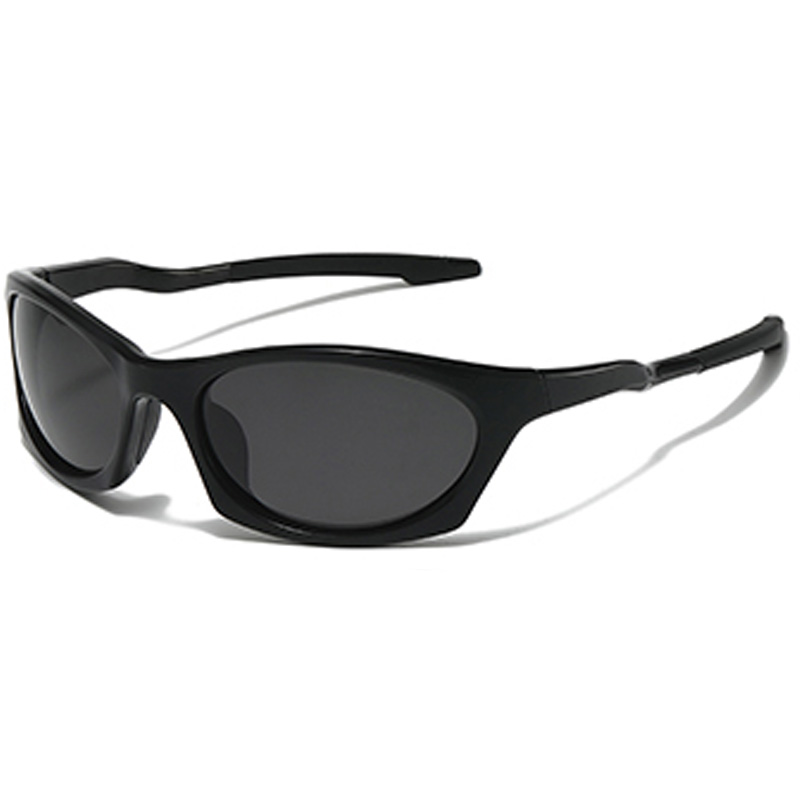
Ultraviolet exposure increases significantly with elevation because the thinner atmosphere filters less of it, and snowfields, granite slabs and alpine lakes bounce it back from below. A full hiking day at moderate altitude can deliver more UV to your eyes than a beach afternoon. The consequences of chronic exposure, from pterygium to cataract, accumulate quietly over years, which is exactly why hikers underestimate them.
The non-negotiable specification is UV400: lenses that block wavelengths up to 400 nanometers, covering all UVA and UVB. Verify it explicitly. Dark tint without UV certification is worse than no glasses, because your pupils dilate behind the dark lens and admit more ultraviolet to the retina. Polarization, meanwhile, is a comfort feature that removes reflected glare from snow patches, lakes and granite; valuable on most mountain routes but not a substitute for the UV rating.
Unlike beach or road sports, hiking moves you through dramatically different light zones within an hour: dense canopy, open meadow, reflective scree, ridge exposure and shadowed valleys. A lens that shines in one zone can hinder in another, so the smartest choice is usually a medium-density tint with strong contrast rather than the darkest lens available.
If you hike mostly below the treeline, contrast tints (amber, rose) will serve you better than fashion-dark gray. If your routes are alpine, carry or choose darker gray or mirrored options for the exposed sections.
| Trail segment | Recommended tint | Polarization | Reason |
|---|---|---|---|
| Forest canopy | Rose / light amber | No | Keep shade detail visible |
| Open meadow | Brown / amber | Optional | Contrast on uneven ground |
| Scree and granite | Gray or brown | Yes | Kill reflected glare off rock |
| Snow patches | Gray, darker density | Yes | Snow reflection is intense |
| Ridgeline, wind | Gray, wrap frame | Yes | Glare plus dust and wind control |
| Dawn start / dusk finish | Yellow / photochromic | No | Maximize low light |
Open trails generate their own weather. Wind dries your eyes, dust rides every gust, and insects arrive at exactly the moment your hands are full with trekking poles. Wraparound coverage solves all three at once: it shields the eyes from lateral wind, blocks windblown grit that a flat lens funnels around the edges, and provides a physical barrier that makes an insect strike a non-event instead of an emergency stop.
Look for frames with modest-to-strong wrap, lens edges that follow the cheekbone and brow, and enough lens height that looking up at a route line does not expose your eyes over the top. Deep ventilation channels help prevent fogging at climbs but admit some dust; on dusty trails, a slightly more sealed frame with hydrophobic coating is the better trade.
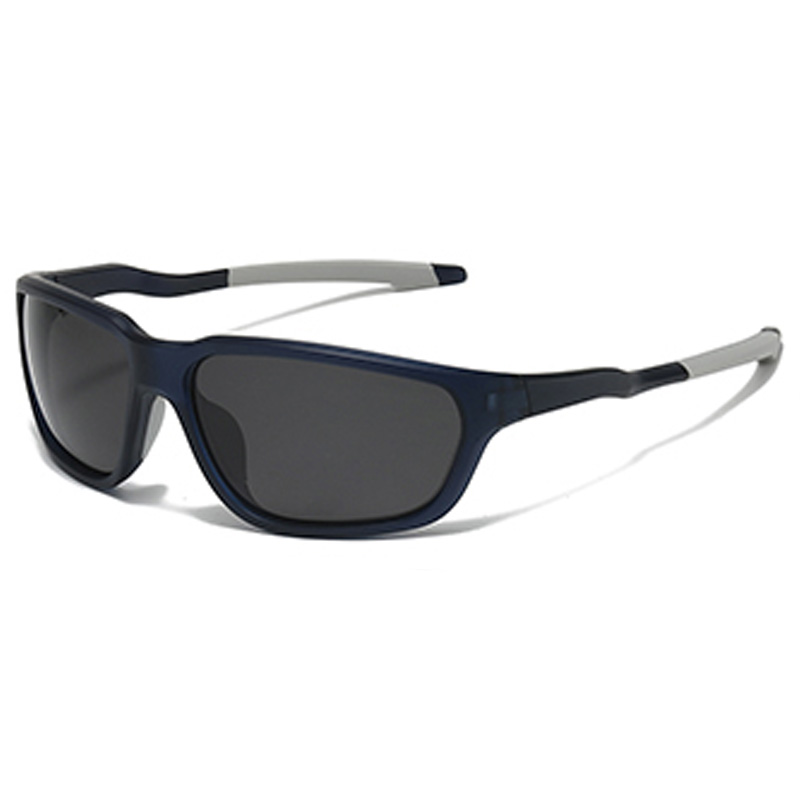
Hiking eyewear lives in a gear ecosystem, and conflicts show up on the trail, not in the shop. Test any candidate pair with your actual equipment:
One more fit detail specific to hiking: check the glasses while looking down at a map or your feet. Frames that slide on a downward glance will slide constantly on descents, when you need stable vision most.
Polarization excels against glare from snowfields, lakes, rivers and wet rock, and it reduces fatigue on long exposed sections. Its one mountain drawback: in flat, uniformly lit terrain, strong polarization can flatten the subtle shading your eyes use to judge slope texture and depth. On mixed forest-and-ridge routes, a moderate polarized tint is usually ideal; on snow travel, polarization plus dark gray is the standard; on technical shaded descents, some hikers prefer non-polarized contrast tints. As with tint choice, match the filter to the dominant terrain rather than following a blanket rule.
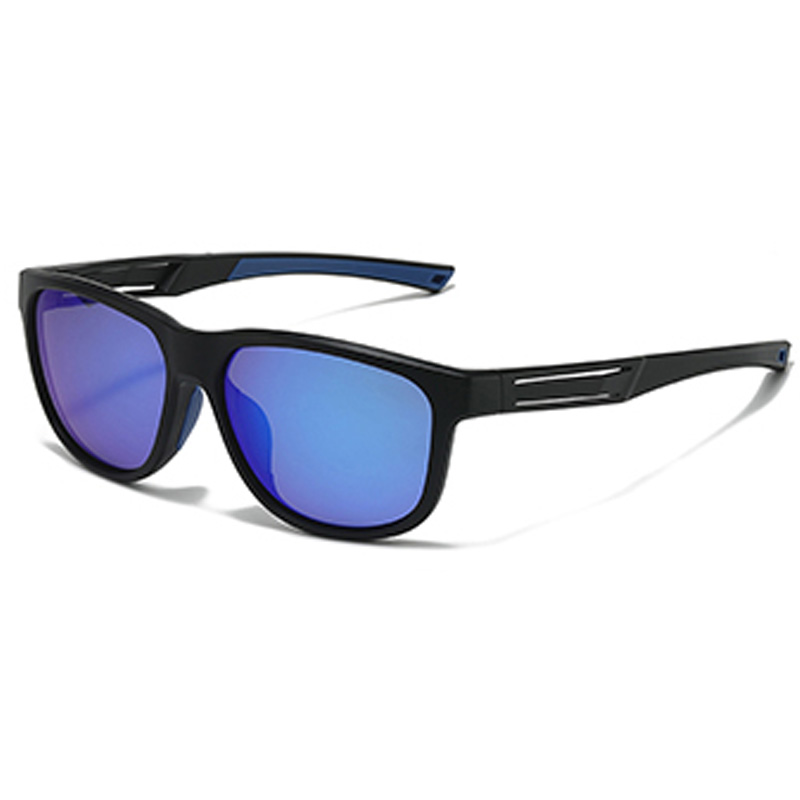
Trail life is hard on eyewear: frames get sat on, lenses meet zippers, and everything lives in a pack pocket that also holds keys. Material choice and habits decide whether a pair survives the season.

Quality in hiking eyewear is mostly invisible until months in, which is why production discipline matters. TR90 granules are injection molded, tumbled and hand-finished; lenses are cut or molded, hard-coated, tinted and, for polarized models, laminated under controlled conditions before final coating. Assembly stations rivet hinges, press nose pads and verify alignment. Disciplined factories then inspect finished pairs under strong light for optical distortion, verify polarization with test cards and check UV400 by batch.

The practical takeaway for buyers: ask which processes a manufacturer performs in-house, particularly lens lamination and final inspection. In-house control usually means the UV400 and polarization promises apply to the whole batch, not just the marketing sample. It also tends to show up in details you can check by hand: smooth mold lines, hinges that cycle without play, and lenses free of wavy distortion when swept across a straight edge.

Hikers needing correction can choose prescription lenses fitted directly to a sport frame, prescription inserts behind the tinted lens, or contacts under non-prescription Sunglasses. Direct prescription in a wrapped frame gives the best wind and dust protection but constrains strong prescriptions, since deep base curves can distort peripheral optics; a lab can confirm your correction is compatible before you commit. Inserts keep tint flexibility for different routes at the cost of a little weight and fogging risk. Contacts plus quality UV400 Sunglasses remain the simplest all-round solution for most multi-day hikers.
Yes, for UV more than brightness. Canopy shade reduces visible light but not necessarily your cumulative UV exposure at clearings, lakes and viewpoints, and glare from wet rock and water still causes fatigue. A medium tint with confirmed UV400 is the right forest tool.
Brown or amber for contrast on mixed terrain, gray for snow and long open exposure, or a photochromic lens if your routes swing constantly between shade and open sky. Avoid very dark lenses for below-treeline trails.
Your face keeps radiating heat while the lens cools in mountain air, so condensation forms the moment you slow down. Ventilated frames, hydrophobic coating and pulling the glasses slightly down the nose during rest stops all help.
They are excellent against glare from snow, lakes and wet rock, and slightly risky on flat shaded descents where they flatten depth cues. A moderate polarized tint covers most mixed routes well.
In a rigid case or hard-shell pouch, never loose with keys or a multitool. If you stow them on the go, use the shirt collar trick only for short periods; pockets and packs are where coatings die.
TR90 or similar nylon-family plastic: light, flexible, sweat-proof and forgiving of being sat on. Metal corrodes and transmits impact; acetate is heavy and brittle in cold weather.
Snow changes the math: reflection roughly doubles your exposure, so darker gray polarized lenses with strong wrap coverage become the standard, and side shields or deep wrap help against reflected light entering from the sides.
Breathe on the lens and wipe gently with the microfiber pouch; if grit is present, rinse with water first. Never dry-wipe a dusty lens, and never use clothing, which grinds particles into the coating.
Hikers respond better to recommendations when the reasoning is visible, so here are the numbers that drive mountain eyewear advice. Ultraviolet exposure rises with altitude because the atmosphere's filtering layer thins: common guidance suggests each thousand meters of elevation adds roughly ten percent to UV intensity, before any reflection is counted. Reflection then multiplies the effect; snowfields reflect most of incident UV upward, bright sand and granite bounce substantial shares, and even a mountain lake contributes its mirror. A hiker standing on a snowy ridge at altitude receives direct sun, sky-scattered UV and reflected UV at once.
Cloud cover misleads more than it protects. Thin cloud transmits most UV while cutting visible light, which is why hikers on overcast days skip sunglasses and finish with surprising eye fatigue. The practical rules follow directly: wear UV400 eyewear whenever you are above the treeline, regardless of visible brightness, and treat gray overcast at altitude exactly as you would treat sun.
Mountain light management comes down to three strategies, each with a clear user profile. The single medium-contrast tint, usually brown or amber, is the simplest: one pair, one habit, adequate for forest and mixed routes below the treeline. It fails gracefully, meaning it is never badly wrong, only slightly imperfect at the extremes.
The two-lens kit, a dark pair for exposed ridges and snow, a light pair for canopy and dusk, delivers the best optical result in every condition at the cost of weight and decisions. It suits multi-day traverses and high routes where you will meet both regimes daily. Interchangeable frames make the swap trailside in seconds, and the spare lens lives in a hard sleeve in the lid of your pack.
Photochromic lenses automate the same logic: one pair that darkens in UV and clears in shade. They excel on forest-to-ridge day routes and for hikers who dislike carrying anything extra. Their limits are cold-weather response and a maximum density below dedicated dark lenses, which matters most on snow. For most three-season hikers, a quality photochromic pair is the single best purchase; for snow travel, add the dark fixed pair.
Multi-hour comfort depends on details that only appear with a pack on your back. Shoulder straps pass close to the temples, so low-profile temple arms prevent hours of chafing against strap edges. Hip-belt pockets have become the standard stow location on modern packs precisely because glasses go in and out constantly, clouds pass, ridges arrive, canopies return; a frame that survives this cycle without scratched lenses needs a hard-coated lens and a pouch that lives in the pocket.
Sweat management changes with load: heavier packs raise effort and face moisture, which is why hydrophilic grip pads earn their name on approach hikes. And consider the map-checking posture, looking down at a screen or paper; frames that slide on a downward glance become a constant nuisance on descent, so test that motion specifically before committing to a pair.
For families and guided groups, eyewear is part of the safety conversation. Children's eyes transmit more UV to the retina than adult eyes, so young hikers benefit from real UV400 sunglasses earlier than parents typically assume; a strap retainer prevents the inevitable drops. Group leaders commonly carry a spare light-tint pair, because the most common eyewear failure on trail is not breakage but a participant who forgot theirs entirely and will spend eight hours squinting into reflected glare.
Spare-kit logic extends to cleaning: a single group microfiber pouch and a tiny spray bottle cover everyone's lenses for a weekend. Establish the rinse-before-wipe habit on day one, since trail dust is abrasive and the first careless wipe of a gritty lens does more damage than the whole rest of the trip.
Above the treeline, yes: thin cloud transmits most UV while dulling the visible light that would remind you to wear them. Below the treeline in dense forest, a light tint is enough; the UV risk concentrates in open terrain.
A medium brown or amber is the best single answer, or a photochromic lens that adapts automatically. Avoid very dark gray as your only lens for mixed routes; it over-darkens the shaded sections where you need detail.
In a rigid case or the pack's hip-belt pocket in a microfiber pouch, never loose in the main compartment. If you clip them to a strap, use a retainer, since unclipped frames vanish into scree fields with remarkable efficiency.
Mid-price products with hard coats and genuine UV400 cover most hikers well. Premium pricing buys optical refinement and interchangeable systems that high-mileage users notice; occasional hikers rarely do. Judge coatings and fit over logos.
Usually yes, since the demands overlap heavily. Add one consideration: hiking puts you in dust and low branches, so slightly more coverage than a minimal running frame is welcome on overgrown trails.
Wraparound coverage doubles as an insect barrier during the hours when bugs find your eyes fastest, and camp is where rough handling happens, so a hard case earns its space in the pack overnight.
Many mountain days end after dark, and the handoff between sunglasses and headlamp deserves planning. Sunglasses live in a predictable pocket during night sections, hard case or padded pouch, because darkness is exactly when a dropped frame becomes a lost frame. Wrap frames with light lenses also serve the golden hour before headlamp time better than dark lenses, which is one more argument for the two-tint kit on long routes.
Runners and hikers who regularly cross the dusk boundary often carry a clear-lens sport frame instead: it blocks wind, dust and branches after dark while transmitting full light, and it uses the same TR90 platform as the sunglasses. The pairing costs little and removes the worst moment of mountain travel, sprinting into twilight with dark lenses because the replacement is buried in the pack.
Hiking vision work concentrates in three recurring micro-tasks, and lens choice shows its value in each. Water crossings demand reading the streambed through moving surface: polarization strips the reflection and lets you place your boots on visible stones rather than hoped-for ones, which converts the sketchiest moment of a trail into routine footwork. Depth perception matters here more than darkness, another point for contrast tints over dark gray.
Scree and talus fields test peripheral clarity, since safe passage means reading slope texture a meter to each side while moving. Lenses with wavy periphery, exactly the flaw the straight-edge sweep exposes, punish you here, turning each step into a guess. Route-finding, meanwhile, is a distance task: spotting the cairn, the ramp, the break in the cliff line at range against glare or haze. A clean neutral or warm tint with true optics keeps those distant features resolvable; a cheap lens smears them into the hillside. The pattern is consistent: mountain walking is footwork, and footwork is vision.
Mountain advice dominates hiking content, but three other environments impose distinct optical demands worth planning for. Desert hiking combines relentless sun with sand-carrying wind: the tint goes darker than mountain norms, wrap coverage stops windblown grit, and the light-colored sand underfoot bounces glare upward into every downward glance, so coverage height matters as much as density. Hydration routines interact with eyewear too, since desert dryness attacks the tear film faster than mountain air.
Coastal trails add salt spray to the standard glare mix: polarization earns its place over every ocean vista, and the after-hike rinse habit stops salt from slowly stiffening hinges and dulling coatings. Rainforest and jungle trails invert the problem entirely: light is dim, humidity saturates the air, and fog becomes the constant adversary. There the right tools are light yellow or rose tints, aggressive ventilation, and hydrophobic coating, plus the discipline of keeping the glasses on the face rather than parked on the head, where they fog instantly on the next wear. One pair of sunglasses rarely masters all four environments; knowing your trail type picks the right compromises.
Hiking eyewear succeeds when it handles everything the mountain throws at once: UV that strengthens with altitude, light that flips between shade and blaze, wind and dust on ridgelines, and a frame that must live peacefully with straps, hats and packs. Choose confirmed UV400, a contrast-friendly tint or photochromic lens, wraparound coverage and TR90 construction, then protect the lenses with rinse-first habits and a hard case. The reward is steady, comfortable vision from the trailhead to the summit and back.
This website uses cookies to ensure you get the best experience on our website.



 Phone
Comment
(0)