

Sports sunglasses for golf solve a specific visual problem: judging depth, distance and surface detail under hours of bright, shifting light on a reflective green surface. The wrong pair dulls the very contrasts a golfer depends on; the right pair makes fairway contours, ball flight and green undulations easier to read while protecting eyes that spend four hours in full sun. This guide covers tint science for turf, the polarization debate on the greens, lens technology for depth perception, and the frame details that stay quiet through a full swing.
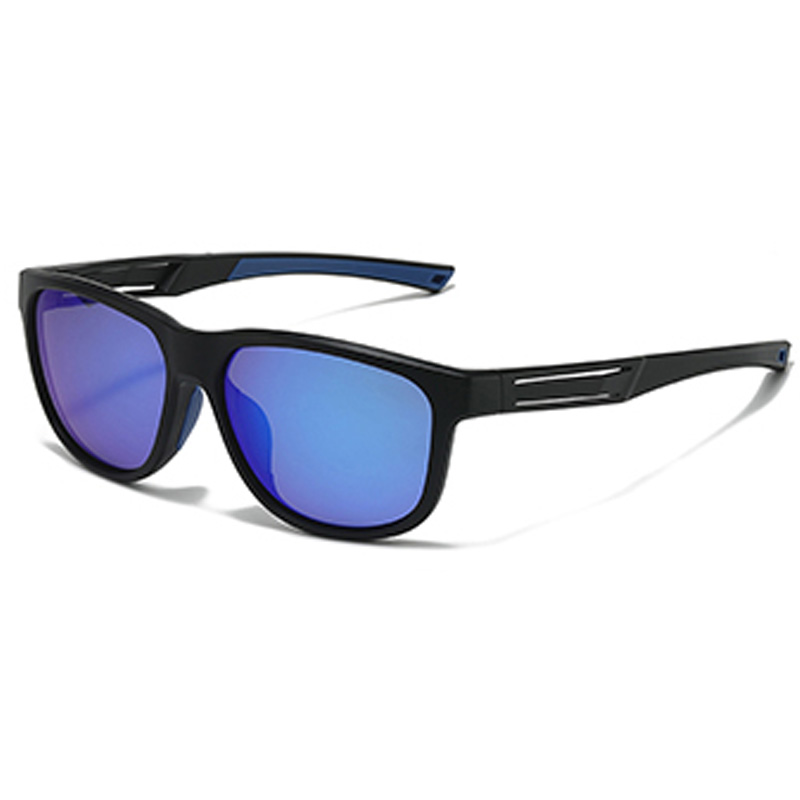
Few sports stress vision across as many distances as golf. You read a green from two meters, track a ball against the sky from two hundred, and judge landing spots on terrain that is uniform in color but subtle in texture. Bright sun flattens exactly those subtleties: fairway undulations wash out, the sky-ball contrast blurs, and squinting introduces head tension that quietly damages a repeatable swing.
Golf eyewear therefore prioritizes contrast enhancement and true depth perception over raw darkening. A lens that simply makes the world darker solves brightness but loses the shading differences your brain uses to read slopes. The goal is selective absorption: trim the glare, keep the shading, and render color in a way that keeps grass tones distinct from sky and sand.
Because light shifts across eighteen holes, some golfers choose two lenses in interchangeable frames or a photochromic lens that adapts automatically. Confirm UV400 on whatever you choose: a golf round is a long, cumulative UV exposure, and color choice has nothing to do with ultraviolet protection.
| Condition | Recommended tint | Effect on turf | Effect on ball flight |
|---|---|---|---|
| Bright sun | Brown / amber | Sharpest contour reading | Good sky contrast |
| Broken cloud | Rose / amber | Keeps slopes visible | Bright ball image |
| Full overcast | Yellow / light rose | Maximizes available light | High contrast against gray sky |
| Intense midday | Dark brown or gray | Comfort over contrast | Neutral, natural |
| Changing all day | Photochromic | Adapts automatically | Consistent across the round |
Polarized lenses remove horizontally reflected glare, and golf generates some: morning dew, wet rough, cart paths and water hazards all throw glare. On balance, many golfers love polarized lenses for comfort during long sun exposure.
But putting adds a complication. Green reading depends on detecting extremely subtle sheen differences between shiny and matte slopes; some players report that strong polarization mutes those sheen cues, flattening the very information they need on the green. The practical advice: try both on your home course. If your green reading suffers through a polarized lens, choose a non-polarized contrast tint instead, or lift the glasses for putting and wear them for everything else. Neither camp is wrong; the deciding test is your own stroke on your own greens.
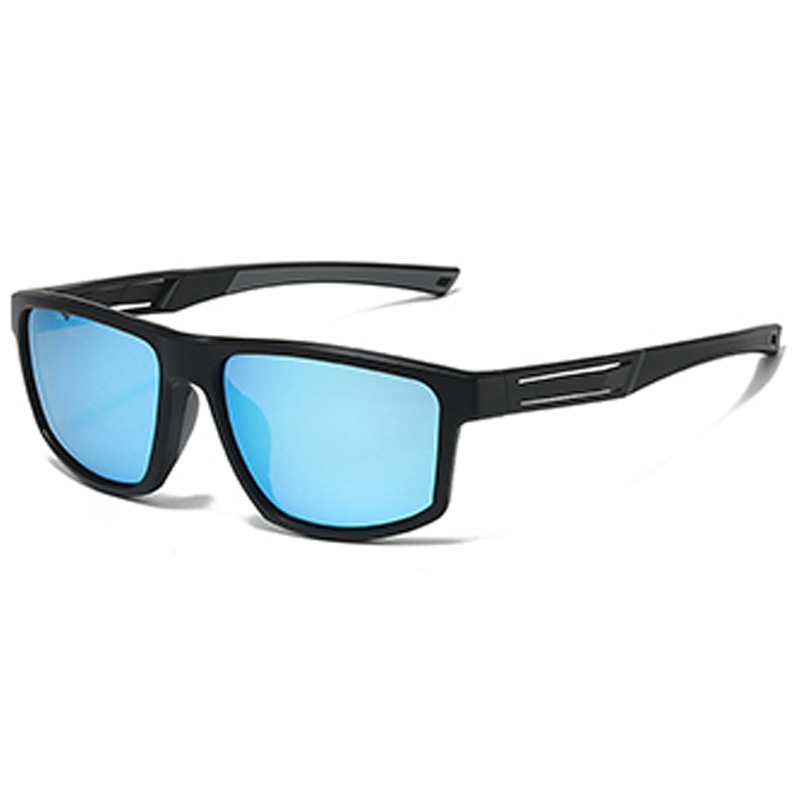
Judging ball flight requires clean sky-to-ball contrast and undistorted distance perception. Two lens properties matter here. First, avoid lenses with heavy color distortion at the edges; warped periphery shifts your sense of where the ball is against the horizon. Second, prefer optical-grade lens material such as polycarbonate with proper hard coating, since optical waviness, however slight, degrades the smooth arc tracking a ball needs.
Fit geometry contributes too. The frame should position your eyes behind the lens center in your normal address posture. If the frame sits low and you peer over it at address, you lose the tint precisely where you need it; if it sits too high, your lids brush the lens during the swing. Test at address, not in the mirror.
A golf swing rotates the head fast and stops it quickly. Eyewear must stay stable without pressure that interferes with feel.

Three coatings deliver real value on the course. A hydrophobic top coat sheds morning dew and sweat spray, keeping optics clean between shots. An anti-reflective back-surface coating removes ghost reflections when the sun sits behind you, which matters on late-afternoon nines. A hard scratch coat protects against the bag, the cart and the pocket between shots. Mirror coatings are optional style-and-brightness trims; they help in extreme sun but show scratches sooner and offer no contrast benefit by themselves.
Golf carries underrated eye risks beyond UV. Sand particles blast from bunkers, twigs whip on wooded courses, and a ball or club near-miss travels fast. Polycarbonate lenses are impact resistant by nature, and full-coverage sport frames add physical shielding that fashion frames cannot offer. UV, impact and glare protection come in one package, which is why sport-grade eyewear beats casual Sunglasses on the course even for golfers who care nothing about optics.


Prescription players can fit their correction into golf eyewear three ways: direct prescription lenses in a sport frame, clip-in inserts behind the tinted lens, or contacts under non-prescription sunglasses. Direct prescription gives the cleanest optics; confirm with the lab that your prescription suits the frame's base curve, since wrap designs can distort strong corrections at the periphery, and peripheral accuracy matters at address. Inserts preserve tint flexibility at a small weight cost. Contacts remain the simplest route for players who already wear them.
It depends on your green reading. Polarization removes dew and cart-path glare comfortably, but some golfers find it mutes the sheen differences they use to read slopes. Test both on your home greens before committing.
Brown and amber enhance green-on-green contrast most, which is why they dominate golf. Rose works well in softer light, and gray suits players who want neutral color with maximum comfort in intense sun.
Yes if the lens does not interfere with your reading of the slopes. Many golfers who wear dark or polarized lenses for full shots lift them on the green; photochromic or light-contrast tints usually let you keep them on throughout.
A quality contrast tint with clean optics helps, by sharpening sky-ball and turf-tone separation. Cheap lenses with optical waviness or heavy edge distortion hurt. Sweep a candidate lens across a straight edge to check for wobble before you buy.
They suit players who face changing light across a round and dislike swapping lenses. Response slows in cold weather, and the darkest state may be lighter than a dedicated dark lens, so very sun-sensitive players may still prefer fixed dark tints.
TR90 or similar nylon-family plastic: light enough to forget during the swing, flexible under impact, and stable against sweat. Metal frames conduct heat and add inertia at the transition; acetate is heavy for sport use.
Choose hydrophilic nose pads and temple tips, confirm bridge fit at your address posture rather than standing straight, and keep the pads clean; skin oils flatten any grip material over a round.
Absolutely. The visual demands are nearly identical, and a comfortable contrast-tint pair with UV400 works for practice sessions, casual rounds and even everyday driving.
Every course imposes its own light geometry, and a few minutes of thinking about yours improves lens selection more than any generic advice. Tree-lined parkland courses create a strobing effect: bright fairway, dark canopy, bright again, dozens of times per round. In that environment, a fixed dark lens forces constant adaptation and a photochromic or medium contrast tint performs visibly better, because your eyes never fully adjust between the zones.
Links and open courses invert the problem: wind, sky and long sightlines dominate, with glare off wet grass and sand after rain. There, a slightly darker lens with polarization earns its keep, and the wrap coverage helps against wind-driven grit. Desert and mountain courses add altitude UV and sand bounce, favoring darker tints and confirmed UV400. Match the lens to the course you actually play most, not to the course in the brochure photograph.
How you move changes the frame's job. Walking rounds raise sweat and heat, so grip materials and ventilation matter more. Cart rounds expose glasses to dashboard storage between shots, which is where coatings die in summer; a hard case in the cart's valuables tray is a small habit with a large payoff. Trolley users get the middle case: less sweat than walking, less heat abuse than carts, and more pocket opportunities for the microfiber pouch.
Golfers over forty meet a specific optical annoyance: reading scorecards, GPS screens and distance marks through distance-corrected lenses. Several solutions exist inside sport eyewear. Round-segment bifocal additions set low in the lens keep the swing zone optically clean while giving the downward glance a reading zone. Full progressive prescription lenses work but demand adaptation and careful fitting in wrapped frames. Many players simply choose non-prescription sunglasses and read the card through reading glasses in the cart, which is awkward at best.
The cleanest modern route for most is contacts for play plus non-prescription sport sunglasses, keeping the optics simple. Whatever the route, verify that any reading segment sits low enough that your address posture never looks through it; a swing through the wrong optical zone is disorienting at exactly the wrong moment.
Eighteen holes almost never hold one light condition, so build a simple decision tree. Morning frost and low sun favor rose or amber and a cap brim. Midday brightness brings the full dark or contrast lens into its own. Afternoon storm cells arrive as abrupt dimness: the moment shadows vanish and greens go flat, that is the signal to swap to a lighter lens or remove the glasses, because a dark lens in storm light is a handicap on every green.
Drizzle and mist deserve specific mention. Wet lenses collect droplets that smear the sight picture, and wiping with a wet glove makes it worse. Hydrophobic coating is the fix that actually works on course, letting water bead off; without it, carry the pouch and accept the maintenance. Wind rounds add dust to the mix, which is where moderate wrap earns its place without creating the tunnel vision that hurts green reading.
Teaching professionals see eyewear-induced faults regularly, and their observations are useful for anyone choosing a pair. A frame that slides during the backswing produces compensating head movement, which shows up as inconsistent contact long before the player identifies the cause. Lenses with heavy color casts can shift a player's perception of the putting surface enough to change stroke confidence, which is why coaches often suggest testing any new lens over several practice rounds rather than switching on tournament day.
Coaches also notice the opposite: well-fitted eyewear that players forget they are wearing. That disappearance is the quality signal. If your glasses announce themselves at any point in the swing, in grip, weight or fog, treat that as a fit failure to solve before adjusting your technique around it.
Often yes, since both reward contrast tints and stable frames. Tennis adds faster lateral head motion, so slightly more grip and a touch more wrap help; many players happily share one pair across racket and club sports.
Quality lenses with clean optics do not distort distance; cheap wavy lenses do. If a new pair seems to change your sense of depth on familiar shots, run the straight-edge distortion test before blaming your swing.
A medium brown or amber polarized lens balances glare relief with contrast, and larger coverage shields aging eyes that are more sensitive to brightness. Comfort and glare control matter more than any trend in tint fashion.
Rinse or blow off dust first, then use the microfiber pouch. Keep the pouch clipped inside the bag where it cannot collect grit, and never clean lenses with the towel that wipes clubs and grips.
It works for bright parkland and links play, but it handicaps storm rounds and shaded courses. A contrast tint or photochromic covers the full range of conditions most golfers actually meet in a season.
Sunglasses make a strong golf gift precisely because most golfers tolerate bad pairs for years, but the purchase needs the same fit discipline as buying for yourself. Confirm the recipient's light conditions first, early-morning player or midday regular, since tint choice follows habit. Choose a neutral, classic frame shape in TR90 rather than a fashion silhouette, because golfers reject gifts they cannot swing in.
Include the accessories that make the gift complete: a hard case, a spare microfiber pouch and a retainer strap. And attach a note suggesting a practice-round trial, since the considerate gift gives the recipient permission to swap tints or sizes if the first choice does not suit their greens. A well-chosen pair gets used four hours at a time, every good-weather week, which few gifts can match.
Competition rounds reward preparation habits that casual golf never demands, and eyewear belongs in that routine. The night before, clean the lenses properly, rinse, dry with microfiber, inspect for the smears that morning dew will highlight, and pack the case with the spare pouch. On the day, arrive wearing the pair you have practiced with; tournament day is never the day to debut a lens tint, a frame, or even a nose pad adjustment, because every small unfamiliarity competes for the attention your swing needs.
Build a weather-contingency plan into the bag: the second lens or second pair for the forecast's opposite, whether that means a light-contrast lens for a forecast storm cell or a darker lens for a burn-off morning. Know where your lens stands on the screen question if your round uses GPS devices in carts. And decide in advance your putting protocol, lenses on or lenses off, so the decision on the twelfth green is a habit rather than a debate. Serious rounds are won on routine, and eyewear routine is a small, controllable part of it.
Green reading is the most information-dense visual task in golf, and it helps to know exactly what your eyes are collecting. Fast greens broadcast their speed through sheen: light reflecting off a moist or smoothed slope reads brighter than matte surroundings, and your brain converts those sheen gradients into slope direction and severity. This is precisely why the polarization debate matters on the putting surface, and why some strong readers prefer non-polarized lenses: the filter can mute the sheen difference that carries the information.
Contrast tints interact with the same signal differently. Brown and amber compress the brightness range while preserving the sheen-to-matte relationships, which is why many golfers report that slopes read more clearly through them in soft morning light. The practical experiment is simple and personal: on your practice green, read the same slope through bare eyes, a contrast tint and a polarized lens, and compare your calls against the actual putt. Ten minutes of this experiment tells you more about your ideal lens than any generic guidance, and it doubles as practice for the day when lighting conditions force a change.
Golf travel adds two hazards that home storage never presents: checked-bag pressure and rental-cart chaos. In flight, hard cases with interior padding protect frames that would flex against bag contents; the glasses ride in cabin luggage where temperature swings are gentler whenever space allows. On arrival, the rental cart becomes the main threat, with its dashboard heat and vibrating ball pocket, so the hard case in the valuables tray, rather than the glovebox in the sun, is the default parking spot for the pair all round.
Golf eyewear is about selective vision: trim the glare, keep the shading, and let your eyes do the reading. Start with confirmed UV400, pick a contrast tint such as brown or amber that makes turf undulations visible, test polarization against your own green reading, and insist on a light TR90 frame with grip that survives a full swing. The payoff shows up quietly, in cleaner ball flight tracking, easier slope reading and a neck that is not squint-tight by the back nine.
This website uses cookies to ensure you get the best experience on our website.



 Phone
Comment
(0)