

Photochromic and polarized Sports sunglasses solve two completely different light problems, yet buyers constantly mix them up. Polarization removes reflected glare; photochromic lenses change their tint density as sunlight changes. Choosing between them is not about quality, since both exist in excellent and terrible versions; it is about which light variable dominates your sport. This guide explains how each technology works, compares them sport by sport, and covers the hybrid option that combines both filters in a single lens.
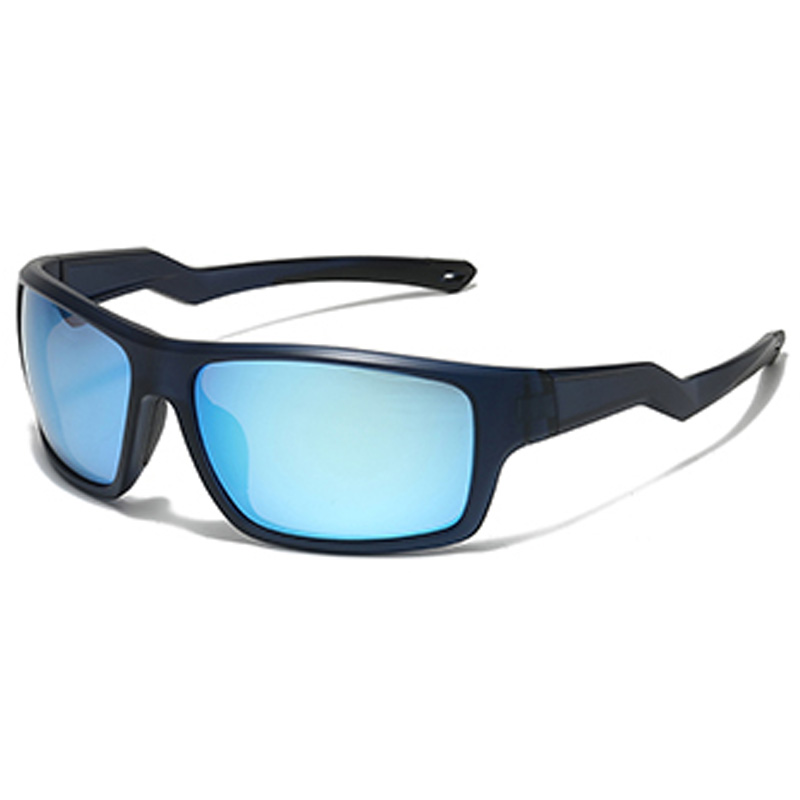
Light reflected off flat horizontal surfaces, water, roads, snow, car hoods, vibrates predominantly in the horizontal plane. A polarizing film is a vertically aligned filter that absorbs that horizontal component while passing most of the rest of the scene. The result is selective glare removal: the blinding sheet off a lake or wet asphalt drops away while the useful detail stays. Polarization is constant; it does not respond to light level. A polarized lens behaves identically at dawn and noon, only removing glare in both.
Its strengths are glare-heavy environments and eye comfort during long exposure. Its limits are equally clear: it does nothing about changing brightness, it can darken LCD screens at certain angles, and on flat shaded terrain it can mute the subtle shading your eyes use for depth reading.
Photochromic molecules change their molecular shape when ultraviolet light hits them, absorbing more visible light as they do. Indoors or behind UV-blocking glass they relax back to clear. The lens therefore continuously adapts its darkness to the UV environment, bright shade to dark sun and back again, without any action from you.
Its strengths are variable light: forest trails, long rides that alternate sun and shadow, dawn starts that turn into bright days. Its limits: transitions take tens of seconds and slow down further in cold weather, the darkest achievable state is usually lighter than a dedicated dark sunglass tint, and because the trigger is UV, ordinary car windshields, which block most UV, keep the lens relatively clear while driving.
| Property | Polarized | Photochromic |
|---|---|---|
| What it manages | Reflected glare | Changing brightness |
| Responds to light level | No, fixed density | Yes, continuously |
| Best environments | Water, wet roads, snow, glass buildings | Forest, mixed trails, dawn-to-noon sessions |
| Weakness | LCD darkening, flat-light depth loss | Slow in cold, lighter than fixed dark tints, inactive behind car glass |
| UV protection | Separate feature; verify UV400 | Usually UV400 by design, but verify |
| Can combine | Yes, polarized photochromic lenses exist | Yes, same hybrid |
Riding throws the widest light swings at your eyes: sunlit straights, dark tree tunnels, dawn starts. Photochromic lenses are the default recommendation for road and gravel cyclists for exactly this reason; one lens handles the whole ride. Polarization still earns its place on waterside routes and wet roads. Competitive riders on closed, predictable circuits often stick with fixed tints for absolute consistency.
Urban and road runners in sunny climates are usually happiest with polarized lenses, since glare from glass, cars and wet pavement dominates. Trail runners face the forest-shade problem and often prefer photochromic or non-polarized contrast tints. Neither technology is wrong; match it to your routes.
Polarization wins outright. The entire value of fishing eyewear is removing water-surface glare, which photochromic lenses do not address. Most anglers run polarized lenses in two tints for different light conditions instead of going photochromic.
Here the two technologies fail in opposite directions. Polarization cuts dashboard and road glare beautifully but can dim LCD instrument panels. Photochromic lenses stay mostly clear behind windshields because glass blocks the UV that triggers them. For regular drivers, fixed polarized lenses remain the standard choice; check your own displays before buying dense polarized tints.
Snow glare is severe and the light is often uniformly bright, so fixed dark lenses dominate. Polarization helps on reflective slopes, but some skiers avoid it in flat light because it hides slope shading. Photochromic works for variable mountain days but rarely reaches the density that extreme snow brightness demands.
Contrast tints, polarized or not, dominate; the polarization debate on greens is real, and photochromic lenses suit players who start early and finish at noon. See the sport's specifics in the lens-tint discussion: what matters most is green-on-green contrast.
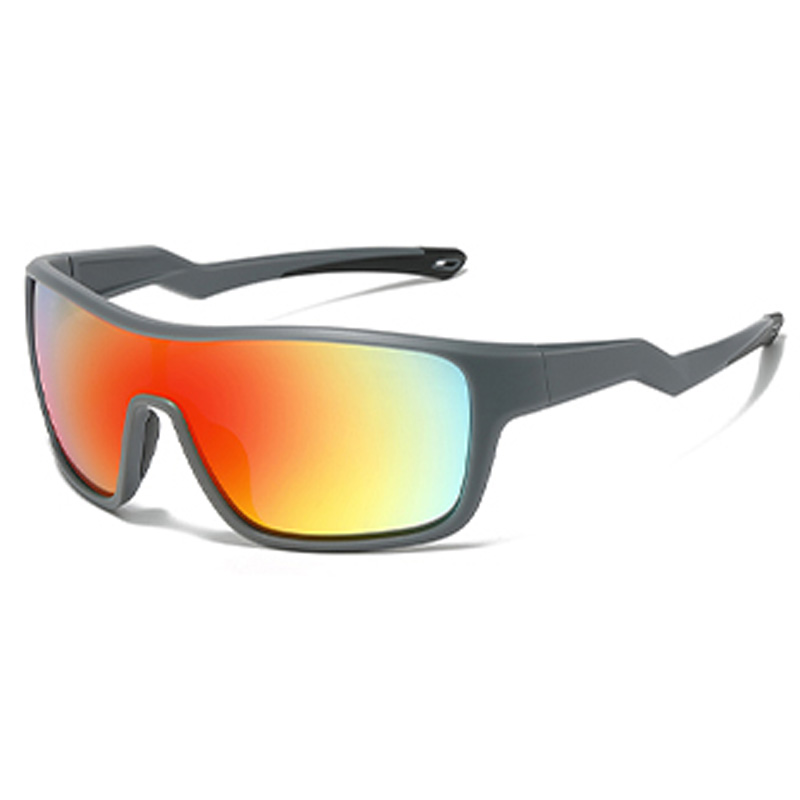
Laminated lens construction allows both filters in one product: a photochromic base whose density shifts with UV, carrying a polarizing film for glare. This combination is genuinely useful for mixed-use athletes, the cyclist who also fishes, the trail runner who drives to coastal routes. Trade-offs are cost and weight, since lamination adds layers, and the same LCD-darkening caveat that applies to any polarized lens. If your week spans multiple sports and light regimes, the hybrid is worth trying; if you specialize, a dedicated lens for your main sport usually performs better per dollar.
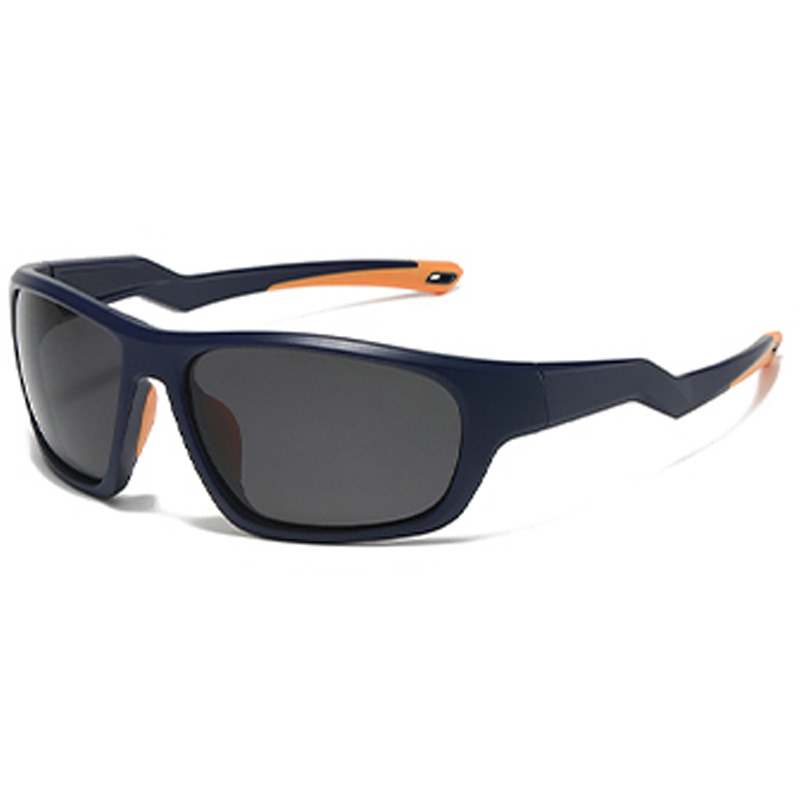

Polarized lenses are laminated sandwiches, so heat and solvent abuse cause delamination; keep them out of hot dashboards and away from harsh cleaners. Photochromic molecules live in the lens substrate or coating and are sensitive to deep scratches, which block the light they respond to. Both benefit from the same basics: rinse before wiping, microfiber only, rigid-case storage and fresh-water rinses after salt or chlorine exposure.

Polarized production bonds a polarizing film between tint and protective layers under controlled heat and pressure, then adds hard and hydrophobic coatings. Photochromic production either impregnates the lens substrate with photochromic molecules or applies them as a coating, then protective layers go on top. Frame work runs the same path for both: TR90 injection molding, tumbling, hinge riveting and final inspection under strong light, with polarization verified by test card and UV400 checked per batch. Factories that keep lamination and inspection in-house deliver batch-consistent performance instead of sample-only promises.

Neither is better in general; they solve different problems. Photochromic manages changing brightness, polarization removes reflected glare. Choose by which variable dominates your sport, or combine both in a hybrid lens.
Poorly. Most windshields block the UV that triggers the darkening, so the lens stays relatively clear even in bright driving. Regular drivers should choose fixed polarized lenses instead.
LCD screens emit polarized light; when its orientation crosses the lens filter, the display darkens at certain angles. This is normal physics and doubles as the fastest authenticity test for a polarized lens.
For multi-sport users who face both glare and changing light, yes. For single-sport specialists, dedicated lenses deliver better value, since you pay for a feature you may rarely use.
Gradually. After several years of heavy UV cycling, response slows and the darkest state lightens slightly. Deep scratches also interfere with the reaction. Expect useful performance for years with normal care.
Yes; optical labs can produce prescription lenses with both properties, though strong prescriptions limit extreme wrap frames. Confirm compatibility of your prescription with the frame's base curve before ordering.
On shaded technical trails, many runners prefer non-polarized or photochromic lenses because strong polarization can flatten shadow depth cues. On open sunny routes, polarization's glare control is a comfort win.
Most quality lenses do, but the properties are technically independent. Always confirm the UV400 rating explicitly rather than assuming that darkness, photochromic behavior or polarization implies ultraviolet protection.
Two molecular stories explain everything these lenses do, and knowing them makes product claims readable. Polarizing films are made of long molecules aligned in parallel, like a dense picket fence; light waves vibrating along the fence pass, waves vibrating across it are absorbed. Since reflected glare vibrates horizontally, the vertically aligned fence removes it. The film's orientation is fixed at manufacture, which is why polarization never varies with brightness and never needs time to work.
Photochromic chemistry works differently. Certain molecules reversibly change shape when they absorb ultraviolet photons: dark, absorbing forms in sunlight, transparent forms in its absence. Because ordinary glass blocks most UV, the reaction happens almost exclusively outdoors, which is why photochromic lenses stay clear behind car windshields and why they respond slowly on cold days, when molecules need more energy to rearrange. The chemistry also explains gradual aging: years of UV cycling slowly reduce the number of responsive molecules, softening both extremes.
Neither mechanism touches ultraviolet protection by itself. UV blocking comes from the lens substrate and added absorbers, which is why the same photochromic or polarized product line can exist with excellent or terrible UV ratings. The rating is printed; the mechanism is marketing; buy on the printed number.
Understanding where money goes in each technology clarifies value. Polarized lens cost concentrates in the film and lamination process: the polarizing sheet itself, the controlled bonding that keeps it optically flat, and the edge quality that predicts long-term delamination resistance. Cheap polarized lenses cut corners in lamination, which is exactly what the bubble-edge and wavy-line tests expose.
Photochromic cost concentrates in the active chemistry and its application, impregnated substrates cost more than coated versions but age better, and coating quality determines whether the response stays consistent across the lens surface. Hybrid polarized-photochromic lenses stack both cost structures, which is why they occupy the top price tier.
Frame cost moves independently in all cases: TR90 molding quality, hinge riveting and coating work price out the same whether the lens is photochromic, polarized or plain. A useful budgeting rule: spend on the lens properties your sport needs, and treat frame branding as the last consideration.
Abstract comparisons become concrete in specific weeks. Consider a trail runner who logs dawn sessions in summer, forest loops in autumn and ski-season road runs in winter. The dawn sessions favor photochromic, since the sun rises mid-run; the forest loops favor non-polarized contrast tints; the winter road runs favor polarized glare control. No single fixed lens wins all three, which is precisely the profile where a photochromic hybrid or a two-pair kit earns its cost.
Now consider an inshore angler who also commutes by car. Fishing demands polarization unconditionally, and driving rewards it, so a fixed gray polarized pair serves both, with the caveat that the driver should test dashboard screens first. Photochromic adds nothing for this user because the windshield blocks the trigger, so the money is better spent on a second polarized tint for low light.
Finally, a gravel cyclist who tours with a fishing rod strapped to the bike: long days of alternating sun and shade, waterside camps, dawn starts. This is the textbook hybrid-user profile, polarized photochromic in one lens, and it is one of the few cases where the premium combined product is genuinely the rational choice rather than a luxury.
Both lens types share baseline care, but each has a specific vulnerability worth knowing. Polarized lenses are laminated, and their enemy is heat and solvent: dashboard storage, hot car interiors and harsh cleaners attack the bond lines, showing first as edge bubbles. Photochromic lenses carry their active chemistry near the surface, and their enemy is abrasion: deep scratches shield the molecules beneath from UV, creating dim patches that no cleaning fixes.
Both enemies share one prevention: rigid-case storage and rinse-before-wipe cleaning. Add heat discipline for polarized pairs, never parked on dashboards, and scratch discipline for photochromic pairs, pouch-only wiping. Neither technology needs special solutions or expensive sprays; the enemies are habits, not chemicals.
No, their density is fixed by the film's design. Only photochromic lenses respond to light level. If your polarized lenses seem to change, it is your pupils adapting, not the lens.
Yes. Hybrid lenses combine a photochromic substrate with a laminated polarizing film. They cost more and weigh slightly more, but they are the correct tool for users who face both glare and changing light regularly.
Neither; eye health depends on the UV400 rating, which both types can carry or lack. Choose the rating first, then the light-management technology that matches your sport.
Quality lenses remain useful for years of regular use, with gradual softening of both the dark and clear states as the chemistry ages. Deep scratches accelerate the perceived decline by blocking UV from the molecules below.
Manufacturing tolerances, age and storage history all shift response. If matching matters, buy both lenses from the same production batch or as a manufactured pair rather than mixing products.
Indoor and night sports, where glare is artificial and brightness is low: clear lenses with anti-reflective coating usually outperform both. The technologies are outdoor tools by design.
Because the two technologies feel different in motion, the most reliable buying decision follows a structured trial rather than a shop test. Wear the candidate lens, or rent a similar one, across two weeks that include your typical activities, and note three observations daily: when you reached to remove the glasses, when you squinted despite wearing them, and any moment of visual confusion such as flattened shadows or darkened screens.
The notes converge quickly. Repeated reach-to-remove moments signal the wrong density behavior; squinting through the lens signals insufficient glare or brightness control for your conditions; visual confusion on screens or flat terrain flags the polarization caveat in your specific life. Two weeks of evidence beats any comparison table, and it converts a technology choice into a personal one, which is exactly what this decision should be.
Both technologies live inside frames, and frame fit decides whether the lens technology ever reaches your eye correctly. Smaller faces meet a specific problem in sport eyewear: oversized lenses sit too far from the face, admitting side light that defeats polarization and wind that defeats coverage. The checklist matters more than the logo: bridge width that actually matches, temples that do not require uncomfortable bending to stay put, and lens coverage that follows the cheekbone rather than floating above it.
Photochromic and polarized behaviors are identical across fit, but their benefits arrive only with correct geometry: the polarizing film needs the glare to enter through the lens, not around it, and the photochromic transition is most useful when the lens actually covers your field in both bright and dim conditions. So the buying sequence stays the same for every face: fit first, verified lens properties second, style third. Small-face wearers who follow that order end up with the same real-world performance as anyone else, which is precisely the point.
Both technologies keep improving, and the direction of travel helps buyers time their purchases. Photochromic chemistry has been closing its historical gaps: newer formulations respond faster in cold weather, reach darker maximum densities, and age more slowly than the generations that gave the technology its sluggish reputation. The remaining compromise, slower response than the eye's own pupil, is shrinking with each product generation, which strengthens the case for photochromic in variable-light sports with every passing year.
Polarization's improvements concentrate in construction: better lamination adhesives resist heat delamination, thinner film stacks reduce the optical compromises of early polarized lenses, and hybrid products continue to merge polarization with photochromic behavior, mirror coatings and prescription compatibility. For buyers, the practical guidance is to treat this category as a regular purchase rather than a one-time one: the best lens available this year outperforms the best lens of five years ago, and athletes who upgrade on a multi-year cycle capture that improvement without chasing every release.
When time is short, the whole comparison compresses into three sentences. Polarized lenses remove reflected glare and never change density, making them the choice for water, road and snow glare. Photochromic lenses change density with sunlight and are the choice for forests, trails and any day that starts dark and ends bright. If your weeks genuinely contain both worlds, the polarized photochromic hybrid exists for exactly that reason, at a price premium you now know how to justify or skip.
Polarized and photochromic are answers to different questions: what is reflecting, and how bright is it. Name your sport's dominant light variable and the choice makes itself: glare-heavy water and road use favor polarization, variable-light trail and mixed conditions favor photochromic, and genuinely mixed use justifies the hybrid. Verify UV400 on whatever you buy, test the specific behavior that matters to you, glare removal or transition speed, and let the technology disappear into the background the way good sports eyewear should.
This website uses cookies to ensure you get the best experience on our website.



 Phone
Comment
(0)