

Small oval and retro Sunglasses are the 1990s silhouette that came back and stayed: compact oval lenses, slim frames and a minimal presence that reads as effortless where oversized frames read as effort. The revival caught on because the shape does something the big-frame era could not, it flatters by receding, letting features lead while adding a clean, curated line across the eyes. But small frames punish bad scaling more visibly than large ones, and the difference between chic and shrunken is a few millimeters. This guide covers why the silhouette works, which faces it flatters and how to adapt it, how to get the scale right, and what lens and material choices keep the retro look current rather than costume.
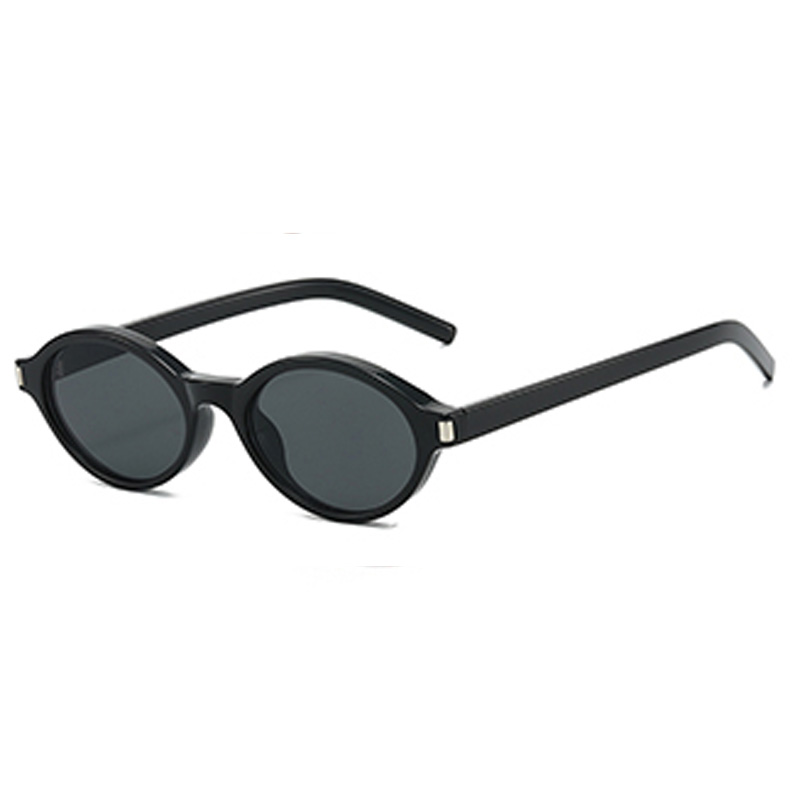
Fashion cycles favor silhouettes that contrast with what preceded them, and the small oval's revival followed years of oversized everything: giant squares, shields and masks that covered half the face. Against that landscape, the compact oval reads as precision, a deliberate, fitted line that treats the sunglasses as jewelry rather than equipment. The shape also photographs distinctly: small lenses reveal the face instead of replacing it, which is exactly the register contemporary street style rewards.
The oval's own geometry helps too. The ellipse is the neutral shape of eyewear, adding no angles and no curves beyond the face's own, which is why it flatters quietly and why it has never fully disappeared since its first mid-century run. Its retro credentials come from proportion, the slim rims and compact scale of the 1990s versions, and its modern credentials from materials and tints that the original decade never had.
The small oval rewards oval and heart-shaped faces most naturally: oval faces wear the shape at any scale, and heart faces benefit from a silhouette whose lightness does not add width to the upper face. Square faces find the oval's curves genuinely useful, softening the jaw with the one shape family whose lack of angles never competes with theirs, though the frame should be wide enough to span the face or it will emphasize the width it fails to cover.
Round faces need the most care: a small oval can double the face's own curves and shrink the eyes, so round-faced wearers do better with slightly elongated ovals, wider than tall, or with the angular polygon frames the trend family also offers. Oblong faces use the small oval differently: compact, wider-than-tall shapes add the horizontal balance long faces lack, and the oval's softness prevents the harshness rectangles would bring. The scaling rule that governs all of this: the frame's width should match the face's width at the temples, and the lens height should sit at or slightly below the eyebrow line. Small frames that violate these proportions read as toy; small frames that respect them read as tailored.
| Face shape | Small oval fit | Recommended version | Approach with care |
|---|---|---|---|
| Oval | Excellent | Any scale and tint | Nothing in particular |
| Heart | Excellent | Light colors, slim rims | Heavy dark oversize details |
| Square | Good | Ovals wide enough to span | Tiny frames inside the face width |
| Round | With care | Elongated, wider-than-tall ovals | Small round ovals doubling curves |
| Oblong | Good | Compact wide ovals | Tall narrow ovals adding length |
Small frames live or die on fit precision, and the numbers matter more than for any oversized silhouette. The frame's total width should land within a few millimeters of your current well-fitting pair; the lens width and bridge should match your measurements, because a small frame that sits two millimeters too wide slides constantly, and one too narrow pinches visibly at the temples. The sits-right test: the frame should rest on the bridge without pad pressure marks after an hour, the temples should clear the ears without touching, and the lenses should center on your eyes rather than floating toward the temples.
Vertical placement defines the retro look: the small oval sits deliberately low-ish and relaxed, but the eyebrow should remain visible above the frame, because the silhouette's charm is the face it reveals. Frames that ride too high hide the brows and read as squinting; frames that sit too low rest on cheeks. The mirror check takes seconds and settles the purchase more reliably than any trend advice.
The 1990s originals came in dark neutrals, and the modern revival keeps that vocabulary while expanding it. Solid black and dark gray lenses on slim black frames are the definitive retro look, minimal and sharp. Brown and amber tones warm the silhouette and flatter the 1990s gold-metal frames that have returned alongside the plastic ones. Light tints and fashion colors, rose, blue, soft yellow, push the look toward editorial, best in translucent or metal frames where the tint reads as design rather than darkness.
Function survives the fashion: confirm UV400 in writing, because small lenses cover less area but your eyes still need full ultraviolet protection, and peripheral light enters around compact rims, which makes coverage discipline, proper fit, more important, not less. Polarized versions exist across the category and suit wearers whose retro pair will actually drive and travel; the tint depth that suits small lenses is typically medium, since very dark glass in a tiny lens reads harsh and hides the eyes that the silhouette is meant to reveal.

Retro proportions demand slim rims and thin temples, which stresses materials in ways oversized frames never meet. TR90 answers best in the modern market: slim profiles with full flexibility, temples that flex rather than snap, and light weight that suits frames whose whole message is effortlessness. Metal frames, the thin gold and silver wires of the 1990s, deliver the vintage authenticity and adjustable nose pads, with the familiar costs of weight, heat conduction and eventual corrosion. Acetate exists in the category for the glossy, substantial versions, though its weight fights the silhouette's ease.
The construction check specific to slim frames: flex a temple gently and cycle the hinges. Slim TR90 should spring back without whitening at the stress points, and thin metal should feel tempered rather than soft, soft wire bends permanently in a bag within a week. The small oval's slimness is a design commitment, and the materials behind it decide whether the commitment lasts a season or a decade.
The current styling language around the small oval is deliberately unfussy: the frame pairs with minimal makeup and clean hair in the street-style version, with tailoring in the 1990s-minimalist version, and with the era's revived wardrobes, slip dresses, baggy denim, slim knits, in the full retro expression. The frame's lightness means it layers well with earrings and structure that oversized frames would crowd, and it transitions into evening more naturally than any sport or shield silhouette could. One styling warning from the archives: the small oval flatters restraint, and piling retro frame plus retro everything else tips the look into costume; the modern wearers who make it work treat the sunglasses as the single vintage note in a current outfit.
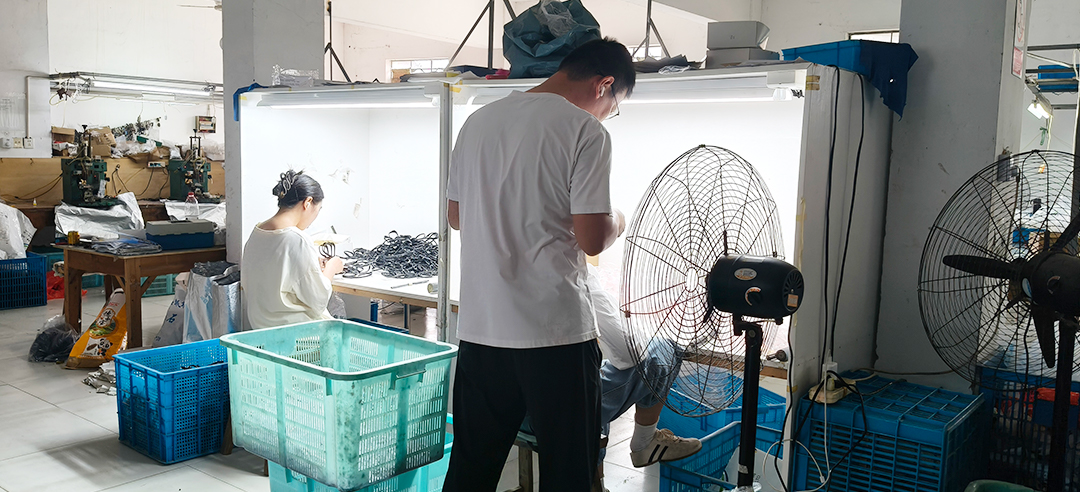
Slim construction concentrates quality signals in small details. Check the rim finish where lens meets frame, since thin rims display edging flaws immediately; cycle the hinges for smoothness with no play; and verify lens quality with the straight-edge sweep, because small lenses are often cut from cheaper stock in budget versions. Care follows the same logic: slim frames bend more easily in bags, so the rigid case matters doubly, and the microfiber habit protects lens surfaces that show every scratch at close conversational distance. Metal versions add a rinse-after-beach habit for their hinges; TR90 versions ask only the standard rinse, wipe and store. A small frame treated this way keeps its precision, and precision is the entire aesthetic.
The lens quality matters more than the coverage area: UV400 filtering protects regardless of size. What small frames compromise is peripheral coverage, so bright-environment users should choose larger wraps for sport and reserve small ovals for urban and casual wear.
With adjustments: elongated, wider-than-tall ovals add the structure round faces want, while small round ovals tend to double the face's curves. The scaling rules matter more for round faces than for any other shape.
Proportions and materials: the revival keeps the compact scale but adds modern TR90 lightness, better lens coatings and refined bridge geometry, so today's versions fit and wear better than the decade's originals.
For driving and travel pairs, yes, polarization works in any silhouette. For fashion-first pairs worn occasionally, quality UV400 tints suffice. Small lenses polarize just as effectively as large ones.
Measure your current best-fitting pair's total width, lens width and bridge, and compare against the product's specifications within two or three millimeters. Small frames punish width errors faster than large ones.
Yes: slim ovals in tortoise, black or metal with gray lenses read as polished minimalism, and the silhouette's restraint suits conservative settings better than oversized fashion frames do.
Quality TR90 and tempered metal both last well; the failure modes differ, TR90 wears gradually, soft metal bends permanently. Flex the temple and cycle the hinge at purchase to tell which you are holding.
They are fashion with function limits: light tints reduce glare modestly and suit overcast and low-sun use, but they are not full-sun tools. For bright-weather wear, keep medium or dark tints and save the pale lenses for the looks that need them.
Most wearers meet the small oval as a second pair, and the role suits it perfectly. The primary pair handles the serious duties, sport, driving, long sun, while the small oval covers the hours where style leads: errands, terraces, evenings, the photograph-heavy days. The strategy buy works best when the two pairs occupy opposite ends of the design spectrum, a wraparound or oversized primary and a compact oval secondary, because each covers situations the other flatters poorly. Owners of that two-pair rotation report wearing sunglasses more overall, which is the quiet metric that matters: protection that stays in the case protects nothing.
Budget logic for the second pair favors the accessible and mid tiers, since the small oval's duties are social rather than athletic, and the mid-tier coatings matter less at four hours of terrace use than at eight of riding. What deserves the spend even here is fit precision, the millimeter discipline this guide describes, because the silhouette's charm is its tailored look, and an imprecise small frame reads as a mistake rather than a choice. Buy it fitted, wear it lightly, and the second pair becomes the one that gets compliments.
Every revival deserves a moment of analysis before purchase, and the small oval's deserves a specific one: this is the rare silhouette revival that changed materials more than proportions. The 1990s originals were often flimsy, thin acetate and soft metal that bent in pockets and snapped at hinges, and their fit was an afterthought of the era's casual attitude. The current versions keep the compact scale and slim rims but build them in TR90 and tempered metals with real hinge engineering, which means today's buyer gets the silhouette without the fragility that made the originals disposable.
The styling context has shifted too. The decade's originals were worn with the era's minimalism as almost anti-fashion statements; the revival wears them as curated selections within a broader retro palette, paired with current tailoring as often as with revived wardrobes. That shift favors buyers: the small oval no longer requires the full 1990s uniform to make sense, and it now functions as a neutral-adjacent accessory in a way the originals never did. The lesson from reading the cycle: buy the proportions you like from the era, take the materials from the present, and skip the parts of the revival that exist only for photographs.
Wearers who adopt the small oval often reorganize their whole eyewear approach around it, and the capsule that works is simple. One small oval in tortoise or black with gray lenses covers the daily and professional register. One metal-framed version with amber or light tints covers the warm, soft-light and evening register, and doubles as the pair that lives in a jacket pocket. One sport or wraparound pair, deliberately outside the retro family, covers driving, beach and activity. Three pairs, three registers, no overlap, and every situation in a normal year has a right answer.
The capsule's economics favor the small oval specifically: the silhouette's accessible mid-tier pricing means the full three-pair system costs less than one premium designer pair, while covering more hours. The maintenance load stays light because each pair works fewer hours, and the rotation actually extends every frame's life by resting it. Owners who build the capsule describe the same outcome: sunglasses stop being a single anxious object and become a small, reliable wardrobe, which is what eyewear was always supposed to be.
Four mistakes account for nearly every abandoned small oval. Buying too wide: the frame slides constantly and reads borrowed; fix with the millimeter measurement before the next order. Sitting it too high: brows hidden, eyes lost, the whole point missed; fix by choosing adjustable pad designs and having the fit set low on the bridge deliberately. Choosing glass-black tints for a pair worn indoors-outdoors all day: the small lens area makes very dark glass read harsh and hides the eyes; fix with medium tints or gradients. And wearing it for the wrong jobs, beach sport, long driving, where the compact coverage underserves the light; fix by honoring the two-pair strategy and letting the small oval do what it does best. Each fix costs less than the abandoned pair it prevents, which is the entire return on reading a guide this carefully.
The silhouette's revival is photograph-driven, and understanding its photographic behavior helps buyers choose within it. Small lenses reveal the eyes and brows, which is why the shape reads as intimate and expressive in portraits: the face does the expressing, and the frame supports. That behavior rewards wearers who like their eyes visible and penalizes nobody, but it changes the judgment criteria: whereas oversized frames are judged by their outline, small ovals are judged by their placement, because every millimeter of position shows. The photograph-first advice follows: take the mirror selfie, check that the lenses center on your eyes and the brows stay visible, and evaluate the silhouette at the distance other people actually see it, conversation distance rather than mirror distance.
Lighting interacts too: slim rims nearly disappear against bright backgrounds and read strongest against darker clothing or hair, which is why the metal versions photograph so well in evening light. Lens tint shows its character in photographs more than on the face, light tints reading as editorial, dark tints as classic, and the choice between them is ultimately about which photograph you want to be in. None of this replaces fit discipline; it simply completes it, because the small oval is the silhouette where optics, fit and image finally share one set of millimeters.
Among Fashion Sunglasses, the small oval is the safest gift in the category, and the reasons are worth spelling out for anyone buying for someone else. The silhouette's neutral geometry flatters the widest range of faces, so the face-shape risk that makes dramatic shapes risky gifts mostly disappears. The scale rules still apply, so the careful giver borrows or measures a current pair first, comparing total width, lens width and bridge against the candidate's specifications. Color follows the recipient's existing frames: dark-frame wearers receive black or tortoise happily, metal wearers receive thin gold, and translucent buyers welcome the frosted versions the revival favors.
Present it with the return window intact and framed positively, the fitting invitation, not a hedge, and include the rigid case that slim frames require. The small oval's accessible mid-tier pricing makes the gift generous without being extravagant, and its neutral character means it flatters rather than challenges the recipient's style, which is the difference between a gift worn weekly and one worn for the giver's benefit. Few fashion purchases carry that success rate, and fewer still survive the return-window conversation as gracefully as a well-measured small oval does.
The geometric family shares the small oval's compact scale, and buyers hesitate between them more than between any other pair. The decision rule is about the face's needs: geometry adds angles, the oval adds neutrality, so angular-lacking round faces gain more from polygons, while soft-featured wearers who find rectangles harsh often discover the oval is the shape that was missing. The lifestyle rule follows: the oval's restraint suits conservative settings and minimal wardrobes, while the polygon's facets suit creative contexts and design-forward dressing. Some wearers solve it with one of each at compact scale, and the pair covers a remarkable range together. Whichever you choose, the fit discipline is identical, and the silhouette that disappears into your routine is the right one, regardless of which trend forecast favored it.
The small oval and retro revival works because the silhouette offers what oversized frames cannot: precision, lightness and a face that stays visible behind the glasses. The shape rewards correct scaling above all, width matched to the face, brows visible above the rim, and it flatters oval, heart and square faces most readily, with elongated versions solving the round-face case. Modern TR90 construction has fixed the fragility the 1990s versions suffered, and UV400, polarization and medium tints keep the look honest. Fit it to the millimeter, wear it as the single vintage note, and the smallest frame in eyewear makes one of the largest style statements available.
This website uses cookies to ensure you get the best experience on our website.



 Phone
Comment
(0)