

Double-bridge and pilot Sunglasses carry more aviation history than any other silhouette, and their modern versions range from faithful teardrop aviators to angular double-bridge squares that borrow the style while updating the geometry. The family's appeal is structural as much as stylistic: the upper brow bar adds a horizontal line that frames the eyes and strengthens the frame, while the lower rim, full or thin, sets the silhouette's character. This guide explains the family's variations, which faces they flatter, how lens shape changes the message, and what materials and lens features separate a lasting pair from a costume accessory.
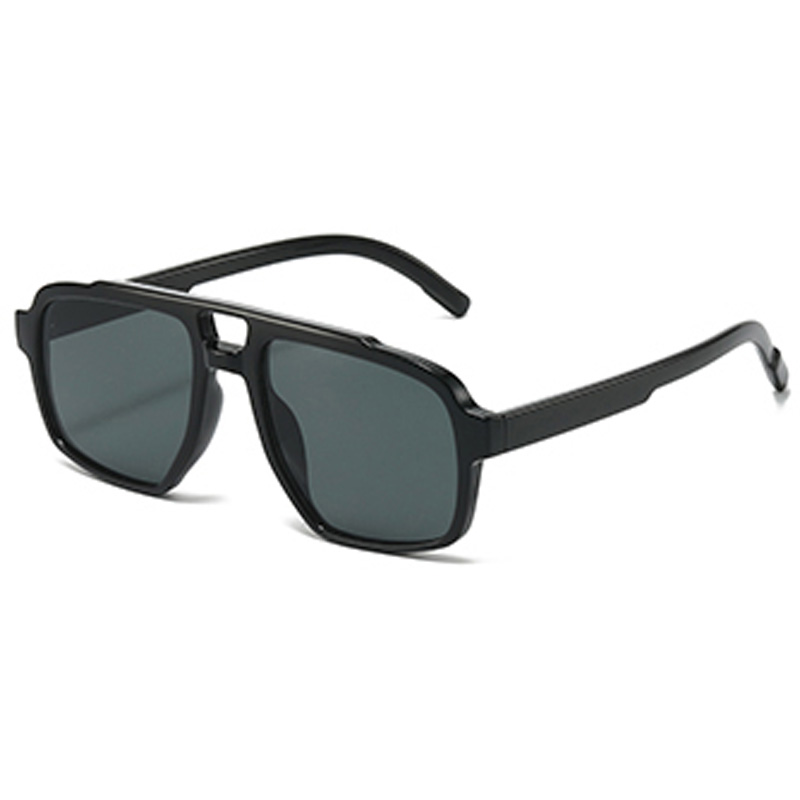
The pilot family spans recognizable territory once you know its landmarks. The classic teardrop aviator drops the lens low and rounded at the bottom, the original flight-goggle geometry designed to seal against wind; it reads as timeless and slightly romantic, and it flatters by adding length and lift to the mid-face. The square and rectangular double-bridge flattens the lens bottom into a straight line, trading the aviator's softness for a contemporary, architectural edge; this is the version that has driven the current double-bridge trend, and it suits modern wardrobes that find teardrops costumey.
Between them live the panto-aviator hybrids, rounded lenses with a flat brow bar, and the oversized shield-adjacent versions that push coverage toward sport. The double-bridge element itself, a brow bar parallel to the top rim, appears across all of them: it adds visual interest, reinforces the frame structurally, and creates the "floating lens" look when the lower rim thins to a wire. Choosing within the family is choosing where on this spectrum your face and wardrobe land.
The aviator family rewards faces with some length and structure. Oval faces wear every version and can pursue the most dramatic teardrops. Square faces suit the teardrop's rounded bottom, which softens the jaw's angles while the brow bar adds a counterbalancing horizontal. Round faces should approach the family carefully: the teardrop's curves can double the face's own, so the square double-bridge versions with straight lens bottoms are the safer, more flattering choice, adding the structure a round face wants.
Heart-shaped faces balance beautifully with teardrop aviators, whose bottom-heavy lens visually widens the narrower chin, while avoiding heavy dark brow bars that exaggerate forehead width. Oblong faces benefit from the family's taller lens shapes, which break vertical length, but should avoid narrow versions that stretch the face further. As always, the brow line calibrates: the double bridge should sit along the eyebrows, and the frame's width should match the face's width at the temples rather than exceeding it, since pilot shapes run wide by design.
| Face shape | Best family member | Effect | Approach with care |
|---|---|---|---|
| Oval | Any, including classic teardrop | Free experimentation | Nothing in particular |
| Square | Teardrop, rounded bottom | Softens jaw angles | Square lenses echoing the jaw |
| Round | Square double-bridge | Adds structure | Curved teardrops doubling the roundness |
| Heart | Teardrop with light brow bar | Widens the chin visually | Heavy dark top bars |
| Oblong | Taller pilot shapes | Breaks vertical length | Narrow stretched versions |
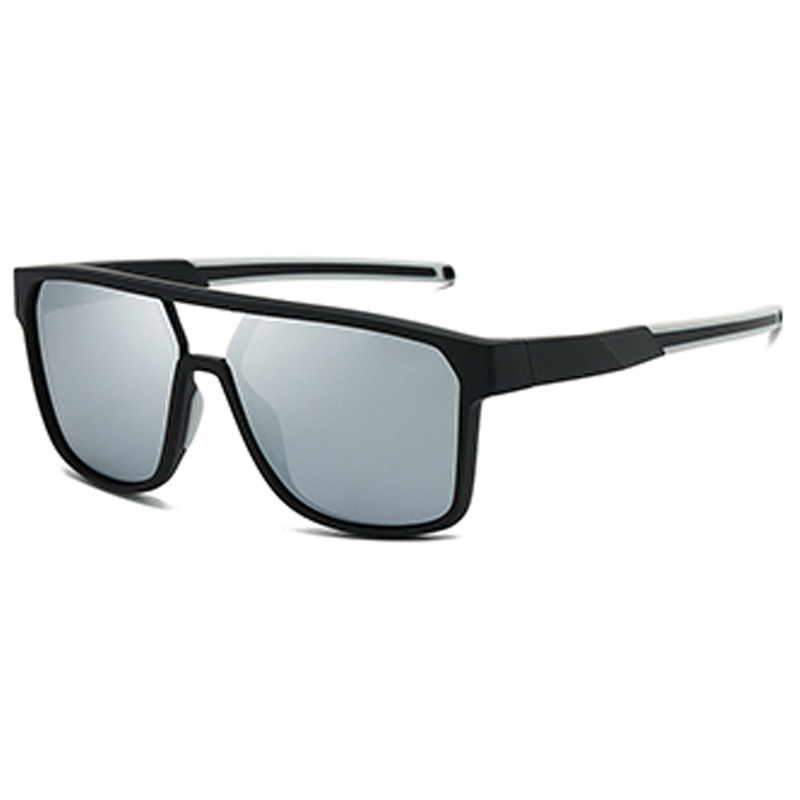
The family's heritage material is thin metal, which delivers the floating-lens look and the aviation authenticity, at the costs of weight on the bridge, conductive heat in summer and eventual corrosion around salt water. The modern alternative that has refreshed the category is TR90: nylon-family frames in matte black or translucent tones carrying the double-bridge geometry with almost no weight, flexible grip temples and full resistance to sweat and corrosion. TR90 double-bridge designs also host wider lens coverage and thicker rims that suit polarized and mirrored lenses better than thin wire frames.
The choice follows use. Metal suits the classic fashion expression, the dressy, photogenic version that pairs with summer tailoring, and it wears fine for occasional use. TR90 suits the version that lives in the car, the beach bag and the daily commute, where lightness and durability decide satisfaction. Hybrid designs combine both: TR90 chassis with metal-effect brow bars, delivering the look without the weight penalty.
Lens color follows the classic logic: gray for natural color rendering, brown or amber for contrast, green for the heritage pilot look. The family tolerates all three because its lens area is generous; smaller fashion frames punish tint mistakes more visibly.
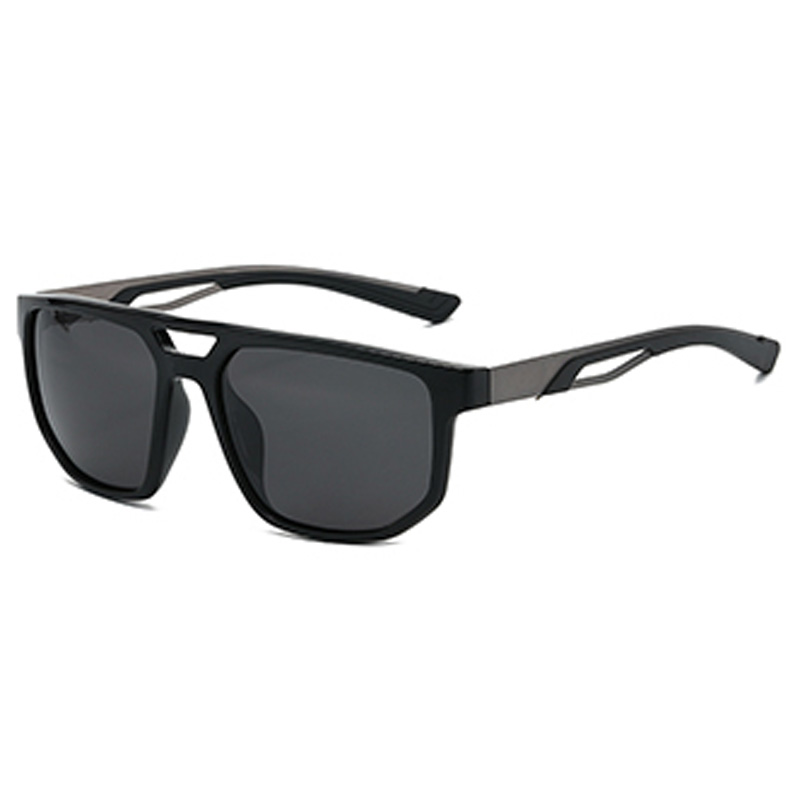
The brow bar creates fitting interactions worth checking in person. It must sit along the eyebrow line without touching the forehead's skin, since contact means the frame rides too high and slides on oil. The bridge geometry, double frames distribute weight across two contact zones, must match your nose shape; wearers with low bridges should look for designs with built-up nose pads rather than flat metal bridges that rest on skin. And the frame's width matters more than in most families, because pilot shapes run wide: the temples should not extend past the face's silhouette, or the aviator look tips from styled into borrowed.
Movement checks apply as always: shake the head, smile, look down. TR90's grip materials earn their keep here, since the family's larger lens area catches more wind and its brow bar catches more hair. Wearers who ride motorcycles or convertibles should test wind behavior specifically, because the teardrop's original job was aerodynamic, and modern versions differ widely in how well they seal.
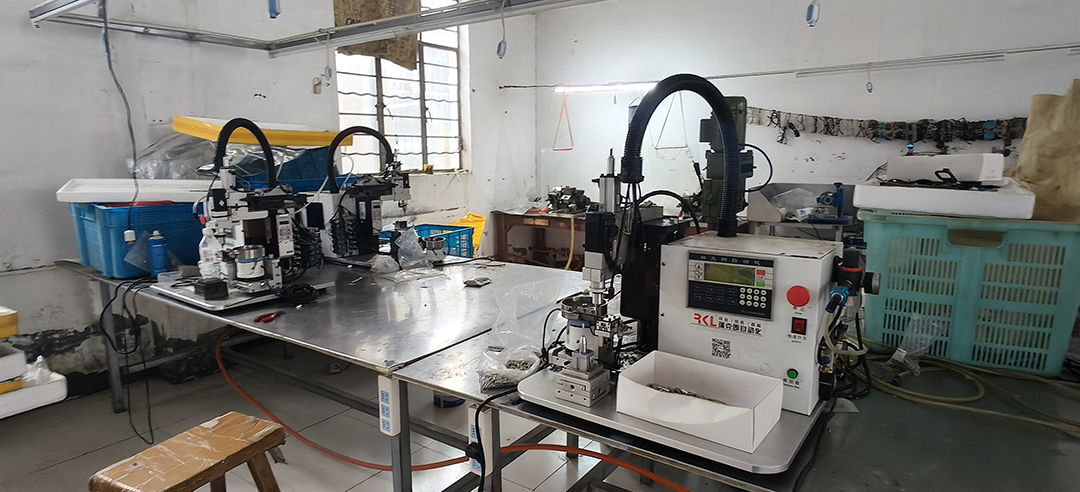
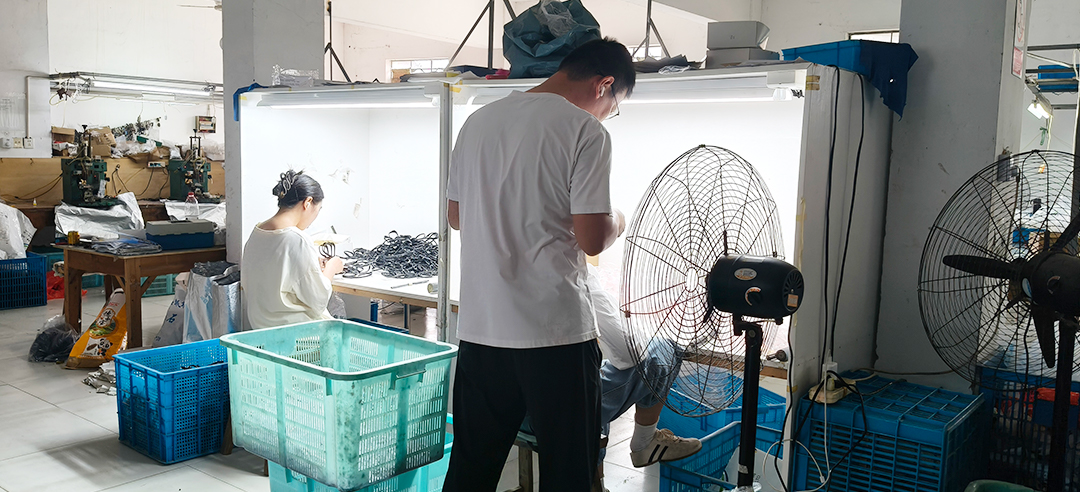
The brow bar is the manufacturing signature, and construction quality shows in how it joins the frame. In TR90 production, the double bridge molds as part of the front or as a fitted element bonded at assembly; quality designs hide the joint cleanly, while budget versions show glue lines at exactly the point the eye lands first. Metal frames bend the bar from wire stock and weld or screw it to the rim, and the joint's finish, polished, filed, seamless, is the fastest quality read on any metal aviator. Lenses are edged to follow the family's curved rims, and coated versions demand clean processing, since the family's large lens area displays every coating flaw.
Assembly stations rivet hinges, set nose pads and verify alignment between brow bar and rim; the double-bridge's parallel lines make misalignment visible immediately, which is why the straight-on symmetry check, sighting the two bridges for parallelism, is the purchase test specific to this family. Buyers who run it catch the frames that will look crooked in every photograph for years.
The aviator family's styling range runs from heritage to streetwear. The classic metal teardrop pairs with summer tailoring, linen and denim, and reads effortlessly at every holiday; it is the rare fashion frame that photographs well on every face it fits. The TR90 square double-bridge reads contemporary and urban, pairing with technical clothing, casual tailoring and the matte-texture wardrobes that current menswear and womenswear both favor. The sport-adjacent versions with polarized mirrored lenses serve driving, fishing and water holidays while keeping the signature line. One frame family, three registers, and the purchase decision is mostly about which register your week actually inhabits.
They describe the same family: "pilot" refers to the aviation origins, "aviator" to the teardrop silhouette those origins produced. Modern usage treats them as synonyms, with "double-bridge" specifying the brow-bar construction.
The square double-bridge versions do, adding the structure round faces want, while the curved teardrop shapes tend to echo the face's own roundness. Choose straight lens bottoms over teardrops.
For daily wear, often better: half the weight, no corrosion around sweat and salt, and grip that survives heat. Metal wins the classic floating-lens look and formal styling. Choose by how often and where you wear them.
For driving and water use, yes, the family's large lenses catch glare from exactly those environments, and polarization transforms them. For occasional fashion use, quality UV400 tints suffice.
Usually the bridge: flat metal brow bars rest on low bridges without grip. Look for designs with built-up or adjustable nose pads, or TR90 frames whose bridges and pads are molded for contact.
Sight down the two bridges for parallelism, check the joint where bar meets rim for clean finishing, and run the hinge cycle. Misaligned or roughly finished brow bars are the family's most common quality tells.
Yes, in scaled-down versions: the family runs wide by design, so small faces should choose narrower frames whose temples stay within the face's silhouette, or compact double-bridge squares sized for smaller heads.
Gray and green hold the heritage look with natural color rendering; brown gradients add warmth and dashboard readability. Mirrored silver delivers the maximum aviation statement at the cost of visible scratches.
The family welcomes prescriptions with a few family-specific notes. The teardrop's curved lens hosts single-vision corrections comfortably, and strong prescriptions favor the full-rim versions that hide edge thickness along the curved rim. Progressives work in pilot shapes with adequate lens height, and the straight-bottom square double-bridge versions usually provide it more generously than the teardrops. Strong wrap is rare in this family, which is good news for prescription wearers, since the aviator's relatively flat lens curves tolerate corrections that deep sport wraps reject.
Polarized prescription lenses are the driving-and-holiday configuration worth pricing first, and clip-on systems over prescription aviators exist for wearers who already own the frame. The measurement discipline stays the same as any prescription purchase: pupillary distance centered in the family's wider-than-average lens, fitting height confirmed for progressives, and the bench fit verifying that the brow bar sits along the eyebrows with the correction centered. Done in that order, the aviator becomes what it was for its original wearers, functional equipment that happens to look iconic.
The aviator's features are not stylistic accidents; they are engineering answers to a 1930s problem, and knowing the history makes the modern catalog legible. The original pilot glasses were built to seal against wind and glare at altitude: the teardrop lens covered the eye socket fully, the thin metal frame stayed light under goggles and headsets, and the slight curve followed the face. When the design crossed into civilian fashion after its military service, the engineering stayed while the context changed, which is why the teardrop still reads as both romantic and functional at once.
The double bridge entered the family through workwear and sport, where the second bar reinforced frames that took daily abuse, and it migrated into fashion as a visual signature. Its modern popularity is a design story: the parallel lines give the eye something to read, structure where other frames offer only rim, and they let designers slim the lower rim to wire without losing strength. That is the "floating lens" look that current collections chase, and it explains why the double-bridge square has become the family's fashion flagship while the teardrop holds the heritage wing. Buyers who understand the two lines, heritage and structure, can read any new aviator variant in seconds and place it on the family tree this guide drew.
Metal aviators add a care chapter that TR90 versions skip, and it centers on corrosion and adjustment. Rinse the frame in fresh water after beach and pool days, because salt and chlorine work into hinge barrels and nose pad assemblies where they stiffen movement within weeks. Dry the frame fully before casing it, and keep the microfiber habit for the lenses, since metal frames scratch lens surfaces with the same grit that attacks their own finish. Sweat is the quiet corrosive: summer wearers in humid climates should wipe the frames down weekly, focusing on the temple tips and pads where skin contact concentrates.
Adjustment is the other metal-specific topic: wire bridges and pads bend with use, and unlike TR90, metal can be re-bent back to shape repeatedly, which is why an optician's twenty-minute adjustment restores an old aviator to factory fit. Check the pad arms monthly, since bent pads are the leading cause of the sliding that wearers blame on the frame's design. With rinsing, drying and occasional professional reshaping, a quality metal aviator serves for decades, and its patina becomes part of the look rather than a flaw in it.
Wearers with strong preferences in lens technology, polarized everything, photochromic loyalists, blue-light filter users, should let those preferences lead the aviator purchase rather than follow it. Polarized loyalists should choose TR90 double-bridge designs whose thicker rims host polarized lenses well and whose mirror-free fronts show coatings honestly. Photochromic users benefit from the family's moderate lens curves, since transition lenses behave best in flat geometry, and the brow bar shades the top of the lens without interfering with UV triggering. Filter-lens wearers, who need clear lenses indoors, use the family's two-bridge structure to justify a second sun pair rather than forcing one frame to serve both worlds, which the aviator's dressy character rewards. The family is flexible; the lens philosophy should be fixed first.
The family's catalog simplifies into five archetypes. The classic metal teardrop serves the heritage wearer, the person who wants the silhouette as history delivered it, and it flatters oval, square and heart faces in dressy and holiday contexts. The matte TR90 square double-bridge serves the daily wearer, the commuter and driver who wants the line without the weight, and it flatters round and oval faces with its straight lens bottom. The panto-aviator hybrid serves the soft-neutral seeker whose face finds teardrops too long and squares too severe, and it is the version most likely to become an only-pair.
The oversized pilot serves coverage-first wearers, larger faces and strong-sun climates, trading some fit precision for field of view, and it rewards UV400 and polarization more than any other variant. And the sport-adjacent polarized version serves the activity calendar, driving, fishing, boating, where the family's large lens area earns its keep functionally. Most buyers will recognize themselves in exactly one archetype plus an occasional visitor, and the recognition converts an overwhelming catalog into a shortlist of one. That is the entire value of naming the variants: the family stops being a style puzzle and becomes a set of answers to a question only your week can ask.
The brow bar makes this family more sensitive to what sits above it than any other silhouette, and the interactions are worth testing before purchase. Caps and brimmed hats: the bar must clear the brim's underside, and low-sitting brow bars will rest on it, lifting the frame off the nose with every wear. Helmets, cycling and motorcycle: the temple arms must pass the helmet's side padding, and the family's wide fit makes this tighter than average, so try the complete head system before committing. Hair is the daily variable: voluminous styles above the ears push the bars up and back, and wearers with height at the crown often find the frame sits lower than the mirror suggested in the shop.
The fixes are ordinary once anticipated: choose higher-set brow bars if hats are constant companions, verify helmet clearance with your actual helmet rather than a shop sample, and accept that the aviator's character changes slightly with each hairstyle it meets. None of these interactions disqualify the family; they simply mean the aviator is chosen for a life, not a mirror, and the life includes what sits above the brow. Wearers who test those interfaces report the family as among the most comfortable they own, precisely because the double bridge distributes rather than concentrates its contact.
The aviator family is the most genuinely shared silhouette in eyewear, and its unisex character is structural rather than styled. The teardrop and double-bridge lines were designed around faces rather than genders, and the brow bar reads as engineering on every face it fits, which is why couples routinely share the family's frames and why the category's sizing runs wider than most. Buyers shopping across gendered sections should simply ignore the signage: the measurements, face shape matching and fit checks in this guide are the entire decision, and the family rewards whoever runs them honestly. Few fashion categories offer that neutrality, and it is one more reason the aviator has outlived every trend that promised to replace it. Shared, gifted, or simply chosen without checking which section of the shop it came from, the family keeps working, which is the quiet definition of a classic.
The double-bridge and pilot family earns its permanence with structure and story: a brow bar that frames the eyes and strengthens the frame, lens shapes that run from romantic teardrop to architectural square, and a fit that rewards the wearers whose faces and registers match its heritage. Choose the family member your face calls for, teardrops for softness, squares for structure, and the material your usage demands, metal for the dressy occasional pair, TR90 for the daily one. Check the bridges for parallelism, the lenses for UV400 and polarization, and the family serves for decades, which is exactly what a century-old silhouette should do.
This website uses cookies to ensure you get the best experience on our website.



 Phone
Comment
(0)