

Testing Sports sunglasses before you trust them takes ten minutes and no equipment beyond a phone, a straight edge and a piece of printed text. The stakes justify the effort: the eyewear market is full of lenses that look the part but fail the fundamentals, selling darkness without UV protection or polarization without optical clarity. This guide walks through the tests that actually matter, how to interpret each result, and the manufacturing details that explain why good lenses pass and bad ones fail.
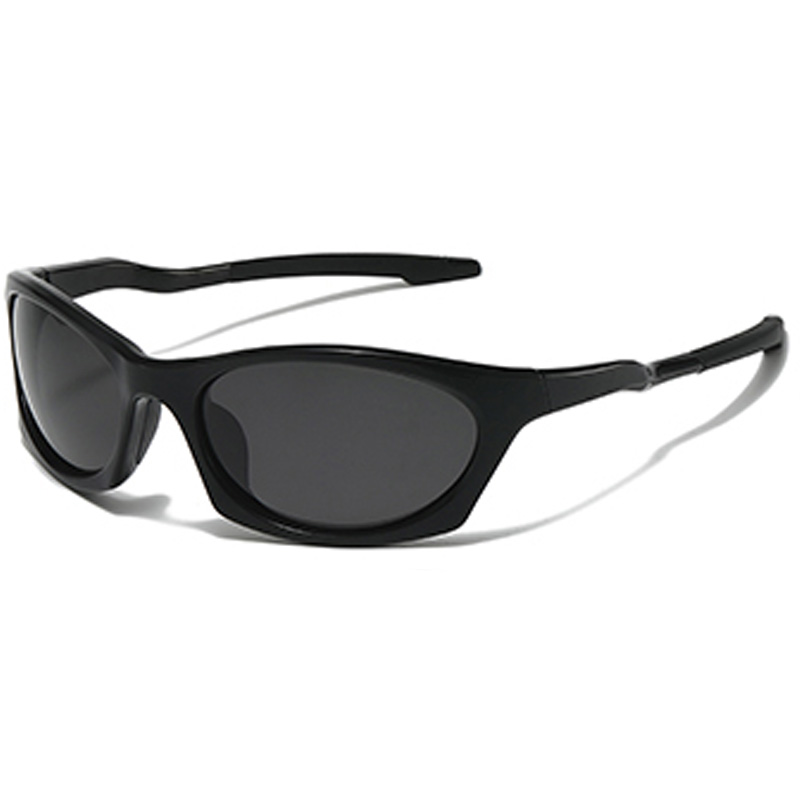
The fastest reliable polarization test uses any LCD screen: a phone, a laptop or a car dashboard display. LCDs emit polarized light, which is exactly what a polarizing lens filters.
A genuinely polarized lens makes the display darken dramatically, often to near black, at a specific rotation angle. A non-polarized tinted lens changes nothing at any angle. Rotate two polarized lenses against each other and the overlap goes dark, which is the classic demonstration of crossed polarizing filters.
Interpretation is simple: if the screen never changes, the lens is not polarized, whatever the label says. If it darkens, polarization is real. Neither result says anything about UV protection, which is a separate property and the next test's problem.
Ultraviolet protection cannot be judged by eye, which is precisely why it is the most commonly faked property in cheap eyewear. Dark lenses feel protective while passing invisible UV through dilated pupils, the worst possible combination for eye health.
At home, your options are indirect but useful:
Remember what UV400 means: blocking wavelengths up to 400 nanometers, which covers effectively all UVA and UVB. Polarization and photochromic behavior have no relationship to UV blocking; never infer one from the other.
A lens can be dark, polarized and UV400-certified and still be bad, if it is optically wavy. Distortion shows up as eye strain, headaches and blurred peripheral vision during motion, and it comes from poor molding stress or careless lamination.
The line should stay straight and continuous. Waviness, bending or a shifting kink as you sweep reveals distortion. Check the whole lens surface, including the periphery, where cheap molding hides its worst flaws. Repeat with a horizontal edge. One clean sweep takes seconds and predicts how the lens will feel at speed on a bike or trail.
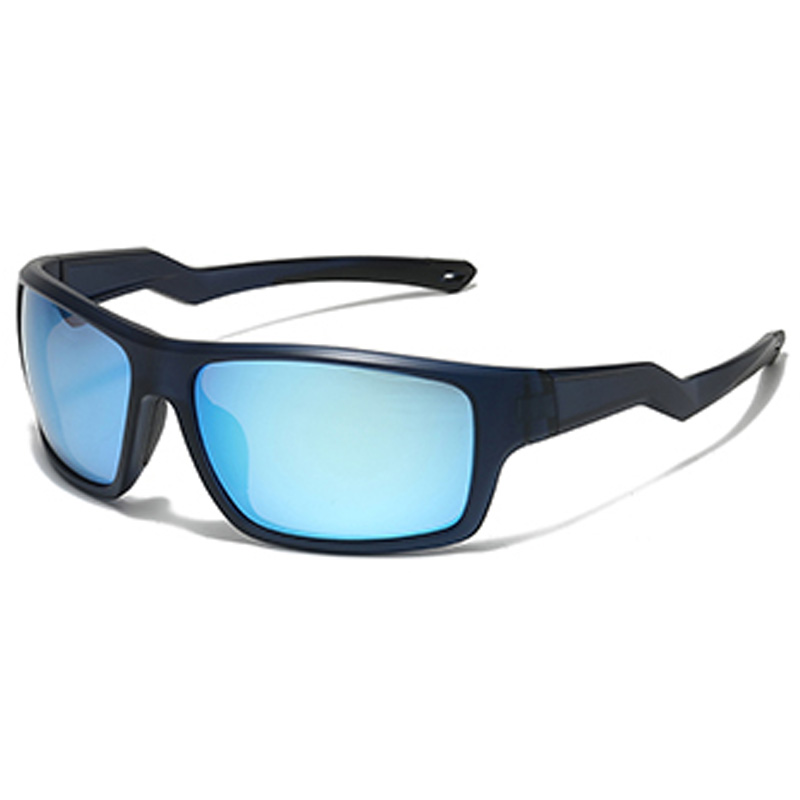
Coatings are where quality differences concentrate, and two of them are testable by feel.
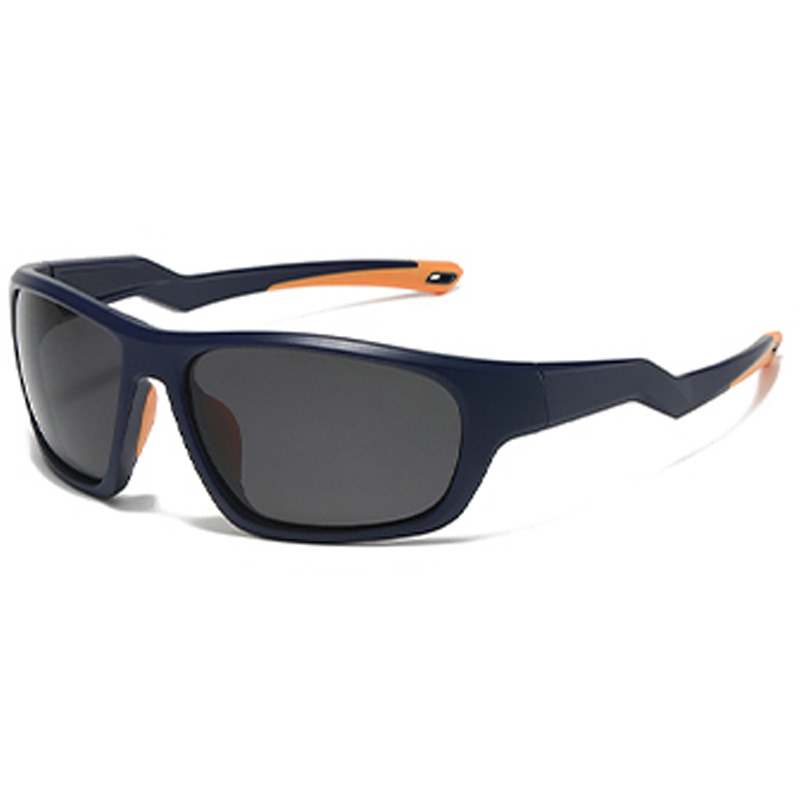
Lens tests matter little if the frame fails first. A minute of mechanical checking tells you most of what you need:
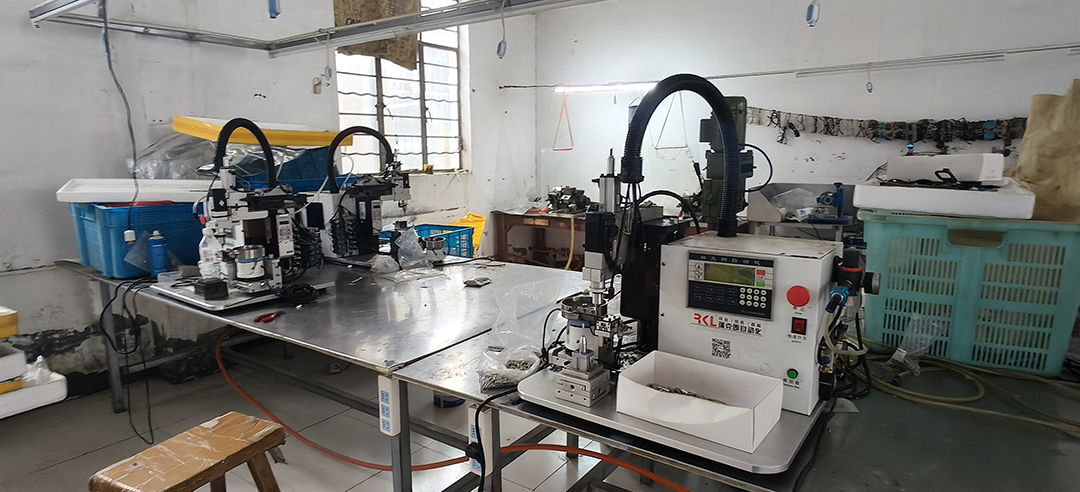

Understanding production explains the test results. Polarized lenses are laminated sandwiches, film bonded between tint and protective layers under controlled heat and pressure; disciplined lamination produces the clean edge and stable optics that pass the sweep test, while rushed bonding produces the bubbles and waves that fail it. Hard coats are applied and cured in controlled conditions; hydrophobic treatments bond to properly prepared surfaces. Frames are injection molded from TR90 granules, tumbled, hand-finished and riveted at assembly stations before final inspection under strong light.
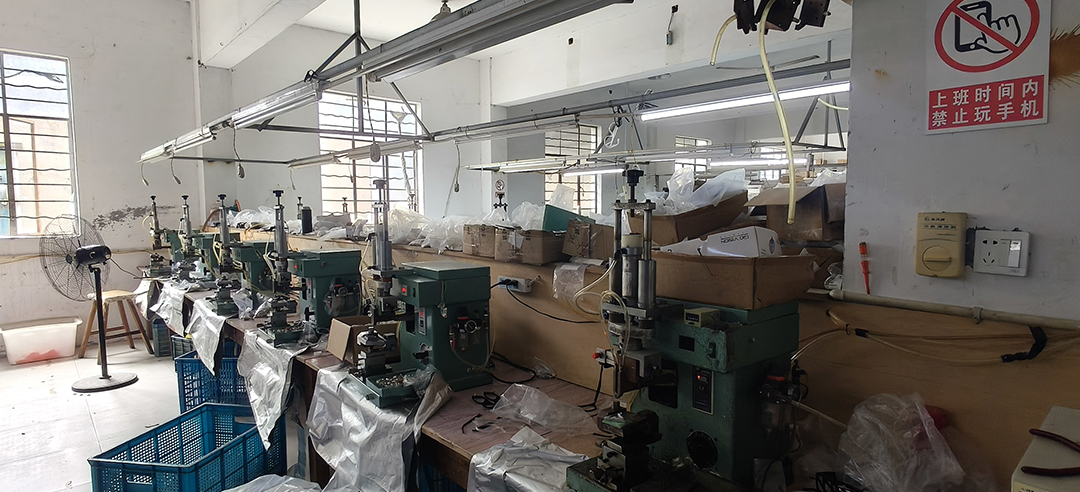
Manufacturers who keep lamination, coating and inspection in-house verify polarization with test cards and check UV400 per batch, which is why their written claims mean something. When you evaluate a brand or supplier, asking which processes are in-house and whether batch reports are available is a fair, revealing question, and the answer usually predicts exactly how their lenses will perform in your ten-minute home test.

Any single failure is reason to walk away, because every one of these properties degrades further with use, never improves.
Rotate them 90 degrees in front of an LCD screen such as a phone display. Genuine polarization darkens the screen dramatically at a certain angle; tinted plastic changes nothing. Two polarized lenses crossed against each other also go dark.
Partially. Check for a written UV400 claim first; then a 365-395 nm UV flashlight shining through the lens onto a UV-reactive surface shows whether that band is blocked. For certainty, buy from manufacturers who publish batch test reports.
No. Tint darkness only reduces visible light. A dark lens without UV filtering is worse than none, because dilated pupils admit more ultraviolet radiation to the eye.
Poor molding stress or careless lamination. It shows up as a bending line on the straight-edge sweep test and translates to eye strain and headaches during motion. Reject any lens that wobbles lines.
Gentle rubbing with a microfiber cloth reveals soft coatings immediately through swirl marks under bright light. For a harsher long-term signal, uncoated lenses scratch within weeks of pocket storage.
Smooth through the cycle with no lateral play and even resistance both sides. Wobble out of the box predicts a loose hinge within weeks; quality riveting feels tight and symmetrical.
A nose-heavy frame tips forward and bounces with every stride in running or riding. Holding the pair by the bridge shows balance instantly: level means comfortable, dipping means bounce.
Not always, but the fundamentals cost real money: genuine polarization, UV400, hard coatings and TR90 frames. Judge with the tests in this guide rather than by price alone; some mid-price products pass everything, and some expensive ones fail the basics.
Knowing a test exists is half the skill; knowing what a failure means completes it. A failed LCD test on a lens sold as polarized means the film is absent or misapplied, and no other claim from that seller deserves trust. A wavy line on the distortion sweep with clean lens edges suggests molding stress; bubbles at the edges with clean optics suggest lamination failure that heat cycles will worsen. These signatures tell you where the manufacturing shortcut was taken, and they predict which other shortcuts likely accompany it.
Partial passes deserve attention too. A lens that passes polarization but shows faint edge haze is a season from delamination; a frame with a smooth hinge but nose-heavy balance is a bounce problem waiting for your first run. Quality is binary in the sense that all the fundamentals must pass, and the ten-minute routine exists precisely because no single test catches everything.
Most eyewear now arrives by courier, which makes the arrival test the decisive step in the purchase. Unbox over the return window's opening days, run the full routine immediately, LCD rotation, UV claim check, straight-edge sweep, breath test, hinge cycle, balance and grip, and wear the pair outdoors once in real light. Real-world wear exposes what bench tests miss: peripheral distortion during a head turn, pressure points that appear after ten minutes, and fog behavior in your climate.
Photograph any failure and note the specific test; return processes move faster with a documented defect than with a vague complaint. Reputable sellers accept documented failures without friction, and their response to a documented defect is itself a quality signal about the supply chain behind the product.
Children's eyewear deserves the same scrutiny as adult gear, with two adjustments. First, UV400 matters more, not less: young eyes transmit more ultraviolet to the retina, so the fake-dark lens problem is more damaging for a child than for an adult. Run the documentation check and, where possible, the UV flashlight test before a child wears a new pair outdoors.
Second, the fit tests shift toward durability: kids' frames live a rougher life, so the flex test and hinge cycle predict satisfaction better than optics. Retainer straps turn drops into non-events, and a hard case survives backpacks in ways pouches never do. The good news is that children's quality eyewear is inexpensive to produce, so there is no reason to accept failed fundamentals at any price point.
Counterfeit sports eyewear imitates appearance, not engineering, and consistency is where the imitation cracks. Compare the claimed materials against the feel: TR90 flexes and returns, cheap substitutes creak. Check the printing quality on the lens stamp and temple arms, counterfeiters struggle with consistent, centered, sharp marks. Weigh the pair against specifications when listed; missing grams usually mean missing coatings or thinner, lower-grade lens material.
Run the standard optical and polarization tests regardless of how authentic the packaging looks, since counterfeiters copy boxes far more convincingly than they laminate films. And buy from channels with accountability: authorized dealers and manufacturers who publish batch test data have something to lose, while marketplaces without return accountability have nothing to protect.
Sunglasses age silently, and periodic re-testing catches the decay before it costs your eyes. Re-run the LCD test yearly: a polarizing film that has begun delaminating can still pass while showing edge haze, so pair it with an edge inspection. Re-check the scratch situation under bright light at an angle; a haze of fine scratches scatters light in glare conditions even though the lens looks acceptable indoors.
Coatings wear measurably: if water no longer beads on the surface, the hydrophobic layer is gone and cleaning will feel harder and scratch faster. Hinge play that cleaning and gentle tightening does not cure, nose pads that have hardened or flattened, and any onset of wavy vision on the straight-edge sweep all mark the retirement point. Eyewear is protective equipment; its end of life is a maintenance decision, not a fashion one.
Yes. Polarization is one property among several; a lens can polarize genuinely and still wavy, uncoated or UV-leaky. The full routine exists because each test covers a different failure mode.
Nothing safe and conclusive. Polycarbonate is impact-rated by material class; treat material claims as verifiable documentation rather than attempting DIY impact tests that damage the lens you are testing.
On average yes, but not reliably enough to skip testing. Price buys brand infrastructure as often as it buys quality; the tests measure the actual product in your hands.
Once or twice a year for the optical and polarization checks, and any time performance seems to change, more cleaning needed, more glare passed through, more eye fatigue after wear.
The LCD rotation test, because polarization is expensive to fake convincingly and impossible to imitate by tinting. Combined with the straight-edge sweep, it eliminates most counterfeit and low-grade product in two minutes.
Product pages speak a marketing language, but a few phrases map directly to testable engineering, and learning the mapping turns browsing into inspection. "UV400 protection" is a specific, verifiable claim; "protects your eyes from the sun" is not, and its absence of numbers is the tell. "Polarized" is verifiable with the LCD test; "glare-reducing" often means only a dark tint. "TR90 frame" is a real material with a characteristic flex; "premium polymer" is whatever the supplier says it is.
Batch language is another strong signal: manufacturers who test per production batch and say so tend to survive inspection, because their claims are process-backed rather than sample-backed. Vague superlatives, "military grade", "aviation quality", without accompanying specifics, correlate strongly with the shortcuts the home tests expose. The habit to build: read every claim as a promise you can test in ten minutes, and let the tests, not the adjectives, make the decision.
The standard ten-minute routine covers universal quality, but each sport adds one or two tests that predict its specific failure modes. Runners and trail users should add the bounce protocol: worn on the face, a firm head shake and a forward bend, plus a two-minute jog if the seller permits. Cycling adds the wind test in motion, since frames that pass static checks still lift and whistle at speed; riding once around the parking lot settles it. Fishing adds the glare test against actual water, which no shop display replicates, and the back-surface check for ghost reflections when the sun is behind you.
Winter use adds the cold flex check: leave the pair in a cold car for an hour and flex the temples again, since materials that pass at room temperature fail in freezing conditions. Golf adds the address-posture check, verifying that your eyes sit behind the lens center in your actual stance. Two minutes of sport-specific testing on top of the standard routine eliminates nearly every bad purchase, because each sport breaks eyewear in a characteristic, predictable way.
The paper trail separates serious manufacturers from assemblers, and it takes two minutes to read. A trustworthy product page states lens material by name, polycarbonate, TAC, nylon family for frames, UV transmission as a number or standard, and, for polarized products, an explicit polarization claim with a test method behind it. Warranty terms signal confidence: coverage against manufacturing defects for a year or more suggests a maker who controls its process; thirty-day "no questions" returns without defect coverage suggests a reseller who never touched the factory.
For wholesale and B2B buyers the documentation deepens: batch test reports for UV transmission, polarization efficiency percentages, drop and hinge-cycle test standards, and factory audit availability. None of this paperwork replaces the physical tests, the LCD rotation and the straight edge remain king, but the paperwork predicts which products will pass the physical tests before they arrive. The combined habit, read the claims, then verify the product, closes the gap between marketing and reality that this entire guide exists to bridge.
For families or anyone managing several pairs, a one-page record per pair multiplies the value of these tests: the date, the results of each check, and any observations such as pressure points or fog behavior. The record turns vague impressions into comparable data across pairs and years, makes retirement decisions objective rather than sentimental, and doubles as proof of condition for warranty or resale conversations. Two minutes per pair per season keeps the record honest, and the first time it prevents an eyestrain headache on a trip, the habit has paid for itself.
Ten minutes and zero equipment separate real sports sunglasses from decorated plastic: the LCD test proves polarization, documentation and a UV flashlight address ultraviolet protection, a straight edge exposes optical waviness, breath reveals coating quality, and a minute of hinge and balance checking tells you how the frame will age. Run the routine before buying, before trusting a brand's claims, and before a season of hard use. Good lenses pass every test with room to spare, and now you know exactly why.
This website uses cookies to ensure you get the best experience on our website.



 Phone
Comment
(0)