

Choosing Sunglasses for your face shape is the highest-leverage decision in eyewear: the right silhouette flatters by geometry before style even enters, and the wrong one fights the face in ways no brand can rescue. The internet is full of shape charts that oversimplify, so this guide does the job properly: a reliable two-minute method to identify your face shape, the silhouettes that flatter each, the adjustments that rescue the difficult matches, and the fit checks that outrank shape rules entirely.
Stand before a mirror with hair pulled back, or take a straight-on selfie, and trace three measurements with your eye. First, the length compared to the width: is your face clearly longer than it is wide, roughly equal, or wider? Second, the jawline: is it sharply angled, softly rounded, or tapering to a point at the chin? Third, the forehead: is it the widest zone, or do the cheekbones hold that title?
The combinations map to five working shapes. Round: length and width similar, soft jaw, cheeks widest. Square: length and width similar, strong angled jaw, forehead and jaw roughly equal. Oval: length modestly greater than width, gently rounded jaw, balanced proportions. Heart: forehead widest, tapering to a narrow pointed chin. Oblong: clearly longer than wide at every zone. Most faces are combinations, and the goal is not a label but a diagnosis of what to balance: width, angles, length or taper.
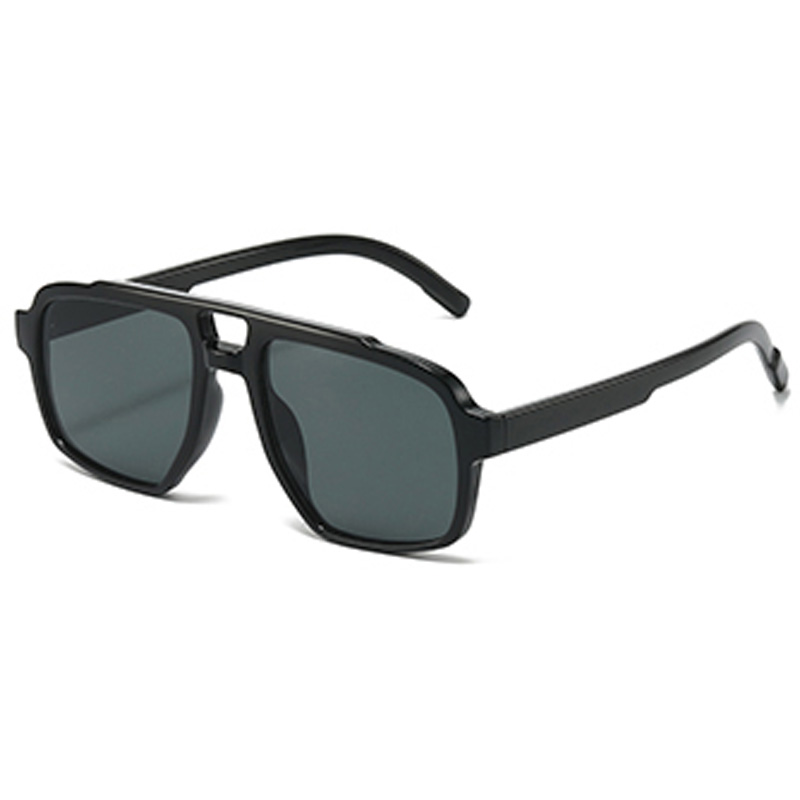
Round faces flatter with silhouettes that introduce the angles and lift the face lacks. Rectangular and square frames add structure; angular polygons sharpen; cat-eyes and browlines add the diagonal that breaks the circle. The shapes to approach carefully are the ones that echo the face's own curves: small round ovals, circular retro frames and soft oversized shapes, which double the roundness rather than contrasting it.
Scaling matters as much as shape: frames should be slightly wider than the face's widest zone, since undersized frames emphasize roundness by comparison. Angular details on the frame's upper half, brow bars, sharp top lines, lift the eye line and read as slimming. Wearers with round faces often report that their first angular frame is the moment sunglasses "clicked," precisely because the geometry finally contrasted rather than repeated.
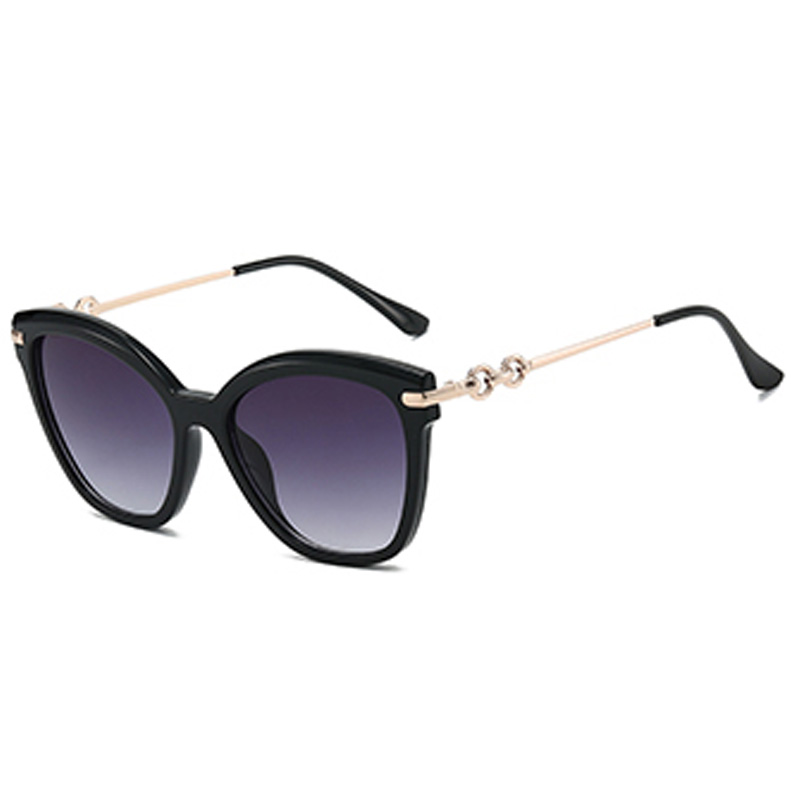
Square faces carry strong horizontal jaw lines and angular foreheads, and the flattering silhouettes answer with curves: round and oval frames, aviator teardrops, and any shape whose lower rim sweeps rather than cuts. The goal is contrast through curve, adding the softness the bone structure withholds. What to avoid is geometry echoing the jaw: sharp rectangular frames and hard polygons double the angles and harden the whole face.
Two refinements help square faces specifically. Frames slightly wider than the jaw soften by comparison, since a narrow frame lets the jaw dominate the composition. And rounded detail at the frame's bottom, curved lower rims, pantos, aviators, works hardest exactly where the face is most angular. Square-faced wearers who switch from rectangles to curved silhouettes describe the change as "warming," which is precisely the intended effect.
Oval faces wear everything, and the practical advice is to spend the freedom deliberately. The balanced proportions tolerate wide and narrow, angular and curved, dramatic and minimal, which makes the oval face the place to experiment with silhouettes other faces must approach carefully: full retro cat-eyes, dramatic oversized squares, narrow geometric shapes. The only universal caution is proportion, since even the versatile oval is flattered by frames whose width matches the face and whose top line converses with the brows.
The oval wearer's real task is matching frame to occasion rather than frame to face, which changes the buying logic: instead of one careful pair, the oval face can build a small wardrobe, a classic daily silhouette, a fashion statement, a sport crossover, and rotate by context. Every other face shape aspires to that freedom, and oval wearers should use it rather than defaulting to the same safe rectangle forever.
Heart faces, wide forehead, narrow chin, flatter with silhouettes that add visual weight at the bottom and keep the top light. Aviator teardrops are the classic match, their bottom-heavy lens widening the lower face; rimless and thin-rim designs reduce the upper mass; and light-colored or translucent frames keep the forehead zone from gaining any additional width. What to avoid is the heavy dark top-line frame, brow bars, thick dark squares, which exaggerate exactly the width the shape wants to balance.
Bottom-accented details work with the same logic: lenses with color or mirror treatments draw the eye downward, and frames that widen slightly at the lens bottom rebalance the taper. Heart-faced wearers should also mind frame width at the temples, since the shape's wide upper face means frames sized to the forehead run wide everywhere; the correct fit matches the temples, letting the glasses mediate between the face's two zones rather than amplifying either.
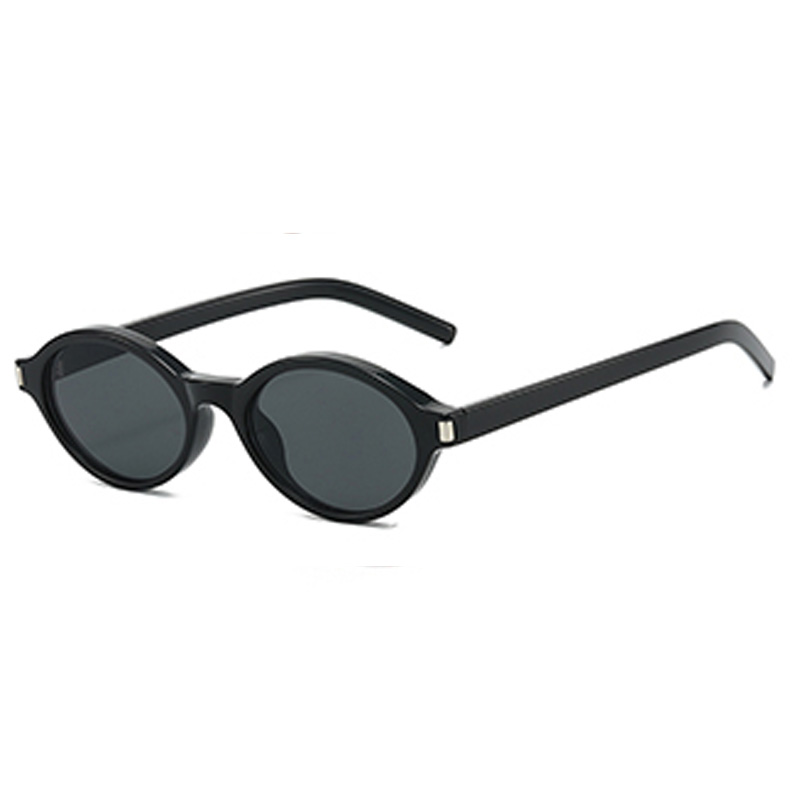
Oblong faces benefit from silhouettes that add horizontal presence and break the vertical run: tall or deep lenses that cover more vertical face, wide frames that match the face at its widest, and decorative temples that draw attention sideways. Oversized and shield shapes work well, as do deep aviators. What to avoid is anything that stretches the face further: narrow small ovals, tall narrow rectangles, and slim vertical geometries.
Contrast helps twice over: frames with strong horizontal details, brow bars, wide temples, add the width the face lacks, and lighter lens tints at the top reduce the vertical emphasis of dark columns. Oblong wearers often discover that their instinct for small, discreet frames is the one habit working against them, and that a confidently wide frame rebalances the face instantly.
| Face shape | Flattering silhouettes | Approach with care | Key adjustment |
|---|---|---|---|
| Round | Rectangles, polygons, cat-eyes, browlines | Round ovals, circular retro | Slightly wider than the face |
| Square | Ovals, aviators, rounded shapes | Sharp rectangles, hard polygons | Curved lower rims |
| Oval | Everything, experiment freely | Poor proportions only | Match occasion, not face |
| Heart | Aviators, rimless, light tops | Heavy dark top-line frames | Bottom-weighted details |
| Oblong | Oversized, shields, deep aviators | Narrow ovals, slim vertical shapes | Width and horizontal detail |
Shape matching sets the direction, but fit decides the outcome, and three checks outrank every chart. First, width: the frame should match the face at the temples, extending no further, because a frame wider than the face distorts every shape's proportions. Second, the brow line: the frame's top should follow or sit just below the eyebrows, since the brows are the face's own horizontal reference and frames that fight them create permanent visual friction. Third, the smile test: no frame should contact the cheeks, because a frame that moves when you express yourself is a frame you will fight all day.
Then the universal checks: stable on a head shake, comfortable at the bridge after an hour, lenses centered on the pupils. A perfectly shape-matched frame that fails these is the wrong frame, and a technically "wrong" silhouette that fits immaculately often looks better than theory predicts, because fit reads as confidence, and confidence flatters more than geometry.

The face-shape framework is a compass, not a cage, and its best use is as a filter before taste. Identify the silhouettes that flatter, shortlist within them, then let color, material and personality make the final call, because the frameworks cannot see your coloring, your wardrobe or your intent. Wearers who treat the charts as law end up with technically correct, personally boring eyewear; wearers who ignore them entirely buy their own repetition. The middle path, know the rules, then break one knowingly, is where personal style actually lives, and the sunglass counter is one of the cheapest places to practice it.
Use the three-measurement method, length versus width, jaw angle, widest zone, on a straight-on selfie with hair back. Most faces are combinations; diagnose what needs balancing rather than chasing a perfect label.
Angular silhouettes: rectangles, square frames, polygons, cat-eyes and browlines that add the structure the face lacks, sized slightly wider than the face's widest zone.
Sharp rectangles and hard polygons that echo the jaw's angles; the flattering choices are ovals, aviators and any frame with curved lower rims that contrast the bone structure with softness.
Small, light cat-eyes can work, but heavy dark upswept frames add width to an already wide upper face. Heart faces do better with aviators and bottom-weighted details that balance the taper.
Wide and deep: oversized shapes, shields and tall aviators that add horizontal presence and break the vertical run, avoiding narrow and slim vertical silhouettes that stretch the face further.
Often yes: fit quality, coloring and confidence routinely beat shape theory. Use the rules as a filter, then try the exception honestly, because a well-fitted "wrong" shape frequently outperforms a poorly fitted "right" one.
It changes the frame's visual context: volume above the face pairs differently with upswept shapes, and fringe styles interact with brow-line frames. Test candidates with your actual daily hairstyle, not the salon version.
The matching logic is identical, with one addition: sunglasses also serve light conditions, so coverage, tint and polarization join shape in the decision stack. Shape sets the flattery, function sets the range.
Face shape sets the silhouette; coloring sets the palette, and the pair together produce the flattery. The classic pairing logic runs on contrast: deep skin and dark hair carry black and dark tortoise frames with maximum presence, while fair colorings often read more harmonious in crystal, translucent and light tortoise tones that do not draw a hard line across the face. Mid-tone colorings hold the widest palette, and warm undertones flatter in tortoise, honey and amber frames while cool undertones gain from black, silver and blue-tinted combinations.
Lens color participates in the same conversation: dark gray lenses read neutral and serious, brown and amber warm the whole composition, and mirrored finishes add a third color element that either completes or crowds the look. The practical method mirrors the shape method: identify your dominant contrast level, high-contrast faces between hair and skin carry strong frame contrasts well, low-contrast faces flatter with tonal frames, then choose frames one step bolder than your instinct suggests, because frames read smaller on the face than in the case. Coloring cannot rescue a wrong silhouette and cannot ruin a right one, which is why it comes second, but it decides whether the right silhouette looks expensive or ordinary.
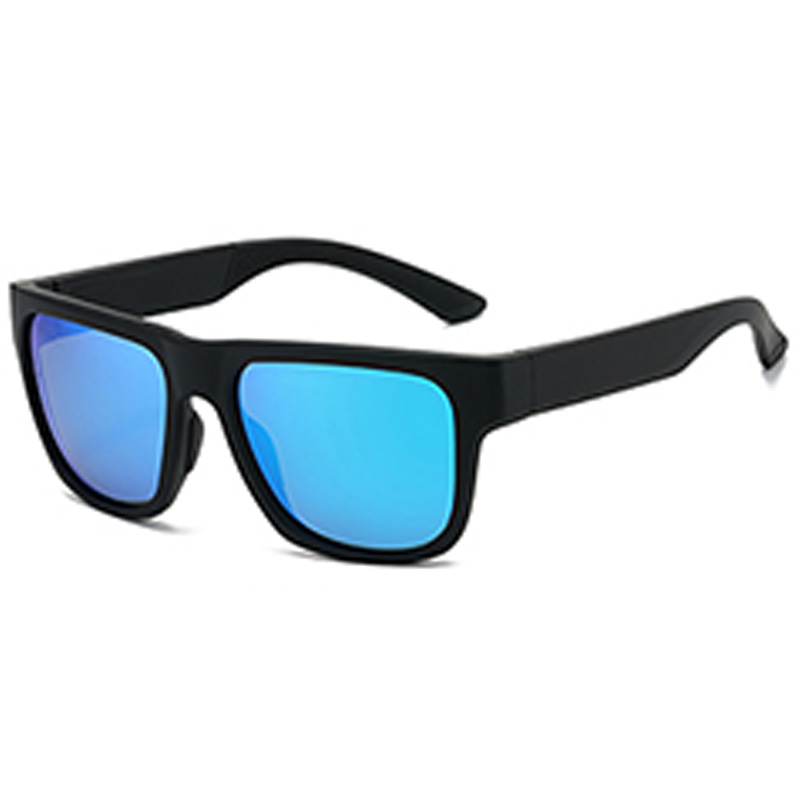
Wearers who know their shape can assemble a three-frame wardrobe that covers a year without overlap. The daily pair sits at the center of the flattering-silhouette list in a neutral color, tortoise, black or crystal, with quality UV400 and, where driving features, polarization. The occasion pair exaggerates: the boldest version of the flattering silhouette, in the season's tint, for events and photographs. The function pair follows the light conditions rather than the style, a wraparound or crossover with polarized lenses for driving, water and sport, chosen in a silhouette as close to the flattering list as function allows.
The wardrobe's economics mirror its coverage: each pair works fewer hours, ages slower, and replaces the desperate single-pair purchases that plague unplanned eyewear. Rotate by season and context, store each in its case, and the annual cost of the system lands near one premium impulse purchase while delivering three right answers every week. Face-shape knowledge is what makes the system possible, because each pair is chosen with its flattering silhouette as the anchor and its role as the modifier, which is the opposite of buying three compromises.
Most face-shape guides cover round, square, oval, and heart, then stop. Two further shapes appear often enough in our customer base to deserve their own rules. Diamond faces, with prominent cheekbones and narrow forehead and jawline, are the rarest and arguably the best served by sunglasses, because almost anything with soft curves flatters them. Oval and rimless styles, cat-eyes that echo the cheekbone line, and shield shapes that emphasize the eyes all work. The one direction to avoid is frames wider than the cheekbones, which exaggerate the narrowness of the forehead. If you have a diamond face, treat the standard advice as a menu rather than a restriction list; nearly all of it applies in your favor.
Triangle faces, sometimes called pear-shaped, carry a wider jaw than forehead. The goal is to draw the eye upward and add visual width at the top of the face. Browline frames do this explicitly, with their heavy upper rim acting as a horizontal anchor above the eyes. Cat-eye frames achieve the same lift more subtly, and aviators with their wide top bar help as well. Avoid small, narrow, or bottom-heavy frames that sit low on the face, because they reinforce exactly the proportion you are balancing. Rimless or very light bottoms, including semi-rimless designs with a strong top bar, are among the most effective choices available for this shape.
These two shapes also illustrate a broader principle that runs through this whole guide: the rules are directional, not mechanical. "Add width where the face is narrow, add angles where the face is soft" covers diamond and triangle as cleanly as it covers round and square. If you remember the direction, you can evaluate any frame in a shop or a catalog without carrying a chart.
Face shape becomes more complicated when prescription lenses enter the picture, and the complications are worth understanding before ordering. Strong prescriptions physically thicken lens edges, and the thickness depends on lens width and shape: large round or oversized frames force thicker, heavier prescription lenses, while smaller and closer-fitting frames keep edge thickness down. If you wear a prescription above roughly plus or minus 4.00, the fashion advice may need to bend toward smaller frames, or toward high-index lenses that compensate for size. Our optical range addresses this directly, offering prescription-ready acetate and TR90 frames in compact geometries that hold strong prescriptions well.
Wrap geometry creates a second complication. Sports wraps curve around the face, and high-curvature lenses introduce prism distortion when ground to prescription; not every prescription suits every wrap. Reputable suppliers limit prescription availability in high-wrap frames or use specially compensated lens designs, so ask before assuming any sport frame can take your prescription. The honest answer protects your eyes better than an optimistic yes. For customers whose prescription and preferred wrap conflict, the practical compromise is often a low-wrap sport style, which takes standard prescriptions comfortably while keeping most of the coverage advantage.
Face shape, fit, and prescription finally meet in one rule: the prescription narrows your frame options before taste widens them again. Get the prescription constraint settled first, confirm the frame can hold your lenses properly, and then apply the shape and fit rules from the rest of this guide to choose among the frames that remain. Order matters, and following it turns a confusing matrix into three simple steps.
Two practical habits make the rules from this guide stick in daily buying. The first is the mirror-line test: stand facing a mirror, hold the frame in place, and check three lines, the top edge of the frame against your eyebrows, the outer edges against the widest part of your face, and the bottom edge against your cheekbones. When the top edge follows or slightly overlaps the brow, the outer edges align with your face's widest point, and the bottom clears the cheek, the proportions are right regardless of the shape category on the chart. This test takes twenty seconds and catches fit problems that shape rules alone miss, including the frames that technically match your shape but sit wrongly on your features.
The second habit is buying your second pair with your first pair's flaws in hand. Note what bothered you about the pair you just retired: slides when you sweat, pinches at the temple, sits too low, hides your brows. Those complaints are worth more than any face-shape chart, because they describe your actual features rather than an average. Bring that list to the next purchase, filter by the shape direction that suits you, apply the fit checks, and the selection narrows to a handful of frames that will genuinely work. Most customers who follow this sequence end the process faster and more satisfied than those who chase trends first, because they have converted their own face, not an abstract category, into the buying criterion. That is the practical destination of everything in this guide.
For wholesale and retail partners, the face-shape framework translates directly into merchandising. Stock deliberately across the four proportion directions, angular frames for soft faces, soft frames for angular faces, wide tops for tapering faces, restrained depths for long faces, so that every customer who walks the shape rules finds a match on your shelf. Label product listings with the face shapes each frame suits, include the three-line fit check in your photography, and train staff to ask about the retired pair's complaints before recommending anything. Stores that sell by shape and fit return less and convert more, because customers leave with frames that match their faces rather than their impulses, and those customers come back when the next season's shapes arrive.
Face-shape matching is geometry in service of flattery: round faces borrow angles, square faces borrow curves, oval faces spend their freedom, heart faces rebalance their taper, and oblong faces add width. Two minutes of honest self-measurement, the silhouette table for your shape, and the fit checks that outrank every chart, width, brow line, smile, turn a browsing session into a decision. Then break one rule on purpose if it speaks to you, because the framework exists to make your taste effective, not to replace it. The right silhouette, rightly fitted, is the cheapest upgrade a face can buy.
This website uses cookies to ensure you get the best experience on our website.



 Phone
Comment
(0)