

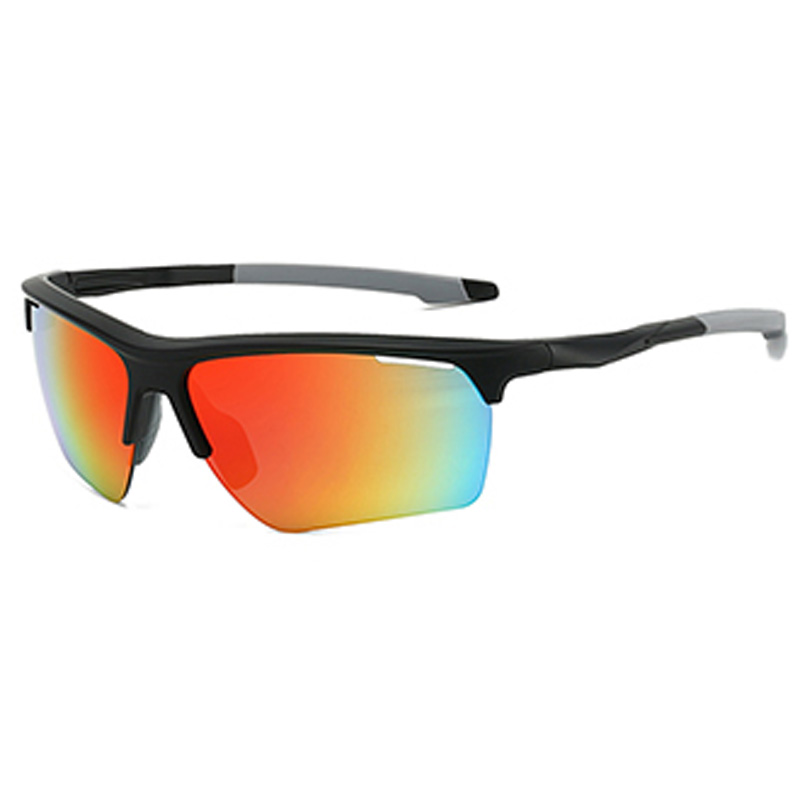
Choosing the right optical glasses for professional use is a critical decision for organizations and buyers who need reliable performance, consistent clarity, and long-term visual comfort. In industrial, laboratory, medical, technical, inspection, and manufacturing environments, the quality of optical glasses directly affects visibility, measurement accuracy, imaging precision, and overall workflow efficiency. Whether the application involves lenses, prisms, windows, filters, or precision optical components, selecting the right glass material can improve transmission, reduce distortion, and support demanding professional standards.
This guide explains how to choose professional optical glass using practical criteria, material definitions, performance characteristics, specification tables, and selection tips. It is designed as a general industry resource for SEO-friendly blog pages, directory pages, and product category pages. It does not include specific brand recommendations and focuses only on universal, technical information that helps buyers, engineers, procurement teams, and content managers understand the subject clearly.
Optical glasses are specially manufactured glass materials designed to control the passage of light with high precision. Unlike standard construction or container glass, optical glass is produced with strict requirements for refractive index, dispersion, homogeneity, transmission, and internal quality. These properties make optical glass suitable for scientific, industrial, medical, photographic, and defense-related systems where accuracy and repeatability matter.
In professional applications, optical glass is used to manufacture:
The term optical glass usually refers to a family of glass types engineered for different optical behaviors. Some materials are optimized for clarity and transmission, while others are designed for dispersion control, thermal stability, or special spectral performance. Understanding the differences is essential when selecting the best glass for professional use.
Choosing the correct glass material is not only about visual quality. In professional environments, the wrong selection can cause reduced image sharpness, lower transmission, color errors, thermal drift, coating failure, or mechanical issues during operation. A carefully selected optical glass supports dependable performance under real working conditions.
Key reasons optical glass selection matters include:
For businesses and technical teams, choosing the right optical glass for professional use can reduce maintenance costs, improve product performance, and extend equipment life.
Professional optical glass offers multiple advantages compared with ordinary glass or lower-grade materials. These benefits are especially important in precision systems and demanding environments.
| Advantage | Description | Professional Benefit |
|---|---|---|
| High optical clarity | Low haze and strong visible light transmission | Sharp imaging and better viewing quality |
| Controlled refractive index | Predictable bending of light | Accurate lens and prism design |
| Low dispersion | Reduced color separation across wavelengths | Improved color correction and reduced chromatic aberration |
| Material homogeneity | Uniform internal structure | Stable optical performance across the full element |
| Good polishability | Can be finished to high surface quality | Suitable for precision optical surfaces |
| Thermal performance options | Different grades resist temperature change differently | Better stability in industrial systems |
| Coating compatibility | Works with anti-reflective and functional coatings | Enhanced transmission and environmental resistance |
There are many categories of optical glass, but most professional users focus on a few major types based on optical behavior and mechanical needs. Each type has a different role in system design and performance.
Crown glass typically has relatively low dispersion and moderate refractive index. It is widely used in lens systems that require clarity and stable color performance. Because of its optical balance, crown glass is often chosen for general-purpose imaging and correction elements.
Flint glass usually has a higher refractive index and higher dispersion than crown glass. It is often used in combination with crown glass to correct chromatic aberration in multi-element optical systems. Flint glass is important in achromatic lens design and precision optical assemblies.
Borosilicate optical glass is valued for its thermal stability, chemical resistance, and mechanical durability. It is suitable for laboratory optics, protective windows, inspection systems, and environments where temperature changes or chemical exposure are expected.
Fused silica offers excellent transmission, very low thermal expansion, and strong UV performance. It is commonly used in laser optics, high-precision instruments, and applications that need high resistance to thermal stress. Although technically different from many traditional optical glasses, it is often included in professional optical material selection.
Specialty optical glass includes materials engineered for infrared transmission, ultraviolet transmission, radiation resistance, low expansion, or specific filter properties. These are used in advanced systems such as spectroscopy, aerospace instruments, defense optics, and medical devices.
Selecting the right optical glass requires a balanced evaluation of optical, thermal, mechanical, and environmental factors. The best choice depends on the application, wavelength range, operating conditions, and budget.
The refractive index determines how strongly light bends when entering the material. Higher refractive index materials can help create compact lens designs, while lower index materials may offer easier design control and reduced reflection in some systems. For professional use, the refractive index must match the optical design requirements precisely.
Dispersion describes how much the refractive index changes with wavelength. High dispersion can create color fringing, while low dispersion supports better color correction. If the optical system must produce accurate color or high-resolution imaging, dispersion is one of the most important material properties to evaluate.
The transmission range shows which wavelengths pass through the glass efficiently. Some optical glasses perform best in the visible spectrum, while others are designed for UV or IR applications. Buyers should always confirm that the selected material supports the required spectral range.
Homogeneity refers to the uniformity of optical properties throughout the glass volume. High homogeneity is essential for precision optics because variations inside the material can distort light and reduce image quality. Professional-grade optical glass should have tight internal quality control.
Even the best glass material will underperform if the surface finish is poor. Surface scratches, digs, and micro-defects can scatter light and reduce optical efficiency. For professional applications, surface quality requirements are usually specified according to industry standards and project needs.
Thermal expansion is a critical factor in environments with temperature changes. Materials with low expansion are less likely to deform, shift focus, or stress coatings. This is especially important in precision measurement systems, laser applications, and outdoor equipment.
Professional optical systems are often cleaned regularly or exposed to humidity, solvents, and processing chemicals. Choosing a material with strong chemical resistance helps preserve optical performance and extend service life.
While optical glass is selected primarily for light behavior, mechanical properties still matter. Impact resistance, hardness, and edge strength can influence manufacturing yield, installation safety, and long-term durability.
When evaluating optical glasses for professional use, the following specification categories are commonly reviewed. These values help designers and buyers compare materials objectively.
| Specification | What It Means | Why It Matters |
|---|---|---|
| Refractive index | Degree of light bending in the material | Determines lens power and system geometry |
| Abbe number | Indicator of dispersion | Helps estimate chromatic correction behavior |
| Transmission | Percentage of light passing through | Affects brightness and signal strength |
| Haze | Light scattering inside or on the surface | Impacts clarity and image contrast |
| Homogeneity | Uniform optical quality across the blank | Supports precision performance |
| Thermal expansion coefficient | Amount the material expands with heat | Important for stability under temperature changes |
| Density | Mass per unit volume | Influences weight and handling |
| Hardness | Resistance to scratching and wear | Affects durability and surface life |
| Water resistance | Resistance to moisture-related damage | Useful in humid or outdoor environments |
| UV/IR performance | Behavior in ultraviolet or infrared light | Essential for specialty optical systems |
Different professional applications require different optical glass properties. The right choice depends on the exact use case, not just the material category. Below are common application-driven considerations.
For cameras, machine vision, and inspection equipment, image sharpness, contrast, and color accuracy are the main goals. Low dispersion, strong transmission, and high surface quality are important. In many cases, glass selection must support multi-element lens correction and compatibility with coatings.
Microscopes, spectrometers, and laboratory devices demand excellent homogeneity, spectral accuracy, and stable performance. Depending on the instrument, UV or IR transmission may also be required. Precision manufacturing is often as important as the material itself.
Laser systems require materials that can handle intense energy without distortion or damage. Low thermal expansion, high transmission at the target wavelength, and strong resistance to laser-induced stress are especially valuable. Surface quality and coating compatibility are also critical.
Inspection windows and viewing components often need strong mechanical durability and resistance to chemicals, dust, and repeated cleaning. Optical quality must remain stable under rough operating conditions.
Medical optical systems often require cleanability, long service life, and dependable performance under frequent sterilization or environmental exposure. Optical glass for these uses should combine clarity with chemical resistance and dimensional stability.
For outdoor instruments, navigation devices, or field inspection equipment, temperature fluctuation, moisture, and contamination are major concerns. Thermal stability and environmental resistance can be more important than absolute optical performance in some cases.
| Material Type | Optical Strengths | Typical Use Cases | Main Consideration |
|---|---|---|---|
| Crown glass | Low dispersion, good clarity | General lenses, imaging optics | Moderate refractive power |
| Flint glass | Higher refractive index | Corrective lens combinations, prisms | Higher dispersion |
| Borosilicate optical glass | Thermal and chemical resistance | Lab optics, protective windows | May not be ideal for extreme optical precision |
| Fused silica | Excellent transmission, low expansion | Laser optics, UV systems | Higher cost and specialized processing |
| Specialty optical glass | Tailored spectral performance | Spectroscopy, aerospace, defense | Requires exact specification matching |
In professional procurement and engineering documents, buyers often see technical terms related to quality, performance, and manufacturing standards. Understanding these terms improves specification accuracy and reduces purchasing mistakes.
Although this guide does not recommend specific companies, buyers still need a consistent evaluation method when sourcing optical glass. A strong supplier or manufacturer should be able to provide technical data, traceability, and quality assurance documentation.
General evaluation points include:
For professional procurement, it is wise to request sample data, spectral graphs, and dimensional tolerances before placing large orders. Reliable technical communication is often a sign of a mature optical glass supply chain.
The following checklist can help simplify material selection for professional use. It can be adapted for internal review, purchasing forms, or content development pages.
| Checklist Item | Questions to Ask |
|---|---|
| Application type | Is the glass used for imaging, filtering, protection, or measurement? |
| Wavelength range | Does the material need to transmit UV, visible, or IR light? |
| Optical precision | How strict are the requirements for homogeneity and surface quality? |
| Thermal environment | Will the glass face temperature changes or heat load? |
| Chemical exposure | Will the surface contact cleaners, solvents, or moisture? |
| Mechanical stress | Will the component face vibration, handling, or impact? |
| Coating needs | Will anti-reflective or protective coatings be applied? |
| Budget and volume | Is the project prototype-based or large-scale production? |
Even experienced buyers can make errors when comparing optical glass materials. Avoiding these mistakes can save time and reduce rework.
When the correct optical glass is selected, the benefits can be seen across performance, reliability, and operational efficiency.
How to choose optical glasses for professional use depends on a careful balance of refractive index, dispersion, transmission, homogeneity, thermal expansion, and environmental durability. Professional optical glass must match the application, whether it is used in imaging systems, laser equipment, scientific instruments, inspection windows, or laboratory devices. By reviewing material type, spectral range, surface quality, and standard specifications, buyers can select optical glass materials that support precision, reliability, and long-term value.
If your goal is to create high-ranking content around optical glasses, professional optical glass selection, optical glass specifications, and how to choose optical glass, this topic provides strong keyword relevance and useful evergreen information. It works well for blog articles, category pages, educational pages, and technical resource centers focused on the optics industry.
```
This website uses cookies to ensure you get the best experience on our website.



 Phone
Comment
(0)