

 RS260714_TR90_Windproof_Wraparound_Unisex_Sports Eyewear
1、Product Introduction
We are a professional manufacturer and supplier of sports eyewear from China.These one-piece wraparound racing Cycling sunglasses are equipped with high-toughness impact-resistant PC lenses featuring inherent UV400 full UV protection. Combined with vibrant mirrored coating, they effectively reduce harsh outdoor glare.
The fully enclosed curved panoramic lenses block wind, sand and scattered side light while delivering clear, wide vision. The lightweight flexible frame matches non-slip silicone nose pads, offering a lightweight and stable fit during prolonged outdoor activities.
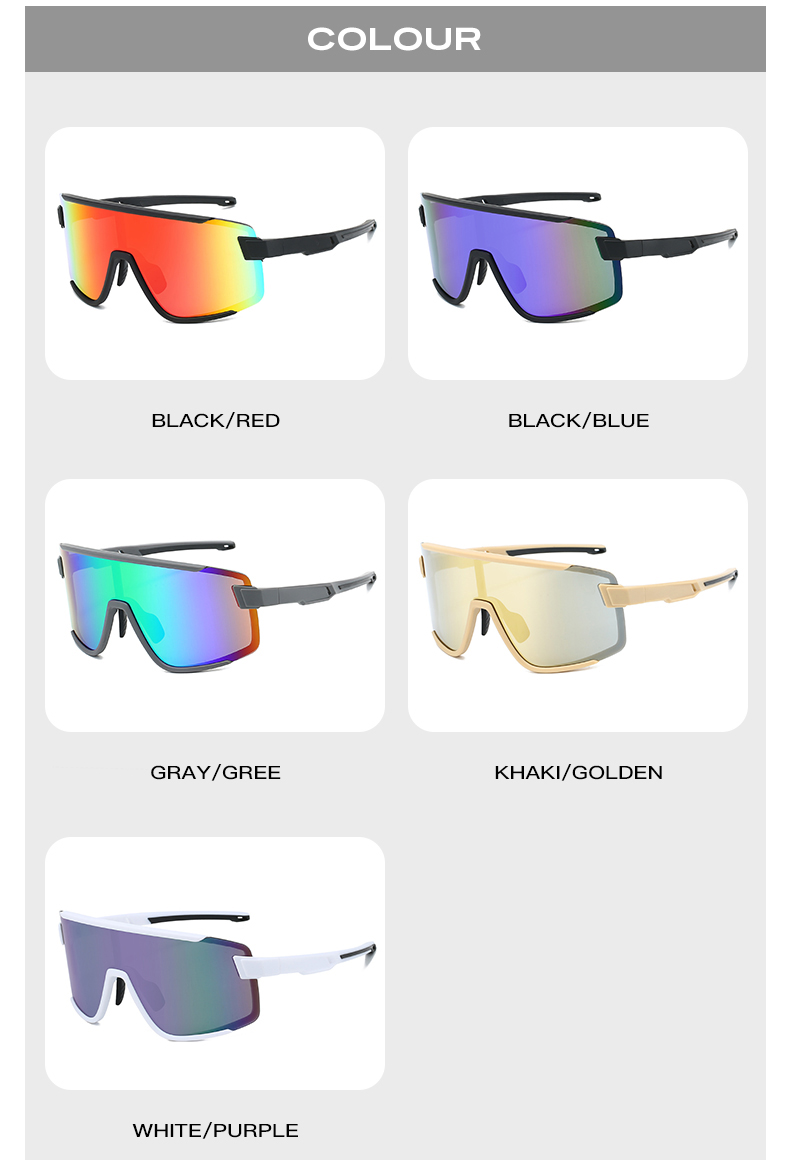
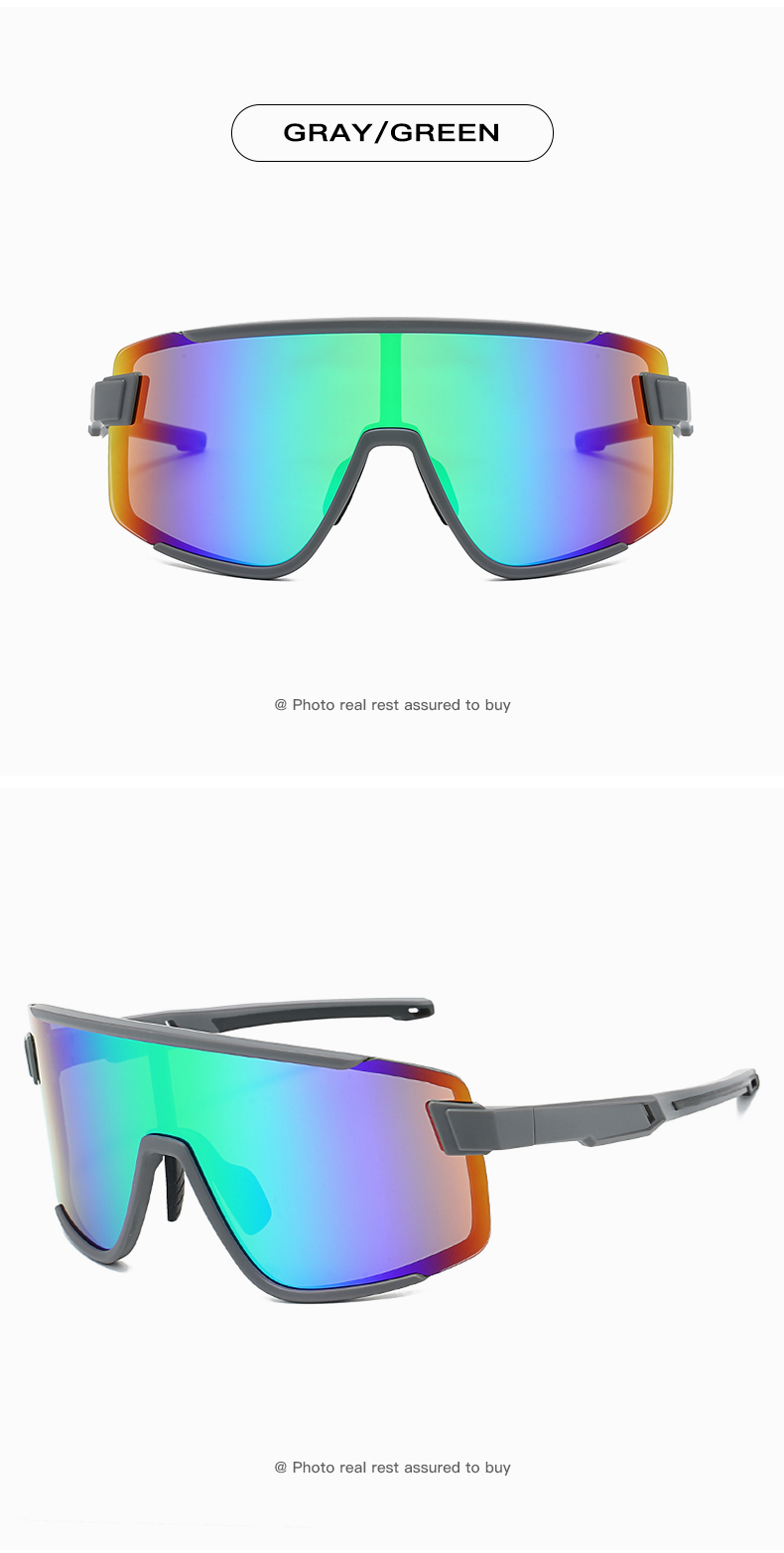
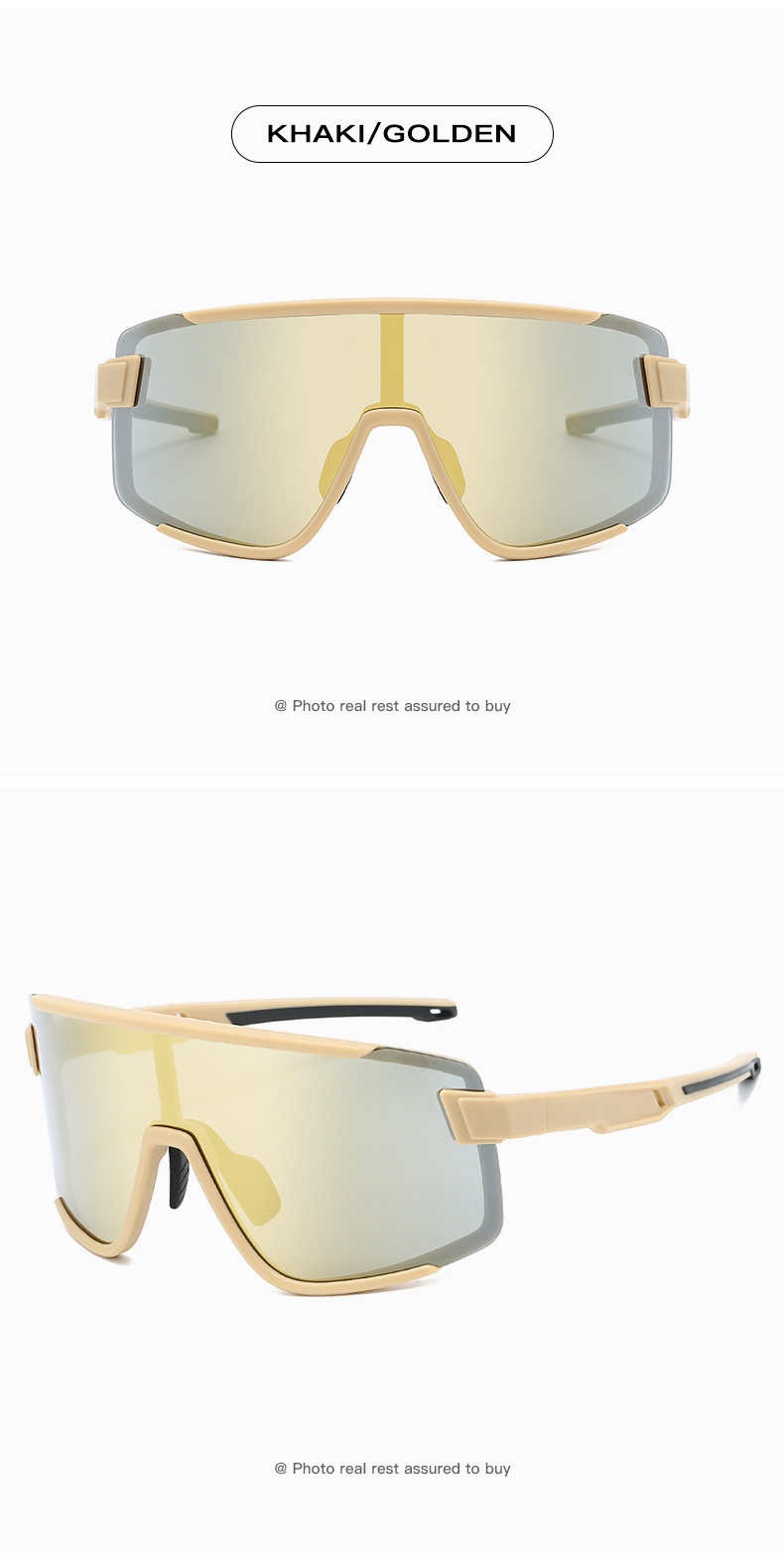
Available in 5 fashionable colorways. Suitable for various outdoor activities such as road cycling, marathons, fishing, mountain hiking, as well as daily sun protection and casual styling. Balancing professional sports protection and trendy competitive appearance, they are ideal protective eyewear for cycling lovers and outdoor enthusiasts.Wholesale, OEM manufacturing and custom logo services are available.
Linhai Huangjia Eyewear Co., Ltd., based in Zhejiang, China, specializes in eyewear production and export. We offer one-stop OEM/ODM customization directly from the factory. Welcome to contact us for details.
2、Product Features & Dimension Drawings
2.1 Product Features
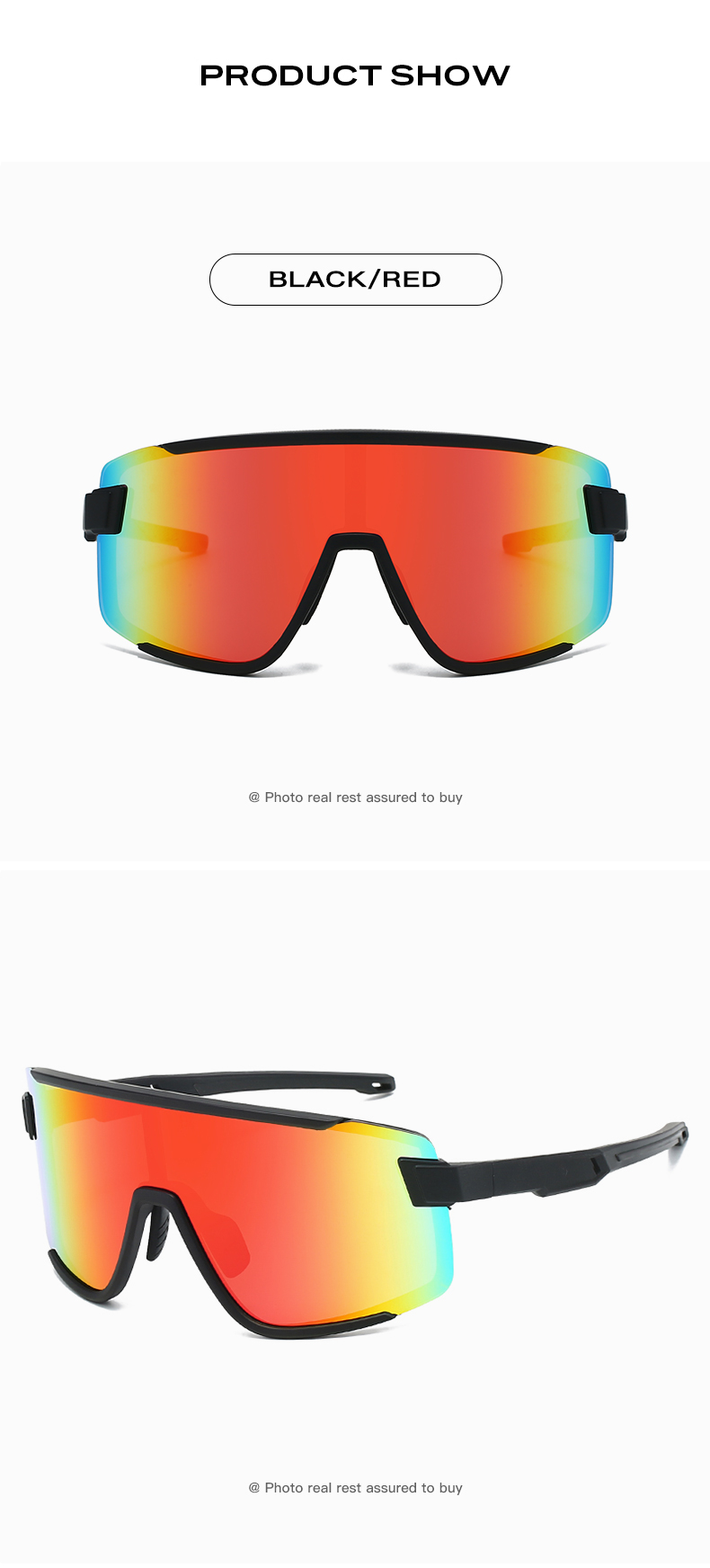
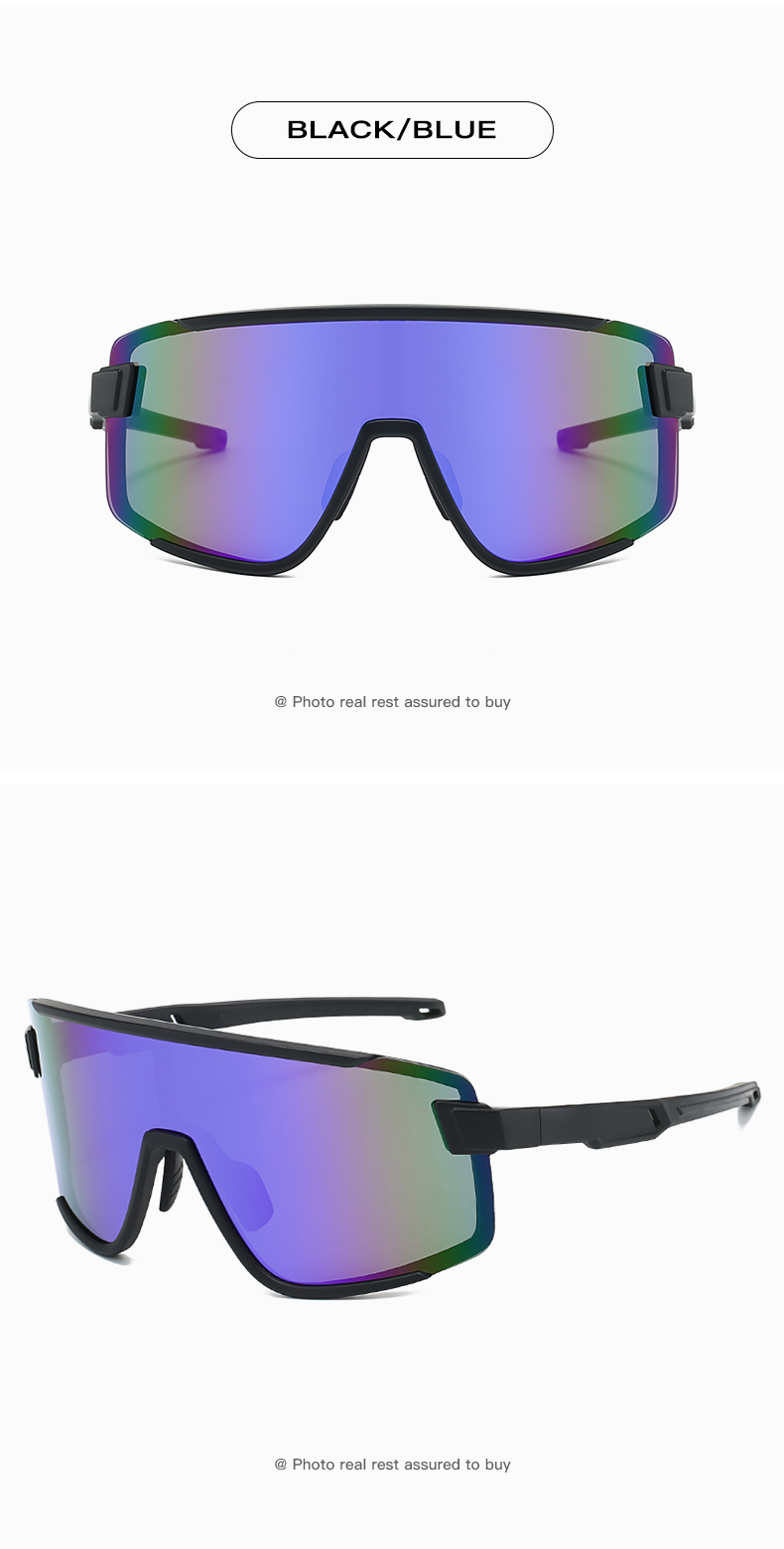
One-piece wraparound large lenses with semi-rimless construction deliver lightweight wearing experience. They block wind, dust and stray side light.Non-slip silicone nose pads prevent slipping even during strenuous workouts with sweat.The ultra-light flexible frame ensures pressure-free comfort for extended wear, and it is extrusion-resistant and not easy to break.Available in 5 trendy colorways, unisex and versatile for various outfits.
Impact-resistant PC lenses withstand impacts from flying stones for safer sports. With full-spectrum UV400 protection against UV rays, the vibrant mirrored coating eliminates harsh glare and restores natural colors.
2.2 Dimensions
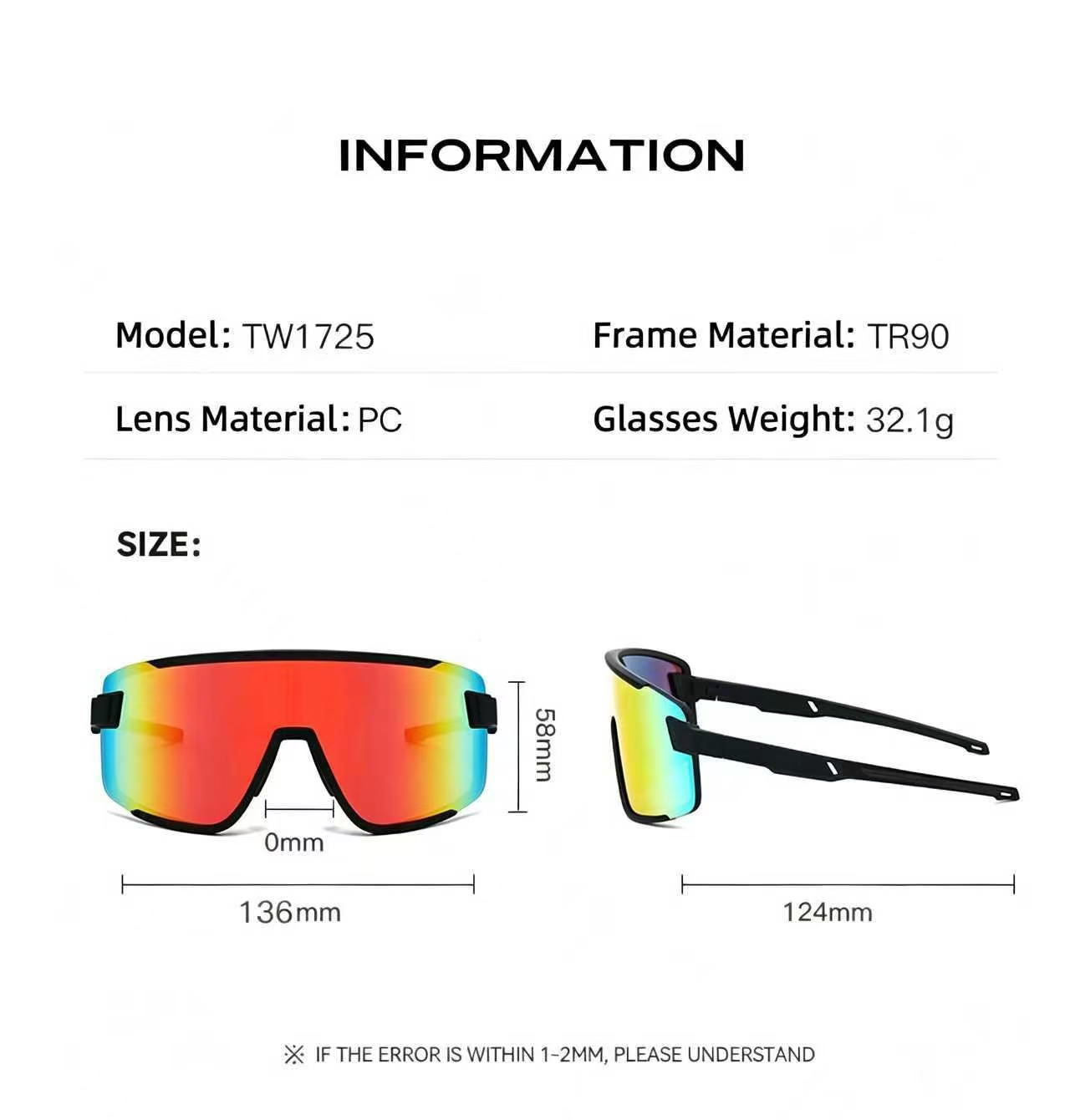
Parameter | Specification |
Model Name | TR90 Windproof Wraparound Sports Eyewear |
Model No. | RS260714 |
Material: | TR90 |
Frame Shape | Half-rim Shield Frame |
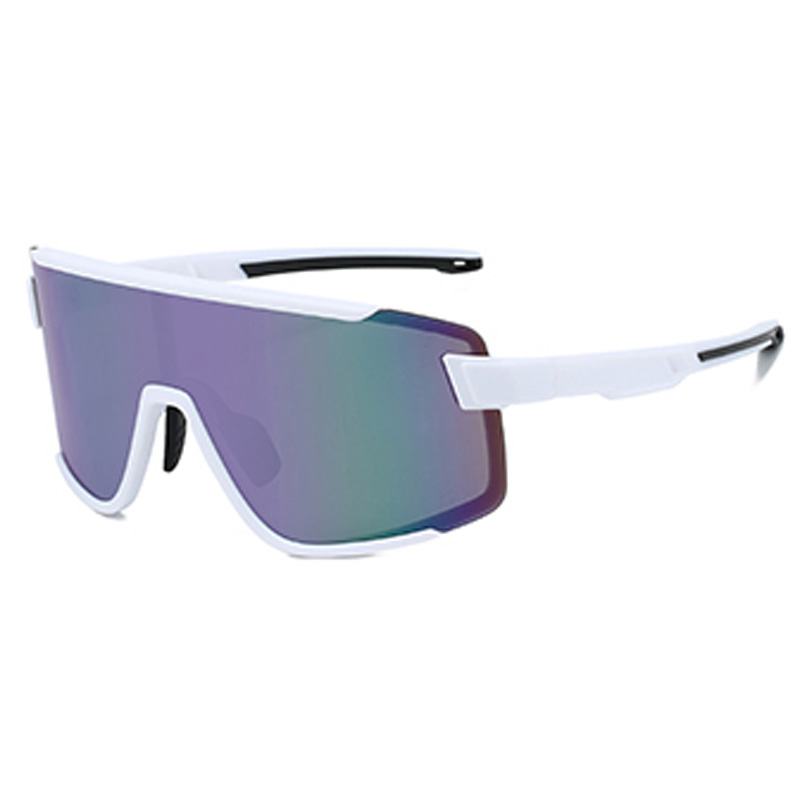
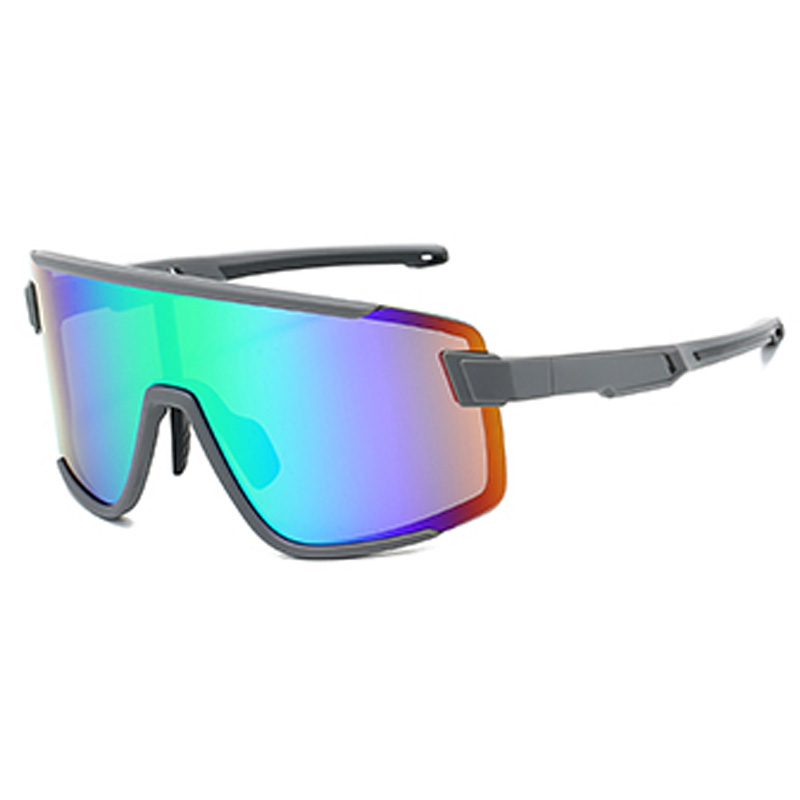
Frame Color | Black、Gray、Khaki、White(Custom) |
Size | 136-124mm |
Total Weight | 32.1g |
Lens Type | PC |
Target Audience | Unisex Men & Women |
Applicable Scenes | cycling,beach vacation, hiking,fishing,mountain off-road riding,driving,long-distance running,golf,badminton,tennis,pickleball,beach volleyball,daily commuting |
MOQ | 300pcs/Color; |
Origin | Taizhou, Zhejiang Province, China |
Logo Printing | Custom Made |
Packaging | 1pcs/bag, 12pcs/box, 300pcs |
TR90 Windproof Wraparound Sports Eyewear
When I develop sports eyewear, I do not look at the frame as just another fashion accessory. I look at how it sits on the face, how it feels during movement, how the frame looks from different angles, and whether the design makes sense for the activity it is intended for. That is the thinking behind our TR90 Windproof Wraparound Sports Eyewear.
This model is designed around a lightweight TR90 frame concept and a wraparound sports profile. The shape is especially suitable for cycling, running, hiking, outdoor training, fitness, travel, and other active outdoor activities. The closer-fitting design creates a practical sports appearance while giving brands plenty of room to develop different colors, lens options, logos, and packaging.
At Linhai Huangjia Glasses Co., Ltd., I work with sports glasses, optical glasses, fashionable Sunglasses, industrial safety goggles, and military and police tactical goggles. Our experience across these categories has taught me one simple lesson: eyewear should be developed around its actual use. A pair of recreational cycling glasses should not be marketed as industrial safety goggles, and a fashion lens should not be described as protective equipment without the appropriate testing.
With this model, my focus is straightforward: create a practical TR90 Wraparound Sports Eyewear platform that looks athletic, feels lightweight, and can be adapted for different outdoor eyewear markets.
At first glance, the most noticeable feature is the wraparound shape. Unlike a traditional flat-front frame, a wraparound design follows the general curve of the face more closely. This gives the eyewear a stronger sports character and can help create a more enclosed visual profile around the eyes.
I use the word “windproof” carefully here. The design is intended to provide a closer-fitting, wind-oriented sports eyewear profile. It can help reduce the feeling of direct airflow around the eyes compared with a very open frame, depending on the individual fit and riding conditions. However, it should not be understood as an airtight seal or as guaranteed protection against wind, dust, or other environmental hazards.
That distinction is important when developing a product for international markets. Good product descriptions should explain what the design is intended to do without turning a design feature into an unsupported performance claim.
The second major element is the TR90 frame. TR90 is commonly used in eyewear where manufacturers want a lightweight, practical frame structure. For sports products, this is useful because people may wear their glasses for extended periods while cycling, running, hiking, or training.
The third element is the overall sports geometry. The frame is not designed to look like an ordinary optical frame with a few sporty details added afterward. The proportions, lens shape, and temple structure are developed around an active outdoor appearance.
When I compare sports eyewear with ordinary casual sunglasses, the difference is often in the overall geometry rather than one individual component.
A wraparound sports frame generally has a curved front profile and side coverage that creates a closer visual relationship between the frame and the wearer's face. This can be particularly useful for outdoor styling because the design looks natural when paired with cycling helmets, sports clothing, running gear, and other active equipment.
However, face shape still matters. A frame that fits one person perfectly may feel different on another person's face. For B2B projects, I therefore recommend checking actual samples rather than relying only on product photographs.
| Design Feature | Primary Purpose | Practical Consideration |
|---|---|---|
| TR90 frame | Lightweight sports frame concept | Actual finished weight depends on complete product construction |
| Wraparound profile | Closer-fitting outdoor appearance | Fit varies with face shape and frame dimensions |
| Sports geometry | Supports an active product identity | Suitable for multiple outdoor lifestyle categories |
| Wind-oriented design | Creates a more enclosed frame profile | Not the same as an airtight environmental seal |
This table describes the design intention of the product rather than claiming a specific laboratory performance level. For a customized order, the actual dimensions, weight, lens specifications, and testing requirements should be confirmed with the final product specification.
Sports eyewear does not have a complicated “working principle” like a machine or water-treatment system. Its performance comes from several simple parts working together: the frame holds the lenses, the temples keep the eyewear positioned, and the lens characteristics determine how light is transmitted through the viewing area.
For cycling, the user is often moving at a higher speed than when walking. Airflow becomes more noticeable, especially when riding downhill or into a headwind. A wraparound frame creates a more curved profile around the face than an open, flat frame.
This is one reason wraparound cycling eyewear is popular in sports product design. The shape naturally communicates speed and movement, while the closer profile can make the product feel more suitable for active outdoor use.
But I would not tell a buyer that a wraparound frame completely blocks wind. Real-world results depend on riding speed, wind direction, face shape, frame dimensions, lens curvature, and the amount of open space around the frame.
The frame provides the main structural support. It holds the lens and connects the front section to the temples. In a sports product, the frame also has to maintain its shape during normal use.
TR90 is attractive for this type of design because it allows manufacturers to produce relatively lightweight frame structures with a modern sports appearance. The exact performance of the finished product still depends on the material specification and manufacturing process.
The lens is the part the user looks through, so lens selection should never be treated as an afterthought. Lens color, visible light transmission, optical characteristics, coating options, and intended application can all affect the final product.
For example, a lens intended for bright outdoor conditions may be specified differently from one intended for more variable lighting. If the product is intended for driving, cycling, competition, or another specific activity, the lens specification should be reviewed for that use.
The temples help keep the eyewear in position. Their length, angle, hinge design, and contact points all influence the fit.
For OEM customers, I recommend paying attention to the temple structure during sampling. A small adjustment to temple angle or length can make a noticeable difference in how the finished product sits on the face.
I prefer to describe the product through features that a buyer can actually understand and check. For this model, the main points are the TR90 frame concept, wraparound geometry, outdoor sports positioning, and customization potential.
The lightweight frame concept is one of the main reasons this product works well for active use. Cycling, running, hiking, and training can involve long periods of continuous wear, so unnecessary frame weight can become noticeable over time.
Still, I do not treat “TR90” as a magic word. The finished weight is affected by the frame dimensions, lens size, lens material, hinges, nose components, and other parts. If a customer has a specific weight target, we should confirm it through the actual sample and production specification.
The curved wraparound profile gives the product its strongest sports identity. It creates a broader side-to-side visual appearance and gives the frame a more aerodynamic look.
For brands developing wraparound Sports sunglasses, this style also offers strong visual consistency across product photography, retail displays, and online product pages.
The “windproof” positioning comes mainly from the wraparound and closer-fitting frame concept. In practical terms, the design is intended to reduce the open feel around the eyes compared with a more exposed frame style.
I would still describe it as wind-oriented sports eyewear rather than a sealed protective device. This wording keeps the product description closer to the actual design.
The frame has a strong connection with cycling and outdoor sports. At the same time, the overall design can be used for recreational activities and active lifestyles.
This gives wholesalers and distributors more flexibility. Instead of selling the product only as cycling glasses, it can be positioned as outdoor sports eyewear for a broader audience.
The frame can also be considered for private-label development. Depending on the project, customers can discuss colors, logos, lens configurations, packaging, and other product details.
| Feature | Typical Market Positioning | Potential Customization |
|---|---|---|
| TR90 frame | Lightweight sports eyewear | Frame colors and finish |
| Wraparound shape | Cycling and outdoor sports | Lens and frame configuration |
| Wind-oriented profile | Outdoor active use | Product positioning and lens options |
| Sports styling | Performance and lifestyle eyewear | Branding and visual details |
| Private-label format | Wholesale and retail | Logo and packaging |
When customers ask me what makes a sports eyewear design practical, I usually talk about four things: fit, weight, visual coverage, and product purpose.
For outdoor sports, a lightweight frame can make the product easier to wear over longer periods. A cyclist may wear glasses for one or several hours. A runner may use them during training. A hiker may keep them on for most of the day.
That is why I consider frame weight together with balance. A light product that presses too strongly around the nose or ears is not necessarily comfortable. Good sports eyewear needs the parts to work together.
A wraparound frame naturally creates a closer profile around the eyes. This is useful for an outdoor product because it provides a stronger sports appearance and can reduce the feeling of an open frame during windy conditions.
The actual level of airflow reduction depends on the individual fit and environmental conditions. I would always recommend testing the final product in its intended application.
The design is not restricted to one sport. It can be used for cycling, running, hiking, walking, fitness, outdoor training, travel, and recreational activities.
From a B2B perspective, this is valuable because one product can potentially serve several related categories.
Sports eyewear is a competitive category. A recognizable wraparound shape helps a product establish its own appearance.
Brands can create different market versions by changing frame colors, lens colors, logos, packaging, and other visual details while keeping the basic sports concept.
For a manufacturer, I see this model as more than one finished SKU. It can also serve as a starting point for product development.
A customer may want a darker frame for cycling, a brighter color combination for younger outdoor users, or a more understated version for daily wear. These requirements can be discussed during the OEM or ODM process.
The main market for this product is sports and outdoor eyewear. I would not force it into industrial applications simply because the frame looks protective.
Cycling is the clearest application for TR90 Windproof Wraparound Sports Eyewear. The wraparound design fits naturally with cycling equipment and clothing, while the lightweight frame concept works well with longer riding sessions.
It can be positioned for road cycling, recreational cycling, training, commuting, and outdoor cycling activities. If a customer is developing eyewear for professional competition, the exact competition requirements should be confirmed separately.
Running is another natural application. Runners often prefer eyewear that feels light and stays visually connected with the face. The wraparound shape gives the product a clear athletic appearance.
For hiking, walking, camping, travel, and outdoor recreation, the product can be positioned as lightweight outdoor eyewear with a modern sports look.
The same product can also fit active lifestyle markets. Fitness brands, outdoor retailers, and sports distributors can use this style as part of a broader sports eyewear collection.
For wholesalers and distributors, versatility is useful. A product that can be presented across cycling, running, hiking, and general outdoor categories may be easier to place into different retail channels.
| Application | Why the Design Fits | Suggested Positioning |
|---|---|---|
| Cycling | Wraparound sports profile and outdoor styling | Cycling eyewear |
| Running | Lightweight sports frame concept | Running eyewear |
| Hiking | Outdoor-oriented design | Outdoor sports eyewear |
| Fitness | Modern athletic appearance | Active lifestyle eyewear |
| Travel | Sporty but versatile appearance | Outdoor lifestyle eyewear |
As a manufacturer, I know that the final appearance of sports eyewear depends on many small production steps. A product can look simple in a photograph, but producing the same appearance consistently in a large batch requires process control.
Before production, we confirm the frame design, material, dimensions, lens requirements, colors, branding, packaging, quantity, and delivery requirements.
For OEM and ODM projects, this stage is especially important. I prefer to resolve details before production rather than discover problems after the order has started.
The TR90 material is processed according to the approved frame design. The front section and temples need to match the required dimensions and geometry.
For a wraparound product, the front curve is particularly important because it contributes directly to the overall appearance and lens fitting.
The temples are processed and finished according to the product specification. Their length, angle, thickness, and connection points need to match the front frame.
This is also where branding details may be incorporated, depending on the design.
The lenses are prepared according to the confirmed specification. Depending on the project, customers may have requirements related to lens color, coating, optical properties, or other characteristics.
I always recommend that customers specify lens requirements clearly rather than relying on general terms such as “premium lens” or “sports lens.” A clear technical specification gives both sides a better production reference.
The lens is fitted into the frame, followed by temple and hinge assembly. The finished eyewear is then checked for alignment and overall appearance.
Inspection can cover the frame appearance, lens position, temple movement, logo placement, color consistency, packaging, and other agreed requirements.
After final inspection, products are packaged according to the confirmed packaging plan. Transportation and delivery arrangements can be discussed according to the order quantity and customer's location.
For bulk orders, we can build the production plan around the customer's specifications, quantity, customization requirements, packaging, and requested delivery schedule.
For international eyewear buyers, I think this section is worth reading carefully. Standards are not just words that should be added to a product page for SEO. They define specific requirements and product categories.
ANSI Z80.3-2025 is the current ANSI standard titled Ophthalmics – Nonprescription Sunglass and Fashion Eyewear Requirements. ANSI states that it applies to nonprescription sunglasses and fashion eyewear normally used for casual, dress, and recreational purposes with substantially plano lenses. It also excludes products covered by ANSI Z87, ANSI Z80.1, ANSI Z136.7, and certain sports and recreational protective eyewear standards.
This means I would not automatically describe a general pair of outdoor sports eyewear as ANSI Z80.3 compliant unless the actual product has been evaluated against the applicable requirements.
There is an even more important distinction with industrial safety eyewear. ANSI/ISEA Z87.1-2025 covers occupational and educational personal eye and face protection devices. The standard addresses requirements related to testing, permanent marking, selection, care, and use for hazards including impact, non-ionizing radiation, and liquid splash in occupational and educational environments.
So if a customer needs eyewear for machinery operation, welding, chemical handling, assembly work, or another occupational hazard, I would recommend selecting an appropriate industrial safety product and confirming the applicable testing requirements instead of treating ordinary cycling glasses as safety goggles.
| Standard / Category | Main Focus | Relationship to This Product |
|---|---|---|
| ANSI Z80.3-2025 | Nonprescription sunglasses and fashion eyewear | Relevant only when the final product falls within its scope and is evaluated accordingly |
| ANSI/ISEA Z87.1-2025 | Occupational and educational eye and face protection | Not automatically applicable to general cycling eyewear |
| Sports-specific requirements | Protection for particular sports and activities | May require separate evaluation depending on intended use |
For buyers, the practical lesson is simple: tell us where the eyewear will be sold and how it will be used. That helps us identify the correct product specification rather than making assumptions.
Linhai Huangjia Glasses Co., Ltd. was established in 2023 and is headquartered in Linhai, Zhejiang. We specialize in sports glasses, optical glasses, fashionable sunglasses, industrial safety goggles, and military and police tactical goggles.
Our product range gives us experience across several eyewear applications. I find this useful because B2B customers often do not need a single standard product. They may need a sports collection, optical products, protective eyewear, or several categories at the same time.
For sports eyewear, we pay attention to frame design, lens configuration, wearing experience, appearance, and intended application.
For industrial safety eyewear, the focus changes to the relevant protective requirements. For tactical eyewear, the project may involve different structural and functional considerations.
In other words, I do not believe one product should be described as suitable for every situation. Matching the product with the real use case is more useful for both the manufacturer and the buyer.
We can work with customers on OEM and ODM projects based on their product requirements. Depending on the order, customization may include frame colors, lens options, branding, packaging, and other agreed specifications.
If a customer already has a product drawing or reference sample, we can use that information as the starting point for discussion. If the customer only has a market concept, we can also discuss the required product direction and specifications.
Production planning is based on the confirmed product specifications, quantity, customization requirements, packaging requirements, and delivery schedule.
Payment methods, production cycle, transportation arrangements, and packaging methods can be discussed according to the order size and destination.
I see this model as suitable for several types of customers:
Sports eyewear brands
Cycling product brands
Outdoor equipment retailers
Eyewear wholesalers
Sports distributors
Private-label brands
Online eyewear sellers
OEM and ODM buyers
Each buyer may have a different target price, quantity, packaging style, and market. That is why we discuss the actual order requirements before production.
It is a sports and outdoor eyewear design using a lightweight TR90 frame concept with a wraparound profile. It is intended for cycling, running, hiking, fitness, outdoor training, travel, and recreational activities.
In this product description, “windproof” refers to the closer-fitting, wraparound-oriented design that can help reduce the direct feeling of airflow around the eyes compared with a more open frame. It does not mean that the eyewear forms an airtight seal or guarantees complete environmental protection.
Yes. Cycling is one of the main applications for this design. The wraparound shape and sports-oriented appearance make it suitable for road cycling, recreational cycling, training, commuting, and outdoor riding.
Yes. The product can be positioned for running, hiking, fitness, walking, travel, and other outdoor activities. The final lens specification should be selected according to the intended environment.
Frame colors can be discussed for OEM and ODM projects. The final options depend on the production specification, quantity, material, and required color.
Yes. Logo placement and branding can be discussed according to the frame design and production requirements. The exact location and process should be confirmed before production.
Yes. For bulk orders, packaging can be customized according to the customer's requirements. Options may include product boxes, bags, labels, inserts, and other agreed packaging materials.
No, not automatically. This model is positioned as sports and outdoor eyewear. Industrial safety eyewear has different application requirements and may need to meet applicable occupational eye protection standards such as ANSI/ISEA Z87.1-2025.
No. Frame material and impact performance are different subjects. Impact performance must be established through the appropriate product design, testing, and applicable standard. I do not recommend treating the material name alone as proof of a specific safety performance.
Yes. We support OEM and ODM projects and can discuss frame colors, lens specifications, logos, packaging, quantities, and other requirements based on the customer's project.
I recommend providing the expected quantity, target market, preferred frame color, lens requirements, logo information, packaging requirements, and delivery destination. If you have product drawings, photographs, reference samples, or similar products, these can also help us understand your requirements.
We prepare the production plan according to the confirmed specifications, quantity, customization requirements, packaging, and delivery schedule. Payment, production cycle, transportation, and packaging can be discussed according to the order and destination.
For me, the value of TR90 Windproof Wraparound Sports Eyewear is not about adding as many technical words as possible to the product description. It comes from a simple combination: a lightweight frame concept, a closer wraparound profile, an active outdoor appearance, and enough flexibility for different B2B applications.
The product fits naturally into cycling and outdoor sports, but it can also be developed for running, hiking, fitness, travel, and active lifestyle markets. That flexibility gives sports brands and distributors more options when building their eyewear collections.
From the manufacturing side, I also understand that the frame is only one part of the project. Lens specifications, colors, branding, packaging, quantity, inspection requirements, and delivery all matter when an order moves from an idea to a finished product.
At Linhai Huangjia Glasses Co., Ltd., we can work with customers from the initial product specification through customization, production, inspection, packaging, and delivery. If you are sourcing TR90 wraparound sports eyewear, lightweight cycling glasses, windproof outdoor sports eyewear, or a customized private-label sports eyewear solution, we can discuss the product around your actual market and application.
The best starting point is always the same: define how the eyewear will be used, where it will be sold, what specifications it needs, and how many units you require. Once those points are clear, the right frame, lens, branding, packaging, and production plan become much easier to determine.
This website uses cookies to ensure you get the best experience on our website.



 Phone
Phone