

RS260715_TR90_Cutout_Temple_Unisex_Cycling_Outdoor_Eyewear
1、Product Introduction
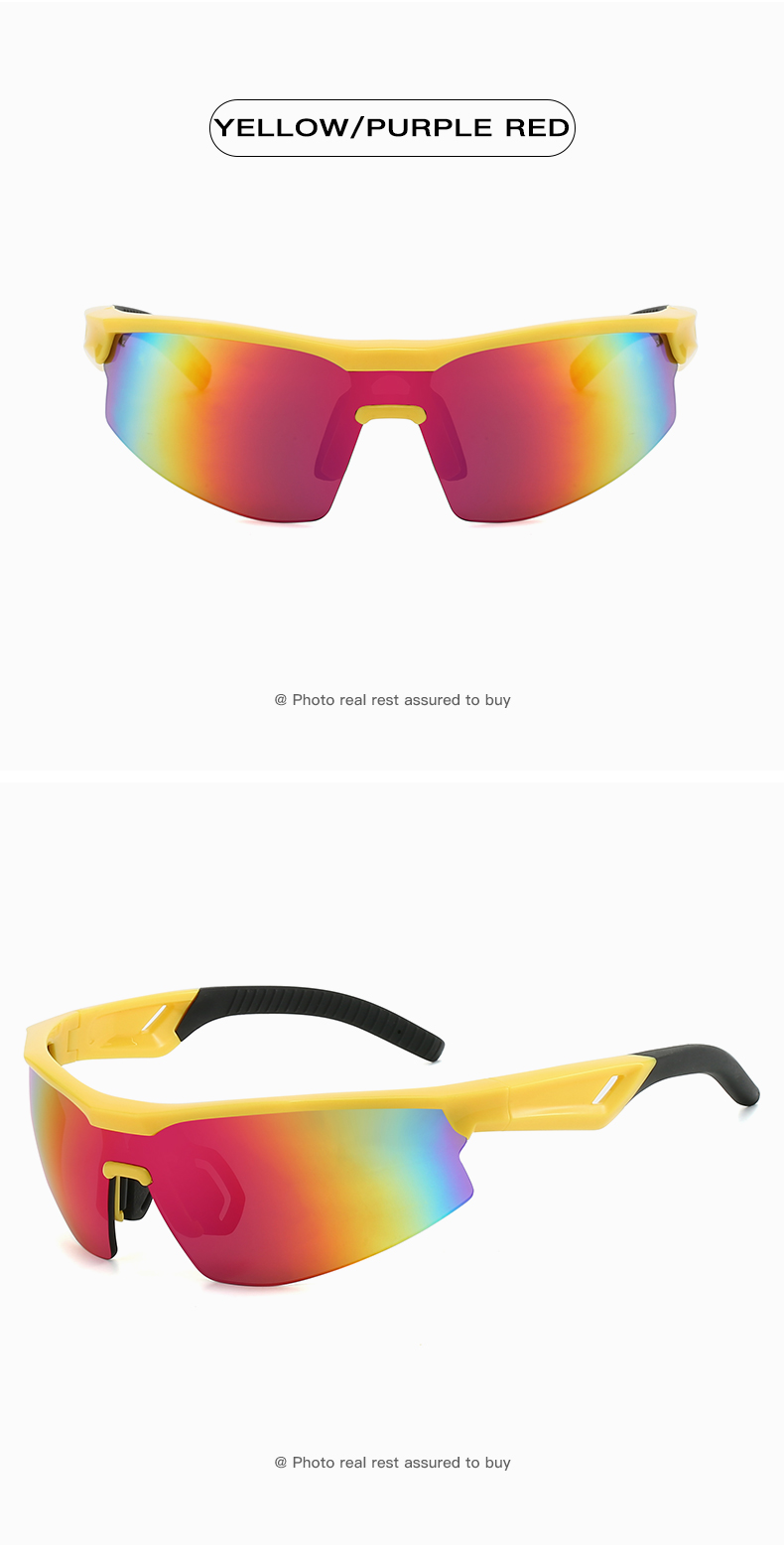
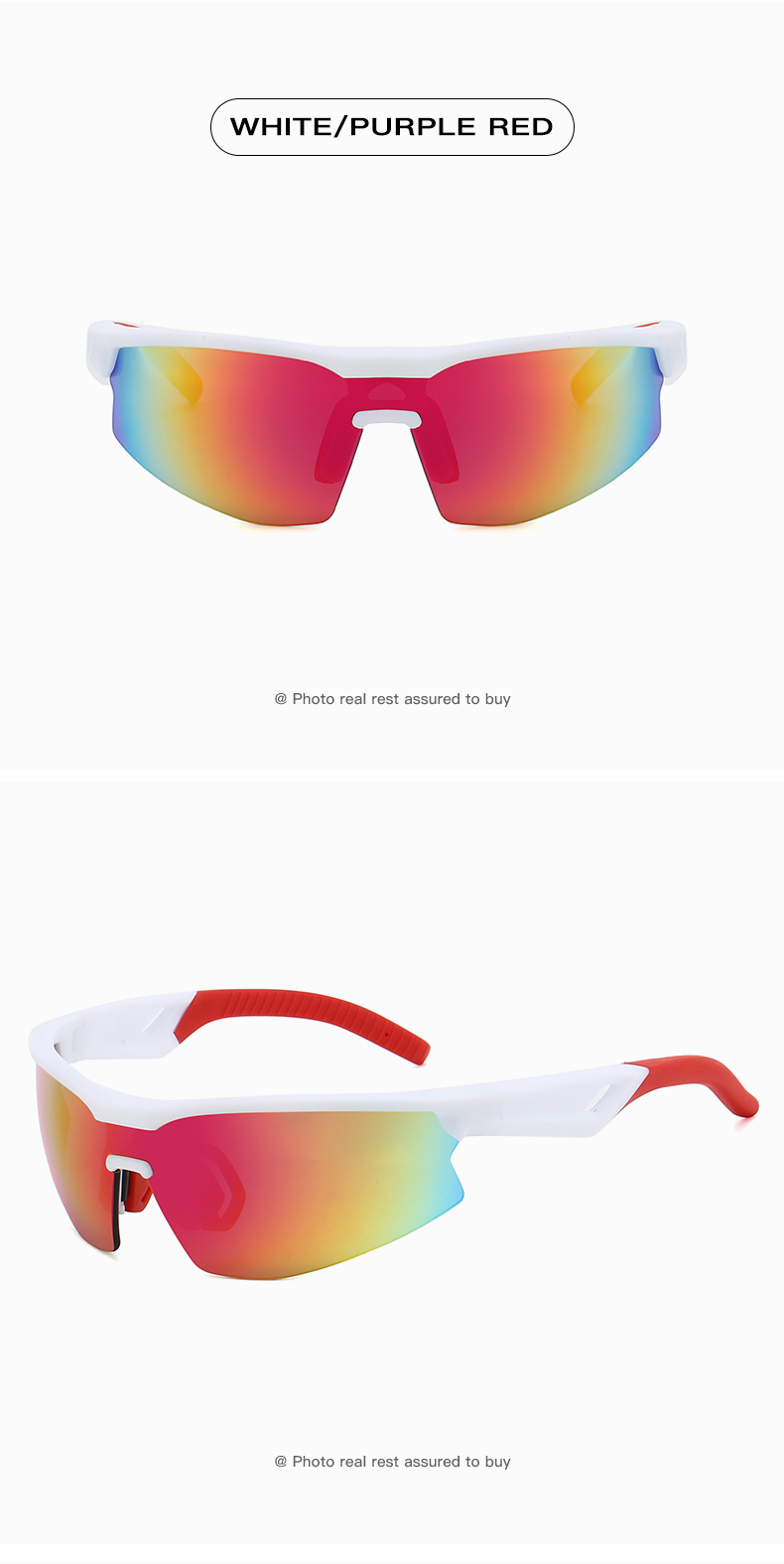
We are a professional manufacturer and supplier of sports eyewear from China.These semi-rimless sports Cycling sunglasses adopt impact-resistant PC lenses with full UV400 protection against ultraviolet rays. The vibrant mirrored coating effectively reduces harsh outdoor glare.
The semi-wraparound curved lenses block wind, sand and stray side light, delivering clear and unobstructed vision. Equipped with a hollow lightweight frame and non-slip silicone structure, they stay lightweight and firmly positioned during extended outdoor activities.
Available in 6 trendy contrasting colorways. Suitable for various outdoor activities such as road cycling, marathons, fishing and mountain hiking. Combining functional sports protection with a dynamic competitive appearance, they are practical protective eyewear for cycling lovers and outdoor enthusiasts.
Linhai Huangjia Eyewear Co., Ltd., based in Zhejiang, China, specializes in eyewear production and export. We offer one-stop OEM/ODM customization directly from the factory. Welcome to contact us for details.
2.1 Product Features
(1)Impact-resistant PC lenses withstand flying stones and resist breakage during sports.
(2)Full-spectrum UV400 blocks UV rays; vibrant mirrored coating cuts harsh glare.
(3)Semi-wraparound curved lenses, windproof and dustproof, block scattered side light.
(4)Hollow lightweight frame, pressure-free for prolonged wear, flexible, anti-extrusion and shatter-resistant.
(5)Anti-slip silicone nose pads and temple tips prevent slipping during sweaty workouts.
2.2 Dimensions尺寸、规格尺寸
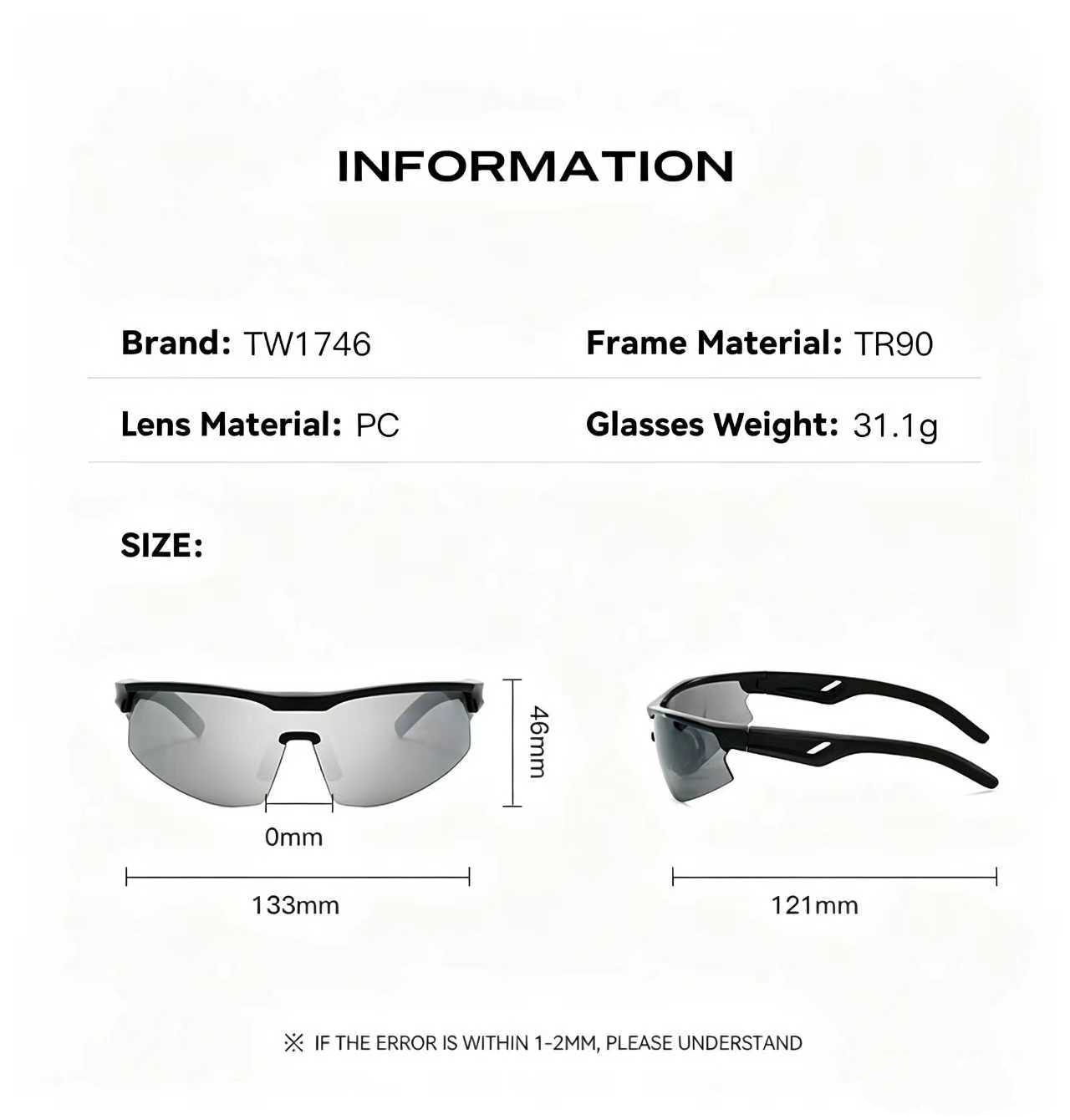
Parameter | Specification |
Model Name | |
Model No. | RS260715 |
Material: | TR90 |
Frame Shape | Half Frame Rimless |
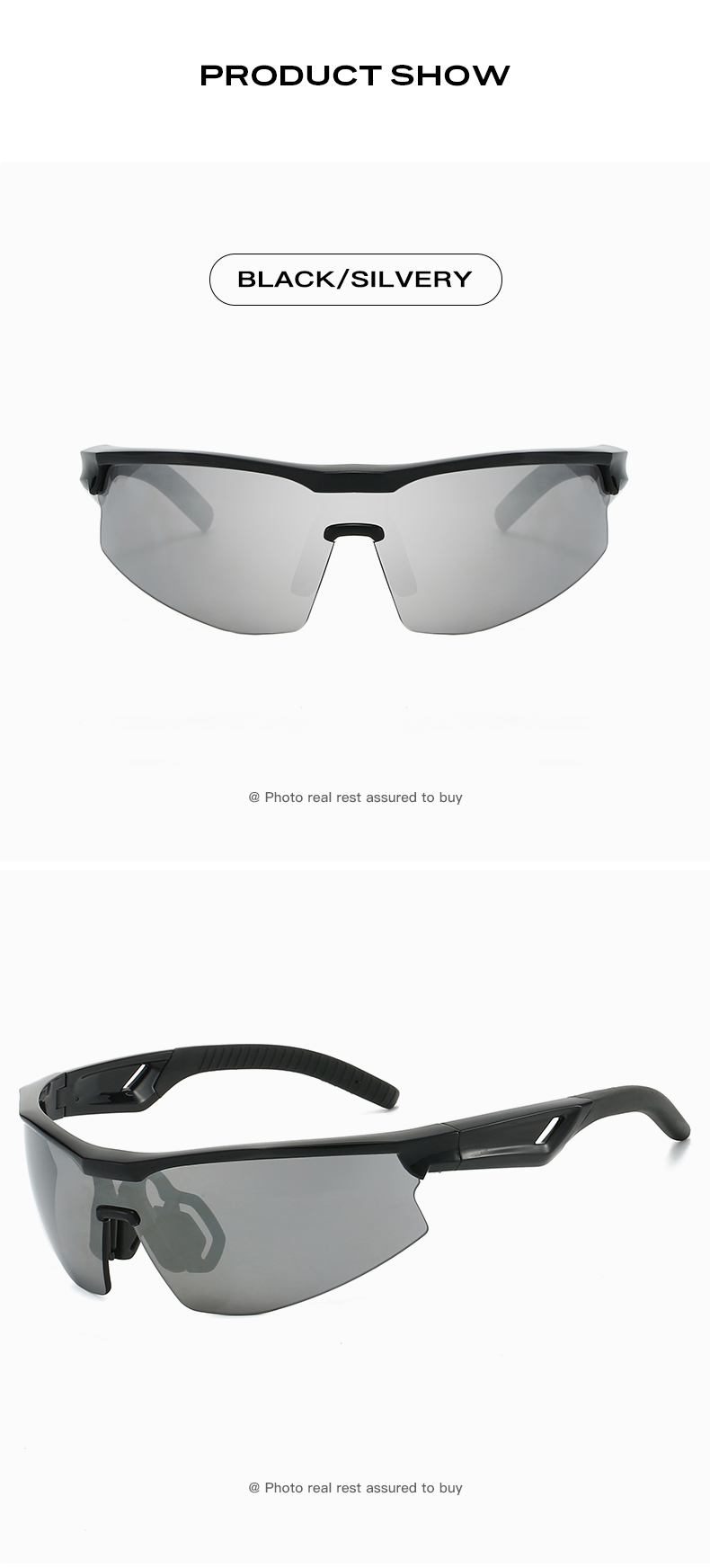
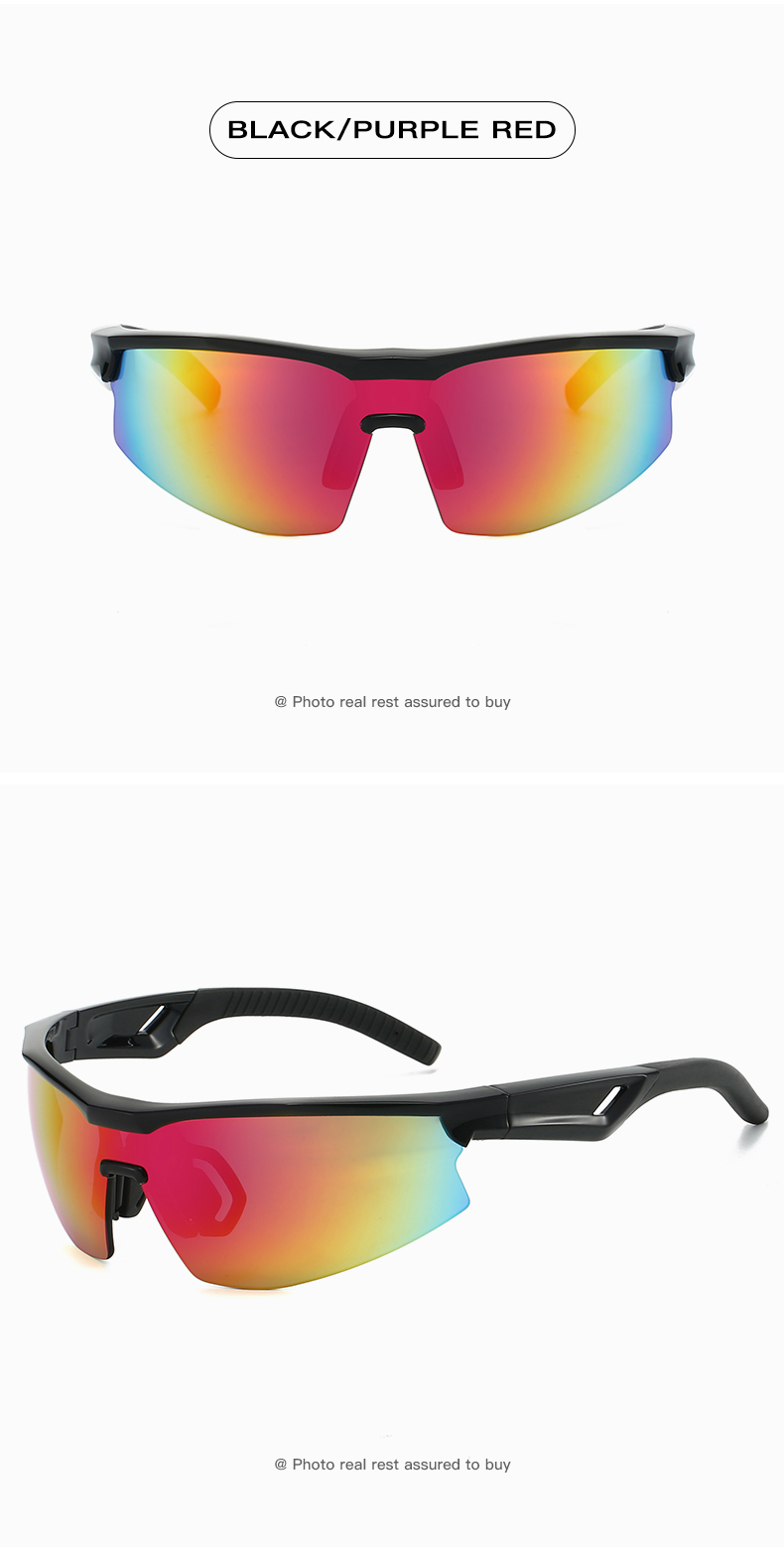
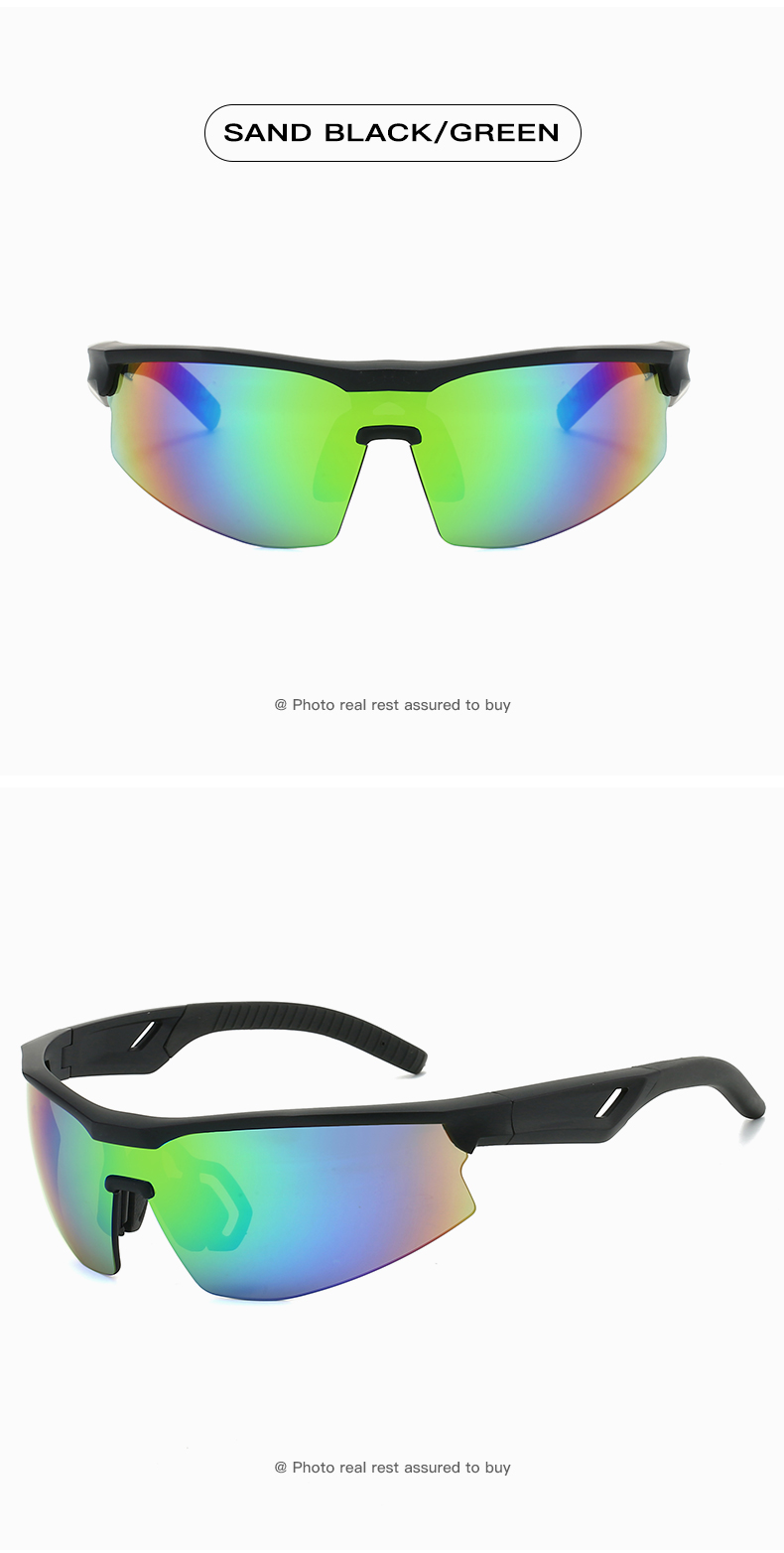
Frame Color | Black、Sand Black、Lake Blue、Yellow、Gray、White(Custom) |
Size | 133-121mm |
Total Weight | 31.3g |
Lens Type | PC |
Target Audience | Unisex Men & Women男女通用 |
Applicable Scenes | cycling,beach vacation, hiking,fishing,mountain off-road riding,driving,long-distance running,golf,badminton,tennis,pickleball,beach volleyball,daily commuting |
MOQ | 300pcs/Color; |
Origin | Taizhou, Zhejiang Province, China |
Logo Printing | Custom Made |
Packaging | 1pcs/bag, 12pcs/box, 300pcs |


TR90 Cutout Temple Cycling Outdoor Eyewear
When I design or manufacture sports eyewear, I always start with a simple question: how will people actually wear it? Cycling eyewear may look simple from the outside, but a good pair needs to balance frame weight, lens shape, temple structure, comfort, appearance, and the way it sits on the face during movement. That is where the TR90 Cutout Temple Cycling Outdoor Eyewear comes in.
This model is built around a lightweight sports eyewear concept, with a distinctive cutout temple structure and an outdoor-oriented profile. I see it as a practical choice for cycling, running, hiking, fitness, training, travel, and other active outdoor situations where people want eyewear that looks sporty without becoming overly complicated.
At Linhai Huangjia Glasses Co., Ltd., I work with different eyewear requirements for sports brands, wholesalers, distributors, retailers, and private-label customers. Our product range covers sports glasses, optical glasses, fashionable Sunglasses, industrial safety goggles, and military and police tactical goggles. For this model, the focus is on the combination of a lightweight TR90 frame concept, a recognizable temple design, and flexible customization for commercial eyewear projects.
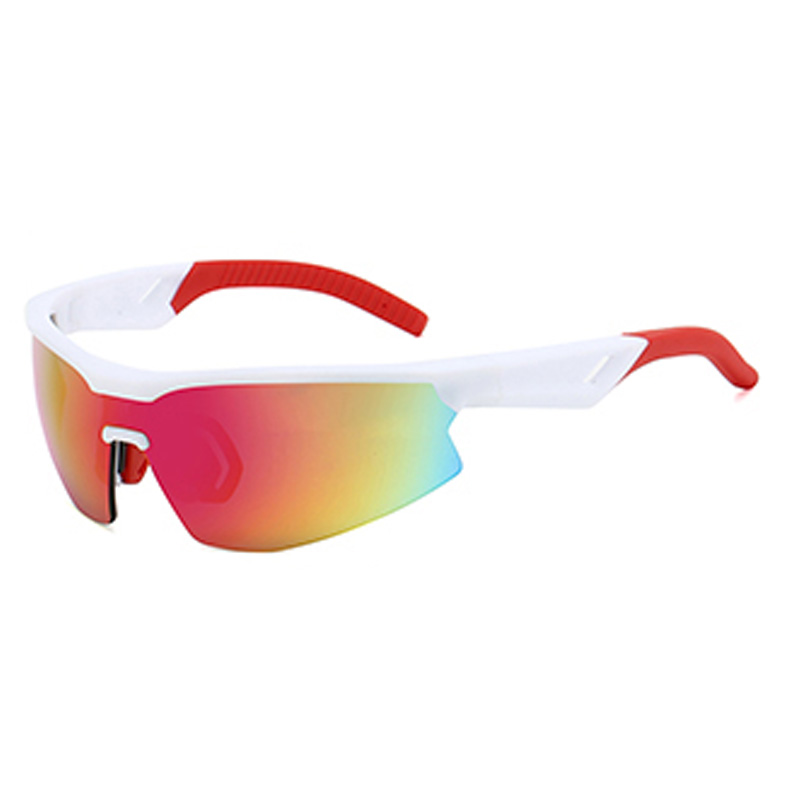
The first thing people usually notice about this eyewear is the temple design. Instead of using a completely solid side structure, the cutout temple creates a more open visual effect. It gives the frame a modern sports character while helping the product stand out from ordinary cycling glasses.
I think this matters more than it may seem. In a crowded eyewear market, small frame details can make a product easier to recognize. A distributor may have dozens of Sports sunglasses with similar lens shapes. A clear temple feature can help create a different product identity without changing the entire frame architecture.
The second important point is the use of a TR90 frame concept. TR90 is widely used in lightweight eyewear because it allows manufacturers to create practical frame structures without making the product feel unnecessarily heavy. For active eyewear, weight is not the only consideration, but it is certainly one of the factors I pay attention to during frame development.
The third point is the overall cycling and outdoor profile. This is not designed only for a shop display. I consider how the eyewear may be used during cycling, running, hiking, outdoor training, fitness sessions, or travel. The frame needs to look active while remaining suitable for everyday use.
| Design Element | Purpose | Typical User Concern |
|---|---|---|
| TR90 frame concept | Supports a lightweight eyewear design | Wearing comfort during longer activities |
| Cutout temple | Adds a distinctive side-frame appearance | Product identity and visual differentiation |
| Sports-oriented profile | Matches active outdoor styling | Appearance during cycling and training |
| Outdoor eyewear format | Suitable for multiple recreational situations | One model for different activities |
The table above describes the design logic of the product rather than claiming a specific performance test result. Actual frame weight, lens specifications, dimensions, and other technical values should be confirmed against the production sample and final order specification.
When I explain sports eyewear to customers, I prefer not to make it sound more complicated than it is. The basic idea is straightforward: the frame holds the lenses in the correct position, the temples keep the eyewear in place, and the lens design creates the visual characteristics required for the intended use.
For cycling, eyewear is exposed to constant movement. The rider may change head position, lean forward, look to the side, or ride over uneven surfaces. The eyewear therefore needs a stable overall structure and a comfortable fit.
The cutout temple is mainly a structural and visual design feature. Its open section changes the appearance of the side frame and can also reduce the amount of solid material used in selected areas of the temple. However, I would not describe the cutout alone as a guarantee of lower weight or improved ventilation. Those results depend on the complete frame design, material distribution, dimensions, and production process.
The lens and frame work together as one system. A wraparound or curved lens profile, for example, can provide a broader visual appearance than a narrow traditional frame. But lens curvature, optical quality, prescription requirements, and individual face shape all need to be considered when developing the final product.
For this reason, I treat TR90 cycling outdoor eyewear as a complete product rather than simply a frame with lenses. Frame geometry, hinge construction, nose support, lens fitting, temple balance, and finishing all affect the final wearing experience.
Frame proportions and overall geometry
Temple opening and cutout shape
Hinge movement and alignment
Lens fitting and edge position
Nose area and contact points
Frame balance when worn
Surface finishing and appearance
Packaging requirements for bulk orders
These checks are especially useful for OEM and ODM projects because a small change in one component can affect several other parts of the product.
From a product-development perspective, I would describe this model through several practical features rather than a long list of marketing claims.
TR90 is one of the key materials associated with the product concept. For sports eyewear, a lightweight frame can make the glasses more comfortable during daily use, especially when customers wear them for cycling, running, hiking, or outdoor training.
Of course, “lightweight” should always be understood as a product-design goal rather than a fixed number. The final weight depends on frame dimensions, lens material, hinge design, surface treatment, and other components. When I prepare an OEM project, I recommend confirming the actual finished-product weight from the production sample.
The temple is one of the strongest visual points of this model. The cutout structure creates a more technical and sporty appearance than a conventional closed temple.
This makes the design suitable for brands looking for custom cycling eyewear or modern outdoor sports glasses with a recognizable side profile. Customers can also discuss colors, logos, packaging, and other product details depending on the project.
The frame shape is suitable for an active lifestyle. I would position it for cycling, running, hiking, fitness, outdoor training, recreational sports, and travel rather than limiting it to one sport.
This broader positioning can be useful for distributors. Instead of carrying a product that only makes sense to cyclists, a retailer can present it as a general outdoor sports eyewear option.
For B2B customers, the frame itself is only the beginning. The real value often comes from how easily the product can be adapted to a brand's requirements.
Depending on order details, we can discuss customized frame colors, lens options, logo placement, packaging, product specifications, and other requirements. Production planning is based on confirmed specifications, quantities, packaging requirements, and delivery schedules.
| Project Area | Standard Product Concept | OEM/ODM Discussion |
|---|---|---|
| Frame | TR90 sports frame | Color, finish, dimensions, design adjustments |
| Temple | Cutout temple structure | Logo, color, shape and visual details |
| Lens | Outdoor eyewear lens configuration | Lens color, coating and specification requirements |
| Branding | Standard product presentation | Logo and private-label requirements |
| Packaging | Standard packaging discussion | Customized boxes, bags, labels and inserts |
I always prefer to explain technical advantages in practical language. A sports eyewear product does not become better simply because it has more technical terms in its description. What matters is whether the design solves real problems for the user.
During a short ride, almost any comfortable pair of glasses may feel fine. During a longer ride, however, pressure around the ears, nose, or temples becomes easier to notice. That is why I pay attention to frame balance and contact points during product development.
A lightweight frame concept can help reduce the feeling of unnecessary weight on the face. The actual wearing experience still depends on frame geometry and the individual user, so I avoid treating material selection as a guarantee of comfort for every face.
The temple has two jobs: it contributes to the overall appearance and helps keep the glasses positioned on the user's head. The cutout design gives the product a more technical visual identity while allowing different approaches to branding and color design.
For a sports brand, this is useful because the side of the frame is often visible when the product is worn. A logo or brand color placed on the temple can become part of the overall product identity.
One reason I like this type of design for B2B applications is its versatility. Cycling is an obvious use case, but the product can also fit running, hiking, fitness, walking, travel, and recreational outdoor activities.
This makes the TR90 Cutout Temple Cycling Outdoor Eyewear suitable for retailers that want a sports-oriented product without restricting it to a single customer group.
There are many simple black sports sunglasses on the market. A distinctive temple structure gives brands another way to build visual differences.
For example, a brand can combine a dark frame with a bright temple detail, use a transparent TR90 color, or create a more understated version for everyday outdoor use. The same basic frame concept can therefore support different market styles.
I would position this eyewear as a sports and outdoor product rather than automatically calling it industrial safety eyewear. That distinction is important, especially for B2B buyers who sell products into different markets.
Cycling is the most natural application for this design. The sporty frame shape and outdoor styling fit road cycling, recreational cycling, commuting, cycling training, and other non-industrial cycling activities.
For professional cycling projects, however, I recommend confirming the exact lens, optical, fit, and sport-specific requirements before placing a production order. A product intended for a professional event may have requirements that are different from those of everyday recreational cycling.
The lightweight sports eyewear concept also works well for running and fitness. The simple, active appearance allows the product to move beyond the cycling category and reach a wider outdoor customer group.
For hiking and travel, customers often want eyewear that looks sporty but does not feel like specialist equipment. This frame concept can be positioned as outdoor lifestyle eyewear for everyday activities.
For wholesalers and private-label brands, product flexibility can be just as important as the design itself. A clean sports frame with a recognizable temple feature can be developed under different brand identities through color, logo, packaging, and lens combinations.
| Application | Product Fit | Typical Buyer |
|---|---|---|
| Cycling | Strong fit with the product concept | Cycling brands, retailers, distributors |
| Running | Suitable for outdoor sports positioning | Sports brands and fitness retailers |
| Hiking | Suitable for recreational outdoor use | Outdoor stores and wholesalers |
| Fitness | Suitable for active lifestyle positioning | Fitness and lifestyle retailers |
| Travel | Suitable as casual outdoor eyewear | Travel and lifestyle brands |
As a manufacturer, I know that a good product page should not stop at the appearance of the finished glasses. Buyers also want to know how the product is made and how customization is handled.
Our production process starts with the confirmed product specification. For an OEM or ODM order, I first need to understand the required frame design, lens configuration, colors, branding, packaging, quantity, and delivery requirements.
Before production begins, the technical requirements are reviewed. This includes dimensions, materials, lens requirements, color references, logo details, packaging, and other agreed specifications.
The frame is produced according to the confirmed design. For TR90 eyewear, the material is shaped into the required frame and temple geometry. Particular attention is paid to the cutout temple area because small dimensional differences can affect the appearance and assembly of the final product.
After forming, the frame components are checked and finished according to the required appearance. Depending on the project, customers may select different color combinations or surface effects.
The lenses are prepared according to the confirmed specification and fitted into the frame. During assembly, the frame and lens need to align correctly. Poor alignment can affect both appearance and the user's visual experience, so this is not a step I like to rush.
The temples are installed and checked for opening, closing, alignment, and general movement. The cutout area also needs to maintain the intended shape after assembly.
Finished eyewear is checked against the agreed product requirements. Depending on the order, inspection can cover appearance, assembly, dimensions, packaging, logo placement, and other agreed criteria.
Finally, the eyewear is packed according to the confirmed packaging method. For bulk orders, the production and delivery plan is discussed according to quantity, customization, destination, transport requirements, and order schedule.
This process may sound straightforward, but consistency is what matters. A sample can look good while a large production order still has problems if specifications are not controlled carefully. That is why I prefer clear product confirmation before mass production.
When buying sports eyewear for an international market, I recommend looking beyond attractive product descriptions. The exact product category and intended use determine which standards and tests may be relevant.
For example, ANSI Z80.3-2025 is the current ANSI standard for nonprescription sunglasses and fashion eyewear, normally used for casual, dress, and recreational purposes with substantially plano lenses. The standard also specifically excludes certain categories, including products covered by ANSI Z87.1 and sports and recreational protective eyewear covered within the relevant ASTM committee.
By contrast, ANSI/ISEA Z87.1-2025 addresses occupational and educational personal eye and face protection devices. Its scope includes requirements related to testing, marking, selection, care, and use for hazards such as impact, non-ionizing radiation, and liquid splash in occupational and educational environments.
That distinction is important for our product range because we also manufacture industrial safety goggles and tactical eyewear. A normal pair of Cycling sunglasses should not automatically be described as industrial safety eyewear simply because it looks protective.
For a B2B order, I recommend confirming:
The exact intended application
Whether the product is general sports eyewear or protective eyewear
Lens material and optical requirements
UV-related specifications when applicable
Required testing standards for the target market
Product markings and labeling requirements
Packaging and documentation requirements
For customers who need a product for industrial work, impact hazards, chemical handling, or other occupational risks, I recommend developing or selecting the appropriate safety eyewear rather than using a general cycling model for a different purpose. This approach keeps the product description and actual use aligned.
Linhai Huangjia Glasses Co., Ltd. was established in 2023 and is based in Linhai, Zhejiang. Our business focuses on the development and manufacturing of sports glasses, optical glasses, fashionable sunglasses, industrial safety goggles, and military and police tactical goggles.
What I believe matters most in B2B eyewear supply is not simply having a large product catalog. A buyer needs a supplier that can understand product specifications, communicate clearly, control production details, and adapt to different order requirements.
Our product range covers several categories, from sports eyewear to optical products and professional protective eyewear. This gives us experience with different product requirements and different usage environments.
For the TR90 Cutout Temple Cycling Outdoor Eyewear, our focus is on the sports and outdoor segment. If a customer has another requirement, such as industrial eye protection or tactical eyewear, we can discuss the appropriate product category instead of forcing one product into every application.
We can work according to customer specifications, order quantity, customization requirements, packaging requirements, and delivery schedules. OEM and ODM projects may include product appearance, colors, branding, packaging, and other agreed details.
Production plans are made according to the confirmed order information. Payment terms, production cycle, transportation method, and packaging method can be discussed based on order size and destination.
For distributors and wholesalers, this flexibility is useful because different markets have different requirements. A retailer may need a smaller private-label project, while a sports brand may need a larger customized production run.
I prefer clear communication over complicated sales language. If you send us your target market, product quantity, frame requirements, lens requirements, logo details, packaging expectations, and delivery destination, we can discuss the project around those actual details.
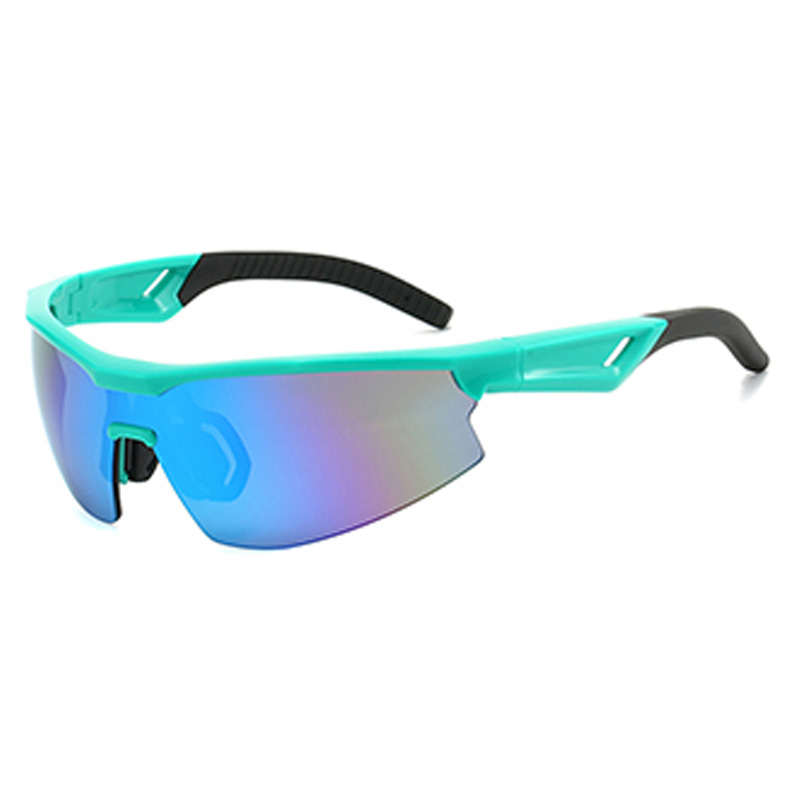
It is a sports and outdoor eyewear design featuring a lightweight TR90 frame concept and a distinctive cutout temple structure. It is positioned for cycling, running, hiking, fitness, outdoor training, travel, and recreational activities.
No. Cycling is one of its main applications, but the design can also be used for running, hiking, fitness, travel, and general outdoor activities. The final product positioning depends on the lens configuration, frame specification, and target market.
Yes. Frame color can be discussed as part of an OEM or ODM project. The available customization depends on the confirmed design, production quantity, material, and color requirements.
Yes. Logo placement and branding can be discussed according to the product design and order requirements. The exact method and position should be confirmed before production.
Yes. For bulk orders, packaging requirements can be discussed, including product packaging, labels, bags, boxes, inserts, and other agreed materials.
No. TR90 describes a frame material commonly used in eyewear, while industrial safety eyewear is defined by its intended protective function and applicable requirements. A TR90 sports frame should not automatically be treated as occupational safety eyewear.
Not automatically. If the intended application involves industrial hazards such as impact, chemical splash, or other occupational risks, the appropriate safety eyewear specification should be selected and verified for that application. ANSI/ISEA Z87.1-2025 addresses occupational and educational eye and face protection requirements.
Yes. We can discuss OEM and ODM development based on your design requirements, target quantity, branding, lens specifications, packaging, and delivery needs.
I recommend providing the expected quantity, target market, frame design, preferred colors, lens requirements, logo information, packaging requirements, and delivery destination. If you have drawings, reference samples, or product photos, these can also help us understand the project more accurately.
The safest approach is to confirm the product specification, sample or approved reference, materials, dimensions, branding, packaging, inspection requirements, and delivery schedule before mass production. This gives both sides a clear reference for the production order.
When I look at the TR90 Cutout Temple Cycling Outdoor Eyewear, I see a product that works because the design is simple and practical. The TR90 frame concept keeps the focus on lightweight sports eyewear, while the cutout temple gives the product a recognizable visual feature.
For cycling and outdoor brands, that combination creates room for different product directions. The same basic concept can be positioned for cycling, running, hiking, fitness, travel, or everyday outdoor use. With OEM and ODM support, brands can further develop the product through colors, logos, lens configurations, packaging, and other project requirements.
At Linhai Huangjia Glasses Co., Ltd., I focus on matching the product to the customer's real application rather than making broad claims that the product cannot support. If you are looking for TR90 cycling eyewear, lightweight outdoor sports glasses, custom cycling sunglasses, or a private-label sports eyewear solution, the first step is to define the actual specification and market requirement.
Once those details are clear, we can work from the product design through customization, production, inspection, packaging, and delivery to build an eyewear solution that fits your business.
This website uses cookies to ensure you get the best experience on our website.



 Phone
Phone