



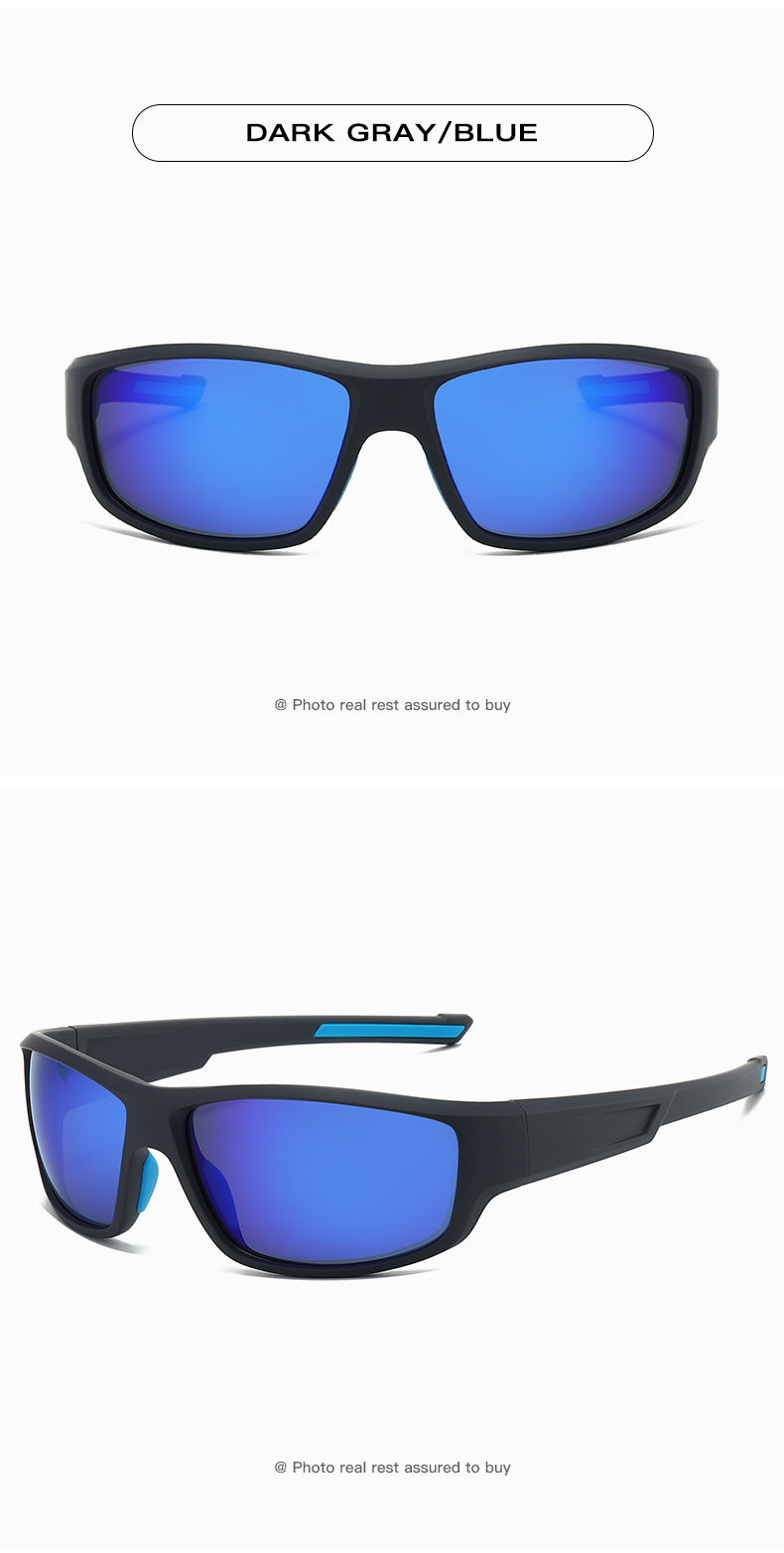
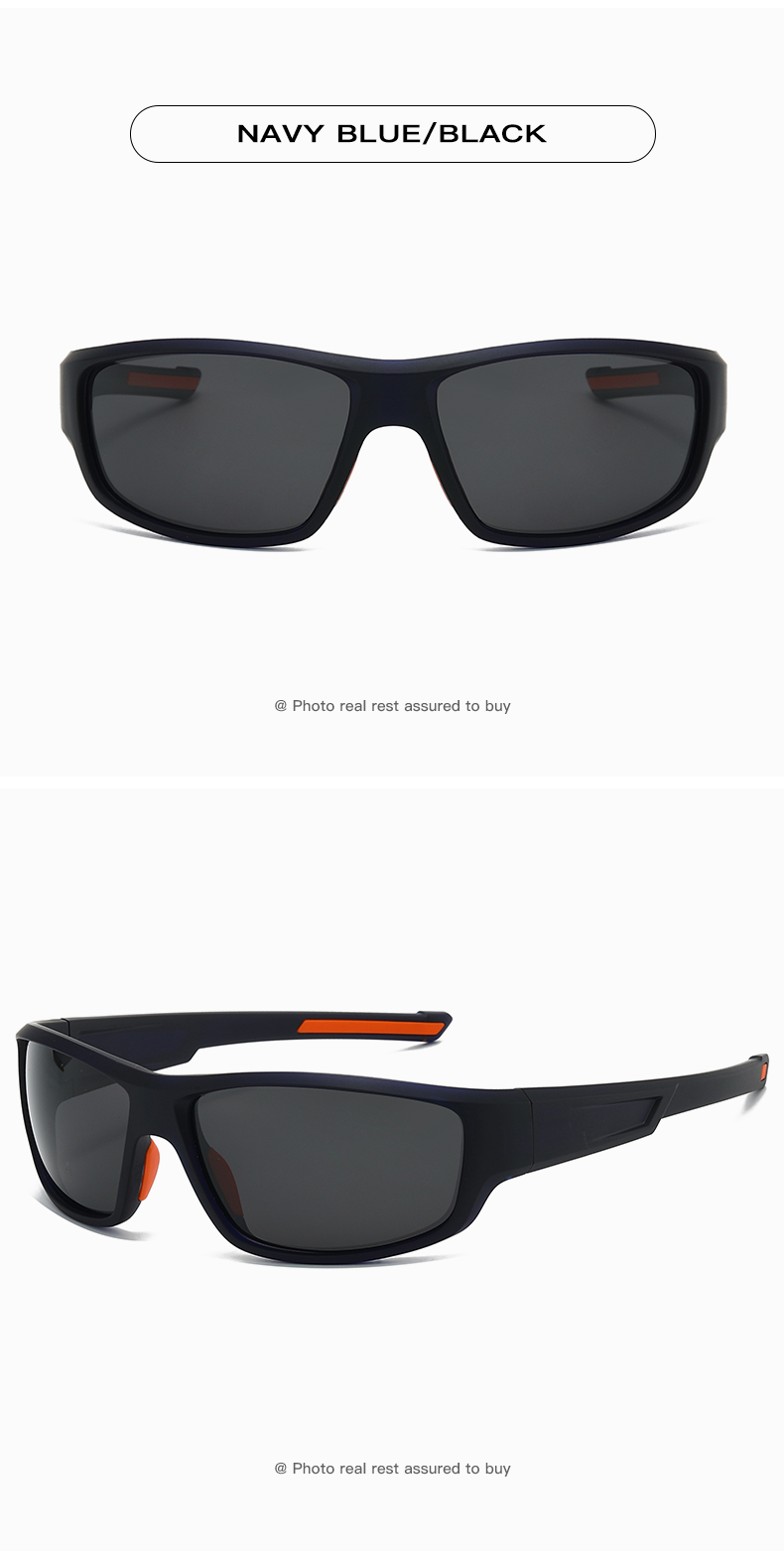
When I look at fishing sunglasses from a manufacturer's point of view, I do not start with color or fashion. I start with the water. Bright sunlight, reflections from the surface, long hours outdoors, changing weather, and constant movement all affect how comfortable a pair of sunglasses feels during a fishing trip.
That is why we developed our TR90 Polarized Fishing Sunglasses around a simple idea: make outdoor eyewear that is comfortable to wear, practical around water, and easy for brands and distributors to adapt to their own markets.
At Linhai Huangjia Glasses Co., Ltd., we specialize in sports glasses, optical glasses, fashionable sunglasses, industrial safety goggles, and military and police tactical goggles. Our company was established in 2023 and is based in Linhai, Zhejiang, China. Although fishing sunglasses are one part of our wider eyewear range, we approach this product with the same attention to frame structure, lens function, wearing comfort, appearance, and production consistency.
The TR90 Polarized Fishing Sunglasses combine a TR90-oriented lightweight frame concept with polarized lens technology. The result is a product designed for anglers, boat users, outdoor enthusiasts, and consumers who spend time around bright water environments.
I would not describe polarized sunglasses as a magic solution for every visual problem. They have a more specific job. Polarization can help reduce glare from reflective surfaces, which is particularly relevant around water. The actual optical performance still depends on the selected lens construction, polarization quality, lens color, transmission characteristics, and final product testing.
1. Why Fishing Sunglasses Need a Different Design Approach
Fishing looks relaxing from the shore, but good fishing eyewear has to deal with a surprisingly demanding environment. A fisherman may spend several hours under direct sunlight, move between open water and shaded areas, look across the surface repeatedly, and deal with reflections that change as the boat or person changes position.
Water is especially important because it can reflect a significant amount of incoming light toward the eyes. The result can be uncomfortable glare, especially during bright conditions.
This is where polarized fishing sunglasses become useful. A polarizing filter is designed to reduce certain directions of light transmission. In everyday terms, I explain it to customers like this: ordinary tinted sunglasses make the overall scene darker, while polarized lenses are designed to deal with a particular type of reflected light.
That difference is important for anglers.
When I select a fishing sunglasses design, I therefore consider more than whether the frame looks sporty. I look at how the frame sits on the face, how much side coverage it provides, how the lens fits into the frame, how the temples feel during extended wear, and whether the product can be adapted to the customer's target market.
The FDA's guidance for nonprescription sunglasses also recognizes that polarizing lenses can attenuate light and reduce glare, while emphasizing that performance claims depend on the physical, chemical, and optical properties of the actual lens construction.
That is why I prefer to discuss the actual lens specification with customers rather than make a broad claim that every polarized lens performs exactly the same way.
| Fishing Environment | Common Visual Challenge | What Buyers Should Consider |
|---|---|---|
| Open lake | Strong sunlight and water reflection | Polarized lens performance, UV protection and comfortable fit |
| River fishing | Changing light and reflections | Lens color, transmission and frame coverage |
| Coastal fishing | Bright sunlight and strong reflected light | Polarization, UV performance and outdoor durability |
| Boat fishing | Water glare and long outdoor exposure | Lens specification, fit and side coverage |
| Shore fishing | Mixed sun and shade | Comfort, optical clarity and suitable lens transmission |
Source note: The table summarizes practical product-selection considerations rather than laboratory performance measurements. Actual performance depends on the final product configuration and testing.
2. How Polarized Fishing Sunglasses Work
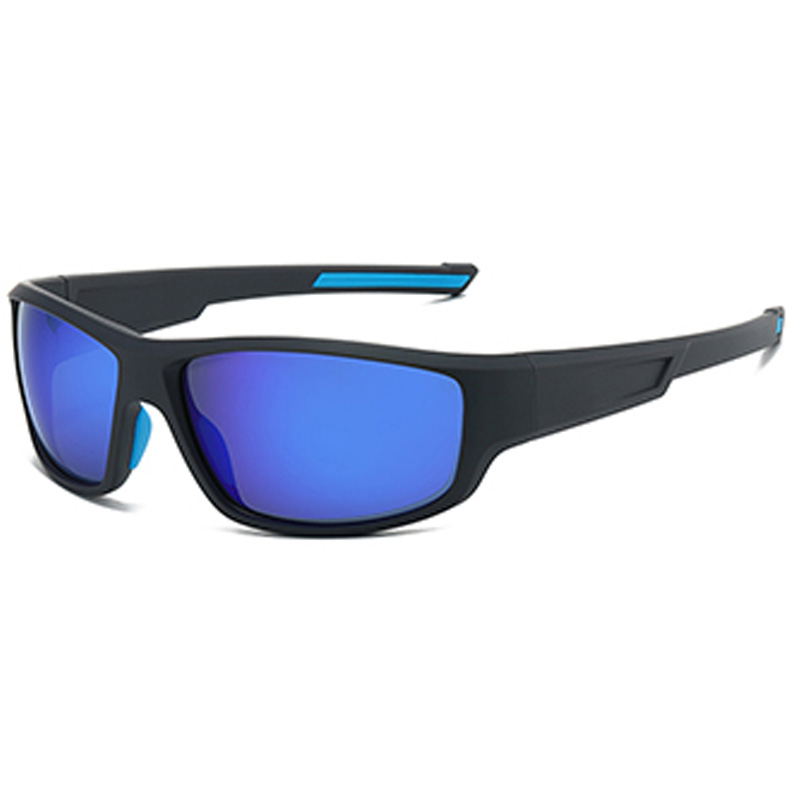
The working principle of polarized sunglasses is easier to understand than it sounds.
Light normally travels in many directions. When sunlight hits a flat surface such as water, some of that light is reflected toward the observer in a way that creates strong glare. A polarizing filter is designed to block a portion of this organized reflected light.
In simple terms, the lens acts like a selective filter.
For an angler, this can make a noticeable difference in bright conditions. Instead of simply making the entire scene darker, the polarized lens can reduce a portion of the reflected glare coming from the water surface.
However, I always remind buyers that polarized sunglasses do not guarantee that fish will become visible under every condition. Water clarity, depth, sunlight angle, surface movement, shadows, lens color, and the viewing position all influence what the wearer can see.
That is one reason professional anglers may use different lens colors for different environments. A lens designed for bright open-water conditions may not be the best choice for early morning, cloudy weather, or heavily shaded areas.
Polarization and Glare
The key benefit of polarization is glare control. FDA guidance notes that sunglasses using polarizing lenses can reduce glare, while the actual degree of light attenuation depends on the physical, chemical, and optical characteristics of the lens.
This makes polarization particularly relevant to fishing sunglasses because water is one of the surfaces where reflected light can become uncomfortable.
Polarization Is Not the Same as UV Protection
This is an important distinction.
A polarized lens and a UV-protective lens are not automatically the same thing. Polarization addresses glare, while UV protection addresses ultraviolet radiation. A product can be designed with both features, but the exact UV performance needs to be verified from the actual lens specification.
The FDA currently advises consumers to look for sunglasses labeled UV400 or 100% UV protection, noting that such products block more than 99% of UVA and UVB radiation.
For this reason, I recommend that B2B customers confirm the exact UV specification and supporting documentation before placing a UV-related claim on packaging or product pages.
Polarization Is Not Impact Protection
The same principle applies to impact resistance.
A pair of polarized fishing sunglasses is still not automatically industrial safety eyewear. If a customer needs eye protection for flying particles, workplace hazards, or another regulated application, the product needs to be assessed against the relevant safety standard.
ANSI Z80.3-2025 covers nonprescription sunglasses and fashion eyewear, while products covered by occupational safety standards or selected sports-protection standards fall outside its scope.
This distinction helps us communicate product capabilities honestly and helps buyers select the correct product category.
3. Main Features of Our TR90 Polarized Fishing Sunglasses
Lightweight TR90 Frame Concept
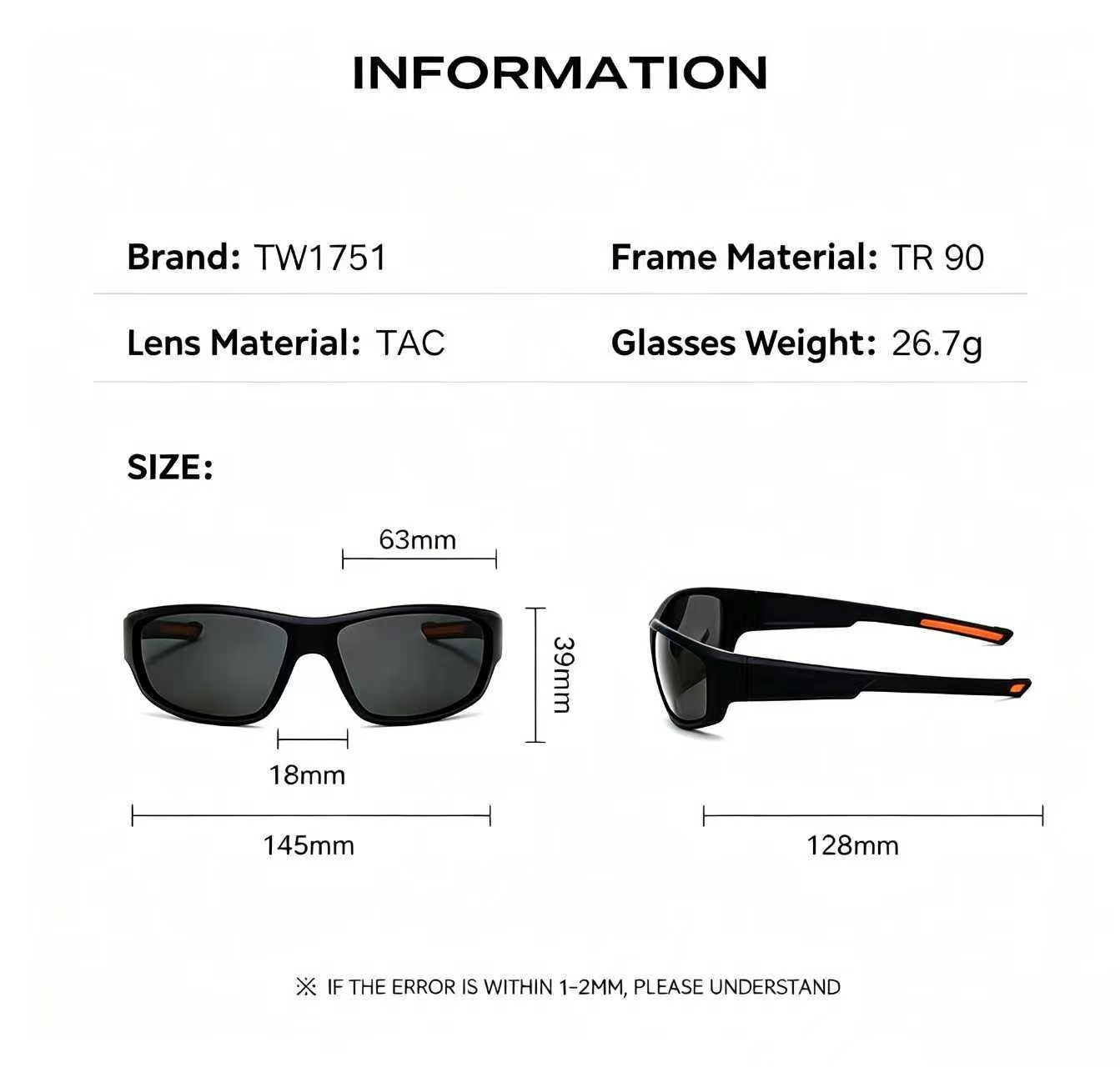
The frame is built around a TR90-oriented lightweight eyewear design. For fishing, lightweight construction matters because anglers often wear sunglasses for several hours at a time.
When the frame feels unnecessarily heavy or creates pressure around the nose and ears, the problem becomes more obvious as the wearing time increases.
Our approach is to keep the frame practical and comfortable while maintaining the structure needed for a modern fishing sunglasses design.
Polarized Lens Configuration
The polarized lens is the central feature of this product. It is intended to help reduce reflected glare, especially in bright outdoor environments.
For buyers developing a private-label fishing eyewear collection, the lens can be discussed according to the intended market and product specification. Depending on the confirmed configuration, customers may have different requirements for lens color, appearance, logo treatment, packaging, and other details.
Outdoor-Oriented Frame Design
Fishing sunglasses should look like outdoor equipment, but they do not need to look overly complicated.
I prefer a clean design that works on a fishing boat but can also be worn while driving to the lake, walking around a marina, traveling, hiking, or spending a weekend outdoors.
This wider usability is useful for B2B buyers because one product can serve more than one consumer scenario.
Comfort for Long Wearing Periods
Comfort is one of the first things I ask customers to consider. Fishing trips can last for hours, and the wearer may keep the sunglasses on almost continuously.
We therefore pay attention to frame proportions, temple construction, nose contact, overall balance, and assembly quality. These details may sound small, but they can make a big difference in actual use.
Suitable for OEM and ODM Development
We understand that many professional buyers do not want a completely standard product. They may have their own logo, packaging, colors, lens requirements, or target market.
Our production approach allows us to discuss OEM and ODM requirements based on the confirmed specifications, order quantity, packaging requirements, and delivery schedule.
| Product Feature | Purpose | Value for B2B Buyers |
|---|---|---|
| TR90-oriented frame design | Supports lightweight eyewear construction | Suitable for long-duration outdoor use |
| Polarized lens | Helps reduce reflected glare | Relevant to fishing and water-based activities |
| Outdoor styling | Matches active-use environments | Suitable for sports and lifestyle product lines |
| Flexible configuration | Allows project-specific requirements | Useful for OEM and ODM development |
| Full product assembly | Combines frame and lens into one finished product | Supports wholesale and private-label supply |
Source note: Product features in this table are based on the supplied product configuration and company information. They are not independent laboratory measurements.
4. Why Polarized Lenses Matter Around Water
If I had to explain the value of polarized fishing sunglasses to someone who had never used them, I would keep it simple: water can be bright, and reflected light can be distracting.
Imagine standing beside a lake at midday. The sky may be bright, but the water surface can also throw light back toward you. When the surface is calm, the reflection can look like a bright sheet. When the water is moving, the reflections change constantly.
This is why glare management is such an important part of fishing eyewear.
Polarization does not make the water transparent. It does not guarantee better fish visibility. What it can do is reduce certain reflected light that reaches the eyes, which can make the viewing experience more comfortable in suitable conditions.
That difference is worth explaining because it keeps product marketing realistic.
Can Polarized Sunglasses Help See Into Water?
They can sometimes make it easier to look at the water surface by reducing reflected glare, but the result depends heavily on conditions. Water clarity, depth, weather, sunlight angle, surface movement, vegetation, and the lens itself all matter.
For a professional fishing eyewear brand, I recommend describing the product as glare-reducing polarized eyewear rather than promising that users will always see fish beneath the surface.
Lens Color Also Matters
Lens color influences the visual appearance of the environment. Gray, brown, amber, green, and other lens colors can produce different viewing experiences.
I do not consider one color universally correct. A serious fishing eyewear program should match lens options with the intended conditions and customer expectations.
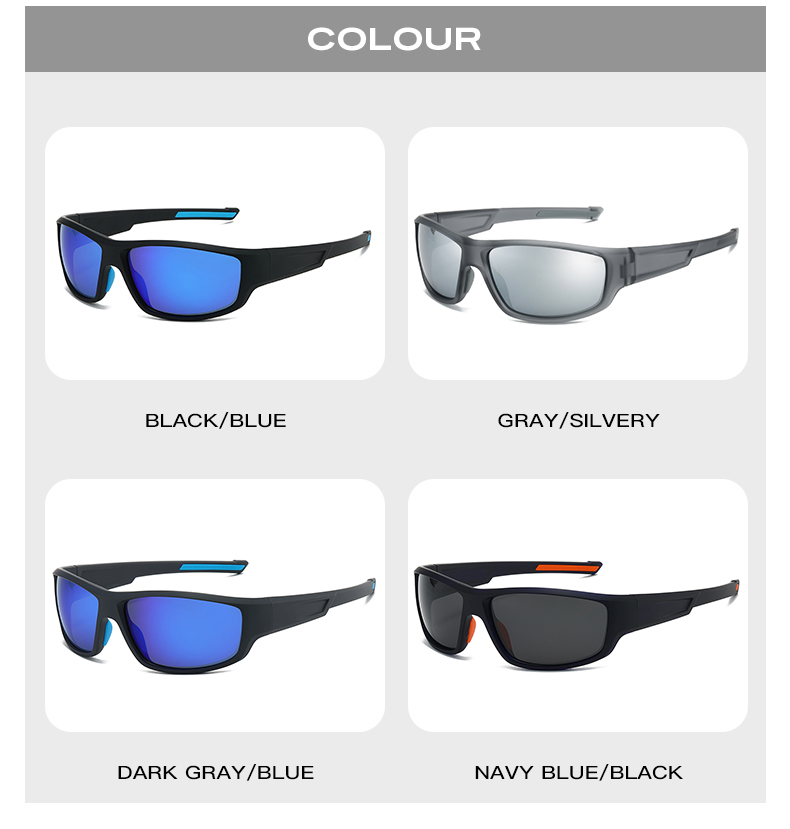
For wholesale buyers, this can also create an opportunity to build a small lens-color collection under one frame design. Instead of selling one model in one configuration, a brand can offer different options for bright water, mixed weather, and general outdoor use.
5. Where I Would Use TR90 Polarized Fishing Sunglasses
Freshwater Fishing
Freshwater anglers can use polarized sunglasses around lakes, rivers, reservoirs, and ponds. These environments can have strong reflected light, especially during bright daytime conditions.
The product's lightweight frame concept makes it suitable for extended outdoor use, while polarization provides the main functional reason for choosing this type of eyewear.
Saltwater and Coastal Fishing
Coastal environments can be especially bright. Open water, sunlight, and reflective surfaces combine to create strong visual conditions.
For this type of application, I recommend paying attention not only to polarization but also to the actual UV performance, lens transmission, frame fit, and durability requirements of the target market.
Boat Fishing
On a boat, the wearer is surrounded by water. Reflections can come from several directions, and the sunglasses may remain on the face for hours.
A comfortable frame and suitable lens specification therefore become more important than fashion alone.
Kayaking and Boating
Although these sunglasses are positioned as fishing eyewear, the same basic needs can apply to kayaking, recreational boating, and other water-based activities.
For brands selling outdoor eyewear, this gives the product a wider market position than a design intended only for anglers.
Driving and Outdoor Travel
Many anglers spend a significant amount of time driving to fishing locations. A practical outdoor sunglasses design can therefore be useful beyond the water.
However, driving suitability should be confirmed based on the actual lens transmission, color, and applicable market requirements. ANSI's current Z80.3 standard includes requirements concerning sunglasses and labeling where lenses may not be suitable for driving.
6. Manufacturing Process: From Frame Design to Finished Fishing Sunglasses
As a manufacturer, I know that the final quality of sunglasses does not come from one machine or one production step. It comes from keeping many small steps under control.
Step 1: Product Specification
Before manufacturing begins, we confirm the product structure and customer requirements.
For a standard order, this may include frame style, lens type, color, quantity, packaging, logo, and delivery requirements. For an OEM or ODM project, the specification can be much more detailed.
Step 2: Frame Production
The frame is produced according to the confirmed design and material requirements. Dimensions and shape need to remain consistent because they affect both appearance and wearing comfort.
For a fishing sunglasses frame, the relationship between the front frame, temples, and nose area needs to be controlled carefully. If these parts do not work together, even a good-looking product can feel uncomfortable.
Step 3: Surface Finishing
Surface finishing gives the frame its final appearance. At this stage, we pay attention to color consistency, surface quality, edges, logos, and visible defects.
For private-label products, appearance consistency is particularly important because the product needs to match the customer's brand image across different production batches.
Step 4: Lens Preparation
The lens is prepared according to the confirmed product specification. For polarized fishing sunglasses, the polarization feature is part of the lens construction and should be controlled according to the agreed specification.
If the customer has specific requirements for lens color, coating, transmission, UV performance, or other optical properties, these should be confirmed before production.
Step 5: Lens Assembly
The lens is fitted into the frame. Correct assembly is important because poor fitting can affect appearance, lens stability, and the overall feel of the product.
Step 6: Final Inspection
Finished products can be checked according to the agreed inspection criteria. Depending on the project, this can include appearance, frame dimensions, lens assembly, logo placement, packaging, labeling, and other customer requirements.
Step 7: Packaging and Delivery
After inspection, the products are packed according to the confirmed packaging plan.
For B2B customers, we understand that packaging is part of the supply chain. Individual boxes, protective pouches, cleaning cloths, labels, inner cartons, outer cartons, and shipping marks may all need to match the customer's sales and logistics requirements.
7. Standards, Testing, and What Buyers Should Actually Ask
I think this is one of the most important sections for professional buyers.
There are many eyewear standards, but they are not interchangeable.
The current ANSI Z80.3-2025 standard covers nonprescription sunglasses and fashion eyewear, normally using substantially plano lenses for casual, dress, and recreational purposes. It specifically excludes products covered by occupational eye protection standards and certain sports-protection standards.
That means a buyer should not see the words “polarized fishing sunglasses” and automatically assume the product is certified safety eyewear.
Likewise, a fishing sunglasses product should not automatically be marketed as industrial safety glasses just because the frame feels strong.
When I work with a B2B customer, I recommend confirming the following points:
What is the intended application?
What lens performance is required?
Is polarization required?
What UV protection claim will be used?
Is the product for general outdoor use or a regulated protective application?
Does the target market require a specific standard?
What product marking or packaging information is required?
Are test reports or technical documents required before shipment?
| Standard / Guidance | Main Area | Important Limitation |
|---|---|---|
| ANSI Z80.3-2025 | Nonprescription sunglasses and fashion eyewear | Does not cover occupational safety eyewear or selected sports protective eyewear |
| ANSI/ISEA Z87.1 | Occupational and educational eye and face protection | Applies to protective eyewear designed for relevant hazards |
| FDA nonprescription sunglasses guidance | U.S. regulatory and labeling guidance | Performance claims need to match the actual product construction and evidence |
| ISO 12311 | Test methods for sunglasses and related eyewear | Provides test methods rather than automatically certifying a specific product |
Sources: ANSI Z80.3-2025; ANSI guidance on eyewear standards; FDA Guidance Document for Nonprescription Sunglasses.
For us, this distinction is not just technical language. It affects product positioning, packaging, marketing claims, and the buyer's responsibility in the target market.
8. Why Choose Linhai Huangjia Glasses Co., Ltd.?
We are based in Linhai, Zhejiang, and our business focuses on eyewear manufacturing across several product categories. Our main product areas include Sports sunglasses, sports optical glasses, fashionable sunglasses, industrial safety goggles, and military and police tactical goggles.
This product range gives us experience with different eyewear applications. A Fashion Sunglasses buyer may focus heavily on appearance. A sports brand may focus on fit and product function. An industrial buyer may focus on safety requirements and documentation. An OEM customer may care about every detail from frame color to packaging.
We understand that these projects should not all be handled in exactly the same way.
OEM Manufacturing
For OEM orders, we can work according to the customer's confirmed specifications. This may include product structure, lens requirements, logo, colors, packaging, quantity, and delivery requirements.
ODM Development
For customers who have a market idea but do not yet have a finished design, we can discuss the product direction and customization requirements based on the available model and project goals.
Flexible Order Planning
Production planning can be arranged according to order volume, customization requirements, packaging specifications, and delivery schedule. Payment terms, transportation methods, and packaging arrangements can be discussed based on the order and destination.
One Manufacturer for Multiple Eyewear Categories
If you are building a broader outdoor eyewear collection, working with a supplier that handles multiple categories can simplify product development and communication.
Alongside polarized fishing sunglasses, we can support product development involving sports sunglasses, optical sports glasses, fashionable sunglasses, industrial safety goggles, and tactical eyewear.
9. TR90 Polarized Fishing Sunglasses vs. Other Outdoor Eyewear
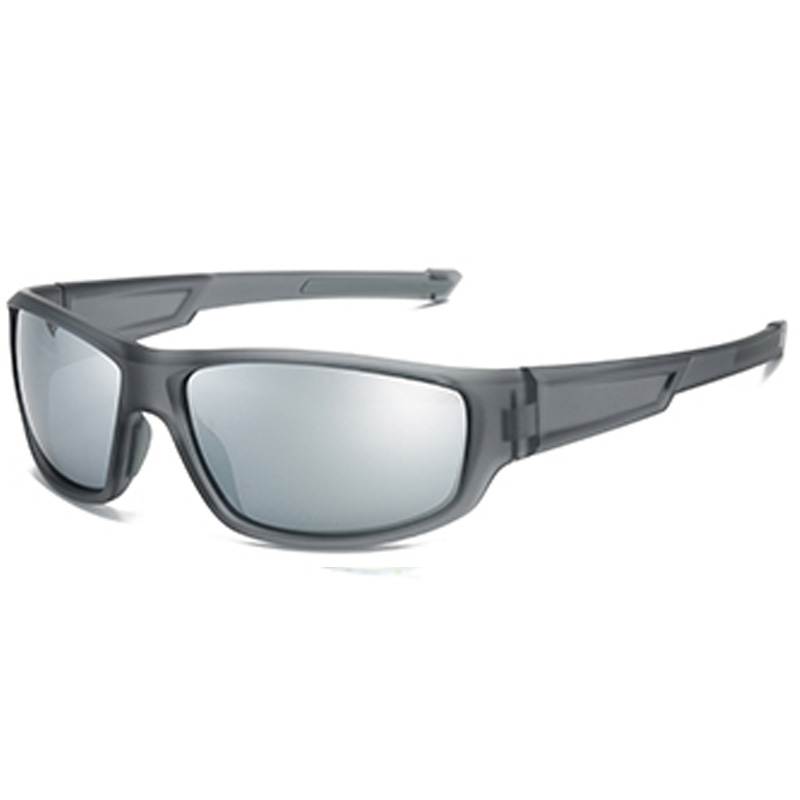
I often tell buyers that there is no single pair of sunglasses that is perfect for every outdoor situation. The right choice depends on the user's environment and what the product needs to do.
| Eyewear Type | Main Application | Key Consideration | Typical Buyer |
|---|---|---|---|
| Polarized Fishing Sunglasses | Fishing and water-based outdoor activities | Glare reduction, lens performance and comfort | Anglers, outdoor brands, fishing retailers |
| General Sports Sunglasses | Running, cycling, hiking and recreation | Fit, coverage, comfort and visual performance | Sports brands and outdoor retailers |
| Fashion Sunglasses | Daily lifestyle and casual wear | Appearance, comfort and light attenuation | Fashion and lifestyle retailers |
| Industrial Safety Goggles | Workplace eye hazards | Impact and hazard-specific protection | Industrial buyers and safety suppliers |
| Tactical Eyewear | Specialized field applications | Fit, coverage, durability and specified requirements | Professional and institutional buyers |
Source note: Category descriptions are based on intended-use distinctions and applicable standards. ANSI Z80.3-2025 specifically distinguishes ordinary nonprescription sunglasses from occupational and selected sports protective eyewear.
For a fishing brand, the polarized fishing sunglasses category is attractive because the product has a clear use case. Customers understand why they are buying polarized lenses: they want sunglasses designed for bright outdoor conditions where reflected glare can be uncomfortable.
10. Frequently Asked Questions About TR90 Polarized Fishing Sunglasses
What are TR90 Polarized Fishing Sunglasses?
They are outdoor sunglasses designed with a TR90-oriented frame concept and polarized lenses. They are intended primarily for fishing, boating, and other outdoor activities where glare from bright surfaces may be an issue.
What is the main benefit of polarized fishing sunglasses?
The main functional benefit is glare reduction. Polarized lenses are designed to reduce certain reflected light, which can be particularly useful around water. The actual effect depends on lens construction and environmental conditions.
Are polarized sunglasses good for fishing?
They are commonly used for fishing because water can create strong reflected glare. Polarization can make the viewing experience more comfortable in suitable conditions, although it does not guarantee that fish or underwater objects will always be visible.
Are these sunglasses suitable for boating?
Yes. The product is suitable for consideration for boating and other water-based outdoor activities. Buyers should select the final lens specification according to the intended application and target market.
Are polarized lenses the same as UV400 lenses?
No. Polarization and UV protection are different lens properties. Polarization is mainly associated with reducing certain reflected glare, while UV protection relates to ultraviolet radiation. A product can have both features, but the actual UV performance should be verified from the product specification and supporting testing.
Can I add my own logo?
Yes. We support OEM and ODM projects. Logo placement, printing or other branding methods can be discussed according to the frame structure, product design, quantity, and production requirements.
Can I customize the lens color?
Customization may be available depending on the selected frame, lens construction, order quantity, and production requirements. We recommend confirming the desired lens color and optical specification before production.
Can I customize the packaging?
Yes. Packaging can be discussed for private-label and wholesale projects. Depending on the project, customers may have requirements for boxes, pouches, cleaning cloths, labels, cartons, logos, and shipping marks.
Are these industrial safety glasses?
No safety certification should be assumed from the product name alone. General polarized fishing sunglasses and occupational safety eyewear are different categories. If you need certified protective eyewear for workplace hazards, please specify the required standard before ordering.
Can these sunglasses be used for driving?
They may be considered for daytime driving depending on the actual lens transmission, color, optical characteristics, labeling, and applicable market requirements. Buyers should verify the final configuration before making driving-related claims.
Can you provide OEM and ODM services?
Yes. Our company supports OEM, ODM, wholesale, and customized eyewear projects. We can discuss product specifications, quantities, branding, packaging, production planning, transportation, and delivery according to the project.
What should I send when requesting a quotation?
I recommend sending the product name, estimated quantity, target market, desired frame color, lens requirements, logo requirements, packaging requirements, delivery destination, and expected delivery time. If you have drawings, samples, reference pictures, or technical specifications, these can make the quotation process more accurate.
11. A Practical Buying Guide for Fishing Sunglasses Brands
If you are buying fishing sunglasses for wholesale or private-label sales, I suggest starting with the market rather than the factory price.
First, decide who will use the product. Is it for professional anglers, recreational fishermen, boating customers, outdoor enthusiasts, or general consumers?
Second, decide what the lens needs to do. Polarization may be the main requirement, but you may also need to define UV performance, lens color, visible light transmission, coatings, or other optical specifications.
Third, consider the frame. A lightweight TR90-oriented frame can be a practical choice for long outdoor use, but the exact fit and dimensions still need to match your target customer.
Fourth, think about product appearance. Fishing sunglasses do not need to look old-fashioned. A clean frame design can work across fishing, boating, driving, hiking, and general outdoor lifestyle markets.
Fifth, confirm packaging early. If you are building a private-label brand, packaging is part of the sales product. It should be planned together with the frame and lens specifications rather than added at the last minute.
Finally, confirm the required documents and standards before production. If your target market has a specific regulatory requirement, tell us at the beginning so the product specification can be developed around that requirement.
12. Built for Fishing, Flexible for Outdoor Markets
I see the biggest advantage of the TR90 Polarized Fishing Sunglasses in their clear product purpose.
They are not trying to be everything at once. The product starts with a simple outdoor need: comfortable sunglasses designed to help manage glare in bright environments, especially around water.
The TR90-oriented frame concept supports a lightweight outdoor eyewear direction. The polarized lens provides the main functional feature. The overall styling gives the product enough flexibility to move beyond fishing into boating, travel, driving, hiking, and other outdoor activities.
For B2B buyers, that flexibility can be valuable. One product can be positioned toward several related outdoor markets without losing its main identity.
At Linhai Huangjia Glasses Co., Ltd., we can support customers from product specification through production and delivery. We can discuss OEM and ODM requirements based on product specifications, order quantities, packaging, branding, and target market needs.
Conclusion
Good fishing sunglasses should solve a real problem. For anglers, one of the most common problems is uncomfortable glare from bright outdoor conditions and reflective water surfaces.
Our TR90 Polarized Fishing Sunglasses are designed around that practical need. The TR90-oriented frame concept provides a lightweight direction for outdoor wear, while the polarized lens is designed to help reduce reflected glare. The product can be considered for fishing, boating, kayaking, hiking, travel, and other outdoor activities.
At the same time, I believe good product communication should be honest. Polarization is not the same as UV protection. A fishing sunglasses product is not automatically industrial safety eyewear. And a marketing claim should always match the actual lens construction, testing, and documentation.
For wholesalers, outdoor retailers, fishing brands, importers, and private-label companies, we can develop the product according to confirmed requirements covering frame design, lens configuration, branding, packaging, order quantity, and delivery.
If you are looking for a TR90 polarized Fishing Sunglasses Manufacturer for wholesale, OEM, or ODM cooperation, we welcome you to discuss your target market and product requirements with us.
Product Information
Product Name: TR90 Polarized Fishing Sunglasses
Product Type: Polarized Outdoor Sunglasses
Main Application: Fishing, Boating, Outdoor Recreation
Frame Direction: TR90-Oriented Lightweight Eyewear Design
Lens Feature: Polarized Lens Configuration
Customization: OEM / ODM / Private Label
Manufacturer: Linhai Huangjia Glasses Co., Ltd.
Location: Linhai, Zhejiang, China
Technical References
U.S. Food and Drug Administration, “Tips to Stay Safe in the Sun: From Sunscreen to Sunglasses.”
U.S. Food and Drug Administration, “Guidance Document for Nonprescription Sunglasses.”
ANSI, “ANSI Z80.3-2025 – Ophthalmics – Nonprescription Sunglass and Fashion Eyewear Requirements.”
ANSI, “ANSI Z80.3-2025, Sunglasses Standard Revision.”
ANSI, “Eyewear Standards for Safety and UV Protection.”



 Phone
Phone