



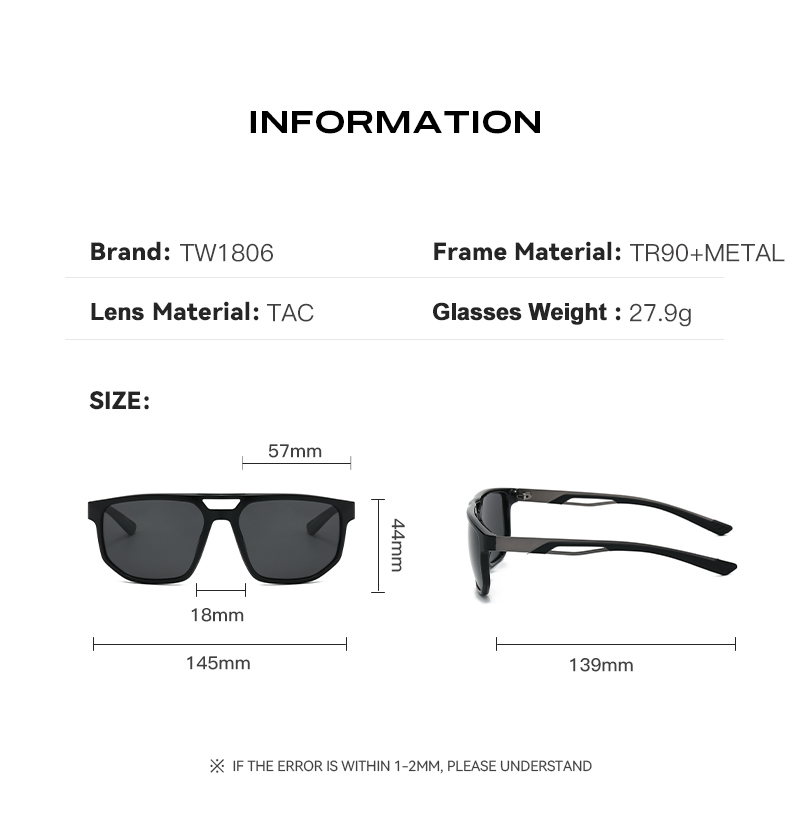
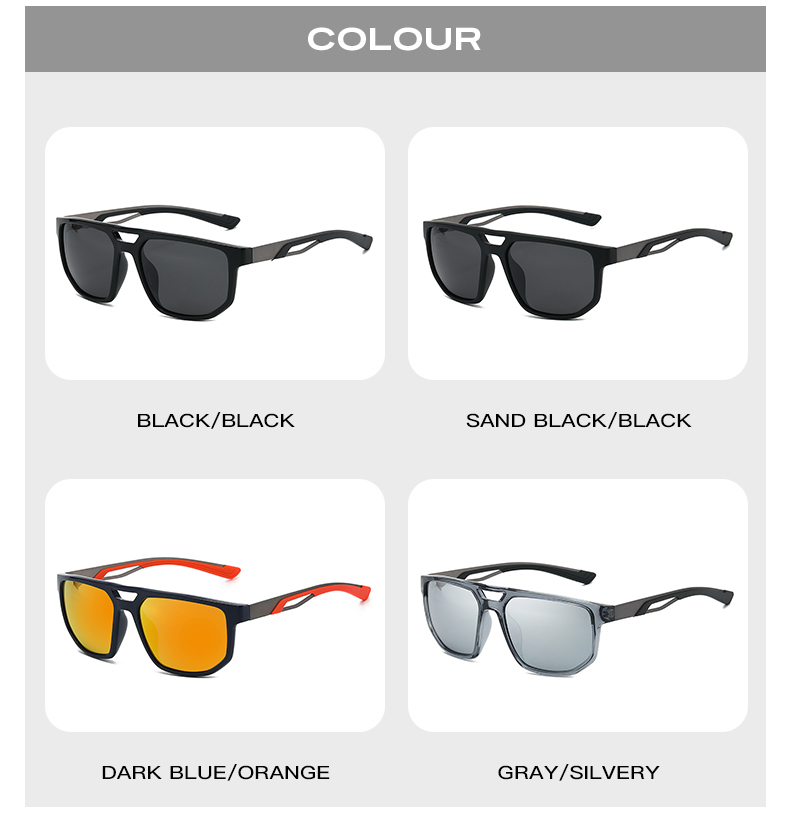
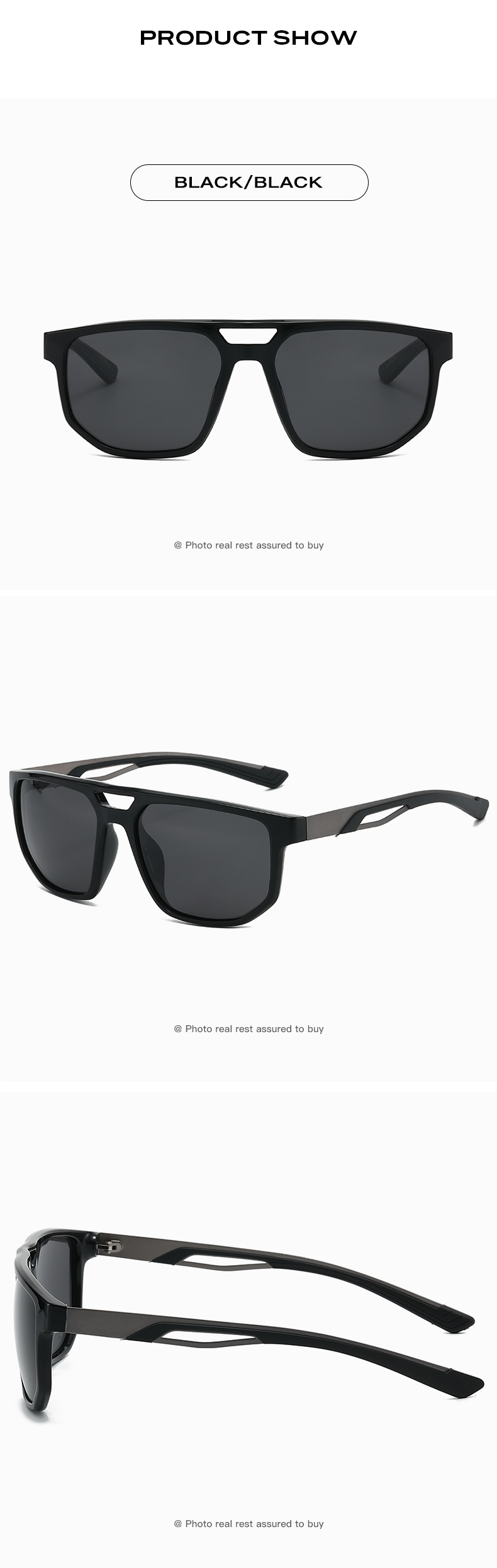
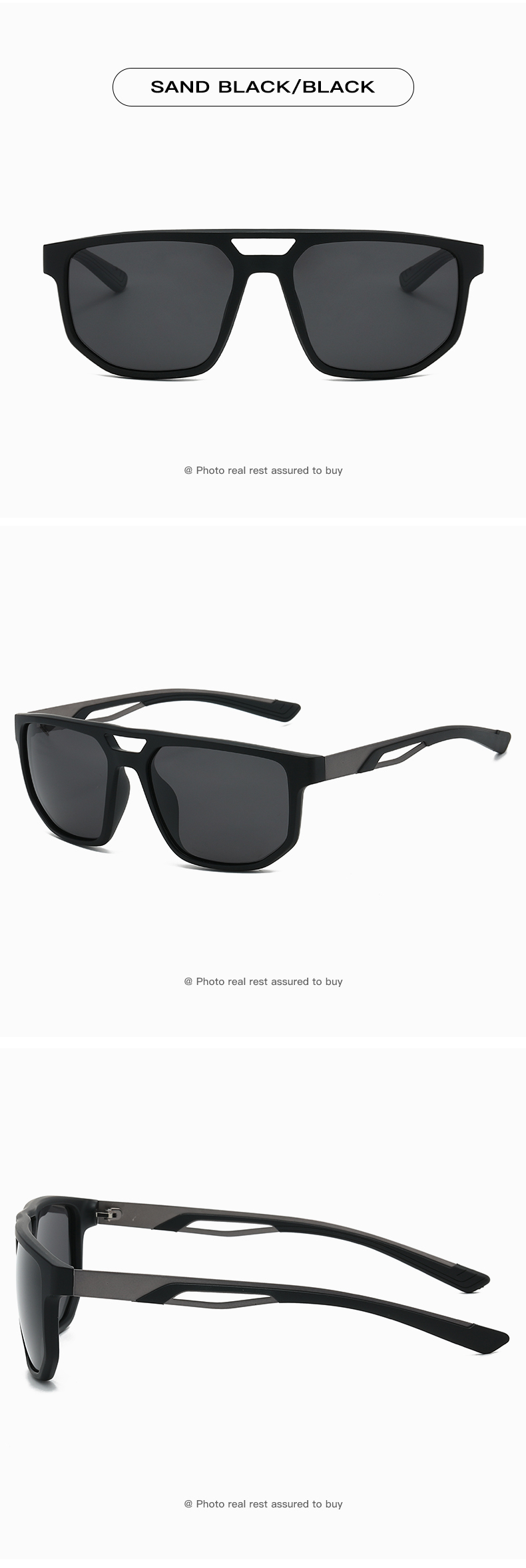
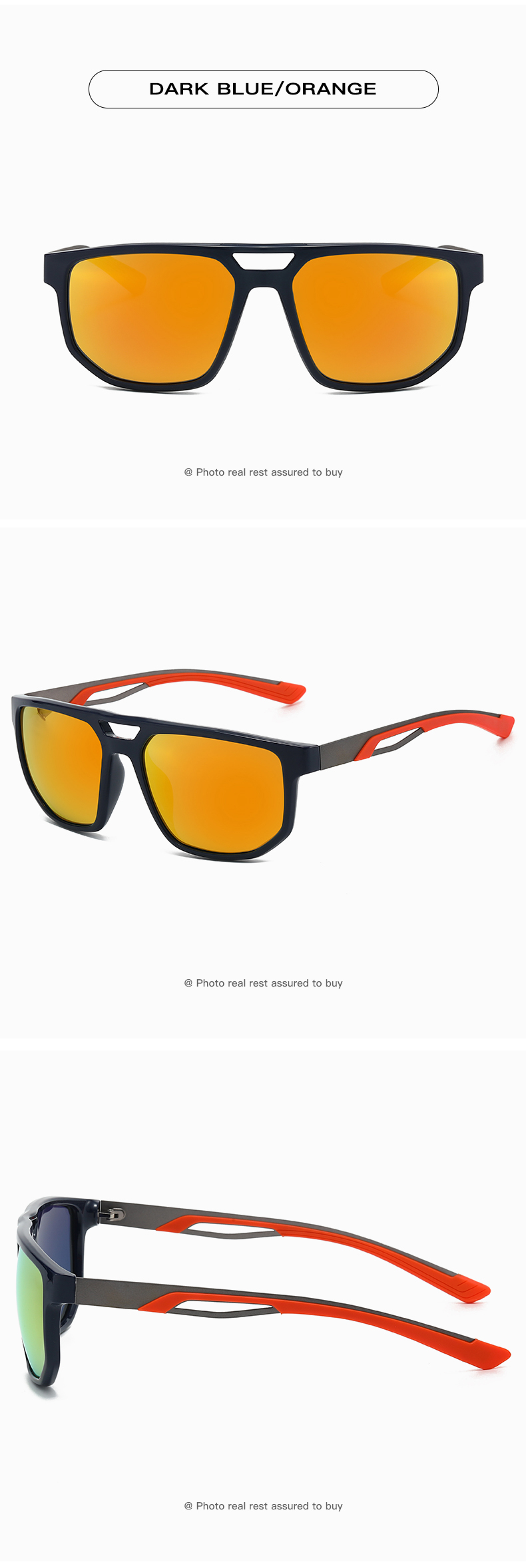
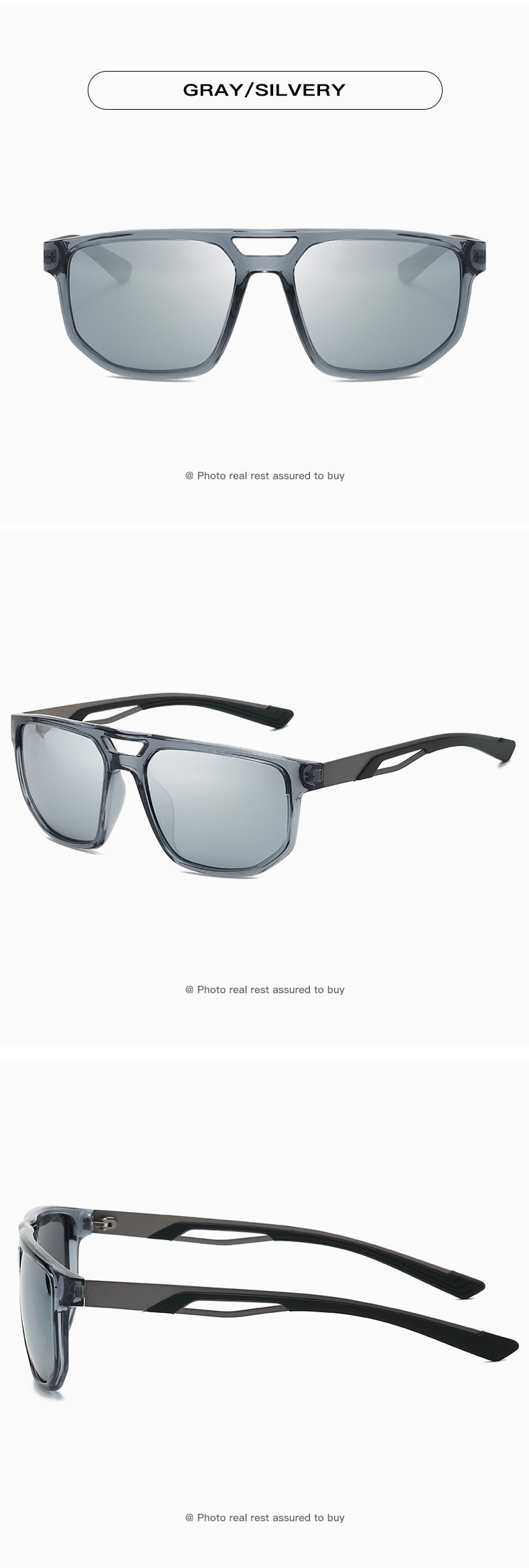
When I design or manufacture a pair of sunglasses, I do not look at the frame as a simple piece of fashion eyewear. I look at how the frame sits on the face, how the temples follow the head, how the bridge changes the visual balance, and how the whole product feels after it has been worn for a while. That is the thinking behind our TR90 Double Bridge Hollow Curved Temple Sunglasses.
This model combines a TR90 frame concept with a double bridge, hollow structural details, and curved temples. At first glance, the design has a strong fashion character. Look closer, however, and the details are quite practical. The curved temple structure is intended to create a closer relationship between the frame and the side of the head, while the double bridge gives the front of the sunglasses a more distinctive appearance.
For me, this is exactly where modern eyewear becomes interesting. A good pair of sunglasses does not need to choose between appearance and everyday usability. With the right frame geometry, material selection, production control, and assembly process, both can be considered at the same time.
Our company, Linhai Huangjia Glasses Co., Ltd., was established in 2023 in Linhai, Zhejiang. We focus on the research, development, and manufacturing of sports glasses, optical glasses, fashionable sunglasses, industrial safety goggles, and military and police tactical goggles. Because we work across different eyewear categories, I pay close attention to the relationship between visual design, wearing comfort, product structure, and the intended application.
This product page explains how I look at the TR90 Double Bridge Hollow Curved Temple Sunglasses, what makes the design different, how the frame is produced, where this type of sunglasses can fit into a product collection, and how we support OEM, ODM, and bulk purchasing projects.
1. What Makes the TR90 Double Bridge Hollow Curved Temple Design Different?
The first thing people usually notice is the front frame. A traditional single-bridge sunglasses design can look clean and simple, but a double bridge creates another visual line above the main lens area. It gives the frame a stronger identity without needing complicated decoration.
The second detail is the hollow structure. Hollow design elements can reduce the feeling of a heavy or crowded frame appearance. They also create visual space around the bridge and temple area. From a product design point of view, this gives us more room to create different styles for fashion eyewear collections.
The third detail is the curved temple. Instead of using a completely straight temple line, the temple follows a curved shape. The actual fit still depends on the final frame dimensions and the wearer's face shape, but this construction gives the designer more flexibility when developing a comfortable daily-wear frame.
I also like this design because it can work across several product directions. It can be developed as a Fashion Sunglasses model, an outdoor lifestyle model, or part of an OEM collection. By changing lens options, colors, surface finishes, temple patterns, logo placement, and packaging, the same basic frame concept can be adapted for different markets.
| Design Element | What We Focus On | Potential Product Value |
|---|---|---|
| TR90 Frame | Frame weight, flexibility, forming consistency, and surface finish | Suitable for lightweight eyewear product development |
| Double Bridge | Bridge geometry and visual balance | Creates a distinctive fashion appearance |
| Hollow Detail | Opening shape, edge finishing, and structural consistency | Adds visual character to the frame |
| Curved Temple | Temple curvature, symmetry, and assembly accuracy | Supports a closer and more natural-looking temple profile |
Source: The table above describes our product-design approach based on the supplied product configuration. It is not a laboratory performance specification.
2. How I Understand TR90 as an Eyewear Frame Material
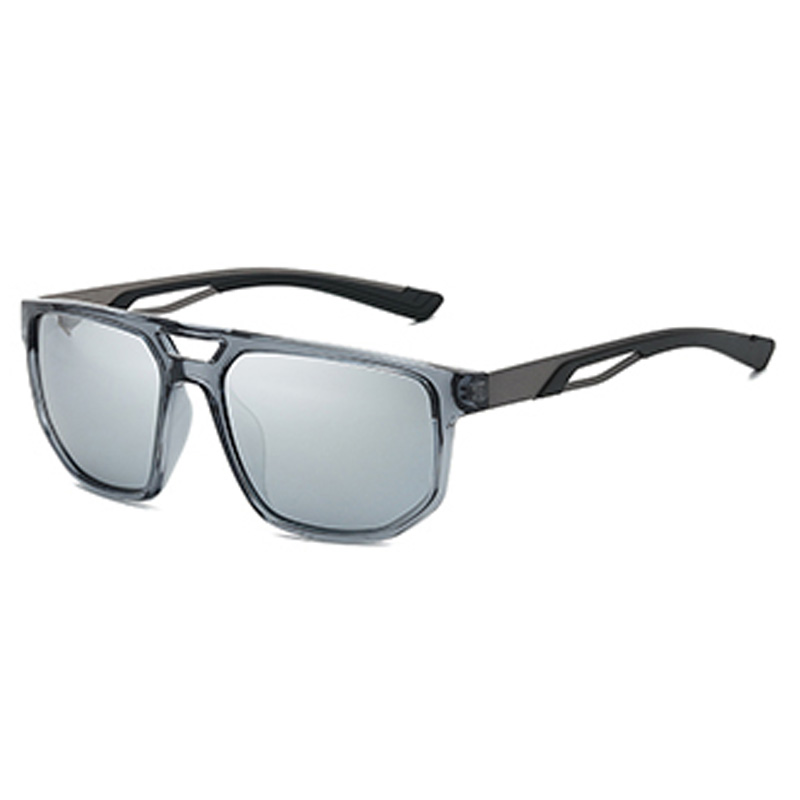
When customers ask me about TR90 sunglasses, I normally explain one thing first: the material name alone does not determine the complete performance of a finished pair of sunglasses. The final result also depends on frame geometry, processing conditions, lens material, hinge construction, assembly accuracy, and quality inspection.
TR90 is widely used in eyewear because designers can develop lightweight frame constructions with a good balance between flexibility and shape retention. For a model such as the TR90 Double Bridge Hollow Curved Temple Sunglasses, those characteristics are useful because the frame contains several visible design transitions.
The double bridge requires accurate shaping around the front frame. The hollow section needs clean edges and stable dimensions. The curved temple needs consistent forming so that the left and right sides remain visually balanced. If the material or processing is not controlled properly, even a good design can lose its intended appearance during production.
This is why I do not treat material selection as an isolated purchasing decision. Before production, I consider the frame design, expected order quantity, color requirements, surface treatment, lens configuration, packaging, and delivery schedule together.
For buyers developing a new eyewear collection, I also recommend separating three questions:
What frame material and structure are required?
What optical or lens specifications are required?
What market or regulatory requirements apply to the finished product?
These three questions may look similar, but they are not the same. A fashionable sunglasses frame and an industrial safety protector can both cover the eyes, yet their intended use and applicable performance requirements can be very different.
For example, ANSI/ISEA Z87.1-2025 covers occupational and educational eye and face protectors and addresses areas including requirements, testing, marking, selection, care, and use. It also covers hazards such as impact, non-ionizing radiation, and liquid splash in applicable occupational environments.
That standard should not automatically be applied to a fashion sunglasses model simply because the product is worn over the eyes. The intended application and the actual tested configuration matter.
3. Main Features I Build Into This Sunglasses Concept
Double Bridge Front Design
The double bridge is one of the strongest visual features of this model. Instead of relying on a complicated pattern, I use the frame structure itself to create the appearance. This makes the sunglasses easier to position within a modern fashion eyewear collection.
From a manufacturing perspective, the double bridge also needs attention during forming and assembly. The distance between structural sections, the alignment of the front frame, and the connection points all need to remain consistent. Small differences may become visible when the sunglasses are viewed from the front.
Hollow Curved Temple Detail
The hollow temple structure gives the side profile more character. I see this as particularly useful for brands that want something more distinctive than a standard solid temple.
However, a hollow detail is not simply a matter of cutting out a shape. The surrounding frame needs enough structural support for normal assembly and handling. The edge should also be properly finished so that the product feels clean when handled.
Curved Temple Profile
The curved temple is another important part of the design. When we develop a frame, we pay attention to symmetry between the two temples and to the relationship between the temple angle and the front frame.
The goal is not to make an exaggerated curve. The goal is to create a shape that works naturally with the rest of the frame and can be produced consistently across a batch.
Fashion-Oriented Appearance
This product is suitable for brands looking for modern sunglasses with a recognizable frame structure. The design can be used for different collections by changing color combinations, lens appearance, logo treatment, packaging, and other agreed specifications.
4. Product Design and Technical Considerations
One of the things I have learned from eyewear production is that customers often see the finished sunglasses, while manufacturers have to think about every small step before that final product exists.
A frame drawing may look simple on a computer screen. Once the design enters production, however, we need to consider material behavior, dimensional tolerances, tooling, forming, surface treatment, hinge installation, lens fitting, and final inspection.
For the TR90 Double Bridge Hollow Curved Temple Sunglasses, I pay particular attention to four areas.
Frame Geometry
The front frame needs to maintain its intended shape after processing. The double bridge should remain aligned with the main frame, and the hollow sections should have consistent proportions from batch to batch.
Temple Symmetry
The left and right temples should be visually matched. Differences in curvature, length, or hinge position can affect both appearance and wearing experience. This is why symmetry checks are important during assembly and final inspection.
Lens Installation
The lens is not simply inserted into the frame at the end of production. Its dimensions need to match the frame opening and the selected lens configuration. A good lens-frame relationship helps reduce assembly problems and keeps the finished product looking clean.
Hinge and Connection Points
The hinge is a small component, but it has a major effect on how the temples open and close. During production, I want the hinge area to be correctly positioned and firmly assembled. The exact hinge specification can be adjusted according to the customer's product requirements.
| Production Area | Key Inspection Focus | Why It Matters |
|---|---|---|
| Frame Forming | Shape, symmetry, dimensions | Maintains the intended product appearance |
| Hollow Structure | Edge finish, opening consistency | Supports a clean visual result and good handling feel |
| Temple Assembly | Left/right alignment, hinge position | Helps maintain consistent opening and wearing geometry |
| Lens Fitting | Lens size, seating, frame matching | Reduces assembly defects and improves finished appearance |
| Surface Finish | Color, coating, scratches, visible defects | Important for fashion eyewear presentation |
Source: These inspection points are manufacturing-process guidance based on our described production requirements. They are not claims of compliance with a specific third-party certification unless the corresponding product has been tested and documented.
5. Manufacturing Process: From Product Idea to Finished Sunglasses
When a customer approaches us for an OEM or ODM sunglasses project, I do not want to jump directly into mass production. A good production process starts by understanding exactly what the customer wants to sell and where the product will be used.
We normally begin with the product specification. This can include frame material, frame dimensions, lens requirements, colors, logo position, packaging, order quantity, delivery requirements, and other details.
For a new TR90 Double Bridge Hollow Curved Temple Sunglasses project, the next step is design confirmation. The customer may already have drawings or samples. If so, we can work from those confirmed specifications. For customers starting with only an idea, the development process can be discussed around the intended market, target appearance, wearing environment, and expected quantity.
Once the design is confirmed, tooling and production preparation can begin. The exact process depends on the final frame structure and manufacturing method, but our focus remains the same: make the product repeatable.
Repeatability is important in B2B eyewear manufacturing. A sample that looks good once is not enough. If a customer orders several thousand pieces, the production team needs to reproduce the same basic appearance and agreed specifications throughout the batch.
During production, frame components are formed and processed according to the approved design. Surface treatment and color processing follow the confirmed specifications. Components are then assembled, lenses are fitted according to the selected configuration, and finished products are inspected.
Before shipment, we also consider packaging and logistics. The customer may require individual boxes, bulk packaging, protective materials, barcode labels, cartons, or other packaging specifications. These details should be confirmed before mass production rather than added at the last minute.
| Stage | Typical Customer Confirmation | Production Objective |
|---|---|---|
| Concept & Specification | Design, dimensions, material, application | Define the product clearly |
| Sample Development | Appearance, fit, colors, components | Confirm the physical product direction |
| Production Preparation | Tooling, quantity, packaging, schedule | Prepare repeatable manufacturing |
| Mass Production | Approved specifications | Produce the agreed batch |
| Inspection & Packing | Quality and packaging requirements | Prepare finished goods for shipment |
Source: This process table reflects the OEM/ODM and bulk-order workflow described for Linhai Huangjia Glasses Co., Ltd. Specific manufacturing stages may change according to the customer's final design and order requirements.
6. Where Can These Sunglasses Be Used?
I see the TR90 Double Bridge Hollow Curved Temple Sunglasses primarily as a fashion and lifestyle eyewear product. The design can fit outdoor leisure, daily wear, travel, casual activities, and fashion-focused retail collections, subject to the final lens and frame configuration.
For outdoor lifestyle brands, the double bridge and curved temple create a more recognizable product profile. For fashion retailers, the hollow detail can help build a collection around modern frame shapes. For distributors and wholesalers, the model can also become a base design for different colors or lens combinations.
At the same time, I would not describe this fashion sunglasses model as industrial safety eyewear simply because it has a frame around the eyes. Industrial eye protection has different hazard requirements. For example, ANSI/ISEA Z87.1-2025 specifically addresses occupational and educational eye and face protection and includes testing and marking requirements for applicable protectors.
That distinction matters when buyers are building a product catalog. If your customer needs eye protection for machinery, chemical handling, welding, or another defined workplace hazard, we should start from the applicable protection requirements rather than adapting a fashion sunglasses specification.
Our company also manufactures industrial safety goggles and military and police tactical goggles. This broader product experience allows us to understand that different eyewear categories should be developed according to different use cases.
For fashion sunglasses, appearance and everyday wearing experience may be central. For safety eyewear, protection requirements, markings, testing, and hazard selection become much more important. I prefer to keep these product categories clear instead of using one general claim for every type of eyewear.
7. Why I Work With Buyers on OEM, ODM, and Bulk Eyewear Projects
Not every buyer needs the same service. Some customers already have a finished design and simply need a manufacturer. Others have a general concept but need help turning it into a manufacturable product. Some distributors need regular bulk orders, while brands may need smaller development quantities before moving into larger production.
Our production support is therefore based around the customer's actual requirements.
If you already have a drawing, sample, or specification, we can discuss the production details around that reference. If you are developing a new sunglasses collection, we can discuss frame structure, material options, colors, lens configuration, packaging, and other specifications.
For bulk purchasing, we can prepare a production plan according to the confirmed order quantity and product requirements. Payment terms, production time, transportation, and packaging can be discussed according to the order scale and destination.
For OEM and ODM projects, communication is especially important. I prefer to confirm important details in writing before production, including the product specification, quantity, packaging requirements, delivery schedule, and other agreed standards.
This simple approach reduces confusion later. It also gives both sides a clear reference when reviewing samples and finished goods.
Our product range covers Sports sunglasses, sports optical glasses, industrial safety goggles, military and police tactical goggles, optical glasses, and fashionable sunglasses. This means our manufacturing work is not limited to one single eyewear style.
For international buyers, this broader experience can also be useful when developing different product lines for different customer groups. One collection may focus on fashion. Another may focus on sports. Another may require a more protective construction.
What I Pay Attention to During a B2B Project
Clear product specifications before production
Consistent frame dimensions and appearance
Material and component confirmation
Lens and frame matching
Packaging requirements
Order quantity and production planning
Delivery schedule confirmation
Inspection requirements agreed before shipment
OEM and ODM customization details
8. Product FAQ for TR90 Double Bridge Hollow Curved Temple Sunglasses
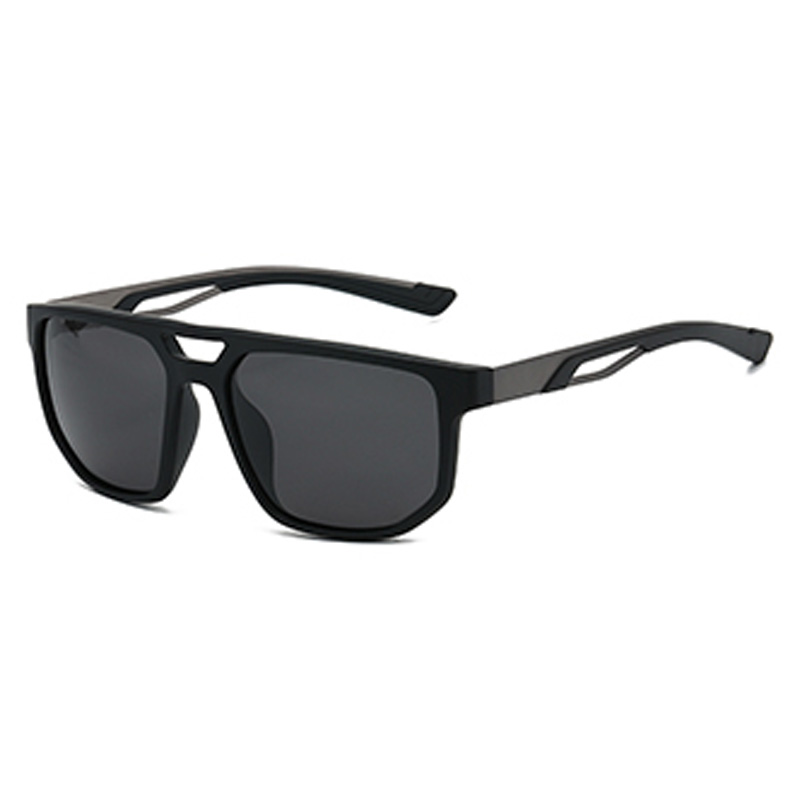
Q1: What does TR90 mean in this product name?
TR90 refers to the frame material specification used for this product concept. In eyewear manufacturing, TR90 is associated with lightweight frame constructions and is commonly used for sports, lifestyle, and fashion eyewear. However, the exact performance of a finished frame depends on the actual material grade, formulation, processing method, frame geometry, and final product construction.
Q2: What is special about the double bridge?
The double bridge adds a second visual connection across the upper front area of the frame. Compared with a conventional single-bridge design, it creates a stronger and more recognizable appearance. It can be particularly useful for brands looking for modern or fashion-oriented sunglasses.
Q3: Why use curved temples?
The curved temple changes the side profile of the sunglasses and can help create a more natural-looking frame shape around the side of the head. The final wearing experience depends on frame dimensions, temple curvature, hinge position, and the individual wearer's face shape.
Q4: Can the color be customized?
For OEM and ODM projects, color options can be discussed according to the customer's requirements. The exact customization range depends on the selected material, surface treatment, order quantity, and production process.
Q5: Can I add my own brand logo?
Yes. For customized projects, logo placement and branding details can be discussed during product development. Depending on the design, branding may be applied to areas such as the temple or other suitable frame positions. The final method should be confirmed against the actual frame structure.
Q6: Can the lens specification be customized?
Lens options can be discussed according to the intended product market and customer requirements. We recommend confirming the required lens material, color, optical specification, coating, and other details before production.
Q7: Are these sunglasses industrial safety glasses?
Not automatically. This model is presented as a fashion and lifestyle sunglasses design. If a customer needs certified occupational eye protection, the product needs to be developed and tested according to the applicable safety requirements. ANSI/ISEA Z87.1-2025 is one example of an occupational and educational eye and face protection standard, covering requirements, testing, marking, selection, care, and use for applicable products.
Q8: Can these sunglasses be used for sports?
The frame style can be considered for lifestyle and outdoor eyewear collections. However, sports-specific products should be developed according to the sport, impact environment, lens requirements, fit requirements, and applicable product standards. I would not recommend treating a general fashion sunglasses specification as a certified sports protection specification without the relevant testing.
Q9: Do you provide OEM and ODM services?
Yes. We support OEM, ODM, and bulk purchasing projects. Customers can provide their own specifications, samples, drawings, or branding requirements, and we can discuss the production plan according to the project.
Q10: What information should I provide when requesting a quotation?
I recommend providing the product name or reference sample, target quantity, frame material, preferred colors, lens requirements, logo requirements, packaging requirements, destination country, and expected delivery schedule. The more complete the initial information is, the easier it is to prepare a practical quotation and production plan.
Q11: Can you handle different packaging requirements?
Yes. Packaging can be discussed according to the customer's product positioning and sales channel. Individual packaging, bulk cartons, protective packaging, labels, and other requirements can be confirmed before production.
Q12: How long does production take?
The production cycle depends on the order quantity, product configuration, customization level, tooling requirements, packaging, and production schedule. Instead of giving every project the same lead time, I prefer to confirm the actual specifications first and then provide a production schedule based on the order.
Q13: Do you work with overseas buyers?
Yes. Our company is based in Linhai, Zhejiang, China, and our business model supports international eyewear customers. Transportation and delivery arrangements can be discussed according to the destination, order size, and customer's requirements.
Q14: What should I check before placing a large order?
For a new supplier or new product, I recommend confirming the sample, frame dimensions, material, lens configuration, color, logo, packaging, quantity, inspection requirements, payment terms, and delivery schedule before mass production. This gives both the buyer and manufacturer a clear product reference.
9. A Practical Way to Choose the Right Configuration
When I talk with a buyer about a new sunglasses project, I usually start with the end customer rather than the frame itself. Who will wear it? Where will they use it? What price level is expected? Is the product mainly about fashion, outdoor lifestyle, sports, or another application?
Once those questions are clear, the frame design becomes easier to define.
For a fashion collection, the double bridge and hollow curved temple may be the main visual selling points. The buyer can then work on colors, lens appearance, logo details, and packaging to build a complete collection.
For outdoor lifestyle products, the buyer may want to pay more attention to lens selection, fit, frame coverage, and wearing conditions. Those requirements should be confirmed before the product is finalized.
For sports eyewear, I would take the discussion one step further and define the activity, movement level, impact environment, lens requirements, and applicable standards. This prevents a common problem in eyewear sourcing: using a fashionable frame specification for an application that requires a different level of protection.
The same principle applies to industrial eyewear. Workplace eye protection should be selected according to the actual hazard. ANSI/ISEA Z87.1-2025, for example, is specifically concerned with occupational and educational eye and face protection and includes criteria related to hazards such as impact, non-ionizing radiation, and liquid splash in applicable environments.
In other words, I would rather ask a few more questions at the beginning than discover later that the product specification does not match the customer's market.
10. Final Thoughts From the Manufacturer
I see the TR90 Double Bridge Hollow Curved Temple Sunglasses as a good example of how a relatively simple eyewear structure can create a recognizable product identity. The double bridge gives the front a distinctive line. The hollow details add visual interest. The curved temples create a different side profile. The TR90 frame concept supports a lightweight-oriented product direction.
But the appearance is only the beginning.
For me, successful eyewear manufacturing is about turning a design into a product that can be reproduced consistently. That means paying attention to frame geometry, material selection, forming, component matching, lens fitting, assembly, surface treatment, inspection, packaging, and delivery.
At Linhai Huangjia Glasses Co., Ltd., we develop and manufacture sports glasses, optical glasses, fashionable sunglasses, industrial safety goggles, and military and police tactical goggles. This product range gives us experience with different eyewear requirements and different customer applications.
For customers interested in this TR90 Double Bridge Hollow Curved Temple Sunglasses model, we can discuss the product around your actual requirements rather than forcing every project into one fixed configuration. Whether you are a sunglasses wholesaler, eyewear distributor, fashion brand, outdoor product company, retailer, or sourcing company, we can review the required frame specification, lens configuration, colors, logo, packaging, quantity, and delivery requirements.
If you are developing a new sunglasses collection, I recommend starting with a confirmed product specification and sample. From there, we can discuss customization, production planning, packaging, and shipping. This gives both sides a clear understanding of what will actually be produced.
For me, that is the practical meaning of a reliable B2B eyewear partnership: clear specifications, realistic communication, controlled production, and a finished product that matches what was agreed before the order was placed.



 Phone
Phone