

1、Product Introduction
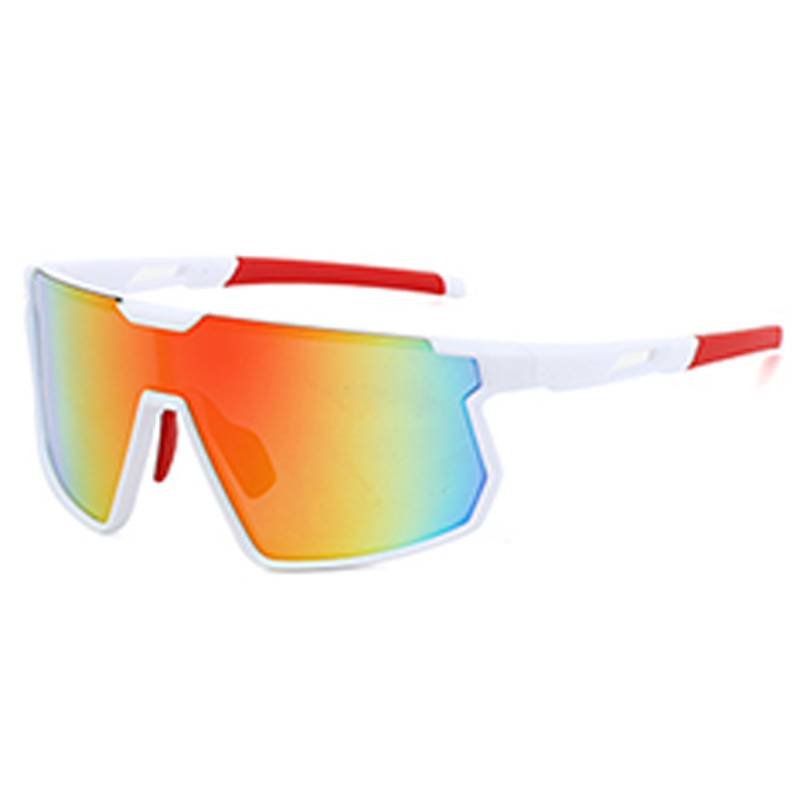
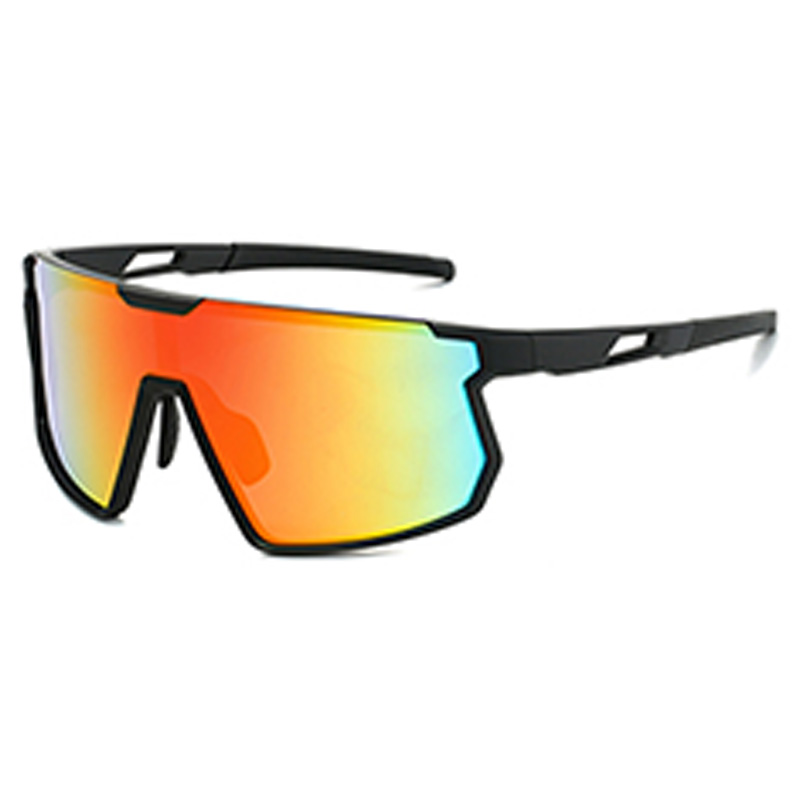
We are a professional manufacturer and supplier of sports eyewear based in China.These full-frame integrated shield Cycling sunglasses feature impact-resistant PC lenses. The full wraparound design effectively blocks wind, sand and stray side light.Hollow segmented temples are lightweight and breathable, paired with anti-slip silicone nose pads to stop slipping even during sweaty prolonged exercise.
Lenses with iridescent mirror coating cut glare from roads and water surfaces, while delivering full UV400 protection against all ultraviolet rays.The ultra-light, highly flexible bend-proof frame creates no pressure on your nose or temples after long wear. Ideal for road cycling, mountain off-road riding, driving, long-distance running, golf, badminton, tennis, pickleball, beach volleyball and other outdoor activities.Full OEM & ODM customization solutions available. Samples can be provided. Feel free to contact us for competitive factory quotations.
Linhai Huangjia Eyewear Co., Ltd. is an eyewear manufacturer and exporter based in Zhejiang, China, providing one-stop OEM & ODM customization services directly from the factory. We welcome your inquiries.
2.1 Product Features
Frame Advantages——Highly flexible and bend-resistant frame, sturdy and long-lasting.Made of pliable material that withstands bending without breaking, it is lightweight for long outdoor activities, and will not pinch your temples or press down on your nose after extended wear.
Lens Advantages——PC lenses are impact and scratch resistant for safer cycling, making them the top safety lens option for marathons, mountain biking and professional fishing.One-piece molded design without frame obstructions delivers a broad, clear field of vision.Low-density lightweight lenses won’t press on your nose or pinch temples during long-distance rides, offering comfortable wear free of soreness for extended periods.The full wraparound structure blocks wind and sand to ease dry eyes.Complete UV400 sun protection blocks all ultraviolet rays.Its streamlined aerodynamic profile reduces wind resistance.
2.2 Dimensions
Parameter | Specification |
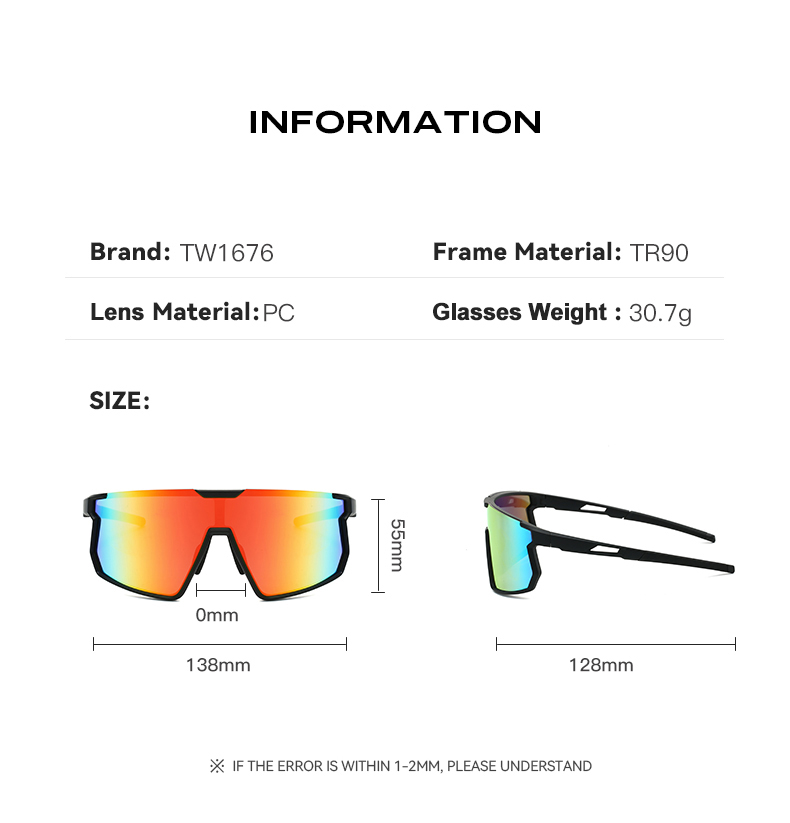
Model Name | TR90 Full Frame Shield Cycling Glasses |
Model No. | RS260703 |
Material: | TR90 |
Frame Shape | Full Frame |
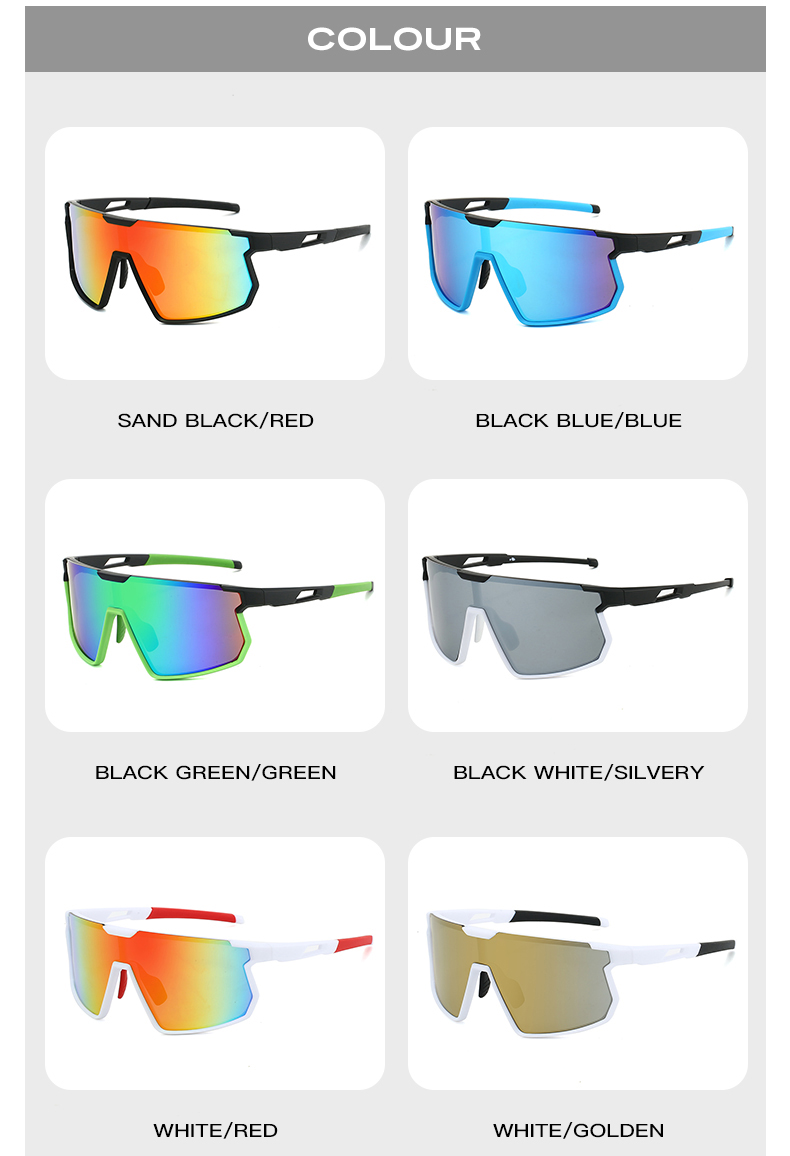
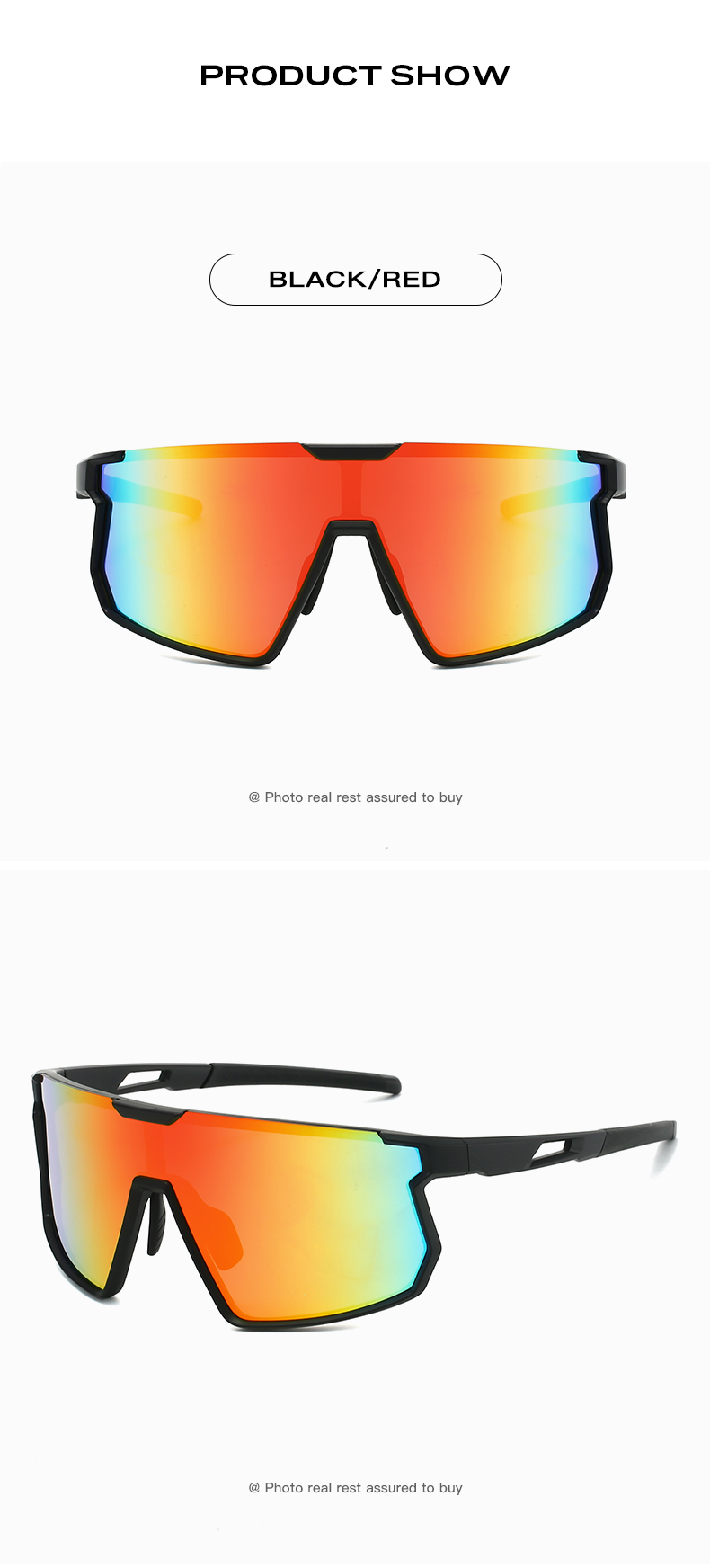
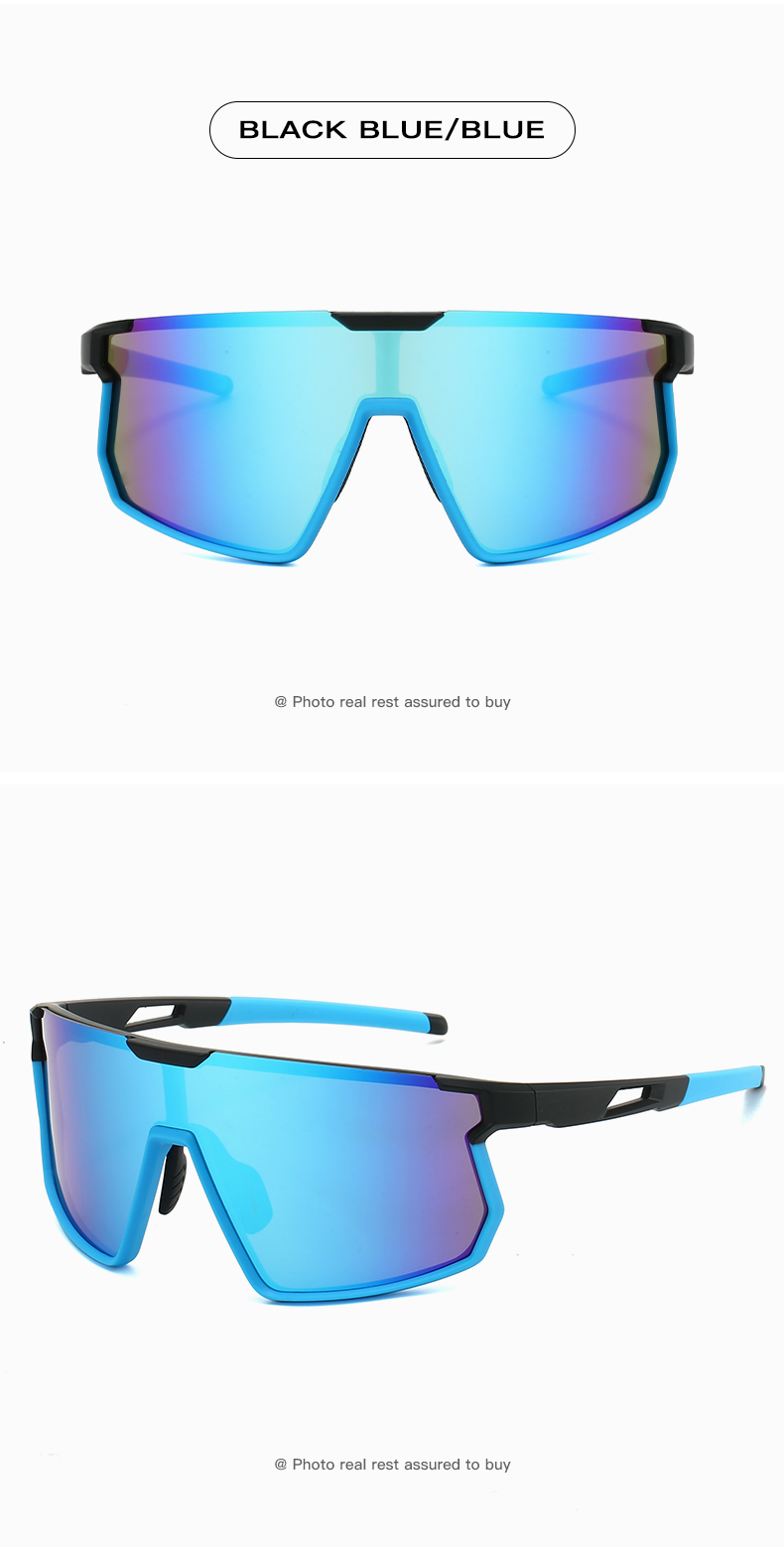
Frame Color | Sand Black、Black Blue、Black Green、Black White、White(Custom) |
Size | 138-128mm |
Total Weight | 30.7g |
Lens Type | PC |
Target Audience | Unisex Men & Women |
Applicable Scenes | cycling,mountain off-road riding,driving,long-distance running,golf,badminton,tennis,pickleball,beach volleyball |
MOQ | 300pcs/Color; |
Origin | Taizhou, Zhejiang Province, China |
Logo Printing | Custom Made |
Packaging | 1pcs/bag, 12pcs/box, 300pcs |
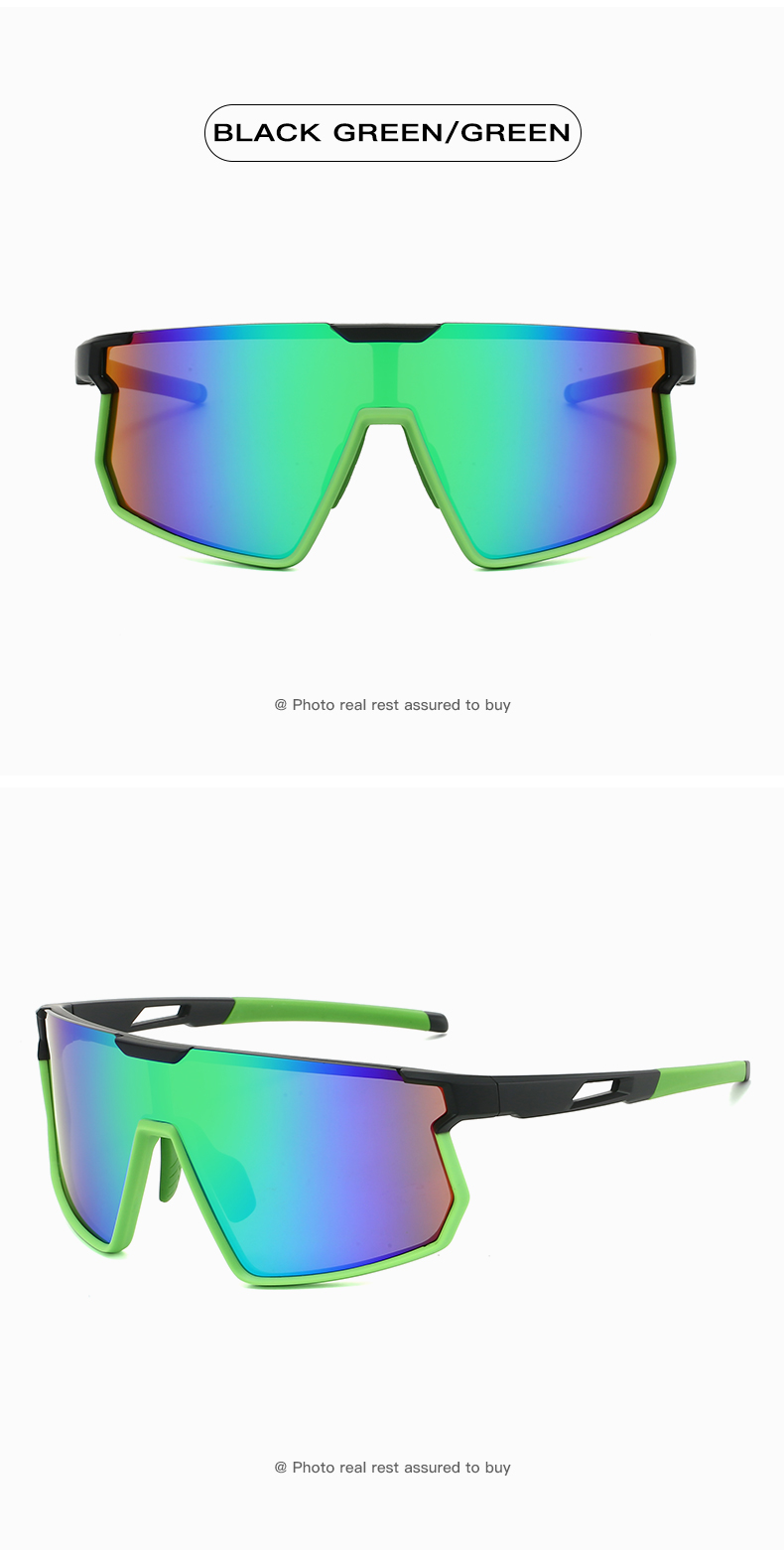
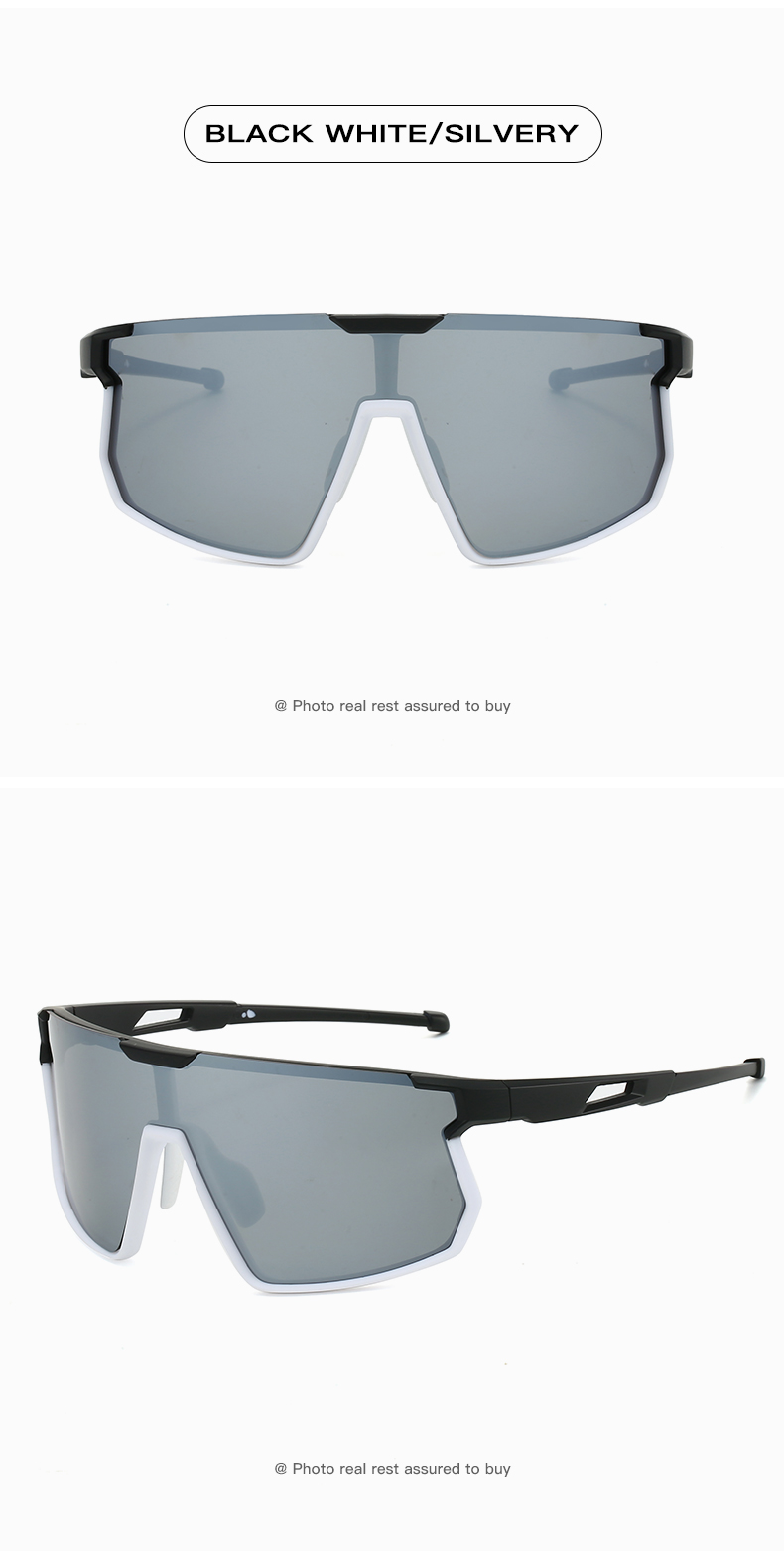
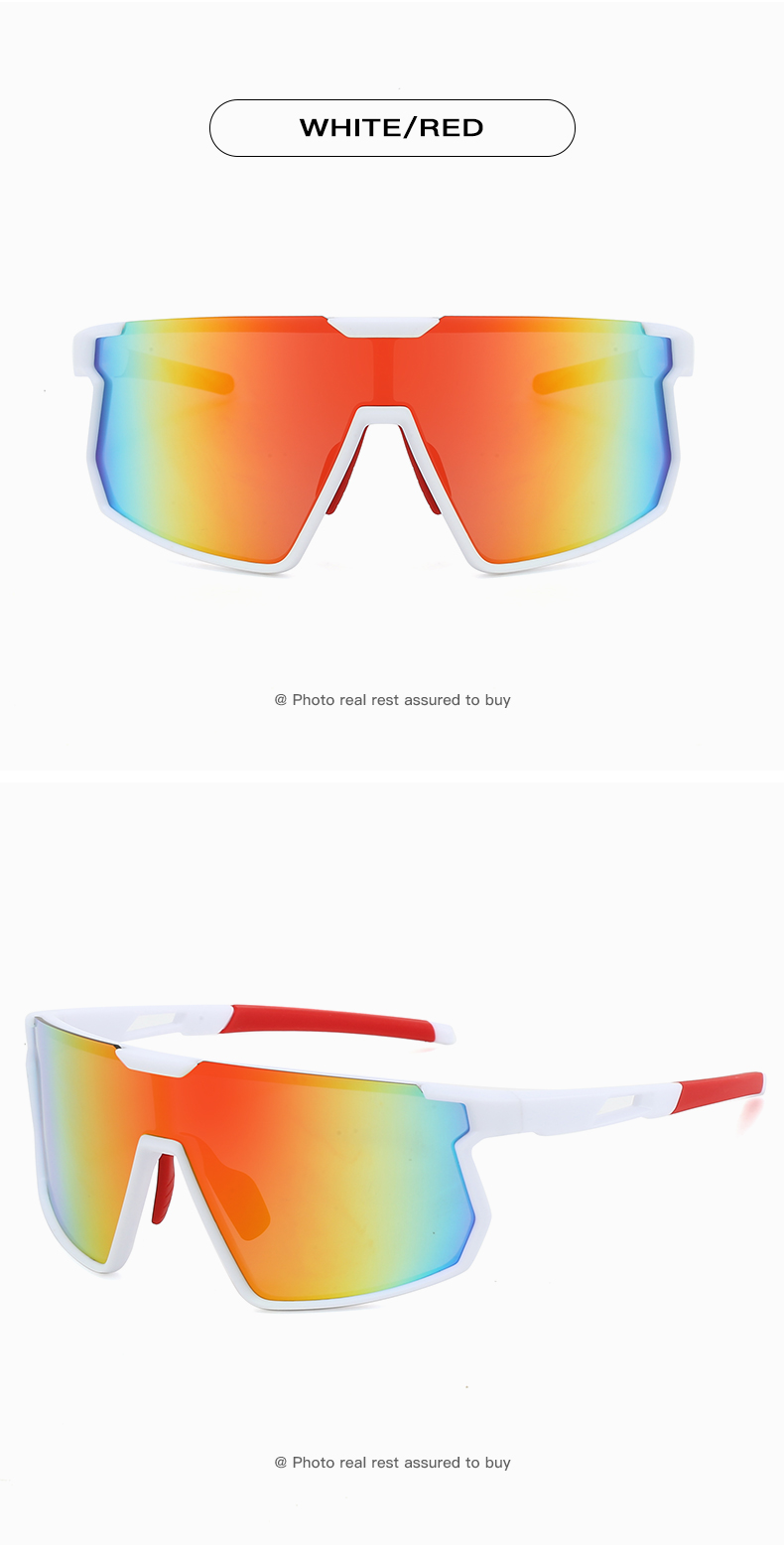
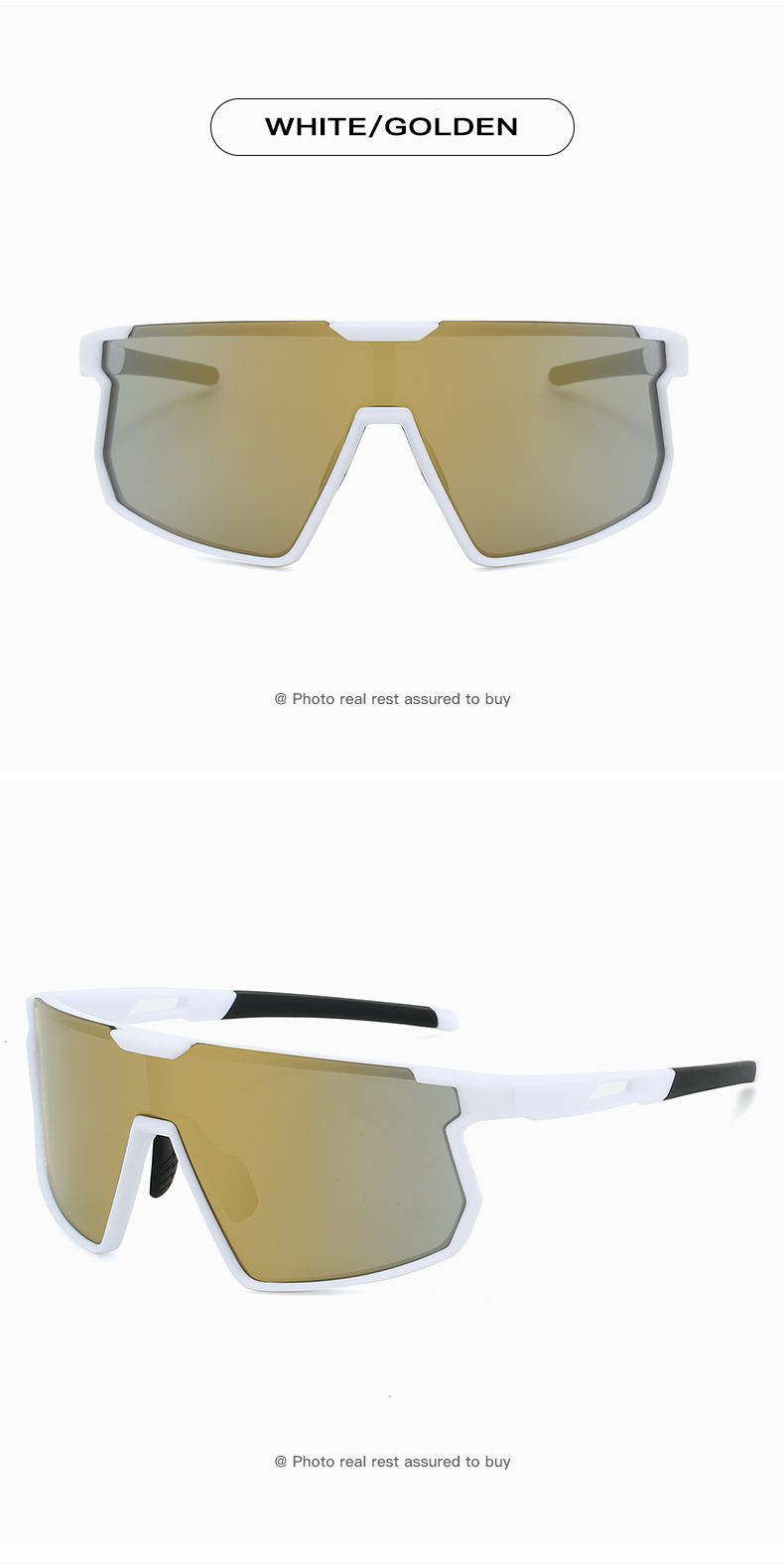
TR90 Full Frame Shield Cycling Glasses for Clear Vision and Comfortable Riding
When I design or select cycling eyewear, I do not look at appearance alone. A pair of cycling glasses needs to stay comfortable when the ride becomes long, the sunlight becomes strong, and the road conditions change. It also needs to give the rider a wide and clear view without becoming a distraction.
That is the thinking behind our TR90 Full Frame Shield Cycling Glasses. At Linhai Huangjia Glasses Co., Ltd., we focus on sports eyewear, optical glasses, fashionable Sunglasses, industrial safety goggles, and tactical eyewear. Since our company was established in 2023, we have built our product development around a simple idea: eyewear should match the real situation in which people use it.
For cycling, that means paying attention to frame comfort, lens coverage, visual field, outdoor light, wind, and the way the glasses sit on the face. A cyclist may spend one hour on the road or several hours on a training route. Small problems that are easy to ignore in a shop can become very noticeable after a long ride.
Our TR90 Full Frame Shield Cycling Glasses use a full-frame shield-style construction designed for active outdoor use. The large lens area gives the glasses a modern sports look while helping create broad visual coverage. The TR90 frame concept is also suitable for lightweight sports eyewear where flexibility, comfort, and daily durability matter.
We supply this type of eyewear for sports brands, distributors, wholesalers, retailers, and customers looking for OEM, ODM, and customized cycling glasses. Product specifications, quantities, packaging, production schedules, and delivery arrangements can be discussed according to the actual project.
A cyclist does not look at the road in only one direction. During a normal ride, the eyes move between the road ahead, the sides of the lane, other cyclists, vehicles, signs, turns, and changes in terrain. This is why I consider the lens shape one of the most important parts of cycling eyewear.
Traditional small-frame sunglasses can work well for casual outdoor use, but cycling often creates a stronger need for coverage. Wind comes from the front. Dust can be raised by passing vehicles or other riders. Bright sunlight can enter from different angles. On mountain roads, trees, open fields, water, and light-colored surfaces can also change the visual environment quickly.
The shield lens format gives us a practical way to create a broad lens area without putting a strong visual break in front of the rider. Instead of having two separate lenses with a visible bridge between them, a shield-style lens creates a more open visual appearance.
I also like the full-frame structure because it gives the product a clear mechanical outline. For manufacturers and brands, this makes it easier to control the overall appearance, frame geometry, lens shape, and product identity during development.
Of course, a larger lens does not automatically mean better protection. Lens material, optical quality, UV filtering performance, frame geometry, fit, and applicable product standards all need to be considered. We therefore recommend confirming the exact lens specification and intended market before mass production.
A broad shield-style lens area for an open field of view.
A full-frame sports construction suitable for cycling applications.
A lightweight TR90 frame concept designed around active wear.
Coverage that can help reduce direct wind and outdoor exposure around the eyes.
A product shape suitable for road cycling, mountain biking, training, and other outdoor sports.
OEM and ODM development options for brands and professional buyers.
For me, the most important point is balance. Cycling glasses should not feel like heavy protective equipment when the rider is simply training or enjoying a weekend ride. They should feel like a natural part of the cycling setup.
There is no complicated mechanism inside these glasses. Their performance comes from the way several simple parts work together: the frame, lens, nose area, temples, lens shape, and overall fit.
The lens acts as the main visual barrier between the rider's eyes and the outdoor environment. Depending on the selected lens specification, it can be designed to manage visible light, glare, and ultraviolet radiation. The frame holds the lens in position and determines how the eyewear sits around the face.
The shield shape is especially useful because the lens can cover a wide area in front of the eyes. This is valuable during cycling because riders frequently look slightly to the left or right while keeping their head pointed toward the road.
The frame also needs to maintain a stable position during movement. When cycling at speed, a loose pair of glasses can move down the nose or create pressure behind the ears. A well-designed sports frame should distribute contact in a comfortable way instead of concentrating pressure in one small area.
Another important point is ventilation. A large lens can create a more enclosed space around the eyes, so frame geometry and ventilation design need to be considered carefully. The objective is not simply to make the lens as large as possible. It is to create a useful combination of coverage, airflow, visual clarity, and wearing comfort.
UV protection should also be treated as a specification rather than an assumption. The World Health Organization explains that UV radiation can affect the eyes and recommends sunglasses providing protection against UVA and UVB radiation. WHO also notes that wraparound-style sunglasses can provide enhanced eye protection for outdoor workers and athletes.
For that reason, when we discuss an OEM project, I prefer to confirm the actual lens transmission and UV requirements instead of simply describing a lens as protective because it is dark or colored.
The frame is designed around a full-frame structure and a sports-oriented shape. TR90 is widely used in eyewear where designers want a combination of low weight, flexibility, and everyday durability. For cycling products, these characteristics are useful because the glasses need to remain comfortable while the rider is moving.
For us, the material name is only one part of the story. Frame geometry matters just as much. A good frame needs to match the lens, nose area, temple length, and overall face fit. That is why we pay attention to the complete product rather than treating the frame material as a selling point by itself.
The shield-style lens gives this product its most recognizable feature. Instead of focusing only on a compact lens area, the design provides broad coverage in front of the face.
This makes the product suitable for cycling applications where the rider needs a wide visual field. It also creates a modern appearance that works well for sports brands looking for a recognizable cycling eyewear product.
Comfort becomes more important as riding time increases. A pair of glasses that feels fine for ten minutes may not feel the same after two or three hours.
We therefore consider frame weight, contact points, temple shape, nose support, lens size, and overall balance during product development. The final fit can also be adjusted according to the target market, user group, and brand requirements.
This product is not limited to road cycling. Its sports-oriented structure can also be considered for mountain biking, recreational cycling, outdoor training, running, hiking, and other active applications where broad eye coverage is useful.
However, I always recommend matching the final product specification to the actual application. Cycling sunglasses are not automatically industrial safety goggles. If a customer needs certified impact protection or occupational eye protection, a dedicated safety product and applicable testing requirements should be selected.
When buyers compare different cycling sunglasses, they often start with lens color or appearance. In professional purchasing, I suggest looking at several factors together.
| Factor | What I Check | Why It Matters for Cycling |
|---|---|---|
| Frame material | Material, flexibility, frame geometry | Influences weight, comfort, fit, and everyday durability |
| Lens coverage | Lens width, height, shield or two-lens structure | Affects visual coverage and exposure around the eyes |
| UV performance | Actual UV transmission specification | Important for outdoor exposure and should be verified rather than assumed |
| Visible light transmission | Lens category or measured transmission where applicable | Helps match the lens to different light conditions |
| Fit | Nose support, temple shape, frame dimensions | Helps maintain comfort and stability during movement |
| Optical performance | Lens quality and applicable testing requirements | Supports clear vision during riding |
Source: The UV-related guidance in this comparison is based on World Health Organization information on ultraviolet radiation and protective eyewear. Actual product specifications should be confirmed through the applicable product test reports and customer requirements.
One point is worth repeating: lens darkness is not a reliable way to judge UV protection. WHO specifically notes that UV protection cannot be determined simply by looking at lens color, darkness, or price.
That is why we prefer a specification-based approach when developing products for professional buyers.
When I talk to customers about cycling sunglasses, lens color is usually one of the first topics. It is easy to understand why. A dark lens looks like a sunny-day product, while a lighter lens looks more suitable for cloudy conditions.
But the real question is not simply, “Which color looks better?” The more useful question is, “What light conditions will this product be used in?”
Road cyclists may ride in bright open sunlight. Mountain bikers may move between direct sunlight and tree-covered sections. Commuters may use their glasses in changing morning and afternoon light. Outdoor sports users may also encounter reflected light from roads, water, sand, or other bright surfaces.
The World Health Organization explains that UV exposure varies according to factors such as time, location, altitude, cloud cover, and ground reflection. It also recommends protective measures when the UV Index reaches 3 or above.
This is why we do not treat one lens specification as suitable for every environment. For OEM and ODM projects, lens tint, transmission, coating, UV filtering, optical requirements, and target market should be confirmed as part of the product specification.
| Riding Environment | Typical Visual Challenge | Product Consideration |
|---|---|---|
| Open road in strong sunlight | High brightness and glare | Appropriate sun lens and verified UV protection |
| Mountain trails | Rapid changes between sun and shade | Balanced lens transmission and stable fit |
| Urban cycling | Changing light and surrounding traffic | Clear visual field and comfortable long-term wear |
| Training and recreation | Extended wearing time | Lightweight frame and comfortable contact points |
Source: Environmental and UV exposure considerations are based on WHO guidance concerning UV radiation, UV Index, and outdoor eye protection. The riding-environment recommendations above are product-development considerations rather than medical advice.
A finished pair of cycling glasses may look simple, but manufacturing it involves several steps. For a professional buyer, I think understanding this process is useful because it explains why small specification changes can affect cost, production time, and quality control.
We start by confirming what the customer actually needs. This can include the product shape, frame material, lens type, lens color, logo position, packaging, quantity, target market, and delivery requirements.
For OEM and ODM projects, drawings, reference samples, product dimensions, and visual requirements can be used during development. The clearer the requirements are at the beginning, the easier it is to control the finished product.
The frame geometry is developed according to the intended wearing position and lens structure. Important areas include the bridge, nose support, temple length, lens groove, frame thickness, and overall curvature.
For sports eyewear, I pay particular attention to the relationship between the frame and the user's movement. The glasses need to remain stable without creating unnecessary pressure.
The lens is processed according to the confirmed specification. Depending on the project, requirements may include tint, coating, UV filtering, optical performance, and other customer-defined features.
At this stage, the lens should be checked against the agreed specification rather than judged only by appearance.
The frame, lens, nose components, temples, and other parts are assembled into the finished product. Assembly accuracy matters because even a small positioning problem can affect appearance, fit, or lens stability.
Before shipment, the finished products are checked according to the agreed product requirements. Depending on the order, inspection can cover appearance, dimensions, assembly, lens condition, logo application, packaging, and other agreed points.
Packaging is also important for B2B orders. Products may need individual packaging, bulk cartons, customized labels, brand information, or other shipping requirements. We can discuss these details according to the customer's order.
| Production Stage | Main Focus | Customer Confirmation |
|---|---|---|
| Requirement review | Product specification and application | Product drawings, samples, quantity, target market |
| Frame development | Geometry, fit, material and appearance | Sample approval and dimensional requirements |
| Lens development | Lens type, tint, transmission and coating | Lens specification and testing requirements |
| Assembly | Component fit and product appearance | Pre-shipment inspection requirements |
| Packaging | Protection and brand presentation | Packaging artwork, labels and carton requirements |
Source: This process table describes our general OEM/ODM production workflow based on the product and manufacturing scope provided by Linhai Huangjia Glasses Co., Ltd. Exact steps may vary according to the product structure and customer specification.
I see this product as a flexible sports eyewear platform rather than a product limited to one cycling category.
For road cyclists, a wide shield lens can provide an open visual experience while the rider maintains a forward position for long periods. The lightweight sports frame is also suitable for customers who prefer minimal-feeling eyewear during training.
Mountain biking creates a different visual environment. Riders may move between sunlight, shade, trees, open areas, and uneven trails. A broad lens area can be useful when the rider needs to look around while maintaining awareness of the trail.
Running, fitness training, hiking, and other outdoor activities can also use sports eyewear with a similar design concept. The actual lens specification should be selected according to the light and environmental conditions.
For sports brands, the product can be developed as part of a larger eyewear collection. Frame colors, lens options, logos, packaging, and other details can be discussed according to the brand's product plan.
We work with customers who need more than a ready-made product. Depending on the project, we can discuss product specifications, quantities, packaging, production schedules, and other requirements for OEM and ODM orders.
This is especially useful for wholesalers, distributors, online retailers, sports equipment companies, and brands that want to build their own cycling eyewear range.
We are a young company, established in 2023 and based in Linhai, Zhejiang, but our focus is not simply on producing another pair of sunglasses. Our product range covers sports eyewear, optical glasses, fashionable sunglasses, industrial safety goggles, and military and police tactical goggles.
This broader product experience helps us look at eyewear from different angles. Sports products need comfort and movement. Optical products need visual requirements. Industrial products need protection and application-specific specifications. Tactical products require practical performance in demanding environments.
For cycling eyewear, we bring that same practical mindset into product development.
First, we focus on the actual application. We want to know how the glasses will be used, who will wear them, what the outdoor environment looks like, and what the buyer expects from the product.
Second, we support customization. Customers can discuss product specifications, quantities, packaging, logos, production schedules, and delivery requirements with us. OEM and ODM projects can be developed according to the confirmed requirements.
Third, we pay attention to communication. A manufacturing project can become expensive when specifications are unclear. We therefore encourage buyers to confirm the important details before production begins.
Fourth, we understand that different markets have different requirements. A cycling product sold as Casual Sports Eyewear is not necessarily the same as a product intended to meet a specific safety or regulatory requirement. Before placing a large order, buyers should confirm the applicable regulations, test standards, labeling requirements, and documentation for their destination market.
Finally, we offer flexible supply support. Payment terms, production schedules, transportation methods, and packaging can be discussed according to order quantity and destination. This allows us to support both regular wholesale orders and customized projects.
Yes. The product is designed around a sports-oriented full-frame and shield-lens structure, making it suitable for road cycling and outdoor riding. For a specific professional cycling application, we recommend confirming the lens, fit, UV, optical, and applicable market requirements before production.
They can be used for mountain biking and other outdoor sports. The wide shield-style lens provides broad visual coverage, while the sports frame is designed for active wear. The final lens specification should be selected according to the riding environment.
No. I would never describe an eyewear frame as unbreakable simply because it uses TR90. Material performance depends on the specific material formulation, frame design, manufacturing process, and test conditions. Buyers who need impact resistance should specify the required test standard and request the corresponding test documentation.
UV protection depends on the actual lens specification selected for the product. We can discuss UV filtering requirements for OEM and ODM projects. Buyers should verify the final UV transmission specification through the applicable test documentation. WHO recommends sunglasses that provide protection against UVA and UVB radiation for outdoor exposure.
Lens color and related specifications can be discussed according to the product design and order requirements. The available options depend on the selected lens material, coating, production process, target market, and order quantity.
Yes. We support OEM and ODM projects, including brand-related customization. Logo position, printing or other application methods, packaging, and artwork should be confirmed before production.
Yes. Packaging can be discussed according to the order. Depending on the project, this may include individual packaging, labels, cartons, brand information, and other shipping requirements.
Yes. We support batch purchasing and wholesale projects. Production planning can be arranged according to product specifications, quantity, customization requirements, and confirmed delivery schedule.
We can discuss ODM requirements based on drawings, reference samples, product concepts, or specific technical requirements. The actual development process depends on the complexity of the design and the specifications that need to be customized.
Start with the actual light environment rather than lens color alone. Consider sunlight intensity, UV exposure, glare, cloud cover, road conditions, and expected riding time. WHO notes that UV exposure can remain relevant outdoors under different conditions and recommends appropriate eye protection as part of sun protection.
For a standard purchase, the process can be straightforward. You tell us the required product, quantity, destination market, packaging requirements, and expected delivery schedule. We then confirm the available specification and production arrangement.
For OEM or ODM projects, I recommend providing as much information as possible at the beginning. Product drawings, reference photos, frame dimensions, lens requirements, logo files, packaging artwork, target quantity, and intended application can all help us understand the project more accurately.
We can then discuss the product details, sample development, production plan, packaging, payment arrangement, and transportation method according to the order.
For international buyers, the final product should also be checked against the regulations and standards applicable in the destination market. This is particularly important when a product is marketed as protective eyewear rather than general-purpose Sports sunglasses.
When I look at TR90 Full Frame Shield Cycling Glasses, I do not see them simply as another pair of sports sunglasses. I see a product built around a practical combination of wide lens coverage, lightweight frame design, outdoor visibility, comfort, and customization potential.
The full shield format gives the product a strong sports identity. The TR90 frame provides a suitable material platform for lightweight active eyewear. The overall design can serve road cyclists, mountain bikers, outdoor training users, sports brands, wholesalers, and retailers.
At the same time, I believe professional eyewear should be described honestly. Lens performance, UV protection, impact resistance, optical quality, and regulatory compliance should be based on confirmed specifications and testing rather than assumptions. A product page should help buyers understand what they are purchasing, not simply use technical words to make the product sound impressive.
That is the approach we take at Linhai Huangjia Glasses Co., Ltd. We combine product development with practical manufacturing communication, and we support standard orders as well as OEM, ODM, and customized projects.
If you are looking for TR90 Full Frame Shield Cycling Glasses for your sports eyewear collection, cycling brand, wholesale business, or outdoor product line, we can discuss the frame design, lens requirements, customization options, packaging, quantity, and production plan based on your project.
Product Keywords: TR90 Full Frame Shield Cycling Glasses, TR90 cycling sunglasses, full frame cycling glasses, shield cycling sunglasses, lightweight cycling glasses, sports cycling eyewear, road cycling sunglasses, mountain biking glasses, outdoor sports sunglasses, OEM cycling glasses, ODM cycling sunglasses, custom cycling eyewear.
This website uses cookies to ensure you get the best experience on our website.



 Phone
Phone